
ATS-Optimized for US Market

Land Your Dream Job: Driver Resume USA

Craft a driver resume that gets you noticed! This guide provides expert tips, examples, and insights to help you showcase your skills and experience, leading to more job interviews in the competitive US market.
Average US Salary: $40k - $80k

Expert Tip: For Driver positions in the US, recruiters increasingly look for technical execution and adaptability over simple job duties. This guide is tailored to highlight these specific traits to ensure your resume stands out in the competitive Driver sector.

What US Hiring Managers Look For in a Driver Resume

When reviewing Driver candidates, recruiters and hiring managers in the US focus on a few critical areas. Making these elements clear and easy to find on your resume will improve your chances of moving to the interview stage.

  • Relevant experience and impact in Driver or closely related roles.
  • Clear, measurable achievements (metrics, scope, outcomes) rather than duties.
  • Skills and keywords that match the job description and ATS requirements.
  • Professional formatting and no spelling or grammar errors.
  • Consistency between your resume, LinkedIn, and application.
  • Proficiency in key areas such as Communication, Organization, Safety Consciousness.

Essential Skills for Driver

Include these keywords in your resume to pass ATS screening and impress recruiters.

Must-Have Skills

  • Communication
  • Organization
  • Safety Consciousness
  • Dependability
  • Integrity

Technical Skills

  • Commercial Driving (CDL)
  • Vehicle Inspection & Maintenance
  • Route Planning & Navigation
  • GPS Navigation Systems
  • Electronic Logging Devices (ELDs)

Soft Skills

    A Day in the Life

    My day begins before dawn with a thorough pre-trip inspection of my tractor-trailer. I meticulously check the tires, brakes, lights, and fluid levels, ensuring everything is in optimal condition for the long haul. After logging my inspection in the ELD, I review my route for the day, paying close attention to potential traffic delays and weather conditions. Once loaded, I carefully secure the cargo, double-checking straps and bracing to prevent shifting during transit. On the road, I maintain a safe following distance, constantly scanning my surroundings for potential hazards. I take mandatory breaks as required by law, using the time to stretch, hydrate, and refuel both myself and the truck. Communication with dispatch is crucial; I provide updates on my progress and address any unforeseen issues promptly. At the destination, I oversee the unloading process, ensuring the cargo is delivered safely and efficiently. Finally, I complete my post-trip inspection, documenting any maintenance needs before logging off for the day, ready to rest and prepare for the next delivery.

    Career Progression Path

    Level 1

    Entry-Level Driver

    Level 2

    Experienced Driver

    Level 3

    Lead Driver

    Level 4

    Dispatcher

    Level 5

    Safety Manager

    Level 6

    Owner-Operator

    Interview Questions & Answers

    Prepare for your Driver interview with these commonly asked questions.

    Tell me about a time you had to deal with a difficult customer.

    Medium
    Sample Answer
    STAR Method: Situation - I was delivering goods to a remote location, and the customer was upset about a delayed shipment caused by unforeseen road closures. Task - My task was to calm the customer down, explain the situation, and find a solution. Action - I actively listened to the customer's concerns, apologized for the inconvenience, and offered a discount on their next order. I also ensured they received regular updates on the delivery status. Result - The customer appreciated my empathy and willingness to help, and they ultimately remained a loyal client.

    Describe your experience with vehicle maintenance and inspections.

    Medium
    Sample Answer
    I have extensive experience conducting pre-trip and post-trip inspections on various types of vehicles, including tractor-trailers and delivery vans. I'm proficient in identifying potential maintenance issues, such as worn tires, brake problems, and fluid leaks. I also understand the importance of preventative maintenance and follow established procedures for reporting and addressing any mechanical concerns promptly. I'm familiar with basic repair tasks and can perform minor maintenance, such as changing light bulbs and checking fluid levels.

    How do you handle stress while driving long distances?

    Medium
    Sample Answer
    I manage stress effectively through a combination of techniques. I ensure I get adequate rest before long trips, plan my routes carefully to avoid potential delays, and take regular breaks to stretch and relax. While driving, I focus on maintaining a calm and alert state of mind, practicing deep breathing exercises and listening to soothing music or podcasts. I also prioritize safety by avoiding distractions and maintaining a safe following distance.

    What safety procedures do you follow when securing a load?

    Medium
    Sample Answer
    I follow a strict set of safety procedures when securing a load. First, I ensure the load is properly distributed and balanced within the vehicle. Then, I use appropriate securement devices, such as straps, chains, and binders, to prevent shifting or movement during transit. I carefully inspect the securement devices for any signs of wear or damage and replace them as needed. I also adhere to all applicable regulations and guidelines for load securement, ensuring compliance with weight restrictions and safety standards.

    Have you ever had a driving accident? Explain the situation and how you handled it.

    Hard
    Sample Answer
    STAR Method: Situation - While driving in heavy rain, another car unexpectedly swerved into my lane. Task - My task was to avoid a collision and ensure the safety of myself and other drivers. Action - I reacted quickly by braking firmly and steering slightly to the right to avoid a direct impact. I also activated my hazard lights to warn other drivers of the potential hazard. Result - I managed to avoid a collision, and no one was injured. I reported the incident to my supervisor and completed all necessary paperwork.

    Describe your experience using Electronic Logging Devices (ELDs).

    Medium
    Sample Answer
    I have extensive experience using various ELD systems to track my driving hours, mileage, and breaks. I'm proficient in navigating the ELD interface, logging my duty status accurately, and generating reports for compliance purposes. I understand the importance of adhering to hours-of-service regulations and use the ELD to ensure I'm always in compliance. I'm also comfortable troubleshooting common ELD issues and can contact technical support if needed.

    How do you stay up-to-date with the latest driving regulations and safety standards?

    Medium
    Sample Answer
    I stay informed about the latest driving regulations and safety standards through a variety of sources. I regularly review publications from the Federal Motor Carrier Safety Administration (FMCSA) and other relevant agencies. I also attend industry conferences and training sessions to learn about new developments and best practices. Additionally, I subscribe to industry newsletters and online forums to stay connected with other professionals and share information.

    ATS Optimization Tips

    Make sure your resume passes Applicant Tracking Systems used by US employers.

    Quantify your driving experience by including the number of miles driven annually, or the volume of deliveries made, to demonstrate your productivity and impact.
    Incorporate specific endorsements from your CDL, such as Hazmat or Tanker, as these are critical keywords that ATS systems scan for in Driver applications.
    List all relevant certifications and licenses in a dedicated 'Certifications' section, using the full official name (e.g., 'Commercial Driver's License - Class A' instead of just 'CDL').
    Use industry-standard terms for vehicle types (e.g., 'Tractor-Trailer', 'Straight Truck', 'Box Truck') instead of vague descriptions, as ATS algorithms are trained on these terms.
    Format your 'Skills' section to include both hard skills (e.g., 'Vehicle Maintenance', 'Route Optimization') and soft skills (e.g., 'Time Management', 'Customer Service'), separated by commas for easy parsing.
    When describing previous roles, use action verbs that demonstrate responsibility and proactivity (e.g., 'Maintained', 'Inspected', 'Transported') at the beginning of each bullet point.
    Include a 'Safety Record' section highlighting any awards, commendations, or clean driving records, as this directly addresses a key requirement in driving positions.
    Save your resume as a .docx file, as some ATS systems have trouble parsing PDFs, and ensure all text is selectable and not embedded as images.

    Common Resume Mistakes to Avoid

    Don't make these errors that get resumes rejected.

    1
    Failing to include specific endorsements on your CDL, such as Hazmat or Doubles/Triples, which are often essential for certain driving positions.
    2
    Listing only the type of license (e.g., 'CDL') without specifying the class or any endorsements, making it difficult for recruiters to assess your qualifications accurately.
    3
    Omitting details about the types of vehicles you've operated, as experience with a specific type (e.g., refrigerated trailers) can be a key differentiator.
    4
    Not quantifying your experience with metrics such as miles driven per year or the number of deliveries completed, which makes it harder to gauge your performance.
    5
    Using generic job descriptions that don't highlight your specific responsibilities and accomplishments in previous driving roles.
    6
    Ignoring gaps in your employment history without providing any explanation, which can raise concerns about your reliability.
    7
    Failing to tailor your resume to the specific requirements of the job you're applying for, such as emphasizing long-haul experience for a long-distance trucking position.
    8
    Not including a professional summary that highlights your years of experience, safety record, and key skills relevant to the job.

    Industry Outlook

    The US market for Driver professionals remains highly competitive. Recruiters and ATS systems prioritize action verbs, quantifiable outcomes (e.g., "Reduced latency by 40%", "Led a team of 8"), and clear alignment with job descriptions. Candidates who demonstrate measurable impact and US-relevant certifications—coupled with a one-page, no-photo resume—see significantly higher callback rates in major hubs like California, Texas, and New York.

    Top Hiring Companies

    UPSFedExWalmart TransportationJ.B. Hunt Transport ServicesSchneider National

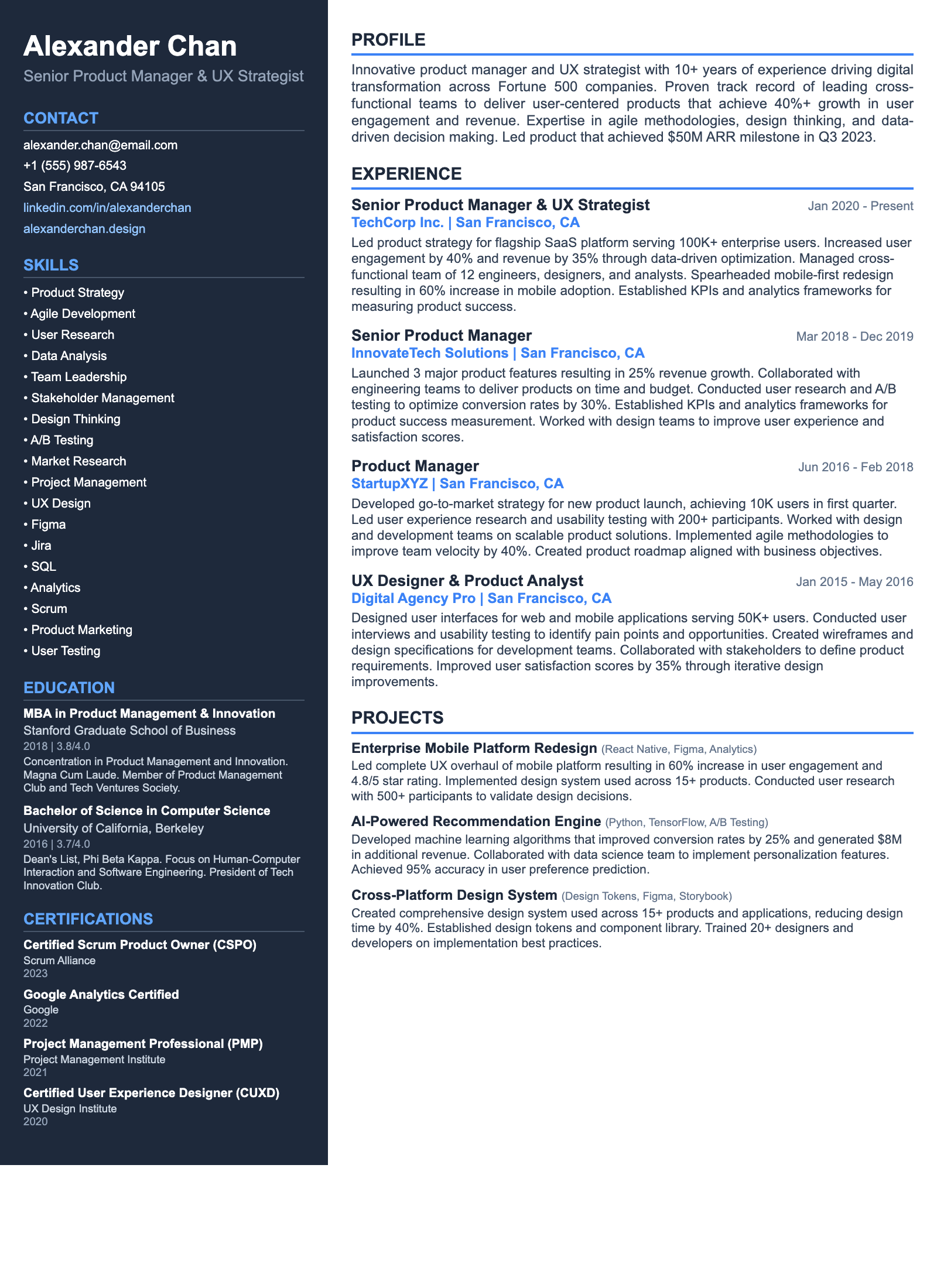
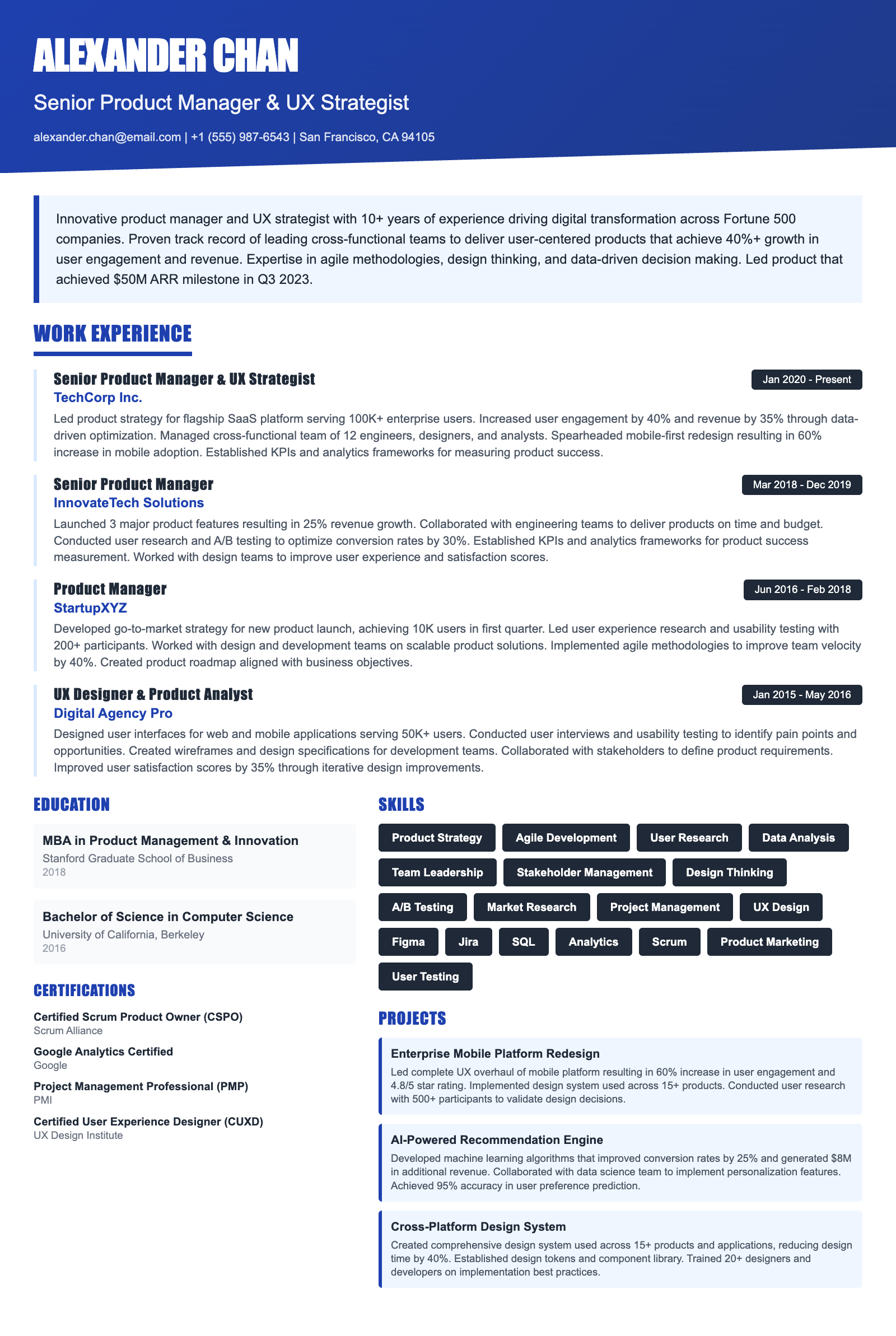
    Recommended Resume Templates

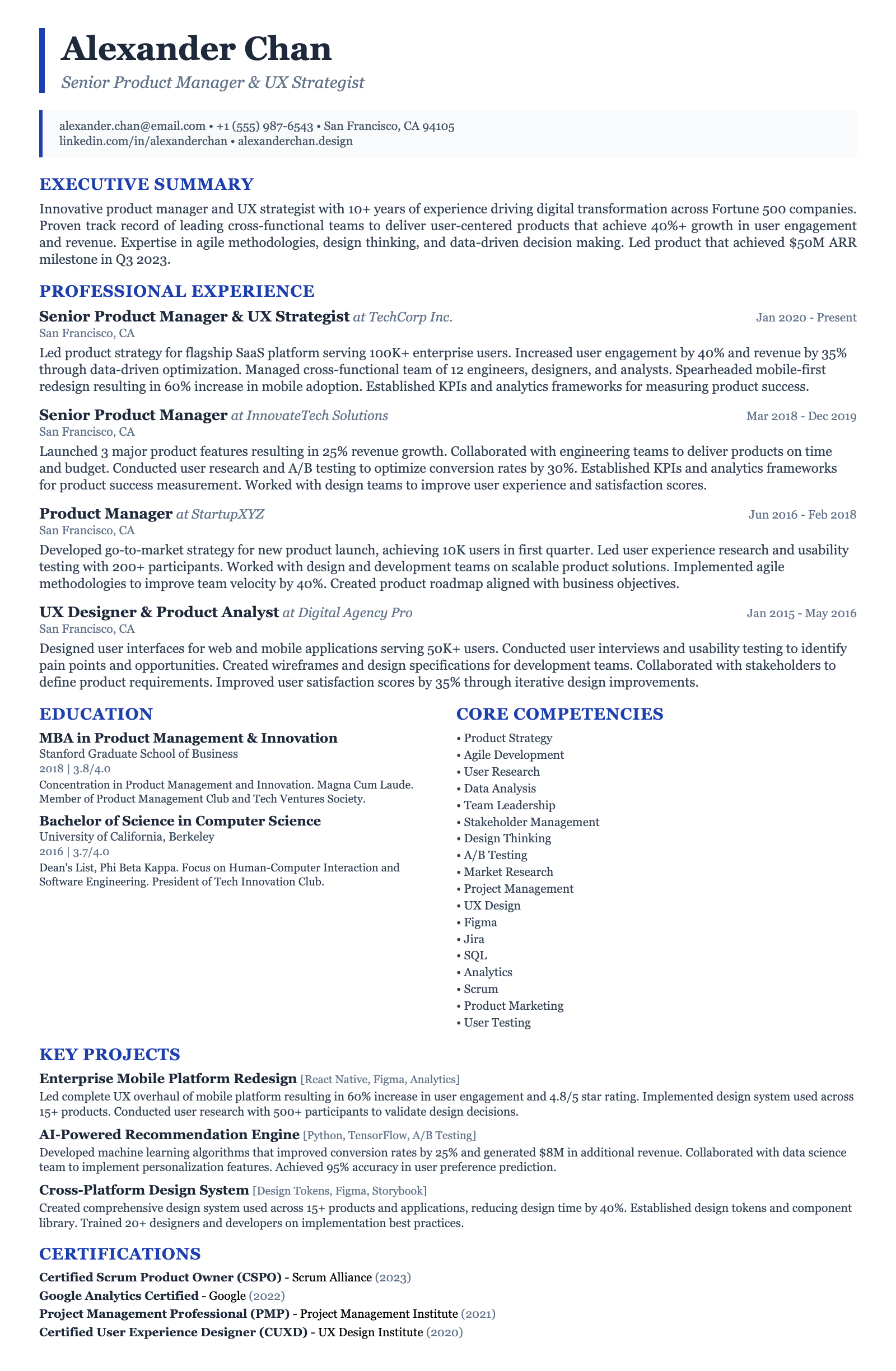
    ATS-friendly templates designed specifically for Driver positions in the US market.
    Frequently Asked Questions

    What should I include in my driver resume?

    Include your CDL information, driving experience (quantify with miles driven/deliveries made), safety record, vehicle types you've operated, relevant certifications, and soft skills like communication and problem-solving.

    How far back should I go with my driving experience?

    Generally, include the last 10-15 years of relevant driving experience. Focus on positions that demonstrate your skills and experience related to the job you're applying for.

    Should I include a summary or objective on my resume?

    A professional summary is highly recommended. It should be a concise overview of your skills, experience, and career goals, tailored to the specific job you're targeting.

    How important is a clean driving record?

    A clean driving record is crucial. Emphasize your safe driving history and any awards or recognitions you've received for safety performance.

    What are the most important skills to highlight on a driver resume?

    Highlight skills such as safe driving practices, vehicle inspection and maintenance, route planning, load securement, communication, time management, and problem-solving.

    Should I include references on my resume?

    It's generally not necessary to include references directly on your resume. Instead, state that references are available upon request.

    How can I make my resume stand out from other driver applicants?

    Quantify your achievements whenever possible (e.g., miles driven, deliveries made, accidents avoided). Tailor your resume to the specific job requirements and highlight your unique skills and experience.

    What if I have gaps in my driving experience?

    Be prepared to explain any gaps in your work history. If possible, highlight any relevant skills or experiences you gained during those periods, such as volunteer work or personal projects.

    Ready to Build Your Driver Resume?

    Use our AI-powered resume builder to create an ATS-optimized resume tailored for Driver positions in the US market.
    Complete Driver Career Toolkit

    Everything you need for your Driver job search — all in one platform.

    Why choose ResumeGyani over Zety or Resume.io?

    The only platform with AI mock interviews + resume builder + job search + career coaching — all in one.

    See comparison

    Last updated: March 2026 · Content reviewed by certified resume writers · Optimized for US job market

    Best Driver Resume Format for USA (2025) - Download Free