
ATS-Optimized for US Market

Entry-Level Retail Product Manager Career & Resume Guide

Crafting an effective entry-level Retail Product Manager resume requires highlighting your foundational skills and demonstrating your potential to contribute to product success. Hiring managers seek candidates who possess a blend of analytical capabilities, communication proficiency, and a passion for the retail industry. Your resume should clearly articulate your understanding of the product lifecycle and how you can leverage data to inform product decisions. Key sections include a compelling summary, a skills section that showcases relevant abilities like communication, time management, data analysis, and teamwork. Quantifiable achievements from internships, projects, or academic experiences are crucial to demonstrate your impact. Use action verbs to describe your responsibilities and accomplishments. Showcase your familiarity with industry-standard tools such as Excel, Google Analytics, or basic project management software like Jira. Emphasize your adaptability and leadership potential, even if demonstrated through extracurricular activities or group projects. A strong educational background in business, marketing, or a related field is essential. Stand out by tailoring your resume to each specific role, researching the company's products and highlighting relevant experience. Demonstrating knowledge of A/B testing, user research methodologies, and basic understanding of retail KPIs like conversion rate and average order value significantly enhances your profile. Remember to quantify your results whenever possible to showcase the impact of your contributions.
Average US Salary: $40k - $70k

Expert Tip: For Entry-Level Retail Product Manager positions in the US, recruiters increasingly look for technical execution and adaptability over simple job duties. This guide is tailored to highlight these specific traits to ensure your resume stands out in the competitive Entry-Level Retail Product Manager sector.

What US Hiring Managers Look For in a Entry-Level Retail Product Manager Resume

When reviewing Entry-Level Retail Product Manager candidates, recruiters and hiring managers in the US focus on a few critical areas. Making these elements clear and easy to find on your resume will improve your chances of moving to the interview stage.

  • Relevant experience and impact in Entry-Level Retail Product Manager or closely related roles.
  • Clear, measurable achievements (metrics, scope, outcomes) rather than duties.
  • Skills and keywords that match the job description and ATS requirements.
  • Professional formatting and no spelling or grammar errors.
  • Consistency between your resume, LinkedIn, and application.
  • Proficiency in key areas such as Communication, Time Management, Industry-Standard Tools.

Essential Skills for Entry-Level Retail Product Manager

Include these keywords in your resume to pass ATS screening and impress recruiters.

Must-Have Skills

  • CriticalCommunication
  • HighTime Management

Technical Skills

  • HighIndustry-Standard Tools
  • MediumData Analysis

Soft Skills

  • CriticalTeamwork
  • HighAdaptability
  • MediumLeadership

A Day in the Life

A Day in the Life of a Entry-Level Product Manager

Your morning starts at 9 AM by checking emails and reviewing yesterday's tasks. As an Entry-Level Product Manager in Retail, you spend the first hour in daily stand-ups, syncing with your team on defining product roadmaps, coordinating between engineering and design, and analyzing user feedback. From 10 AM to 1 PM, you focus on execution. In Retail, this involves learning standard operating procedures and applying your Product Manager skills to real-world problems. Post-lunch (1-5 PM) is for deep work and collaboration. You might attend workshops or pair with senior members to understand the nuances of defining product roadmaps, coordinating between engineering and design, and analyzing user feedback within the company. Wrap up by 5:30 PM, documenting your progress. Retail professionals at this level prioritize learning and consistency to build a strong career foundation.

Career Progression Path

Level 1

Product Manager I (Entry Level)

Level 2

Product Manager II (Junior)

Level 3

Senior Product Manager

Level 4

Lead Product Manager

Level 5

Product Manager Manager / Director

Interview Questions & Answers

Prepare for your Entry-Level Retail Product Manager interview with these commonly asked questions.

Walk me through a time when you had to analyze data to make a recommendation. What was the situation, your approach, and the outcome?

Medium
Behavioral
Sample Answer
In a university project, we aimed to improve the user experience of our campus store's website. I used Google Analytics to analyze user behavior, identifying high bounce rates on the checkout page. I recommended simplifying the checkout process by reducing the number of steps and offering guest checkout. After implementing these changes, the conversion rate increased by 10%, demonstrating the impact of data-driven recommendations. This project reinforced the importance of A/B testing and continuous iteration.

Describe a time you had to prioritize multiple tasks with conflicting deadlines. How did you manage your time and ensure everything was completed?

Medium
Behavioral
Sample Answer
During my internship at a tech startup, I was responsible for managing multiple product features with varying deadlines. I utilized the Eisenhower Matrix to prioritize tasks based on urgency and importance. I communicated proactively with stakeholders to manage expectations and renegotiate deadlines when necessary. By staying organized and focused, I successfully delivered all projects on time and within budget. I also used Jira to track progress and keep everyone informed.

How would you approach improving the online shopping experience for a specific retail product (e.g., shoes, electronics) that you frequently purchase?

Hard
Situational
Sample Answer
For online shoe shopping, I'd focus on improving the fit and reducing returns. I'd implement a virtual try-on feature using augmented reality, allowing customers to see how the shoes look on their feet. I'd also enhance the size guide with detailed measurements and customer reviews on sizing accuracy. Additionally, I would implement a clearer return policy with easy-to-understand instructions. Finally, I would test different product images using A/B testing to see which images would drive more sales.

Explain a time you had to work with a difficult team member. How did you handle the situation and what was the outcome?

Medium
Behavioral
Sample Answer
In a group project, one team member was consistently late with their deliverables and often missed meetings. I initiated a one-on-one conversation to understand their challenges. I discovered they were struggling with time management. I helped them break down their tasks into smaller, more manageable steps and offered to provide support. By addressing their concerns and fostering open communication, we improved our working relationship, and the project was successfully completed on time. Regular check-ins were key.

What are some key performance indicators (KPIs) you would track to measure the success of a new retail product launch?

Technical
Medium
Sample Answer
Key KPIs for a new product launch include conversion rate (percentage of website visitors who make a purchase), average order value (the average amount spent per order), customer acquisition cost (the cost of acquiring a new customer), customer retention rate (the percentage of customers who return for repeat purchases), and net promoter score (a measure of customer loyalty and satisfaction). Tracking these metrics allows us to assess the product's performance and make data-driven adjustments to optimize its success.

Imagine a new competitor launches a product similar to one you manage. How would you react and what steps would you take?

Hard
Situational
Sample Answer
First, I'd conduct a thorough competitive analysis to understand the competitor's product features, pricing, and marketing strategy. Next, I would gather customer feedback on our existing product and identify areas for improvement. Then, I would prioritize and implement product enhancements to differentiate our product and address customer needs. Finally, I would communicate these improvements to our customers through targeted marketing campaigns and highlight our product's unique value proposition. Continuous improvement is key.

ATS Optimization Tips

Make sure your resume passes Applicant Tracking Systems used by US employers.

Incorporate keywords from the job description throughout your resume, especially in the skills and experience sections. Focus on terms related to product management, retail, and relevant software.
Use a standard resume format with clear headings like 'Summary,' 'Experience,' 'Education,' and 'Skills.' Avoid using tables or complex formatting that ATS systems may not be able to parse.
Quantify your accomplishments whenever possible using metrics and data. For example, mention how your actions led to increased sales, improved conversion rates, or enhanced customer satisfaction.
List your skills using a dedicated 'Skills' section. Include both hard skills (e.g., data analysis, SQL, Excel) and soft skills (e.g., communication, teamwork, problem-solving).
Tailor your resume to each job application by highlighting the skills and experiences that are most relevant to the specific role and company.
Save your resume as a PDF to preserve formatting and ensure that the ATS can accurately read the content. Avoid using older file formats like .doc.
Use action verbs to describe your responsibilities and accomplishments in your work experience section. Start each bullet point with a strong action verb, like 'Managed,' 'Analyzed,' or 'Implemented'.
Include a link to your LinkedIn profile or online portfolio, if applicable. This allows hiring managers to learn more about your background and see examples of your work.

Common Resume Mistakes to Avoid

Don't make these errors that get resumes rejected.

1
Failing to quantify achievements: Entry-level PMs often describe responsibilities without detailing the impact. 'Managed product backlog' is weaker than 'Managed product backlog, resulting in a 15% reduction in sprint completion time'.
2
Using a generic resume: Sending the same resume for every Retail PM role shows a lack of interest and understanding of the specific company or product.
3
Ignoring retail-specific keywords: Not including terms like 'omnichannel,' 'inventory management,' 'POS systems,' or 'customer journey' demonstrates a lack of retail knowledge.
4
Neglecting to showcase analytical skills: Data analysis is crucial. Not highlighting experience with tools like Excel, Google Analytics, or A/B testing is a major oversight.
5
Poor formatting and typos: A poorly formatted resume with grammatical errors conveys a lack of attention to detail, a critical skill for product managers.
6
Not tailoring to the company’s specific products: Showing no knowledge of the company's product line or target market suggests a lack of preparation.
7
Omitting projects or internships: Even if unrelated directly, any project showcasing leadership, problem-solving, or analytical skills should be included.
8
Overstating experience: Exaggerating responsibilities or skills can lead to disappointment during the interview process and ultimately hurt your chances.

Industry Outlook

The US Retail sector is experiencing steady growth. Entry-Level Product Managers are particularly sought after, with the Bureau of Labor Statistics projecting average job growth through 2030. Peak hiring occurs in Q1 (January-March) and Q3 (August-September).

Top Hiring Companies

Industry LeadersRegional FirmsFast-Growing Companies

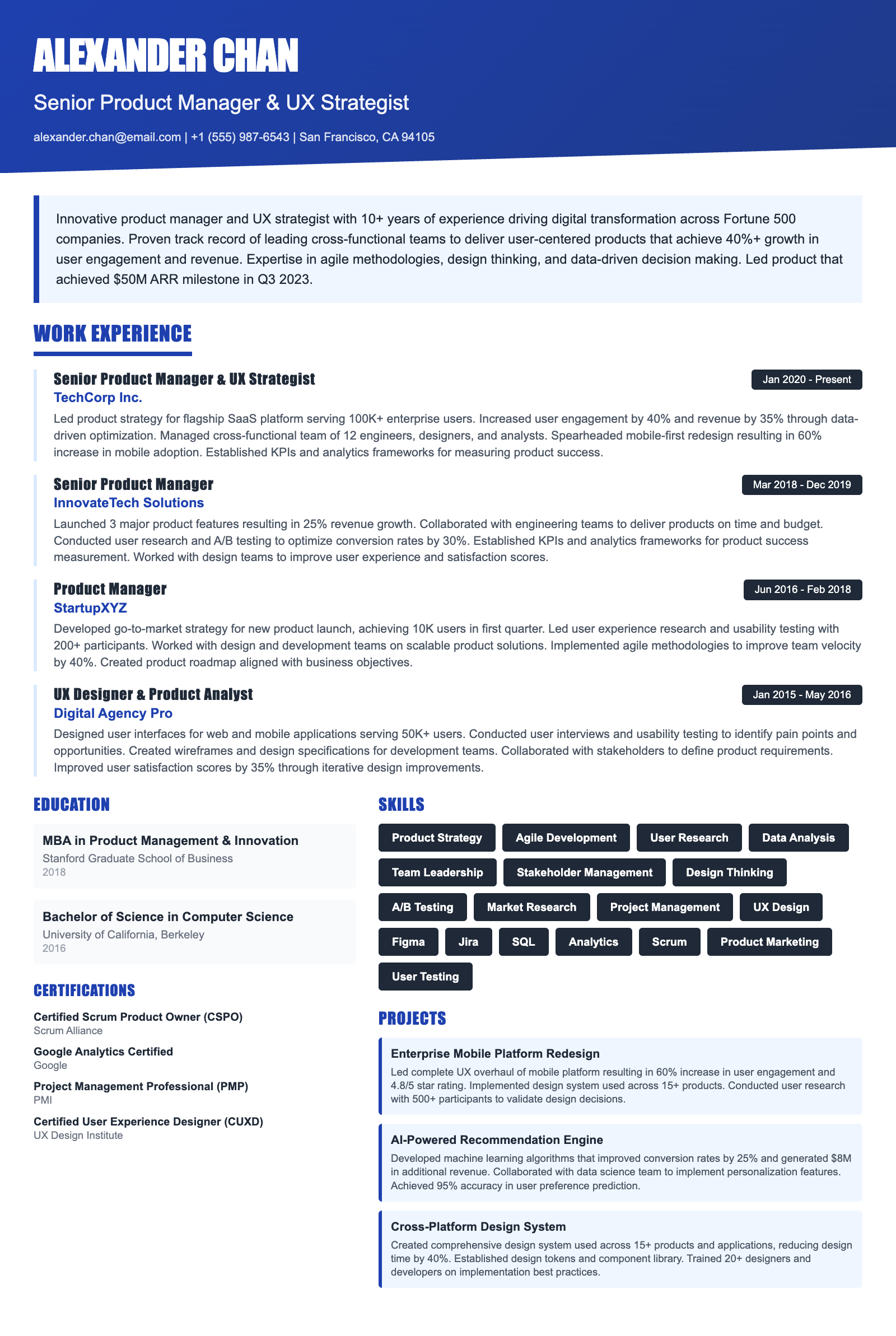
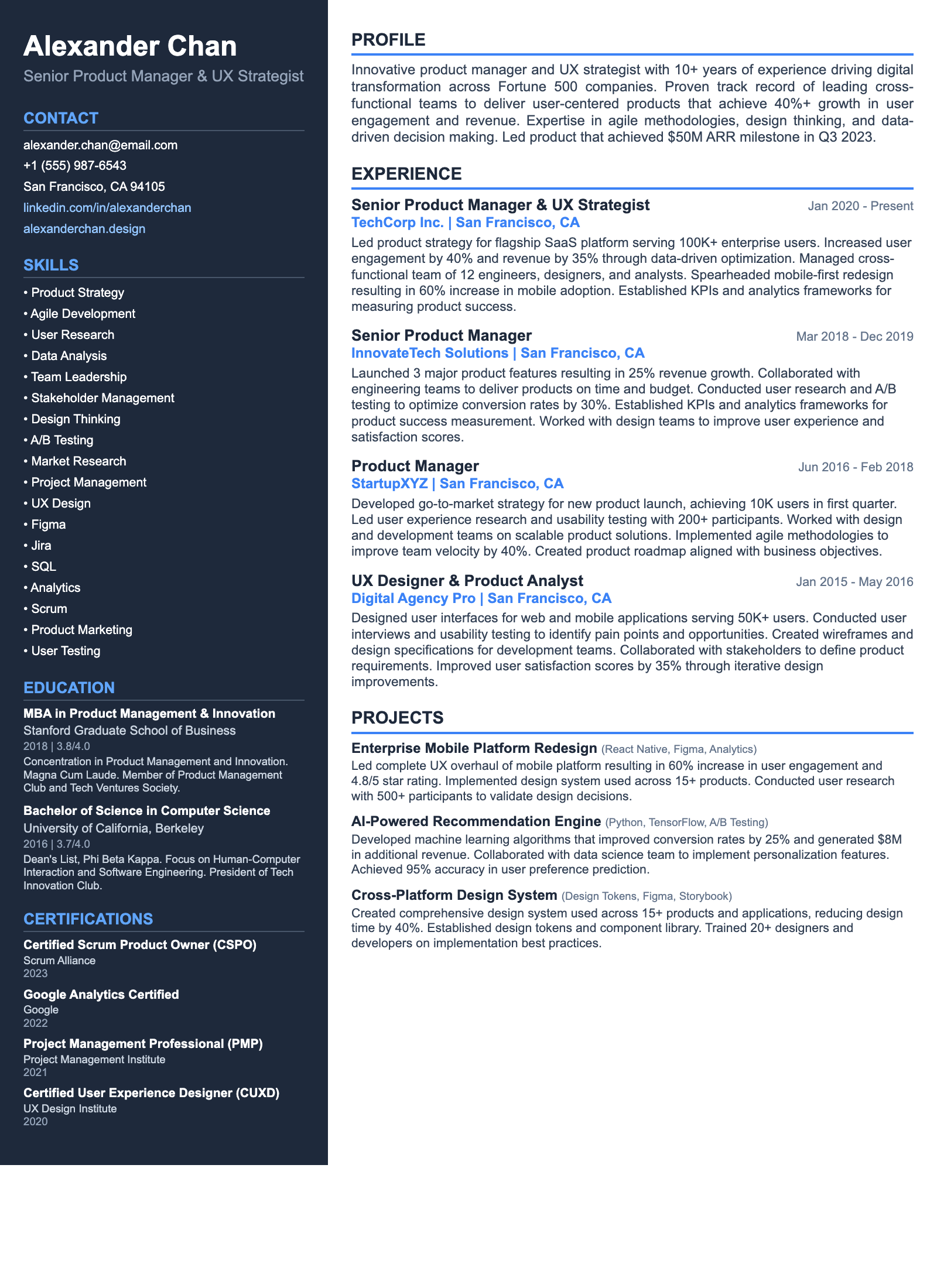
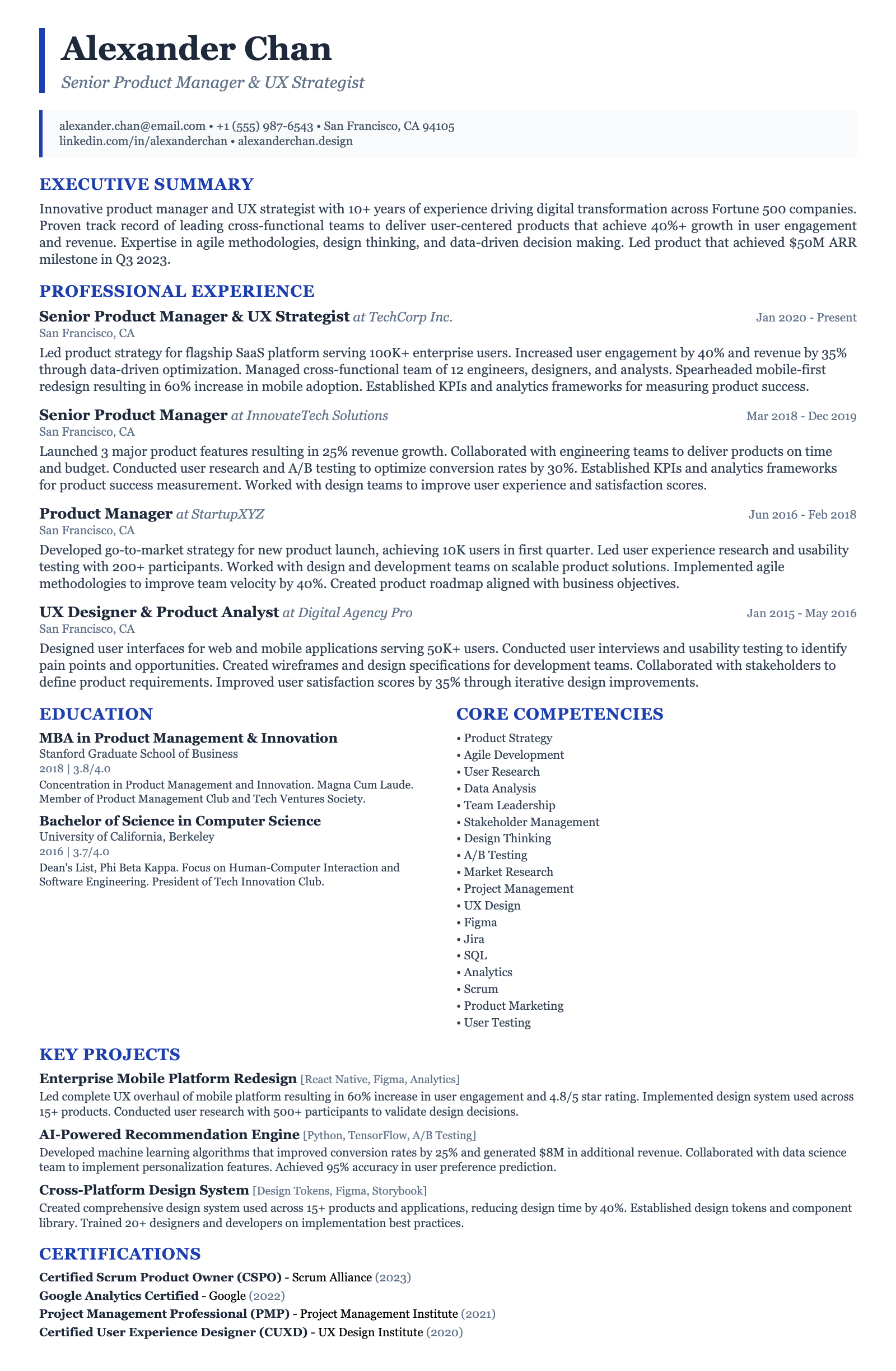
Recommended Resume Templates

ATS-friendly templates designed specifically for Entry-Level Retail Product Manager positions in the US market.
Frequently Asked Questions

What is the ideal length for an entry-level Retail Product Manager resume?

As an entry-level candidate, aim for a one-page resume. Focus on the most relevant experiences and skills. Prioritize internships, academic projects, and extracurricular activities that showcase your product management potential. Use concise language and prioritize quantifiable achievements to make the most of the limited space. Highlight your understanding of retail metrics and your ability to use tools like Excel or Google Analytics.

What key skills should I emphasize on my Retail Product Manager resume?

Emphasize both hard and soft skills. Highlight your analytical abilities, proficiency in tools like Excel, Google Analytics, and project management software. Showcase your communication and teamwork skills through examples from projects or internships. Adaptability is crucial in the fast-paced retail environment. Demonstrate your understanding of A/B testing methodologies and basic familiarity with UX principles. Leadership potential, even if demonstrated through university projects, is a plus.

How can I optimize my resume for Applicant Tracking Systems (ATS)?

Use a simple, clean resume format that ATS can easily parse. Avoid tables, images, and unusual fonts. Incorporate keywords from the job description naturally throughout your resume. Use standard section headings like 'Experience,' 'Skills,' and 'Education.' Save your resume as a PDF to preserve formatting. Ensure your contact information is clearly visible and easily readable by the ATS. Mention tools like JIRA, Confluence, and specific retail analytics platforms if you have experience.

Are certifications beneficial for an entry-level Retail Product Manager resume?

Certifications can be beneficial, but prioritize those directly related to product management or the retail industry. Consider certifications in Agile methodologies (e.g., Scrum Master), data analysis (e.g., Google Analytics), or project management (e.g., PMP fundamentals). These demonstrate your commitment to professional development and can enhance your credibility. List certifications in a dedicated section, including the issuing organization and completion date.

What are some common resume mistakes to avoid as an entry-level Retail Product Manager?

Avoid generic resumes. Tailor your resume to each specific role. Don't exaggerate your experience or skills. Omit irrelevant information, such as unrelated work history. Proofread carefully for typos and grammatical errors. Refrain from using vague language; quantify your accomplishments whenever possible. Neglecting to showcase your understanding of retail KPIs is a missed opportunity. Ensure your resume highlights your familiarity with industry-standard tools.

How can I transition my resume if I have a background in a different field?

Highlight transferable skills such as data analysis, problem-solving, communication, and project management. Frame your previous experiences in terms of their relevance to product management in the retail sector. Take online courses or workshops to build foundational knowledge in product management and retail analytics. Showcase any personal projects or volunteer experiences that demonstrate your passion for product development and the retail industry. Mention any familiarity with tools like SQL, Tableau, or retail-specific software.

Ready to Build Your Entry-Level Retail Product Manager Resume?

Use our AI-powered resume builder to create an ATS-optimized resume tailored for Entry-Level Retail Product Manager positions in the US market.

Complete Entry-Level Retail Product Manager Career Toolkit

Everything you need for your Entry-Level Retail Product Manager job search — all in one platform.

Why choose ResumeGyani over Zety or Resume.io?

The only platform with AI mock interviews + resume builder + job search + career coaching — all in one.

See comparison

Last updated: March 2026 · Content reviewed by certified resume writers · Optimized for US job market

Entry-Level Retail Product Manager Resume Guide (2026) | ATS-Optimized Template