
ATS-Optimized for US Market

Entry-Level Tech Architect Career & Resume Guide

As an Entry-Level Tech Architect navigating the US job market, you need a resume that showcases your potential to design and implement scalable solutions. Hiring managers seek candidates who can bridge the gap between business needs and technical execution, even with limited experience. Your resume should emphasize your foundational knowledge of architectural principles, programming experience, and cloud services. Key sections include a compelling summary highlighting your skills, a detailed project section demonstrating practical application of your knowledge, and a skills section emphasizing adaptability and teamwork. To stand out, quantify your achievements whenever possible, such as the scale of projects you've worked on or the impact of your contributions. Highlight your proficiency in relevant tools and frameworks like AWS, Azure, or Google Cloud Platform, and languages like Python, Java, or JavaScript. Include any relevant certifications, such as AWS Certified Cloud Practitioner or Azure Fundamentals. Frame your experience to demonstrate your problem-solving abilities and how you've applied architectural concepts in real-world scenarios. Emphasize experience with data analysis and the ability to use insights to drive better solutions. Mention how you've contributed to team projects, showcasing your collaboration and communication skills.
Average US Salary: $56k - $105k

Expert Tip: For Entry-Level Tech Architect positions in the US, recruiters increasingly look for technical execution and adaptability over simple job duties. This guide is tailored to highlight these specific traits to ensure your resume stands out in the competitive Entry-Level Tech Architect sector.

What US Hiring Managers Look For in a Entry-Level Tech Architect Resume

When reviewing Entry-Level Tech Architect candidates, recruiters and hiring managers in the US focus on a few critical areas. Making these elements clear and easy to find on your resume will improve your chances of moving to the interview stage.

  • Relevant experience and impact in Entry-Level Tech Architect or closely related roles.
  • Clear, measurable achievements (metrics, scope, outcomes) rather than duties.
  • Skills and keywords that match the job description and ATS requirements.
  • Professional formatting and no spelling or grammar errors.
  • Consistency between your resume, LinkedIn, and application.
  • Proficiency in key areas such as Problem Solving, Time Management, Programming/Cloud Services.

Essential Skills for Entry-Level Tech Architect

Include these keywords in your resume to pass ATS screening and impress recruiters.

Must-Have Skills

  • CriticalProblem Solving
  • HighTime Management

Technical Skills

  • HighProgramming/Cloud Services
  • MediumData Analysis

Soft Skills

  • CriticalTeamwork
  • HighAdaptability
  • MediumLeadership

A Day in the Life

A Day in the Life of a Entry-Level Architect

Your morning starts at 9 AM by checking emails and reviewing yesterday's tasks. As an Entry-Level Architect in Tech, you spend the first hour in daily stand-ups, syncing with your team on handling core responsibilities, collaborating with cross-functional teams, and driving project success. From 10 AM to 1 PM, you focus on execution. In Tech, this involves learning standard operating procedures and applying your Architect skills to real-world problems. Post-lunch (1-5 PM) is for deep work and collaboration. You might attend workshops or pair with senior members to understand the nuances of handling core responsibilities, collaborating with cross-functional teams, and driving project success within the company. Wrap up by 5:30 PM, documenting your progress. Tech professionals at this level prioritize learning and consistency to build a strong career foundation.

Career Progression Path

Level 1

Architect I (Entry Level)

Level 2

Architect II (Junior)

Level 3

Senior Architect

Level 4

Lead Architect

Level 5

Architect Manager / Director

Interview Questions & Answers

Prepare for your Entry-Level Tech Architect interview with these commonly asked questions.

Describe a time you had to solve a complex technical problem. What steps did you take?

Medium
Behavioral
Sample Answer
In a recent project, we faced a performance bottleneck in our application's data processing pipeline. I started by profiling the code to identify the slowest operations. Then, I researched alternative algorithms and data structures to optimize performance. I implemented a new caching strategy using Redis and refactored the code to use asynchronous processing. This reduced processing time by 40% and significantly improved application responsiveness. This experience taught me the importance of thorough analysis and experimentation when tackling technical challenges.

Explain the difference between monolithic and microservices architectures. What are the pros and cons of each?

Medium
Technical
Sample Answer
A monolithic architecture is a single, unified application, while microservices are a collection of small, independent services. Monoliths are simpler to develop and deploy initially, but can become difficult to scale and maintain. Microservices offer greater scalability, flexibility, and fault isolation, but introduce complexity in terms of distributed systems management, inter-service communication, and monitoring. The choice depends on the specific requirements of the project, considering factors like team size, scalability needs, and deployment frequency.

Imagine a scenario where a critical system is experiencing downtime. What steps would you take to troubleshoot and resolve the issue?

Medium
Situational
Sample Answer
First, I would assess the impact and severity of the downtime. Then, I'd check monitoring dashboards and logs to identify potential causes, such as server outages or application errors. I would collaborate with the operations team to isolate the problem and implement temporary workarounds to minimize disruption. Finally, I would conduct a root cause analysis to prevent future occurrences, documenting the issue and implementing permanent fixes. Clear communication is essential throughout the process.

How do you stay up-to-date with the latest trends and technologies in cloud computing and software architecture?

Easy
Behavioral
Sample Answer
I actively follow industry blogs, attend webinars and conferences, and participate in online communities like Stack Overflow and Reddit. I also experiment with new technologies and frameworks through personal projects and side hustles. For instance, I recently completed a course on serverless computing using AWS Lambda and API Gateway, which helped me understand the benefits of event-driven architectures. Continuous learning is crucial in this rapidly evolving field.

Describe a situation where you had to adapt to a change in project requirements or priorities. How did you handle it?

Medium
Behavioral
Sample Answer
In a recent project, the client requested a significant change in scope midway through development. I collaborated with the project manager to reassess the timeline, resources, and budget. I then communicated the impact of the change to the development team and worked with them to reprioritize tasks and adjust the architecture accordingly. By maintaining open communication and flexibility, we were able to accommodate the client's request while still delivering a successful product. Adaptability is key to thriving in this field.

Explain the concept of Infrastructure as Code (IaC) and why it's important in modern cloud architecture.

Hard
Technical
Sample Answer
Infrastructure as Code (IaC) involves managing and provisioning infrastructure through code rather than manual processes. Tools like Terraform and CloudFormation allow you to define your infrastructure in configuration files, which can be version-controlled and automated. This improves consistency, repeatability, and efficiency in deploying and managing cloud resources. IaC is essential for achieving DevOps best practices and ensuring that your infrastructure is scalable, reliable, and secure.

ATS Optimization Tips

Make sure your resume passes Applicant Tracking Systems used by US employers.

Incorporate relevant keywords directly from the job description, such as 'cloud architecture', 'microservices', 'AWS', 'Azure', and specific services like 'Lambda' or 'Kubernetes'.
Use standard section headings like 'Summary', 'Skills', 'Experience', and 'Education' for easy parsing by ATS systems.
List your skills as bullet points under a 'Skills' section, categorizing them by domain (e.g., Cloud Computing, Programming Languages, Databases).
Quantify your achievements in your work experience descriptions, focusing on metrics like 'reduced infrastructure costs by X%' or 'improved application performance by Y%'.
Use a simple, clean resume template that is easily readable by machines; avoid complex formatting elements like tables, images, and text boxes.
Save your resume as a PDF to preserve formatting, but ensure the text is selectable so the ATS can parse it correctly; some older systems prefer .doc format.
Include certifications like 'AWS Certified Cloud Practitioner' or 'Azure Fundamentals' prominently, as ATS systems often prioritize candidates with relevant certifications.
Tailor your resume to each job application by adjusting the keywords and skills listed to match the specific requirements of the role.

Common Resume Mistakes to Avoid

Don't make these errors that get resumes rejected.

1
Listing generic skills without providing concrete examples of how you've applied them in architectural design.
2
Failing to quantify your achievements, making it difficult for hiring managers to assess your impact.
3
Overemphasizing theoretical knowledge without showcasing practical experience with cloud platforms or programming languages.
4
Using technical jargon excessively without explaining the context or business value of your work.
5
Neglecting to tailor your resume to the specific requirements of the job description.
6
Including irrelevant work experience that doesn't demonstrate your potential to excel as a Tech Architect.
7
Omitting relevant certifications or online courses that demonstrate your commitment to professional development.
8
Using a resume template that is visually appealing but difficult for ATS systems to parse.

Industry Outlook

The US Tech sector is experiencing rapid growth with 8% YoY expansion. Entry-Level Architects are particularly sought after, with the Bureau of Labor Statistics projecting above-average job growth through 2030. Peak hiring occurs in Q1 (January-March) and Q3 (August-September).

Top Hiring Companies

GoogleAmazonMicrosoftMetaStartups

Recommended Resume Templates

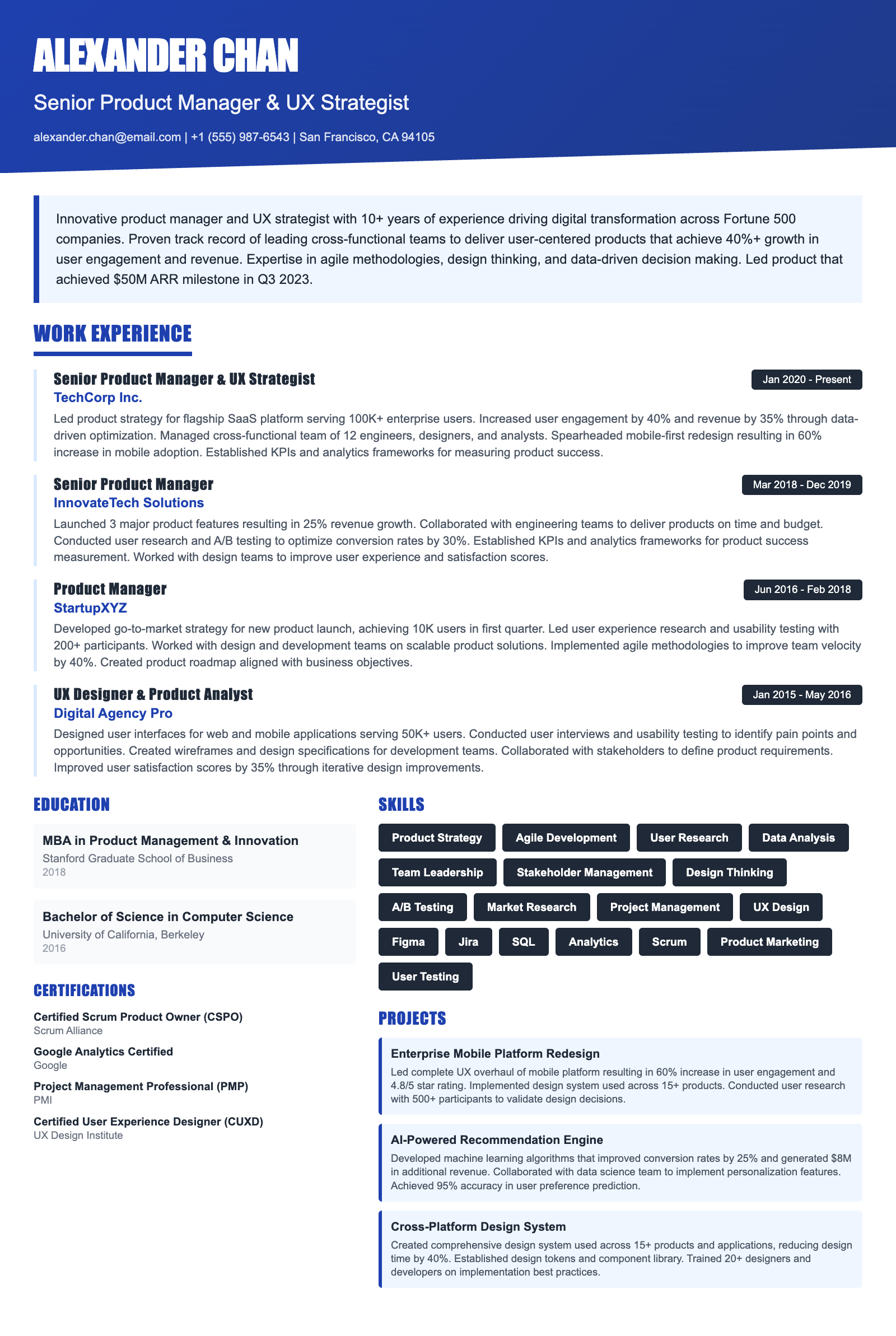
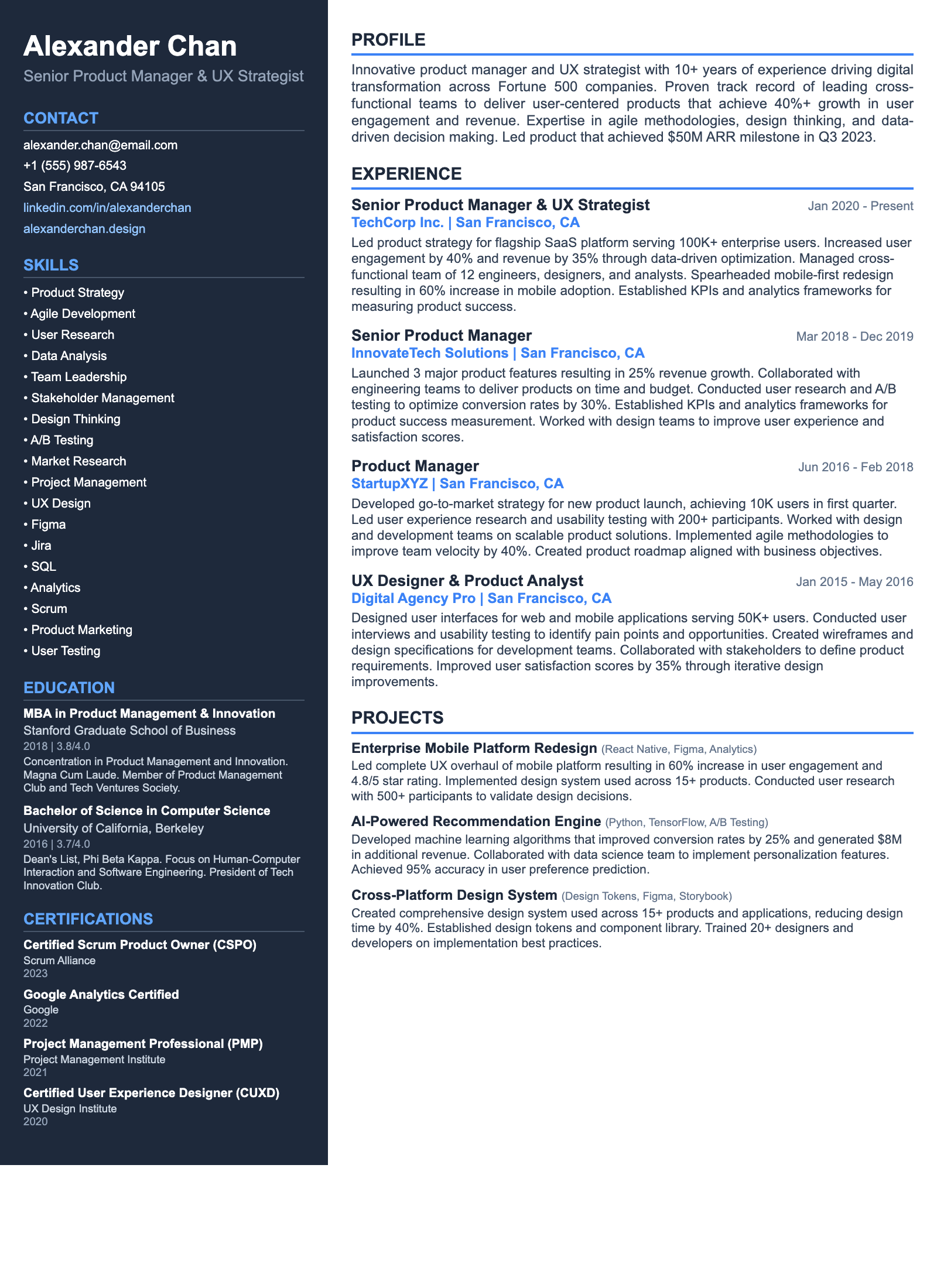
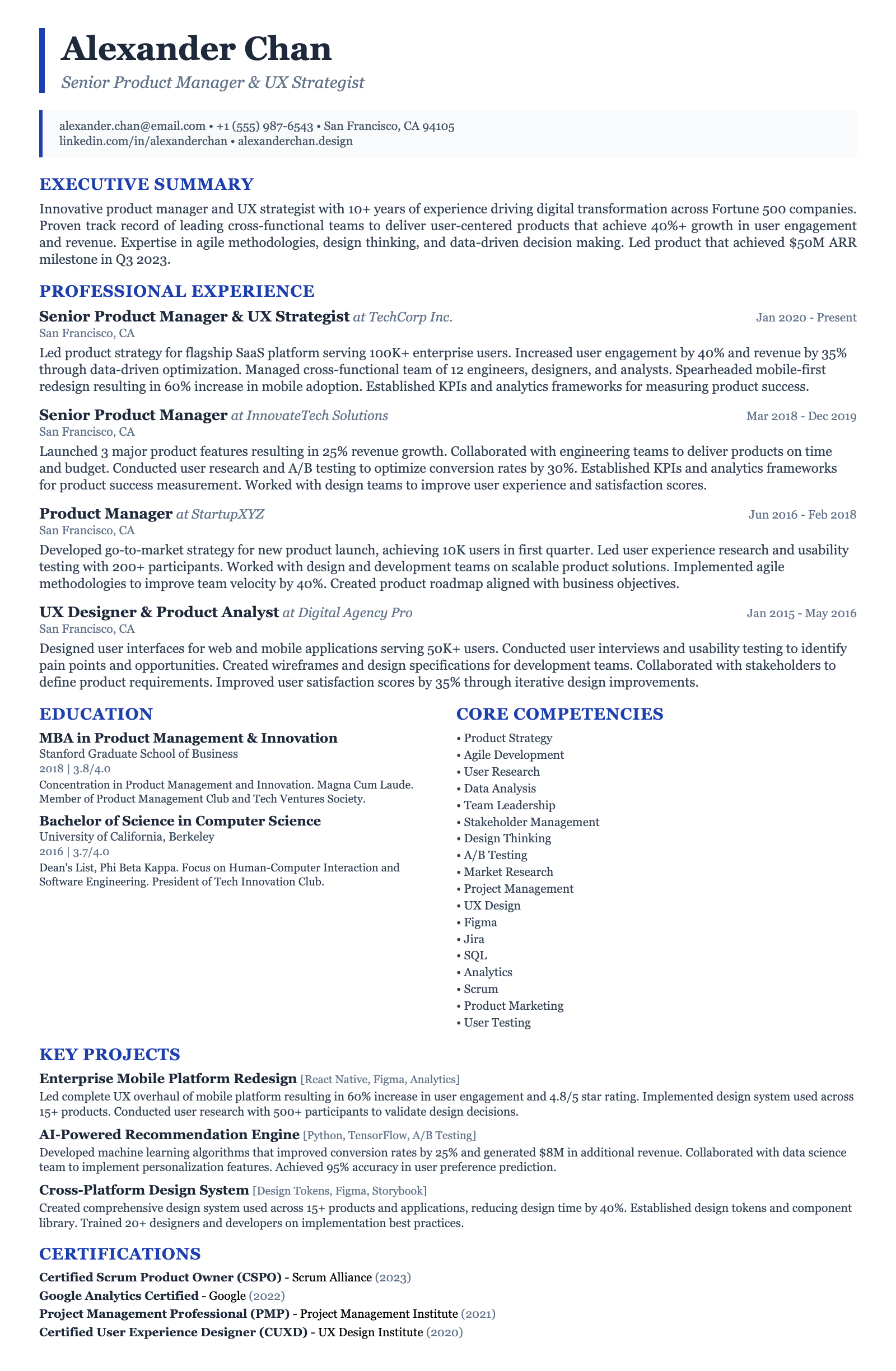
ATS-friendly templates designed specifically for Entry-Level Tech Architect positions in the US market.
Frequently Asked Questions

How long should my Entry-Level Tech Architect resume be?

As an entry-level candidate, aim for a one-page resume. Prioritize relevant projects, skills (such as proficiency in AWS, Azure, or GCP, programming languages like Python or Java, and database technologies), and education. Focus on demonstrating your potential to contribute to architectural design and implementation, rather than trying to fit everything in. Quantify your achievements whenever possible.

What are the most important skills to highlight on my resume?

Highlight skills crucial for tech architecture, like proficiency in cloud platforms (AWS, Azure, GCP), programming languages (Python, Java, JavaScript), database management (SQL, NoSQL), and architectural patterns. Emphasize problem-solving, teamwork, and communication skills. Showcase your understanding of DevOps principles, infrastructure-as-code tools like Terraform or CloudFormation, and data analysis techniques.

How can I optimize my resume for Applicant Tracking Systems (ATS)?

Use a clean, ATS-friendly format with clear headings and bullet points. Avoid tables, images, and unusual fonts. Incorporate relevant keywords from the job description, such as specific cloud services (e.g., AWS Lambda, Azure Functions), programming languages, or architectural patterns. Submit your resume as a .doc or .pdf file to ensure compatibility. Proofread carefully for errors that could be flagged by the ATS.

Are certifications important for Entry-Level Tech Architect roles?

Certifications can significantly boost your resume. Consider obtaining certifications like AWS Certified Cloud Practitioner, Azure Fundamentals, or Google Cloud Certified Associate Cloud Engineer. These demonstrate your foundational knowledge of cloud computing and architectural principles. Highlight these prominently on your resume to showcase your commitment to professional development.

What are some common resume mistakes to avoid?

Avoid generic descriptions and focus on quantifiable achievements. Don't list every technology you've ever touched; prioritize those relevant to tech architecture. Refrain from using subjective language and focus on demonstrating your skills through concrete examples. Ensure your contact information is accurate and professional. Proofread meticulously to avoid typos and grammatical errors.

How can I transition my resume if I'm changing careers to become a Tech Architect?

Focus on transferable skills from your previous role, such as problem-solving, analytical thinking, and project management. Highlight any experience with programming, cloud services, or data analysis, even if it wasn't the primary focus of your previous job. Consider completing relevant certifications or online courses to demonstrate your commitment to learning new skills. Tailor your resume to emphasize how your past experience aligns with the requirements of a Tech Architect role.

Ready to Build Your Entry-Level Tech Architect Resume?

Use our AI-powered resume builder to create an ATS-optimized resume tailored for Entry-Level Tech Architect positions in the US market.

Complete Entry-Level Tech Architect Career Toolkit

Everything you need for your Entry-Level Tech Architect job search — all in one platform.

Why choose ResumeGyani over Zety or Resume.io?

The only platform with AI mock interviews + resume builder + job search + career coaching — all in one.

See comparison

Last updated: March 2026 · Content reviewed by certified resume writers · Optimized for US job market

Entry-Level Tech Architect Resume Guide (2026) | ATS-Optimized Template