
ATS-Optimized for US Market

Junior Construction Accountant Career & Resume Guide

As a Junior Construction Accountant, your resume needs to showcase your foundational knowledge and practical skills within the construction industry's financial landscape. Hiring managers seek candidates who understand project costing, job costing, and the intricacies of construction accounting software. A strong resume will highlight your proficiency in tools like QuickBooks Contractor, Sage 100 Contractor, or Viewpoint Spectrum. Emphasize your ability to analyze financial data, track budgets, and prepare accurate reports. Key sections include a compelling summary, a detailed work experience section demonstrating your hands-on experience, a skills section that aligns with the job description, and an education section that highlights any relevant certifications or coursework (e.g., associate's or bachelor's degree in accounting, CPA candidate). To stand out, quantify your achievements whenever possible, such as 'Reduced project cost overruns by 15% through diligent budget tracking' or 'Improved invoice processing efficiency by 20% using streamlined workflows in QuickBooks'. Showcase your communication, teamwork, and problem-solving skills to demonstrate your ability to collaborate effectively with project managers, subcontractors, and other stakeholders. Tailor your resume to each specific job posting, highlighting the skills and experiences that are most relevant to the employer's needs. Mention any experience you have with AIA billing, lien waivers, and understanding of revenue recognition methods specific to the construction industry. Demonstrating adaptability is crucial, as construction projects often face unforeseen challenges and require you to adjust your approach accordingly.
Average US Salary: $50k - $85k

Expert Tip: For Junior Construction Accountant positions in the US, recruiters increasingly look for technical execution and adaptability over simple job duties. This guide is tailored to highlight these specific traits to ensure your resume stands out in the competitive Junior Construction Accountant sector.

What US Hiring Managers Look For in a Junior Construction Accountant Resume

When reviewing Junior Construction Accountant candidates, recruiters and hiring managers in the US focus on a few critical areas. Making these elements clear and easy to find on your resume will improve your chances of moving to the interview stage.

  • Relevant experience and impact in Junior Construction Accountant or closely related roles.
  • Clear, measurable achievements (metrics, scope, outcomes) rather than duties.
  • Skills and keywords that match the job description and ATS requirements.
  • Professional formatting and no spelling or grammar errors.
  • Consistency between your resume, LinkedIn, and application.
  • Proficiency in key areas such as Communication, Time Management, Industry-Standard Tools.

Essential Skills for Junior Construction Accountant

Include these keywords in your resume to pass ATS screening and impress recruiters.

Must-Have Skills

  • CriticalCommunication
  • HighTime Management

Technical Skills

  • HighIndustry-Standard Tools
  • MediumData Analysis

Soft Skills

  • CriticalTeamwork
  • HighAdaptability
  • MediumLeadership

A Day in the Life

A Day in the Life of a Junior Accountant

Your morning starts at 9 AM by checking emails and reviewing yesterday's tasks. As an Junior Accountant in Construction, you spend the first hour in daily stand-ups, syncing with your team on handling core responsibilities, collaborating with cross-functional teams, and driving project success. From 10 AM to 1 PM, you focus on execution. In Construction, this involves learning standard operating procedures and applying your Accountant skills to real-world problems. Post-lunch (1-5 PM) is for deep work and collaboration. You might attend workshops or pair with senior members to understand the nuances of handling core responsibilities, collaborating with cross-functional teams, and driving project success within the company. Wrap up by 5:30 PM, documenting your progress. Construction professionals at this level prioritize learning and consistency to build a strong career foundation.

Career Progression Path

Level 1

Accountant I (Entry Level)

Level 2

Accountant II (Junior)

Level 3

Senior Accountant

Level 4

Lead Accountant

Level 5

Accountant Manager / Director

Interview Questions & Answers

Prepare for your Junior Construction Accountant interview with these commonly asked questions.

Describe your experience with job costing and how it applies to construction projects.

Medium
Technical
Sample Answer
Job costing is crucial in construction to track all direct and indirect costs associated with specific projects. I have experience setting up job codes, allocating labor and materials, and monitoring expenses against budgets. For instance, at [Previous Company], I implemented a job costing system in QuickBooks Contractor that improved cost tracking accuracy by 15%, leading to better project profitability analysis. Understanding variances between actual costs and budgeted costs is vital for proactive decision-making.

Tell me about a time you had to resolve a discrepancy in a construction project budget. What steps did you take?

Medium
Situational
Sample Answer
In my previous role, a significant discrepancy arose between the budgeted and actual costs for a concrete pour on a commercial building project. I started by meticulously reviewing all invoices, purchase orders, and labor records. I identified an error in the initial quantity estimation. I then collaborated with the project manager to renegotiate the contract with the concrete supplier, mitigating further cost overruns. I also implemented a more rigorous review process for future estimates.

How do you ensure accuracy when reconciling accounts payable in a construction environment?

Medium
Technical
Sample Answer
Accuracy in accounts payable is paramount to maintaining good relationships with subcontractors and suppliers. I follow a strict reconciliation process, which includes matching invoices to purchase orders and receiving reports, verifying pricing and quantities, and investigating any discrepancies promptly. I also utilize tools within QuickBooks Contractor to automate reconciliation and flag potential errors. Regularly communicating with vendors helps resolve issues quickly and avoid late payment penalties.

Describe a situation where you had to communicate complex financial information to non-financial stakeholders.

Medium
Behavioral
Sample Answer
During a monthly project review meeting, I needed to explain the implications of a change order on the overall project budget to the project manager and the client. I prepared a clear and concise presentation with visual aids, focusing on the key financial impacts and potential risks. I avoided technical jargon and used plain language to ensure everyone understood the situation. By addressing their concerns proactively, we were able to gain their support for the necessary budget adjustments.

How familiar are you with AIA billing and lien waivers?

Medium
Technical
Sample Answer
I understand the importance of AIA billing in construction to ensure timely and accurate payments to contractors and subcontractors. I have experience preparing and reviewing AIA payment applications, ensuring compliance with contract terms and applicable regulations. I am also familiar with the process of obtaining and tracking lien waivers to protect the project owner from potential claims. I know that conditional and unconditional lien waivers are both important for our protection, depending on whether or not payment has been made.

What strategies do you use to manage your time effectively and prioritize tasks in a fast-paced construction environment?

Easy
Behavioral
Sample Answer
In a fast-paced construction environment, I prioritize tasks based on their urgency and impact on project deadlines. I use tools like Outlook calendar and task management software to stay organized and track my progress. I break down large projects into smaller, manageable tasks and set realistic deadlines for each. I also proactively communicate with stakeholders to anticipate potential roadblocks and adjust my priorities accordingly. Regularly reviewing my workload helps me stay focused and avoid feeling overwhelmed.

ATS Optimization Tips

Make sure your resume passes Applicant Tracking Systems used by US employers.

Incorporate industry-specific keywords such as 'job costing,' 'work in progress (WIP),' 'AIA billing,' 'lien waivers,' and 'percentage of completion' to match job descriptions.
Use standard section headings like 'Summary,' 'Experience,' 'Skills,' and 'Education' to ensure the ATS can accurately parse the information.
Format dates consistently using a standard format like 'MM/YYYY' to avoid confusion for the ATS.
List your skills as a separate section and include both hard skills (e.g., QuickBooks Contractor, Sage 100 Contractor) and soft skills (e.g., communication, teamwork).
Quantify your achievements whenever possible, using metrics like 'Reduced project cost overruns by X%' to demonstrate your impact.
Avoid using tables, images, and special characters, as these can be difficult for the ATS to read. Stick to a clean, simple format.
Save your resume as a PDF to preserve formatting and ensure the ATS can properly process it.
Proofread your resume carefully for any typos or grammatical errors, as these can negatively impact your application. Pay attention to consistency in formatting.

Common Resume Mistakes to Avoid

Don't make these errors that get resumes rejected.

1
Using generic accounting terms instead of construction-specific terminology, failing to showcase your understanding of job costing, WIP schedules, and AIA billing processes.
2
Not quantifying achievements – simply listing responsibilities without demonstrating the impact you had on projects or the company's bottom line.
3
Failing to tailor the resume to each specific job description, resulting in a generic application that doesn't highlight the most relevant skills and experience.
4
Omitting key software proficiency, like QuickBooks Contractor, Sage 100 Contractor, Viewpoint Spectrum or other construction-specific accounting software.
5
Neglecting to mention experience with lien waivers, change orders, or other construction-specific documentation, indicating a lack of industry knowledge.
6
Using an unprofessional email address or failing to include a professional LinkedIn profile, giving a negative impression to recruiters.
7
Having grammatical errors or typos, which demonstrate a lack of attention to detail and professionalism.
8
Not highlighting experience with project accounting principles or revenue recognition methods specific to the construction industry, like percentage-of-completion.

Industry Outlook

The US Construction sector is experiencing steady growth. Junior Accountants are particularly sought after, with the Bureau of Labor Statistics projecting average job growth through 2030. Peak hiring occurs in Q1 (January-March) and Q3 (August-September).

Top Hiring Companies

Industry LeadersRegional FirmsFast-Growing Companies

Recommended Resume Templates

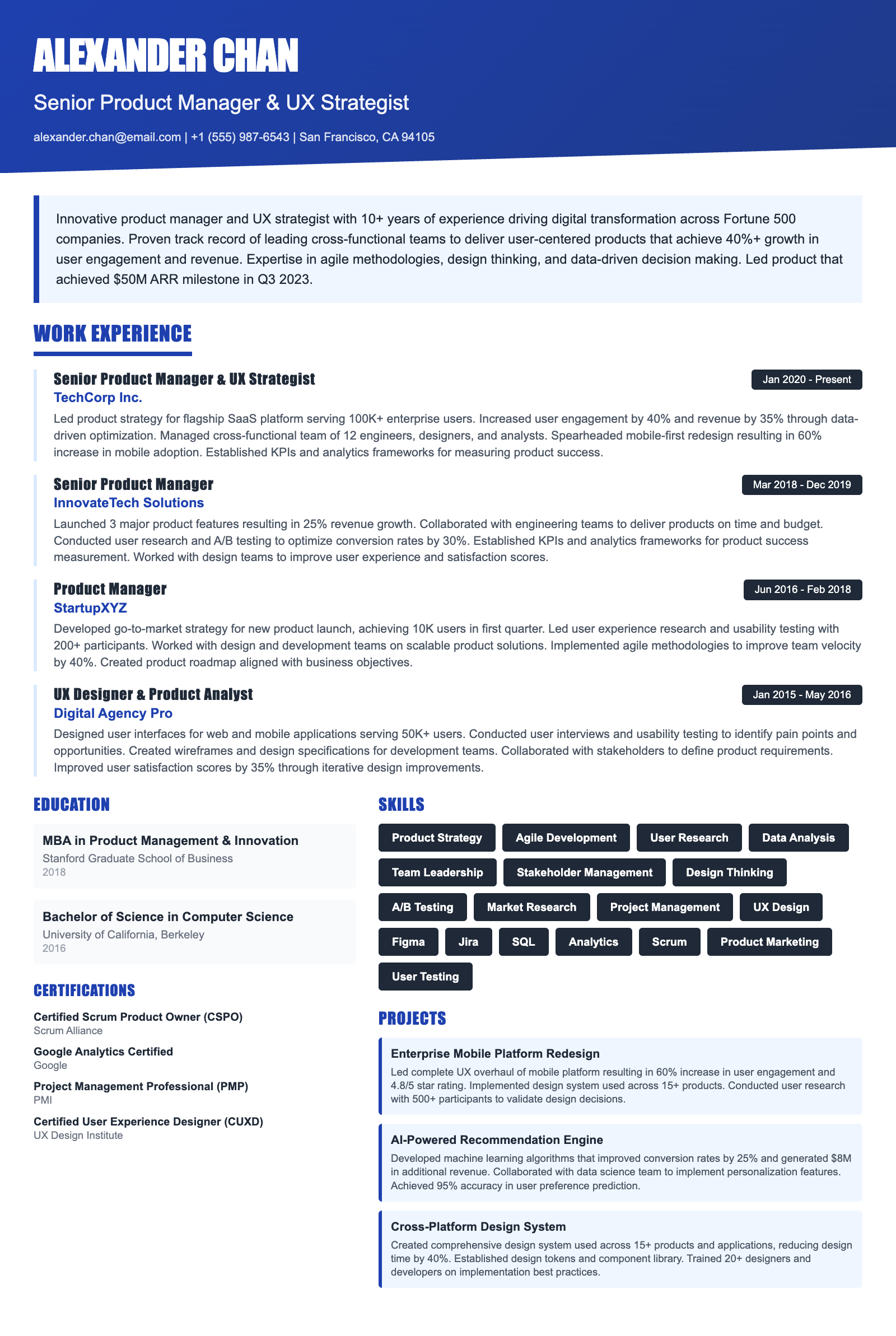
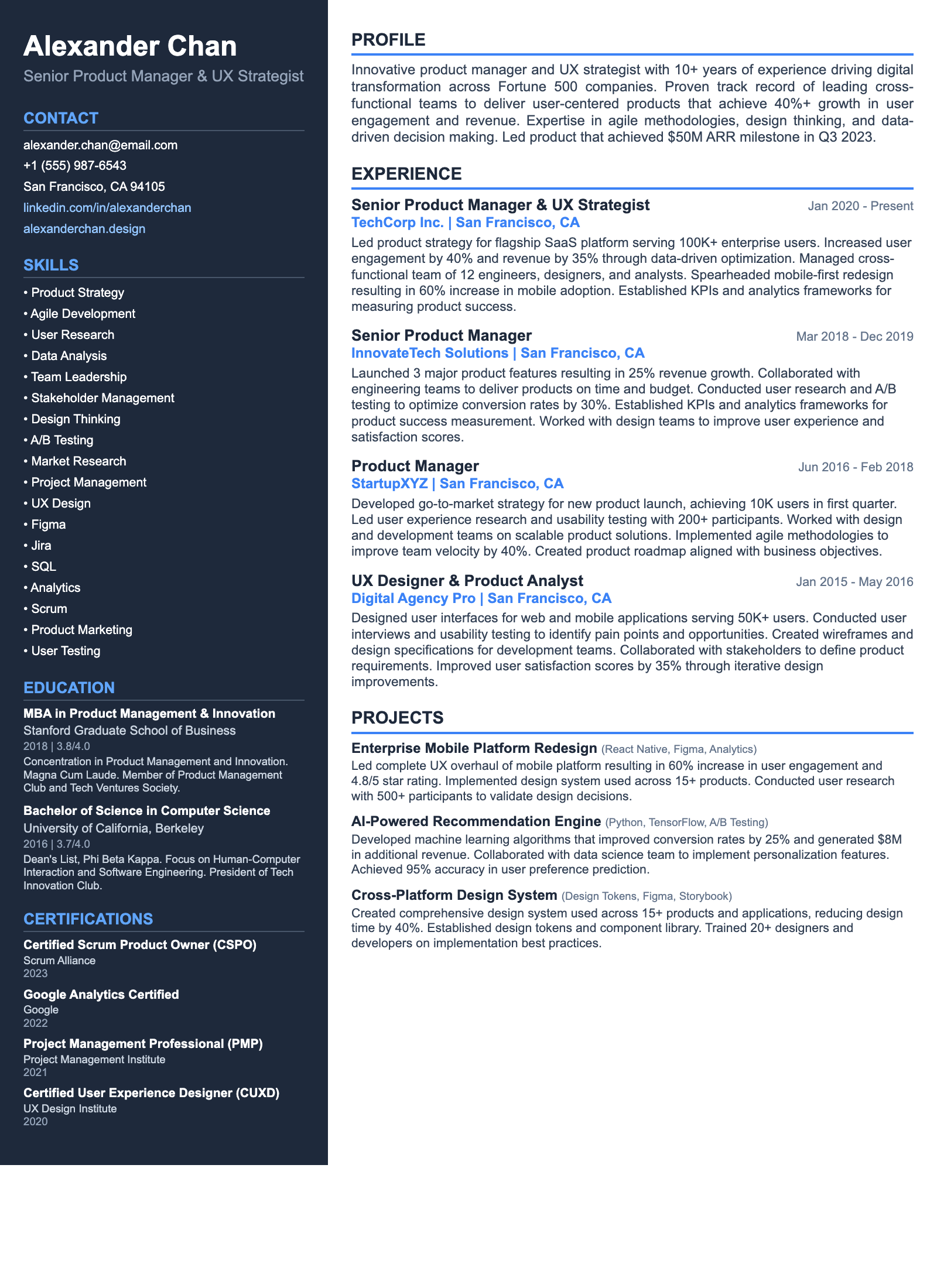
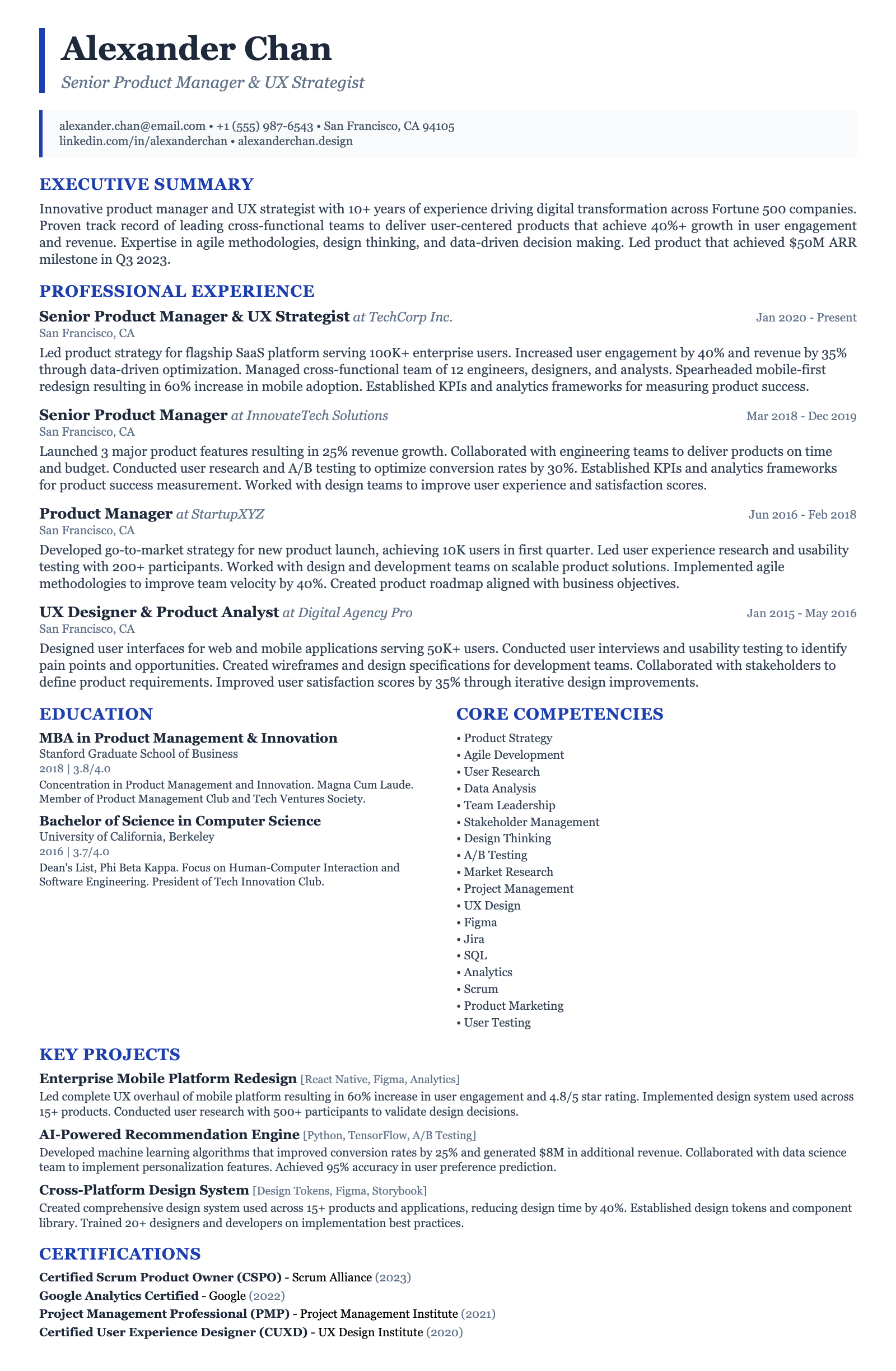
ATS-friendly templates designed specifically for Junior Construction Accountant positions in the US market.
Frequently Asked Questions

How long should my Junior Construction Accountant resume be?

Ideally, your resume should be one page long, especially if you have less than five years of experience. Focus on the most relevant skills and experiences that align with the job description. Use concise language and avoid unnecessary details. If you have extensive experience (e.g., internships), you can stretch to two pages, but prioritize the most impactful information. Highlight your proficiency with construction-specific accounting software such as Sage, Viewpoint, or Foundation.

What key skills should I emphasize on my resume?

Highlight skills directly related to construction accounting, such as job costing, project accounting, budget management, variance analysis, and accounts payable/receivable within the construction industry. Mention your proficiency in industry-standard software like QuickBooks Contractor, Sage 100 Contractor, or Viewpoint Spectrum. Also, showcase your analytical abilities, attention to detail, and communication skills, as you'll be working with project managers and other stakeholders. Don't forget to include skills related to AIA billing and lien waivers.

How can I optimize my resume for Applicant Tracking Systems (ATS)?

Use a clean, ATS-friendly format with clear headings and bullet points. Avoid tables, images, and unusual fonts, as these can confuse the ATS. Incorporate keywords from the job description throughout your resume, particularly in the skills and experience sections. Save your resume as a PDF to preserve formatting. Make sure your contact information is easily readable. Focus on skills like GAAP compliance and experience with specific accounting principles related to construction projects.

Are certifications important for a Junior Construction Accountant resume?

While not always required, certifications can enhance your resume and demonstrate your commitment to professional development. Consider pursuing certifications like Certified Construction Industry Financial Professional (CCIFP) or becoming a CPA candidate. Even relevant coursework in construction accounting can be beneficial. Mention any certifications or relevant coursework prominently in your education section. Familiarity with SOX compliance is also beneficial.

What are some common resume mistakes Junior Construction Accountant candidates make?

One common mistake is using generic accounting language instead of construction-specific terms. Avoid vague descriptions of your responsibilities; instead, quantify your achievements and highlight your contributions to specific construction projects. Failing to tailor your resume to each job posting is another mistake. Also, neglecting to mention your experience with relevant software like Procore or Textura can be detrimental. Always proofread carefully for errors.

How can I transition into construction accounting if I have general accounting experience?

Highlight any transferable skills you possess, such as budgeting, financial analysis, and reconciliation. Emphasize your willingness to learn the specific nuances of construction accounting. Consider taking online courses or workshops on construction accounting principles. Network with professionals in the construction industry and seek out entry-level positions or internships. Showcase your understanding of GAAP and any experience with project-based accounting. Highlight any experience you have with AIA billing or lien waivers, even if it's limited.

Ready to Build Your Junior Construction Accountant Resume?

Use our AI-powered resume builder to create an ATS-optimized resume tailored for Junior Construction Accountant positions in the US market.

Complete Junior Construction Accountant Career Toolkit

Everything you need for your Junior Construction Accountant job search — all in one platform.

Why choose ResumeGyani over Zety or Resume.io?

The only platform with AI mock interviews + resume builder + job search + career coaching — all in one.

See comparison

Last updated: March 2026 · Content reviewed by certified resume writers · Optimized for US job market