
ATS-Optimized for US Market

Junior Education Product Manager Career & Resume Guide

Crafting a compelling resume as a Junior Education Product Manager means showcasing your potential to shape the future of learning. Hiring managers seek candidates who understand educational technology trends, possess strong analytical skills, and can effectively contribute to product development cycles. Your resume should immediately highlight your ability to translate educational needs into actionable product features. Start with a concise summary emphasizing your passion for education and product innovation. Quantify your achievements whenever possible. For instance, mention specific projects where you contributed to increased user engagement or improved learning outcomes. A dedicated 'Skills' section should feature keywords like curriculum development, learning management systems (LMS), instructional design, A/B testing, user research, and Agile methodologies. Detail your experience with industry-standard tools like Jira, Asana, Google Analytics, and user testing platforms. In your work experience, demonstrate your ability to collaborate with cross-functional teams (developers, designers, educators) and your capacity to adapt to evolving project requirements. Showcase your understanding of educational standards (e.g., Common Core) and your ability to conduct market research to identify unmet needs. To stand out, highlight any experience with accessibility standards (WCAG) or personalized learning platforms. Include any relevant certifications, such as Certified Scrum Product Owner (CSPO), and a portfolio showcasing your contributions to education products. Tailor your resume to each specific job description, emphasizing the skills and experiences that align with the employer's needs. Remember to proofread meticulously to ensure clarity and accuracy. Finally, quantify any positive impact you made and use precise language to communicate your expertise.
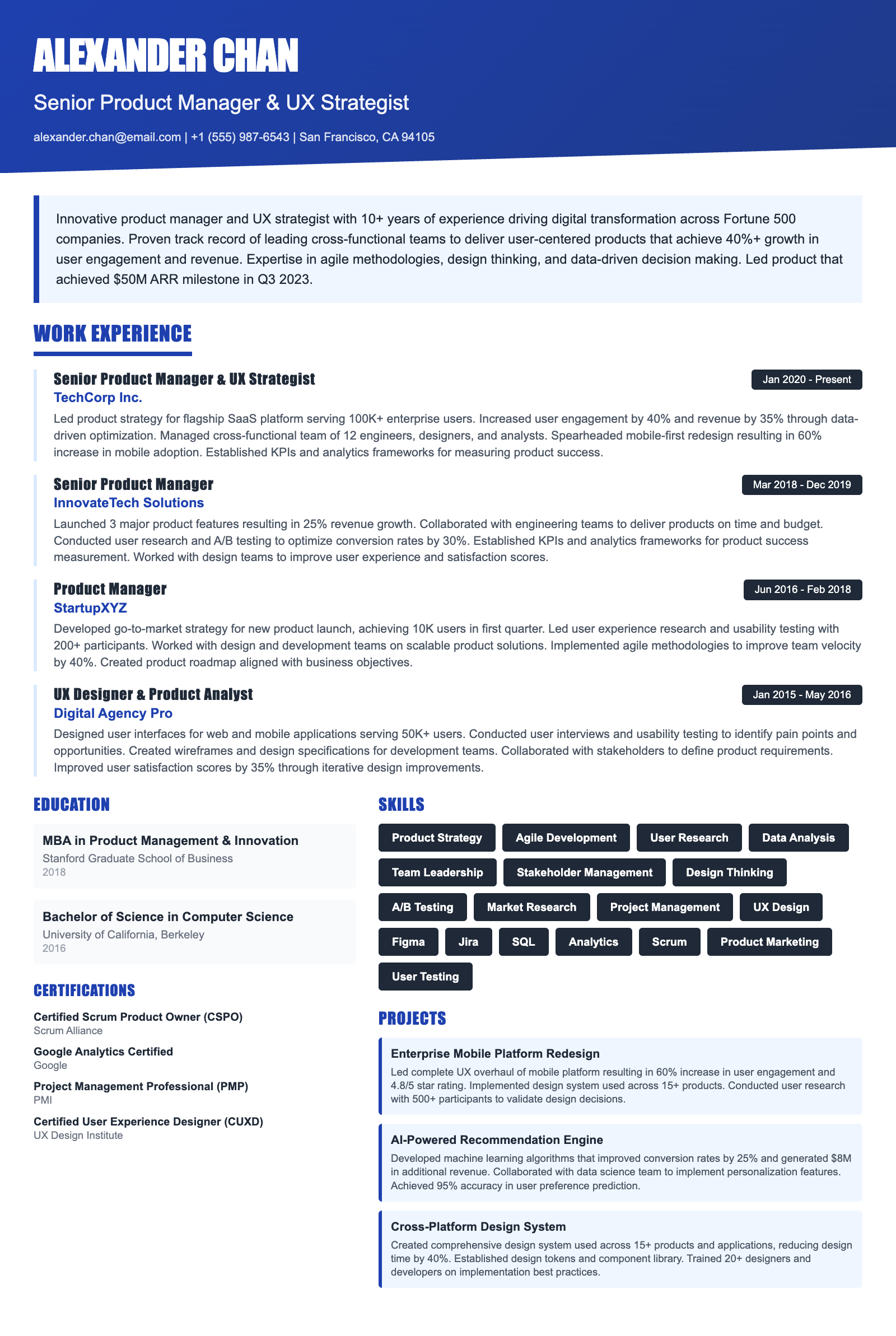
Average US Salary: $50k - $85k

Expert Tip: For Junior Education Product Manager positions in the US, recruiters increasingly look for technical execution and adaptability over simple job duties. This guide is tailored to highlight these specific traits to ensure your resume stands out in the competitive Junior Education Product Manager sector.

What US Hiring Managers Look For in a Junior Education Product Manager Resume

When reviewing Junior Education Product Manager candidates, recruiters and hiring managers in the US focus on a few critical areas. Making these elements clear and easy to find on your resume will improve your chances of moving to the interview stage.

  • Relevant experience and impact in Junior Education Product Manager or closely related roles.
  • Clear, measurable achievements (metrics, scope, outcomes) rather than duties.
  • Skills and keywords that match the job description and ATS requirements.
  • Professional formatting and no spelling or grammar errors.
  • Consistency between your resume, LinkedIn, and application.
  • Proficiency in key areas such as Communication, Time Management, Industry-Standard Tools.

Essential Skills for Junior Education Product Manager

Include these keywords in your resume to pass ATS screening and impress recruiters.

Must-Have Skills

  • CriticalCommunication
  • HighTime Management

Technical Skills

  • HighIndustry-Standard Tools
  • MediumData Analysis

Soft Skills

  • CriticalTeamwork
  • HighAdaptability
  • MediumLeadership

A Day in the Life

A Day in the Life of a Junior Product Manager

Your morning starts at 9 AM by checking emails and reviewing yesterday's tasks. As an Junior Product Manager in Education, you spend the first hour in daily stand-ups, syncing with your team on defining product roadmaps, coordinating between engineering and design, and analyzing user feedback. From 10 AM to 1 PM, you focus on execution. In Education, this involves learning standard operating procedures and applying your Product Manager skills to real-world problems. Post-lunch (1-5 PM) is for deep work and collaboration. You might attend workshops or pair with senior members to understand the nuances of defining product roadmaps, coordinating between engineering and design, and analyzing user feedback within the company. Wrap up by 5:30 PM, documenting your progress. Education professionals at this level prioritize learning and consistency to build a strong career foundation.

Career Progression Path

Level 1

Product Manager I (Entry Level)

Level 2

Product Manager II (Junior)

Level 3

Senior Product Manager

Level 4

Lead Product Manager

Level 5

Product Manager Manager / Director

Interview Questions & Answers

Prepare for your Junior Education Product Manager interview with these commonly asked questions.

Describe a time you had to make a difficult decision regarding a product feature. What factors did you consider, and what was the outcome?

Medium
Behavioral
Sample Answer
In a previous project involving a new online learning module, data showed low completion rates for video lectures. We had to decide whether to shorten the videos or add interactive elements. I analyzed user feedback, consulted with instructional designers, and ultimately recommended adding interactive quizzes within the videos. This increased completion rates by 20% and improved user engagement, demonstrating the importance of data-driven decision-making and collaboration.

How would you approach prioritizing features for a new educational app designed to help students with math skills?

Medium
Situational
Sample Answer
I would begin by conducting thorough user research, gathering insights from students, teachers, and parents to understand their needs and pain points. Next, I'd analyze market trends and competitor offerings. Using a framework like the MoSCoW method (Must have, Should have, Could have, Won't have), I'd prioritize features based on their impact on learning outcomes, feasibility, and alignment with the app's overall strategy. I'd also create a product roadmap to guide the development process.

Explain your understanding of Agile methodologies and how you would apply them to developing an educational product.

Medium
Technical
Sample Answer
Agile methodologies, such as Scrum, emphasize iterative development, collaboration, and continuous improvement. In developing an educational product, I would use Agile to break down the project into smaller sprints, allowing for regular feedback from stakeholders. Daily stand-up meetings would ensure clear communication and quick problem-solving. Sprint reviews would provide opportunities to demonstrate progress and gather feedback, enabling us to adapt the product to meet evolving user needs and deliver value incrementally. Tools like Jira or Asana would be essential for project management.

Tell me about a time you had to work with a difficult stakeholder. How did you handle the situation?

Medium
Behavioral
Sample Answer
In a previous project, I worked with a subject matter expert who was resistant to incorporating new technology into the curriculum. I took the time to understand their concerns, actively listened to their feedback, and presented data demonstrating the potential benefits of the technology. I also involved them in the decision-making process, making them feel valued and heard. Eventually, they became an advocate for the new technology, demonstrating the power of empathy and collaboration.

Describe your experience with data analysis and how you would use it to improve an educational product.

Medium
Technical
Sample Answer
I have experience using tools like Google Analytics and Excel to analyze user data and identify areas for improvement. For example, in a recent project, I analyzed user behavior within an online learning platform and discovered that many students were struggling with a particular module. Based on this data, we redesigned the module with clearer instructions and more interactive elements, resulting in a significant improvement in student performance. Data-driven insights are crucial for making informed product decisions.

How do you stay up-to-date with the latest trends and technologies in the education sector?

Easy
Behavioral
Sample Answer
I actively follow industry publications like EdSurge and Education Week. I also attend webinars and conferences focused on educational technology and innovation. I am a member of professional organizations like ISTE (International Society for Technology in Education) and regularly participate in online communities and forums to engage with other professionals and learn about new developments. I am also experimenting with AI tools to understand how they can be incorporated into learning.

ATS Optimization Tips

Make sure your resume passes Applicant Tracking Systems used by US employers.

Incorporate keywords directly from the job description, specifically related to education, product management, and required tools, such as "curriculum development", "LMS administration", and "Agile methodologies".
Use standard section headings like "Skills", "Experience", "Education", and "Projects" to help the ATS correctly parse your resume.
Format your resume with a simple, clean layout, avoiding tables, images, and unusual fonts that can confuse the ATS parser.
Save your resume as a .docx or .pdf file, as these formats are generally well-supported by ATS systems.
Quantify your achievements whenever possible, using numbers and metrics to demonstrate the impact of your work, which helps the ATS recognize tangible results.
Include a dedicated skills section that lists both hard and soft skills relevant to the Junior Education Product Manager role.
Tailor your resume to each specific job application, adjusting the keywords and skills to match the requirements outlined in the job description.
Ensure your contact information is clearly visible and easily parsed by the ATS.

Common Resume Mistakes to Avoid

Don't make these errors that get resumes rejected.

1
Failing to highlight specific experience with education technology or learning management systems (LMS) – make sure to mention any experience with platforms like Canvas, Blackboard, or Moodle.
2
Not quantifying accomplishments – instead of saying "Improved user engagement," say "Increased user engagement by 15% through targeted feature enhancements."
3
Using generic product management language without relating it to the education context – focus on how your product management skills directly impact learning outcomes.
4
Neglecting to mention experience with user research or A/B testing in an educational setting – demonstrate your ability to gather and analyze data to improve product effectiveness.
5
Omitting relevant educational certifications or coursework – include any certifications in instructional design, curriculum development, or educational technology.
6
Not tailoring the resume to the specific job description – each application should be customized to highlight the most relevant skills and experiences.
7
Overlooking accessibility standards (WCAG) – highlight any experience with ensuring products are accessible to users with disabilities.
8
Not showcasing experience collaborating with educators or subject matter experts – demonstrate your ability to work effectively with diverse stakeholders in the education sector.

Industry Outlook

The US Education sector is experiencing steady growth. Junior Product Managers are particularly sought after, with the Bureau of Labor Statistics projecting average job growth through 2030. Peak hiring occurs in Q1 (January-March) and Q3 (August-September).

Top Hiring Companies

Industry LeadersRegional FirmsFast-Growing Companies

Recommended Resume Templates

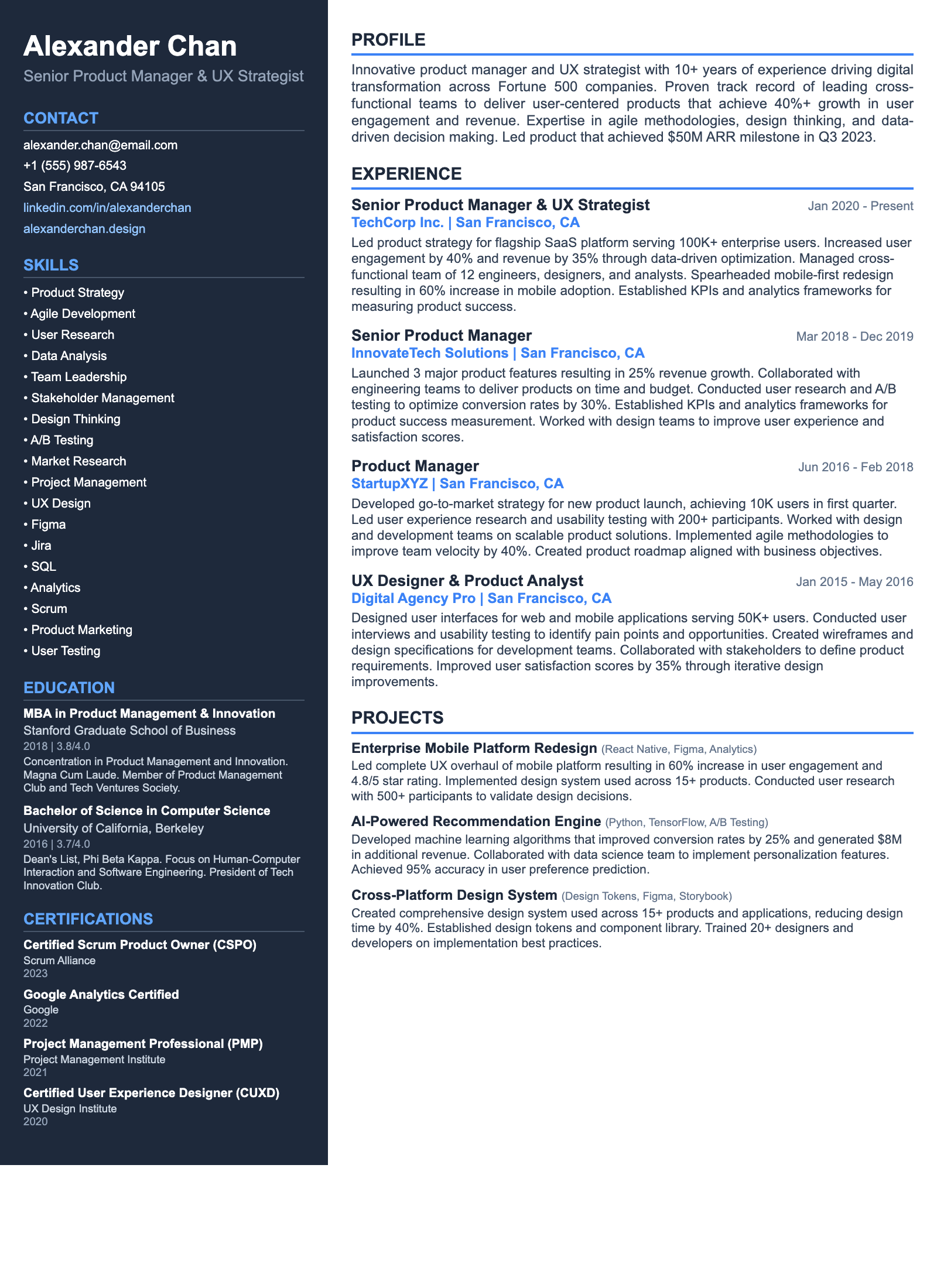
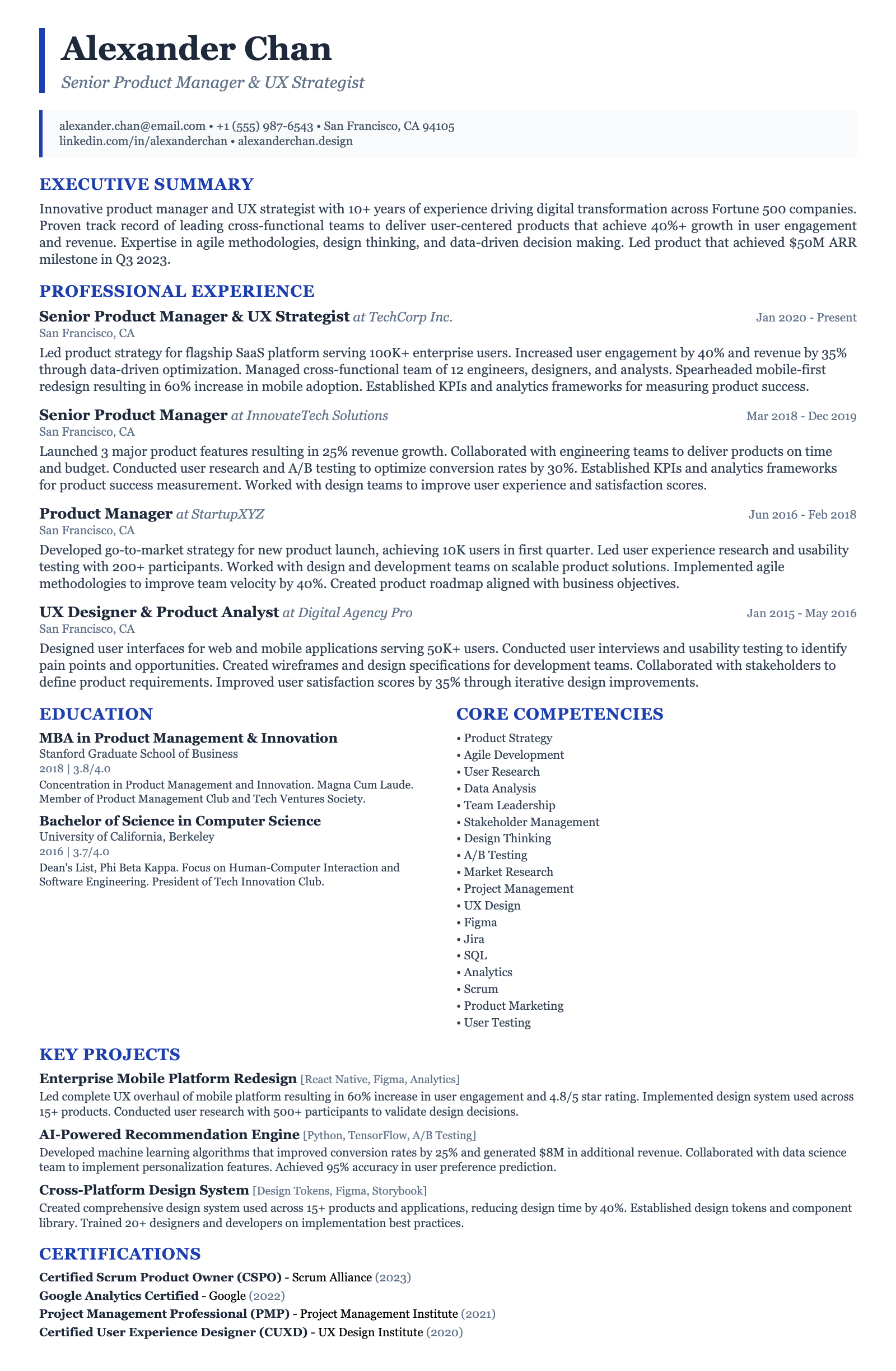
ATS-friendly templates designed specifically for Junior Education Product Manager positions in the US market.
Frequently Asked Questions

How long should my resume be as a Junior Education Product Manager?

Ideally, your resume should be one page, especially with limited experience. Focus on showcasing your most relevant skills and accomplishments concisely. Prioritize your education, product management experience (even if internship-based), and key skills like curriculum development, LMS familiarity, and data analysis using tools such as Google Analytics. Keep each section focused and avoid unnecessary details.

What are the most important skills to highlight on my resume?

Beyond general product management skills, emphasize your understanding of the education sector. This includes skills in curriculum design, knowledge of learning management systems (LMS) like Canvas or Blackboard, experience with instructional design principles, and proficiency in data analysis using tools like Google Analytics and Excel to measure learning outcomes. Highlight your communication and teamwork abilities to collaborate with educators, developers, and designers.

How can I optimize my resume for Applicant Tracking Systems (ATS)?

Use a clean, ATS-friendly format (avoid tables, images, and unusual fonts). Incorporate keywords from the job description, such as 'Agile', 'Scrum', 'LMS', 'instructional design', and the names of specific tools like 'Jira' and 'Asana'. Ensure your sections are clearly labeled (e.g., 'Skills', 'Experience', 'Education'). Submit your resume as a .doc or .pdf file, as specified in the job posting.

Are certifications valuable for a Junior Education Product Manager role?

Yes, certifications can enhance your resume. Consider certifications like Certified Scrum Product Owner (CSPO) or Certified Product Manager (CPM). Also, any certifications related to educational technology or instructional design can be beneficial. Highlight these certifications near the top of your resume to grab the hiring manager's attention. Specific certifications for tools commonly used, such as Google Analytics, are valuable as well.

What are some common resume mistakes to avoid?

Avoid generic resumes that don't highlight your education-specific skills. Don't neglect to quantify your accomplishments or provide concrete examples of your contributions. Avoid using overly technical jargon without explaining its relevance to the education context. Ensure you proofread carefully for typos and grammatical errors. Don't exaggerate your experience, as this can be easily uncovered during the interview process.

How can I highlight a career transition into education product management?

If transitioning from a different field, emphasize transferable skills such as project management, data analysis, communication, and problem-solving. Highlight any volunteer experience or side projects related to education. Frame your previous experience in a way that demonstrates its relevance to the education product management role. Consider taking online courses or certifications in educational technology to demonstrate your commitment to the field. For example, if you used data analysis in a prior role, emphasize how you can apply those skills to improving learning outcomes through product optimization.

Ready to Build Your Junior Education Product Manager Resume?

Use our AI-powered resume builder to create an ATS-optimized resume tailored for Junior Education Product Manager positions in the US market.

Complete Junior Education Product Manager Career Toolkit

Everything you need for your Junior Education Product Manager job search — all in one platform.

Why choose ResumeGyani over Zety or Resume.io?

The only platform with AI mock interviews + resume builder + job search + career coaching — all in one.

See comparison

Last updated: March 2026 · Content reviewed by certified resume writers · Optimized for US job market

Junior Education Product Manager Resume Guide (2026) | ATS-Optimized Template