
ATS-Optimized for US Market

Lead Hospitality Chef Career & Resume Guide

As a Lead Hospitality Chef, your resume needs to showcase your culinary expertise, leadership abilities, and operational management skills to potential employers. Hiring managers seek candidates who can not only create exceptional dining experiences but also efficiently manage kitchen staff, control costs, and maintain high standards of hygiene and safety. Your resume should prominently feature a professional summary highlighting your years of experience, culinary specializations (e.g., French, Italian, Asian), and key accomplishments, such as menu development, cost reduction, and staff training. Emphasize your proficiency with industry-standard tools like food inventory management software (e.g., ChefTec, FoodLogiQ), point-of-sale (POS) systems, and kitchen equipment. Quantify your achievements whenever possible, using metrics to demonstrate your impact on revenue, efficiency, and customer satisfaction. Include sections detailing your culinary education, certifications (e.g., Certified Executive Chef - CEC), and relevant experience, outlining your responsibilities and accomplishments in each role. To stand out, tailor your resume to each specific job description, incorporating keywords and phrases used in the posting. Showcase your ability to analyze data related to food costs, sales trends, and customer preferences to optimize menu offerings and improve profitability. Demonstrate your leadership skills through examples of team management, conflict resolution, and employee development. Highlight your adaptability by mentioning experience with various culinary styles, dietary restrictions, and catering events. Finally, ensure your resume is visually appealing, well-organized, and free of errors to make a strong impression on potential employers.
Average US Salary: $100k - $160k

Expert Tip: For Lead Hospitality Chef positions in the US, recruiters increasingly look for technical execution and adaptability over simple job duties. This guide is tailored to highlight these specific traits to ensure your resume stands out in the competitive Lead Hospitality Chef sector.

What US Hiring Managers Look For in a Lead Hospitality Chef Resume

When reviewing Lead Hospitality Chef candidates, recruiters and hiring managers in the US focus on a few critical areas. Making these elements clear and easy to find on your resume will improve your chances of moving to the interview stage.

  • Relevant experience and impact in Lead Hospitality Chef or closely related roles.
  • Clear, measurable achievements (metrics, scope, outcomes) rather than duties.
  • Skills and keywords that match the job description and ATS requirements.
  • Professional formatting and no spelling or grammar errors.
  • Consistency between your resume, LinkedIn, and application.
  • Proficiency in key areas such as Communication, Time Management, Industry-Standard Tools.

Essential Skills for Lead Hospitality Chef

Include these keywords in your resume to pass ATS screening and impress recruiters.

Must-Have Skills

  • CriticalCommunication
  • HighTime Management

Technical Skills

  • HighIndustry-Standard Tools
  • MediumData Analysis

Soft Skills

  • CriticalTeamwork
  • HighAdaptability
  • CriticalLeadership

A Day in the Life

A Day in the Life of a Lead Chef

Arrive early to review metrics or sprint progress. As a Lead Chef, you lead the 9 AM stand-up, addressing blockers and setting the strategic direction for handling core responsibilities, collaborating with cross-functional teams, and driving project success within the Hospitality team. 10 AM-1 PM is for high-impact decisions. You're architecting solutions, reviewing critical deliverables, or negotiating priorities with Hospitality stakeholders. Afternoons involve mentorship and cross-org coordination. You're the go-to expert for handling core responsibilities, collaborating with cross-functional teams, and driving project success, ensuring the team's output aligns with company goals. You finish by finalizing quarterly roadmaps or reviewing next steps. At this level in Hospitality, your focus shifts from individual tasks to organizational impact.

Career Progression Path

Level 1

Chef I (Entry Level)

Level 2

Chef II (Junior)

Level 3

Senior Chef

Level 4

Lead Chef

Level 5

Chef Manager / Director

Interview Questions & Answers

Prepare for your Lead Hospitality Chef interview with these commonly asked questions.

Describe a time you had to resolve a conflict between kitchen staff. What steps did you take?

Medium
Behavioral
Sample Answer
In my previous role at [Restaurant Name], I mediated a dispute between two sous chefs regarding kitchen station responsibilities during a busy banquet event. I first listened to each chef's perspective, identifying the root cause of the disagreement. Then, I facilitated a collaborative discussion to redefine roles and responsibilities, ensuring a fair and efficient workflow. I emphasized the importance of teamwork and mutual respect, ultimately resolving the conflict and ensuring a successful event. This experience highlighted the value of proactive communication and equitable distribution of tasks.

How do you approach menu development and pricing to maximize profitability?

Medium
Technical
Sample Answer
My approach to menu development involves analyzing food costs, market trends, and customer preferences. I use tools like ChefTec to track ingredient prices and calculate food costs accurately. I also conduct market research to identify popular dishes and emerging culinary trends. I then develop menus that balance profitability with customer satisfaction, using strategic pricing techniques to maximize revenue. For instance, I might use menu engineering principles to highlight high-margin items and strategically price dishes based on perceived value and competition.

Tell me about a time you had to quickly adapt to a sudden change in service demands or a significant ingredient shortage.

Medium
Situational
Sample Answer
Once, during a major catering event at [Hotel Name], our supplier informed us of a last-minute shortage of a key ingredient for our signature dessert. With limited time, I quickly assessed available alternatives and collaborated with my pastry team to reformulate the recipe. We successfully substituted the missing ingredient with a locally sourced alternative, maintaining the dessert's quality and flavor profile. This experience taught me the importance of remaining calm under pressure, thinking creatively, and working collaboratively to overcome unexpected challenges.

How do you ensure consistent food quality and adherence to recipes in a high-volume kitchen environment?

Medium
Technical
Sample Answer
Maintaining consistency in a high-volume kitchen requires clear communication, standardized recipes, and rigorous quality control. I implement detailed recipe cards with precise measurements and instructions. I also conduct regular training sessions to ensure all kitchen staff understand and follow the recipes correctly. I implement tasting protocols at different stages of preparation to ensure consistent flavor profiles. Additionally, I emphasize the importance of using calibrated equipment and accurate measuring tools to minimize variations. Regular spot checks and constructive feedback further reinforce quality standards.

Describe your experience with managing and training kitchen staff, including handling performance issues.

Medium
Behavioral
Sample Answer
I believe in fostering a positive and supportive work environment where kitchen staff feel empowered to learn and grow. I conduct regular training sessions on various culinary techniques, food safety protocols, and kitchen equipment operation. When addressing performance issues, I first provide constructive feedback and coaching to help employees improve. If necessary, I implement performance improvement plans with clear goals and timelines. I also believe in recognizing and rewarding exceptional performance to motivate and retain talented staff. Documented performance evaluations are essential for compliance and fair treatment.

How do you stay updated with the latest culinary trends and techniques in the hospitality industry?

Easy
Behavioral
Sample Answer
I am committed to continuous learning and professional development. I regularly read industry publications such as Food Arts, Restaurant Business, and Plate Magazine. I also attend culinary conferences, workshops, and trade shows to learn about new ingredients, techniques, and equipment. I actively participate in online forums and communities to exchange ideas and best practices with other chefs. Furthermore, I experiment with new recipes and techniques in my own kitchen to stay ahead of the curve and offer innovative menu options. Attending ACF events is also a great resource.

ATS Optimization Tips

Make sure your resume passes Applicant Tracking Systems used by US employers.

Incorporate industry-specific keywords like 'menu engineering', 'food cost analysis', 'HACCP compliance', and 'kitchen management' throughout your resume, aligning with job description requirements.
Use a chronological or combination resume format, as ATS systems generally parse these formats most accurately, ensuring your experience is clearly presented.
Quantify your achievements with specific metrics, such as 'reduced food waste by 15%' or 'increased customer satisfaction scores by 20%', to demonstrate your impact.
Include a dedicated skills section that lists both hard skills (e.g., sauce preparation, pastry techniques) and soft skills (e.g., leadership, communication) relevant to the Lead Hospitality Chef role.
Use standard section headings like 'Summary', 'Experience', 'Skills', and 'Education' to help the ATS categorize your information correctly.
Format dates consistently using a standard format (e.g., MM/YYYY) to avoid parsing errors by the ATS; for example, use 01/2018-12/2022.
Save your resume as a .pdf file unless the job posting specifically requests a .doc or .docx file, as .pdf files preserve formatting across different systems.
Ensure your contact information is accurate and up-to-date, including your phone number, email address, and LinkedIn profile URL, for easy contact by recruiters.

Common Resume Mistakes to Avoid

Don't make these errors that get resumes rejected.

1
Failing to quantify achievements; instead of saying 'Managed kitchen staff', say 'Managed a team of 10 kitchen staff, improving efficiency by 15%'.
2
Using generic job descriptions instead of tailoring the resume to the specific role; customize your resume for each application to highlight the most relevant skills and experiences.
3
Omitting relevant certifications, such as ServSafe or Certified Executive Chef (CEC); include all relevant certifications and licenses.
4
Providing inaccurate or outdated information, especially regarding past employment dates or contact information; ensure all information is current and correct.
5
Focusing solely on responsibilities without highlighting accomplishments; emphasize how you exceeded expectations and contributed to the success of previous employers.
6
Neglecting to proofread the resume for typos and grammatical errors; even minor errors can detract from your professionalism.
7
Using a resume template that is not ATS-friendly; stick to simple, clean formatting with clear headings and bullet points.
8
Not including a professional summary or objective statement; a strong summary can capture the hiring manager's attention and highlight your key qualifications.

Industry Outlook

The US Hospitality sector is experiencing steady growth. Lead Chefs are particularly sought after, with the Bureau of Labor Statistics projecting average job growth through 2030. Peak hiring occurs in Q1 (January-March) and Q3 (August-September).

Top Hiring Companies

Industry LeadersRegional FirmsFast-Growing Companies

Recommended Resume Templates

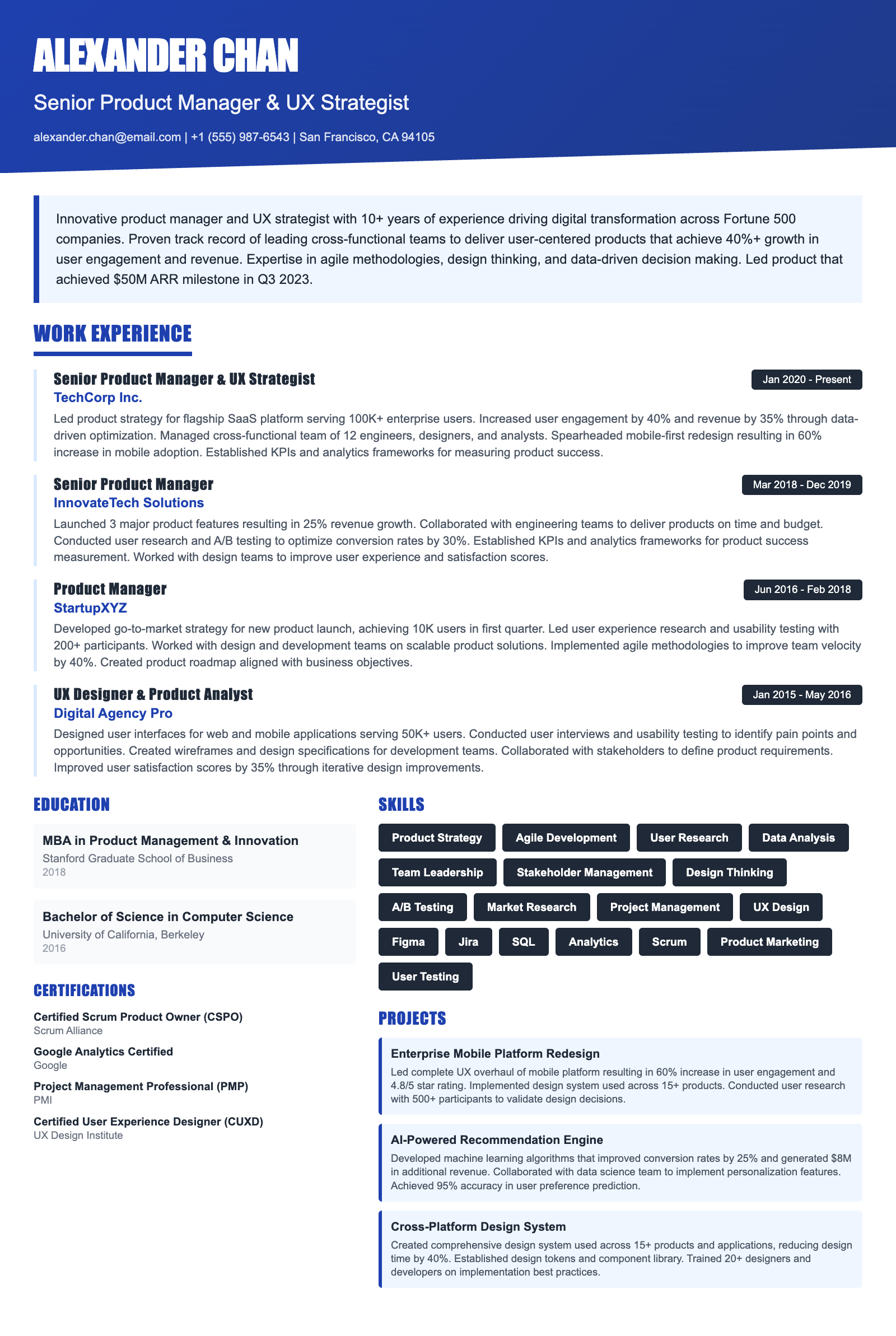
ATS-friendly templates designed specifically for Lead Hospitality Chef positions in the US market.
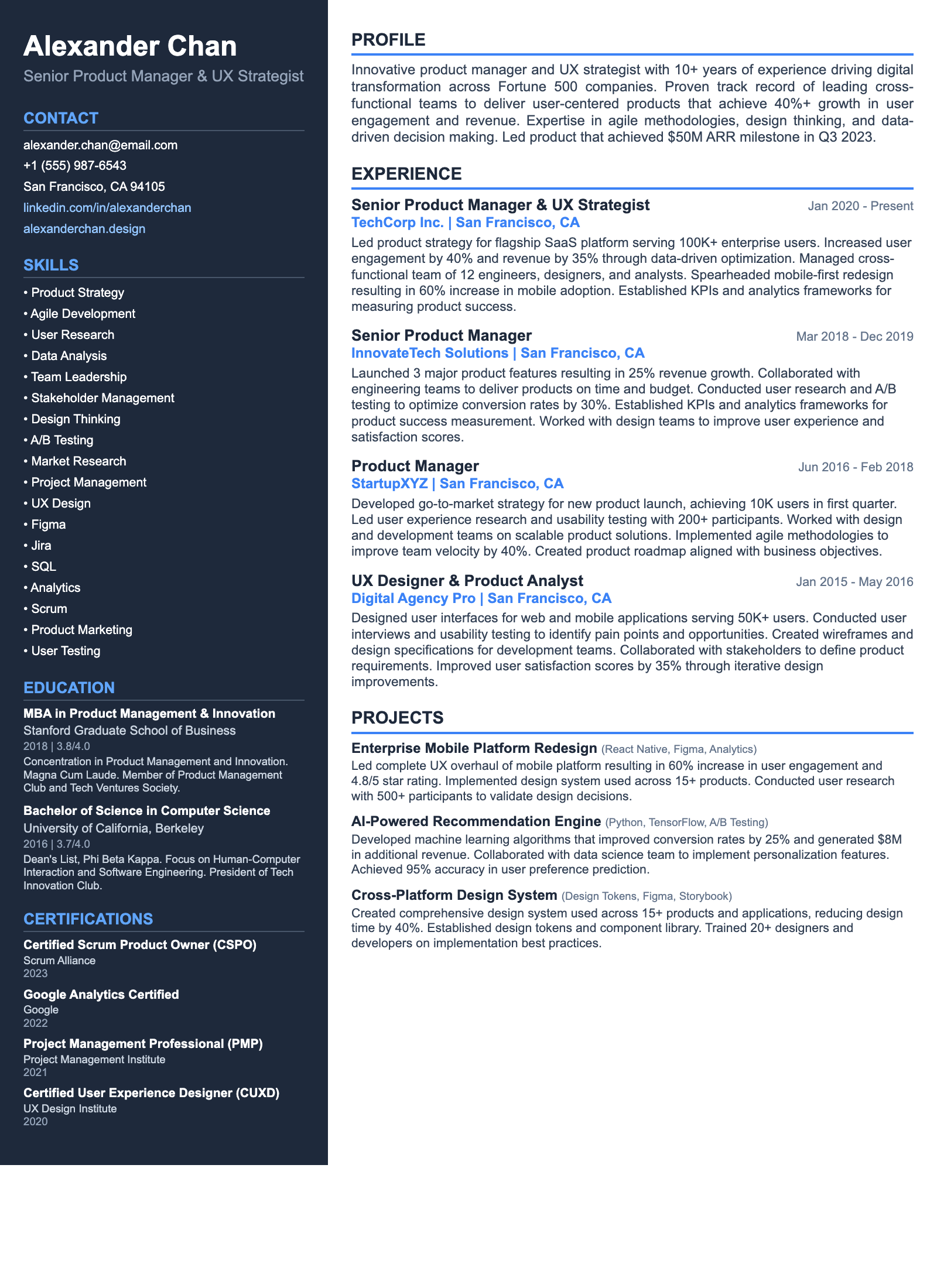
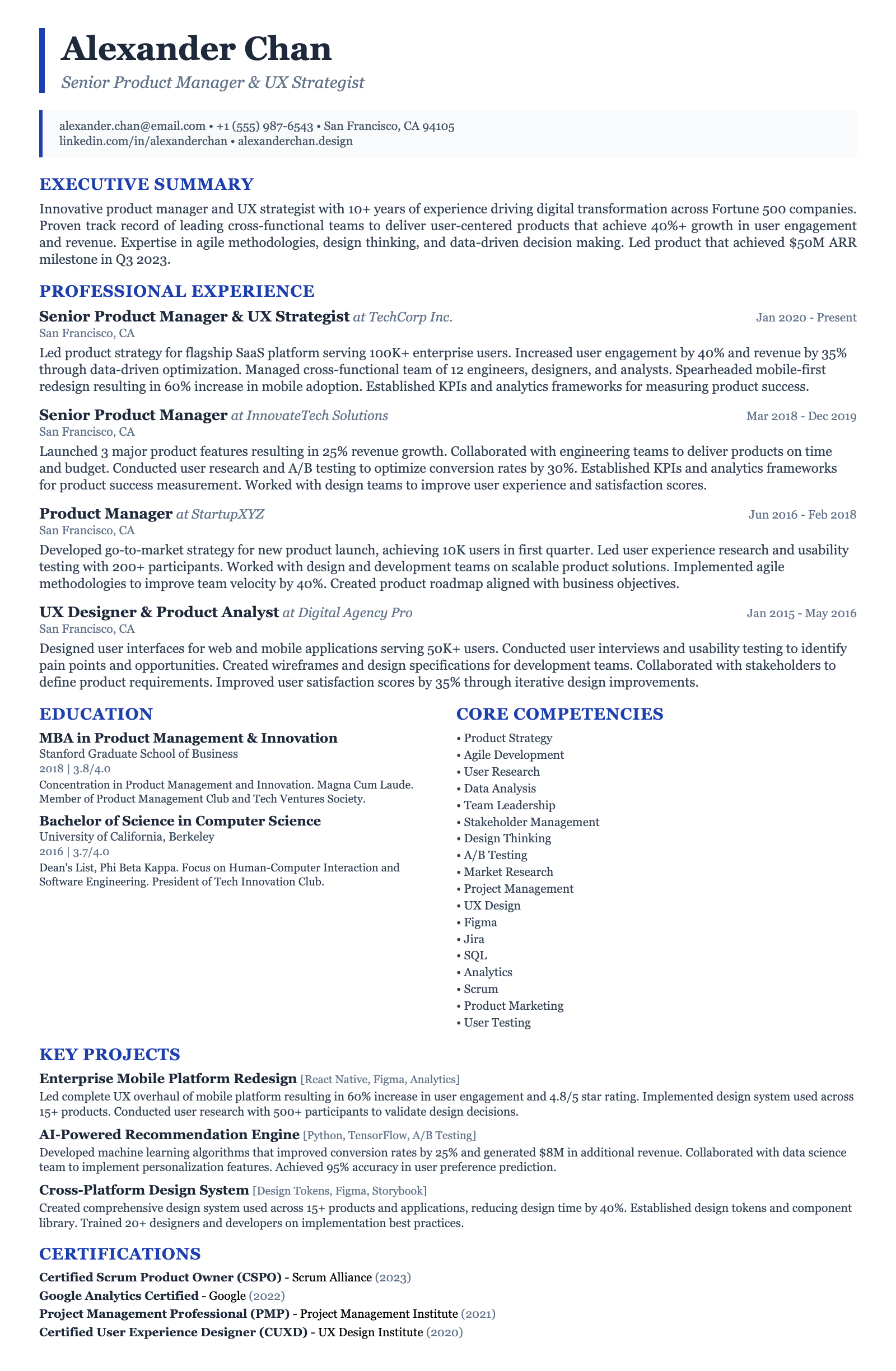
Frequently Asked Questions

What is the ideal length for a Lead Hospitality Chef resume?

Ideally, your Lead Hospitality Chef resume should be no more than two pages. Focus on showcasing your most relevant skills and experiences that align with the specific job description. Prioritize your accomplishments and quantifiable results over simply listing responsibilities. For example, instead of saying 'Managed kitchen staff,' say 'Managed a team of 15 kitchen staff, reducing labor costs by 10% through efficient scheduling using software like HotSchedules.'

What are the most important skills to highlight on a Lead Hospitality Chef resume?

The most important skills to highlight include culinary expertise in specific cuisines (e.g., French, Italian, Asian), menu development, cost control, inventory management (using systems like ChefTec), staff training and supervision, food safety and sanitation (HACCP certification), and leadership abilities. Also showcase soft skills like communication, teamwork, and problem-solving. Quantify your achievements wherever possible; for example, 'Increased guest satisfaction scores by 15% through menu enhancements.'

How can I optimize my resume for Applicant Tracking Systems (ATS)?

To optimize your resume for ATS, use keywords and phrases directly from the job description. Format your resume with clear headings and bullet points. Avoid using tables, images, or unusual fonts that may not be readable by ATS. Save your resume as a .doc or .pdf file, as specified in the application instructions. Ensure your resume is free of typos and grammatical errors, as these can negatively impact ATS parsing. Mention certifications like Certified Executive Chef (CEC) using the full name and abbreviation.

What certifications are most valuable for a Lead Hospitality Chef and how should I present them?

Valuable certifications include Certified Executive Chef (CEC), Certified Chef de Cuisine (CCC), ServSafe Manager Certification, and HACCP (Hazard Analysis and Critical Control Points) certification. List these certifications prominently in a dedicated section, including the issuing organization and the date of expiration (if applicable). For example, 'Certified Executive Chef (CEC), American Culinary Federation (ACF), Valid through 2025.'

What are some common resume mistakes that Lead Hospitality Chef candidates should avoid?

Common mistakes include failing to quantify achievements, using generic language instead of specific examples, not tailoring the resume to the specific job description, omitting relevant certifications (like ServSafe), and providing inaccurate or outdated information. Avoid focusing solely on responsibilities without highlighting accomplishments, such as 'Increased banquet sales by 20% through proactive menu planning and marketing initiatives.'

How should I address a career transition on my Lead Hospitality Chef resume?

If you are transitioning from a related field, highlight transferable skills such as leadership, management, inventory control, and customer service. For example, if you previously worked as a restaurant manager, emphasize your experience with budgeting, staff supervision, and customer relationship management. Consider including a brief explanation in your summary statement to contextualize your career change. Show your passion for culinary arts and your commitment to developing your skills in the kitchen.

Ready to Build Your Lead Hospitality Chef Resume?

Use our AI-powered resume builder to create an ATS-optimized resume tailored for Lead Hospitality Chef positions in the US market.

Complete Lead Hospitality Chef Career Toolkit

Everything you need for your Lead Hospitality Chef job search — all in one platform.

Why choose ResumeGyani over Zety or Resume.io?

The only platform with AI mock interviews + resume builder + job search + career coaching — all in one.

See comparison

Last updated: March 2026 · Content reviewed by certified resume writers · Optimized for US job market

Lead Hospitality Chef Resume Guide (2026) | ATS-Optimized Template