
ATS-Optimized for US Market

Lead Manufacturing Data Analyst Career & Resume Guide

As a Lead Manufacturing Data Analyst, your resume is your key to unlocking opportunities in a competitive field. Hiring managers seek candidates who can bridge the gap between raw data and actionable insights, driving process optimization and efficiency in manufacturing environments. A standout resume highlights your proficiency in data analysis, statistical modeling, and industry-standard tools like SQL, Python (with libraries such as Pandas and NumPy), and visualization software such as Tableau or Power BI. Clearly demonstrate your ability to collect, cleanse, analyze, and interpret complex datasets to identify trends, anomalies, and areas for improvement in manufacturing processes. Structure your resume with clear sections: a compelling summary showcasing your leadership and analytical skills, a detailed skills section highlighting technical proficiencies, a quantifiable work experience section emphasizing achievements (e.g., reduced downtime by X%, improved yield by Y%), and an education section. Emphasize your experience in leading data-driven projects and collaborating with cross-functional teams. Highlight your understanding of manufacturing KPIs (Key Performance Indicators) such as OEE (Overall Equipment Effectiveness), yield, and cycle time, and how you've used data to impact these metrics. To stand out, quantify your achievements using numbers and metrics. Showcase your leadership experience by detailing projects where you mentored junior analysts or led data-driven initiatives. Demonstrate your understanding of lean manufacturing principles and how you've applied data analysis to support continuous improvement efforts. Finally, tailor your resume to each specific job description, using keywords from the posting and highlighting the skills and experiences most relevant to the role.
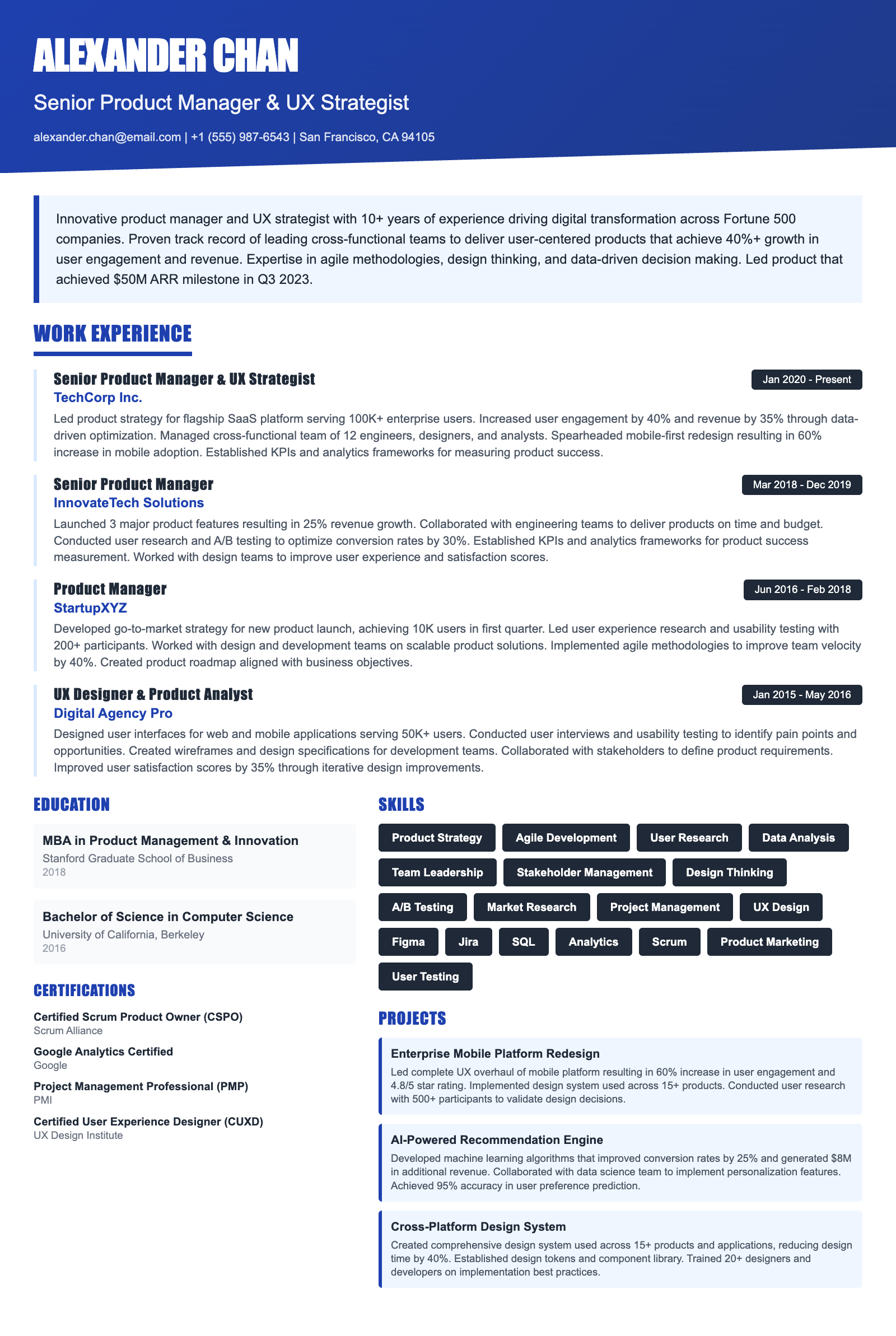
Average US Salary: $100k - $160k

Expert Tip: For Lead Manufacturing Data Analyst positions in the US, recruiters increasingly look for technical execution and adaptability over simple job duties. This guide is tailored to highlight these specific traits to ensure your resume stands out in the competitive Lead Manufacturing Data Analyst sector.

What US Hiring Managers Look For in a Lead Manufacturing Data Analyst Resume

When reviewing Lead Manufacturing Data Analyst candidates, recruiters and hiring managers in the US focus on a few critical areas. Making these elements clear and easy to find on your resume will improve your chances of moving to the interview stage.

  • Relevant experience and impact in Lead Manufacturing Data Analyst or closely related roles.
  • Clear, measurable achievements (metrics, scope, outcomes) rather than duties.
  • Skills and keywords that match the job description and ATS requirements.
  • Professional formatting and no spelling or grammar errors.
  • Consistency between your resume, LinkedIn, and application.
  • Proficiency in key areas such as Communication, Time Management, Industry-Standard Tools.

Essential Skills for Lead Manufacturing Data Analyst

Include these keywords in your resume to pass ATS screening and impress recruiters.

Must-Have Skills

  • CriticalCommunication
  • HighTime Management

Technical Skills

  • HighIndustry-Standard Tools
  • MediumData Analysis

Soft Skills

  • CriticalTeamwork
  • HighAdaptability
  • CriticalLeadership

A Day in the Life

A Day in the Life of a Lead Data Analyst

Arrive early to review metrics or sprint progress. As a Lead Data Analyst, you lead the 9 AM stand-up, addressing blockers and setting the strategic direction for writing SQL queries, cleaning messy datasets, and building interactive dashboards for stakeholders within the Manufacturing team. 10 AM-1 PM is for high-impact decisions. You're architecting solutions, reviewing critical deliverables, or negotiating priorities with Manufacturing stakeholders. Afternoons involve mentorship and cross-org coordination. You're the go-to expert for writing SQL queries, cleaning messy datasets, and building interactive dashboards for stakeholders, ensuring the team's output aligns with company goals. You finish by finalizing quarterly roadmaps or reviewing next steps. At this level in Manufacturing, your focus shifts from individual tasks to organizational impact.

Career Progression Path

Level 1

Data Analyst I (Entry Level)

Level 2

Data Analyst II (Junior)

Level 3

Senior Data Analyst

Level 4

Lead Data Analyst

Level 5

Data Analyst Manager / Director

Interview Questions & Answers

Prepare for your Lead Manufacturing Data Analyst interview with these commonly asked questions.

Describe a time when you used data analysis to identify and solve a problem in a manufacturing environment.

Medium
Behavioral
Sample Answer
In my previous role, we were experiencing a higher-than-normal defect rate on a specific product line. I used SQL to extract data from our MES system and then used Python (Pandas, NumPy) to perform statistical analysis. I identified a correlation between machine calibration drift and increased defects. I presented my findings to the engineering team, and we implemented a more frequent calibration schedule, reducing the defect rate by 22% within two months. This directly improved product quality and reduced waste.

Explain your experience with statistical process control (SPC) and how you have used it to improve manufacturing processes.

Medium
Technical
Sample Answer
I have extensive experience with SPC and have used it to monitor and control critical process parameters. In my previous role, I implemented SPC charts for monitoring temperature and pressure in a chemical reaction process. By analyzing the control charts, we were able to identify and address process variations before they led to out-of-spec product. This resulted in a 15% reduction in process variability and improved product consistency. I am familiar with various SPC techniques, including control charts, capability analysis, and process optimization methods.

How would you approach a situation where you need to analyze a large, complex dataset with limited documentation?

Hard
Situational
Sample Answer
First, I would begin with exploratory data analysis (EDA) using Python libraries like Pandas and Matplotlib to understand the data structure, identify missing values, and explore the distribution of variables. I would then collaborate with subject matter experts in manufacturing to gain context and understanding of the data. I would document my assumptions and interpretations clearly throughout the analysis process. If necessary, I would employ data cleaning and transformation techniques to prepare the data for further analysis. I'd prioritize understanding the data's integrity before drawing conclusions.

Tell me about a time you had to present complex data insights to a non-technical audience. How did you ensure they understood your findings?

Medium
Behavioral
Sample Answer
I once had to present findings on machine downtime to the plant manager, who had a limited technical background. I avoided using technical jargon and instead focused on the business impact of the downtime, translating the data into financial losses and production delays. I used clear and concise visuals created in Tableau, such as bar charts and trend lines, to illustrate the key findings. I also prepared a summary slide with key takeaways and actionable recommendations. This approach helped the plant manager understand the problem and make informed decisions.

Describe your experience with data visualization tools like Tableau or Power BI. How have you used these tools to communicate insights and drive decision-making?

Medium
Technical
Sample Answer
I have extensive experience with both Tableau and Power BI. In my previous role, I used Tableau to create interactive dashboards that provided real-time visibility into key manufacturing KPIs, such as OEE, yield, and cycle time. These dashboards were used by plant managers and engineers to identify bottlenecks, track performance, and make data-driven decisions. I am proficient in creating various types of visualizations, including bar charts, line charts, scatter plots, and maps, to effectively communicate insights to different audiences.

Imagine you are tasked with improving the accuracy of a predictive maintenance model. What steps would you take?

Hard
Situational
Sample Answer
First, I'd assess the existing model's performance using metrics like precision, recall, and F1-score. I would then analyze the feature importance to identify which variables are most influential in the model's predictions. I would explore additional data sources, such as sensor data, maintenance logs, and environmental conditions, to identify potential new features. I would experiment with different machine learning algorithms and hyperparameter tuning techniques to optimize the model's performance. Finally, I would rigorously validate the updated model using a holdout dataset to ensure its generalizability.

ATS Optimization Tips

Make sure your resume passes Applicant Tracking Systems used by US employers.

Incorporate keywords related to manufacturing data analysis, such as "OEE," "SPC," "Six Sigma," "root cause analysis," and specific industry-standard tools like "MES" (Manufacturing Execution System) or "ERP" (Enterprise Resource Planning) systems.
Use standard section headings like "Skills," "Experience," "Education," and "Projects." This helps ATS systems correctly categorize the information on your resume.
Quantify your accomplishments whenever possible using metrics and data. For example, instead of saying "Improved manufacturing processes," say "Improved manufacturing processes, resulting in a 15% reduction in downtime."
Tailor your resume to each specific job description by incorporating keywords and phrases from the posting. This demonstrates that you have the specific skills and experience the employer is looking for.
List your skills using both full names and acronyms (e.g., "Statistical Process Control (SPC)") to ensure ATS systems recognize your expertise.
Save your resume in a format that is easily parsed by ATS systems, such as .docx or .pdf. Avoid using tables, images, or unusual fonts.
In your skills section, include both hard skills (e.g., SQL, Python, Tableau) and soft skills (e.g., communication, teamwork, leadership).
Use a chronological or combination resume format to highlight your work history and career progression. ATS systems generally prefer these formats.

Common Resume Mistakes to Avoid

Don't make these errors that get resumes rejected.

1
Failing to quantify achievements with specific metrics, such as percentage improvements in yield or reductions in downtime.
2
Not tailoring the resume to the specific job description, resulting in a lack of relevant keywords and skills.
3
Overlooking industry-specific certifications like Six Sigma or Certified Analytics Professional (CAP).
4
Describing responsibilities instead of accomplishments, failing to demonstrate the impact of your work.
5
Omitting proficiency levels for software and tools (e.g., "Proficient in SQL," "Advanced Python user").
6
Not highlighting experience with specific manufacturing KPIs like OEE (Overall Equipment Effectiveness), TAKT time, or cycle time.
7
Neglecting to mention experience with specific manufacturing methodologies like Lean Manufacturing or Kaizen.
8
Using generic language instead of specific technical terms related to manufacturing data analysis (e.g., using "data analysis" instead of "statistical process control").

Industry Outlook

The US Manufacturing sector is experiencing steady growth. Lead Data Analysts are particularly sought after, with the Bureau of Labor Statistics projecting average job growth through 2030. Peak hiring occurs in Q1 (January-March) and Q3 (August-September).

Top Hiring Companies

Industry LeadersRegional FirmsFast-Growing Companies

Recommended Resume Templates

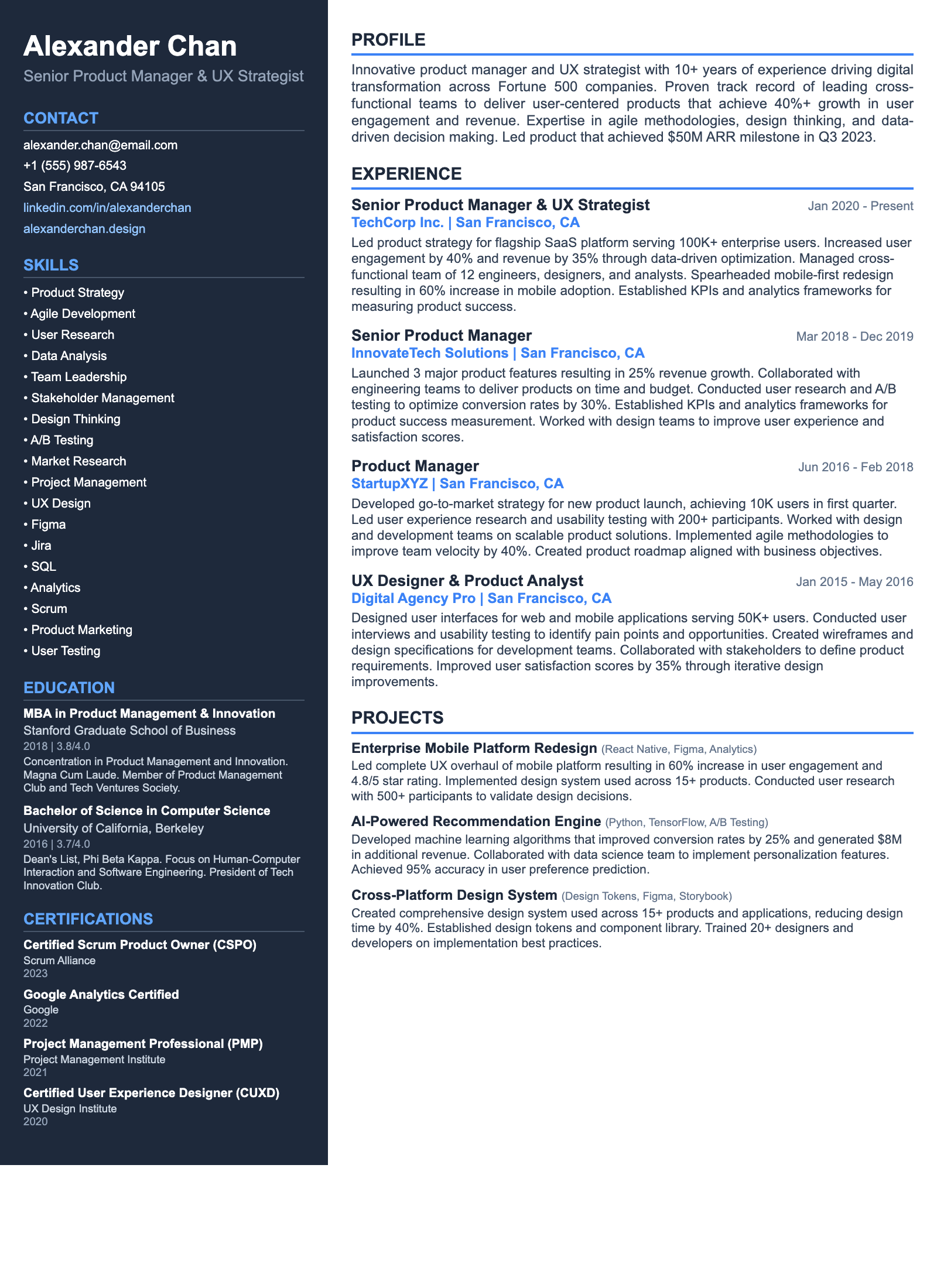
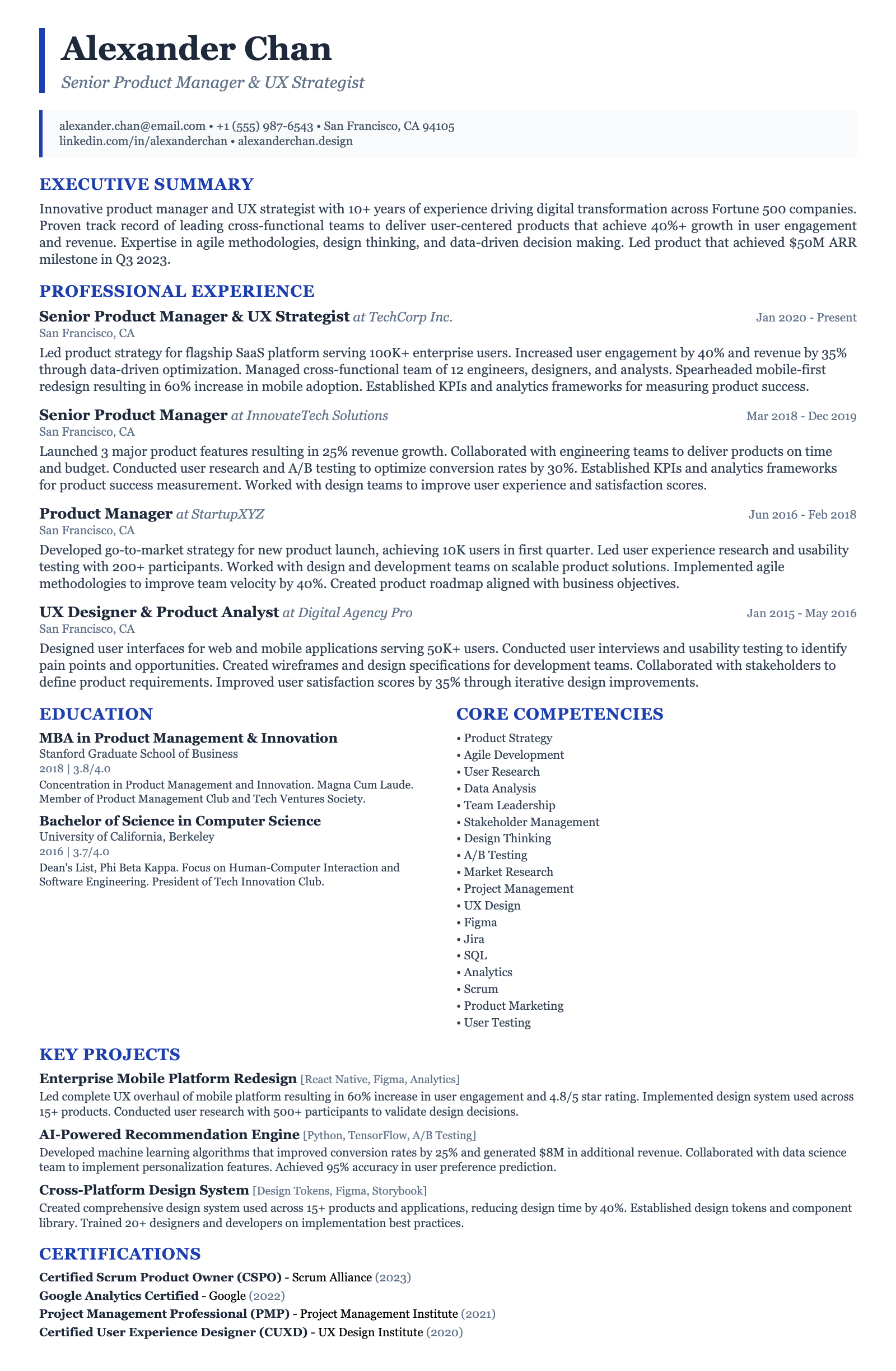
ATS-friendly templates designed specifically for Lead Manufacturing Data Analyst positions in the US market.
Frequently Asked Questions

What is the ideal length for a Lead Manufacturing Data Analyst resume?

Ideally, your resume should be one to two pages. Given the depth of experience often required for a lead role, two pages are acceptable if you have significant accomplishments to showcase. Focus on the most relevant experiences and quantifiable results. Prioritize clarity and conciseness to ensure your key skills and achievements are easily discernible. Always tailor it to the specific job.

What are the most important skills to highlight on my resume?

Prioritize skills directly relevant to manufacturing data analysis. This includes expertise in SQL for data extraction and manipulation, Python (with Pandas, NumPy, Scikit-learn) for statistical analysis and machine learning, and data visualization tools like Tableau or Power BI. Also include experience with statistical process control (SPC), data warehousing, and ETL processes. Don't forget to mention relevant soft skills, such as communication, teamwork, and leadership, especially when you can contextualize them with accomplishments.

How can I ensure my resume is ATS-friendly?

Use a simple, clean resume format with clear headings like "Summary," "Skills," "Experience," and "Education." Avoid using tables, images, or unusual fonts that ATS systems may not be able to parse correctly. Incorporate relevant keywords from the job description throughout your resume, particularly in the skills and experience sections. Save your resume as a .docx or .pdf file, as these formats are generally ATS-compatible.

Are certifications important for a Lead Manufacturing Data Analyst resume?

While not always mandatory, relevant certifications can significantly enhance your resume. Consider certifications in data analytics (e.g., Certified Analytics Professional - CAP), Six Sigma (Green Belt or Black Belt), or specific software tools (e.g., Tableau Certified Data Analyst, Microsoft Certified: Data Analyst Associate). These certifications demonstrate your commitment to professional development and validate your skills to potential employers.

What are some common mistakes to avoid on a Lead Manufacturing Data Analyst resume?

Avoid generic descriptions of your responsibilities. Instead, focus on quantifiable achievements and the impact of your work. Don't neglect to tailor your resume to each specific job application. Avoid listing irrelevant skills or experiences that don't align with the requirements of the role. Proofread carefully to eliminate any typos or grammatical errors.

How can I showcase my experience if I'm transitioning into a Lead Manufacturing Data Analyst role from a related field?

If you're transitioning into this role, highlight transferable skills and relevant experiences from your previous roles. Emphasize projects where you used data analysis to solve problems, improve processes, or drive decision-making. Quantify your accomplishments whenever possible, and clearly articulate how your skills and experience align with the requirements of the Lead Manufacturing Data Analyst position. Frame your experience to showcase your understanding of manufacturing concepts and challenges.

Ready to Build Your Lead Manufacturing Data Analyst Resume?

Use our AI-powered resume builder to create an ATS-optimized resume tailored for Lead Manufacturing Data Analyst positions in the US market.

Complete Lead Manufacturing Data Analyst Career Toolkit

Everything you need for your Lead Manufacturing Data Analyst job search — all in one platform.

Why choose ResumeGyani over Zety or Resume.io?

The only platform with AI mock interviews + resume builder + job search + career coaching — all in one.

See comparison

Last updated: March 2026 · Content reviewed by certified resume writers · Optimized for US job market