
ATS-Optimized for US Market

Lead Manufacturing Recruiter Career & Resume Guide

As a Lead Manufacturing Recruiter, your resume needs to demonstrate expertise in sourcing, attracting, and hiring top talent within the manufacturing sector. Hiring managers look for a proven track record of filling critical roles, reducing time-to-fill metrics, and improving the quality of hire. Key sections include a compelling summary highlighting your years of experience and key accomplishments, a detailed work experience section showcasing your impact in previous roles, and a skills section that includes both technical and soft skills. To stand out, quantify your achievements with data (e.g., "Reduced time-to-fill by 20%" or "Increased candidate pipeline by 30%"). Highlight your proficiency with Applicant Tracking Systems (ATS) like Workday, Taleo, or Greenhouse, and sourcing platforms like LinkedIn Recruiter, Indeed, and specialized manufacturing job boards. Emphasize your understanding of manufacturing processes, roles (e.g., CNC machinists, quality engineers, plant managers), and industry certifications. Showcase your ability to build strong relationships with hiring managers and candidates. Your resume should reflect your leadership skills in managing a recruiting team, mentoring junior recruiters, and driving recruiting strategy. Demonstrate your adaptability by showing experience with different manufacturing environments and technologies. Focus on results and impact, not just tasks.
Average US Salary: $100k - $160k

Expert Tip: For Lead Manufacturing Recruiter positions in the US, recruiters increasingly look for technical execution and adaptability over simple job duties. This guide is tailored to highlight these specific traits to ensure your resume stands out in the competitive Lead Manufacturing Recruiter sector.

What US Hiring Managers Look For in a Lead Manufacturing Recruiter Resume

When reviewing Lead Manufacturing Recruiter candidates, recruiters and hiring managers in the US focus on a few critical areas. Making these elements clear and easy to find on your resume will improve your chances of moving to the interview stage.

  • Relevant experience and impact in Lead Manufacturing Recruiter or closely related roles.
  • Clear, measurable achievements (metrics, scope, outcomes) rather than duties.
  • Skills and keywords that match the job description and ATS requirements.
  • Professional formatting and no spelling or grammar errors.
  • Consistency between your resume, LinkedIn, and application.
  • Proficiency in key areas such as Communication, Time Management, Industry-Standard Tools.

Essential Skills for Lead Manufacturing Recruiter

Include these keywords in your resume to pass ATS screening and impress recruiters.

Must-Have Skills

  • CriticalCommunication
  • HighTime Management

Technical Skills

  • HighIndustry-Standard Tools
  • MediumData Analysis

Soft Skills

  • CriticalTeamwork
  • HighAdaptability
  • CriticalLeadership

A Day in the Life

A Day in the Life of a Lead Recruiter

Arrive early to review metrics or sprint progress. As a Lead Recruiter, you lead the 9 AM stand-up, addressing blockers and setting the strategic direction for handling core responsibilities, collaborating with cross-functional teams, and driving project success within the Manufacturing team. 10 AM-1 PM is for high-impact decisions. You're architecting solutions, reviewing critical deliverables, or negotiating priorities with Manufacturing stakeholders. Afternoons involve mentorship and cross-org coordination. You're the go-to expert for handling core responsibilities, collaborating with cross-functional teams, and driving project success, ensuring the team's output aligns with company goals. You finish by finalizing quarterly roadmaps or reviewing next steps. At this level in Manufacturing, your focus shifts from individual tasks to organizational impact.

Career Progression Path

Level 1

Recruiter I (Entry Level)

Level 2

Recruiter II (Junior)

Level 3

Senior Recruiter

Level 4

Lead Recruiter

Level 5

Recruiter Manager / Director

Interview Questions & Answers

Prepare for your Lead Manufacturing Recruiter interview with these commonly asked questions.

Describe a time you had to fill a highly specialized manufacturing role with very few qualified candidates. What steps did you take?

Medium
Situational
Sample Answer
In a previous role, I needed to find a CNC Machinist with 5+ years of experience working with a specific type of Swiss screw machine, which was a very niche skillset. I started by leveraging LinkedIn Recruiter to identify potential candidates, then expanded my search to specialized manufacturing job boards and industry-specific forums. I proactively reached out to passive candidates, highlighting the unique aspects of the role and the company's culture. I also partnered with the hiring manager to refine the job description and target specific skills. Ultimately, I successfully filled the role within 6 weeks by targeting a specialized talent pool.

How do you stay up-to-date with the latest trends and technologies in the manufacturing industry?

Easy
Behavioral
Sample Answer
I actively participate in industry-specific webinars and conferences, subscribe to relevant publications (e.g., Manufacturing Engineering magazine), and follow key influencers on LinkedIn. I also maintain close relationships with hiring managers and candidates, which gives me firsthand insights into the evolving skill sets and technologies that are in demand. I proactively research emerging technologies like additive manufacturing and automation to understand their impact on workforce needs.

Explain your approach to building relationships with hiring managers in the manufacturing sector.

Medium
Behavioral
Sample Answer
I believe in building strong, collaborative relationships with hiring managers based on trust and open communication. I start by taking the time to understand their specific needs, challenges, and priorities. I proactively share market insights and candidate feedback. I regularly check in with them to ensure they are satisfied with the recruitment process and the quality of candidates. I also solicit their feedback on ways to improve my performance and better meet their needs.

Describe a time you had to manage a challenging candidate experience. What did you do?

Medium
Situational
Sample Answer
I once had a candidate who was highly qualified but had unrealistic salary expectations. After learning of my client's budget, I addressed this by having an open and honest conversation with the candidate about the company's compensation structure and the overall benefits package. I emphasized the long-term career growth opportunities and the company's positive work environment. I also negotiated with the hiring manager to see if there was any flexibility within the budget. Ultimately, I was able to find a compromise that satisfied both parties, resulting in a successful hire.

What metrics do you use to measure the success of your recruitment efforts in the manufacturing industry?

Technical
Technical
Sample Answer
I track several key metrics, including time-to-fill, cost-per-hire, quality of hire (measured by performance reviews and retention rates), candidate satisfaction, and hiring manager satisfaction. I use these metrics to identify areas for improvement and to demonstrate the value of my recruitment efforts to stakeholders. I also monitor diversity and inclusion metrics to ensure we are building a diverse and representative workforce.

How do you handle confidential or sensitive information during the recruitment process?

Hard
Behavioral
Sample Answer
I understand the importance of maintaining confidentiality and discretion throughout the recruitment process. I adhere to strict ethical guidelines and company policies regarding data privacy. I ensure that all candidate information is stored securely and accessed only by authorized personnel. I am careful to avoid disclosing any sensitive information to unauthorized parties. I am also aware of and comply with all applicable laws and regulations, such as GDPR and CCPA.

ATS Optimization Tips

Make sure your resume passes Applicant Tracking Systems used by US employers.

Incorporate specific manufacturing-related keywords such as "Lean Manufacturing," "Six Sigma," "CNC Machining," and "Quality Control" throughout your resume to match industry-specific searches.
Use a chronological or combination resume format, which are typically easier for ATS to parse, presenting your work history in a clear and structured manner.
Ensure your contact information (name, phone number, email address) is in plain text and easily accessible at the top of your resume, as ATS systems need to quickly identify this information.
Use standard section headings like "Summary," "Experience," "Skills," and "Education" to help the ATS categorize your information correctly.
Quantify your achievements whenever possible, using metrics like "Reduced time-to-fill by X%" or "Increased candidate pipeline by Y%" – ATS systems often look for quantifiable results.
List your skills in a dedicated skills section, separating them into categories like "Technical Skills" (e.g., ATS, sourcing platforms) and "Soft Skills" (e.g., communication, leadership).
When describing your experience, use action verbs (e.g., "Managed," "Developed," "Implemented") to showcase your accomplishments and responsibilities effectively.
Before submitting your resume, run it through an ATS checker tool like Jobscan or Resume Worded to identify potential issues and optimize for ATS compatibility.

Common Resume Mistakes to Avoid

Don't make these errors that get resumes rejected.

1
Failing to quantify achievements. Instead of saying "Managed recruitment process," say "Reduced time-to-fill by 15% by streamlining the recruitment process using Workday."
2
Not tailoring the resume to the specific manufacturing role. A generic resume won't stand out; highlight experience recruiting for similar positions or industries.
3
Omitting relevant manufacturing industry knowledge. Even if you're new to the sector, demonstrate an understanding of manufacturing processes, technologies, and roles.
4
Neglecting to mention experience with specific ATS or sourcing platforms. Hiring managers want to see you're proficient with tools like LinkedIn Recruiter or Workday.
5
Focusing on responsibilities rather than results. Describe how your actions positively impacted the company, such as increased employee retention or improved quality of hire.
6
Using an outdated or overly creative resume format. Stick to a clean, professional design that is easily scannable by ATS and hiring managers.
7
Ignoring the importance of soft skills. Manufacturing recruitment requires strong communication, interpersonal, and problem-solving skills.
8
Not proofreading carefully for errors. Typos and grammatical mistakes can make you appear unprofessional.

Industry Outlook

The US Manufacturing sector is experiencing steady growth. Lead Recruiters are particularly sought after, with the Bureau of Labor Statistics projecting average job growth through 2030. Peak hiring occurs in Q1 (January-March) and Q3 (August-September).

Top Hiring Companies

Industry LeadersRegional FirmsFast-Growing Companies

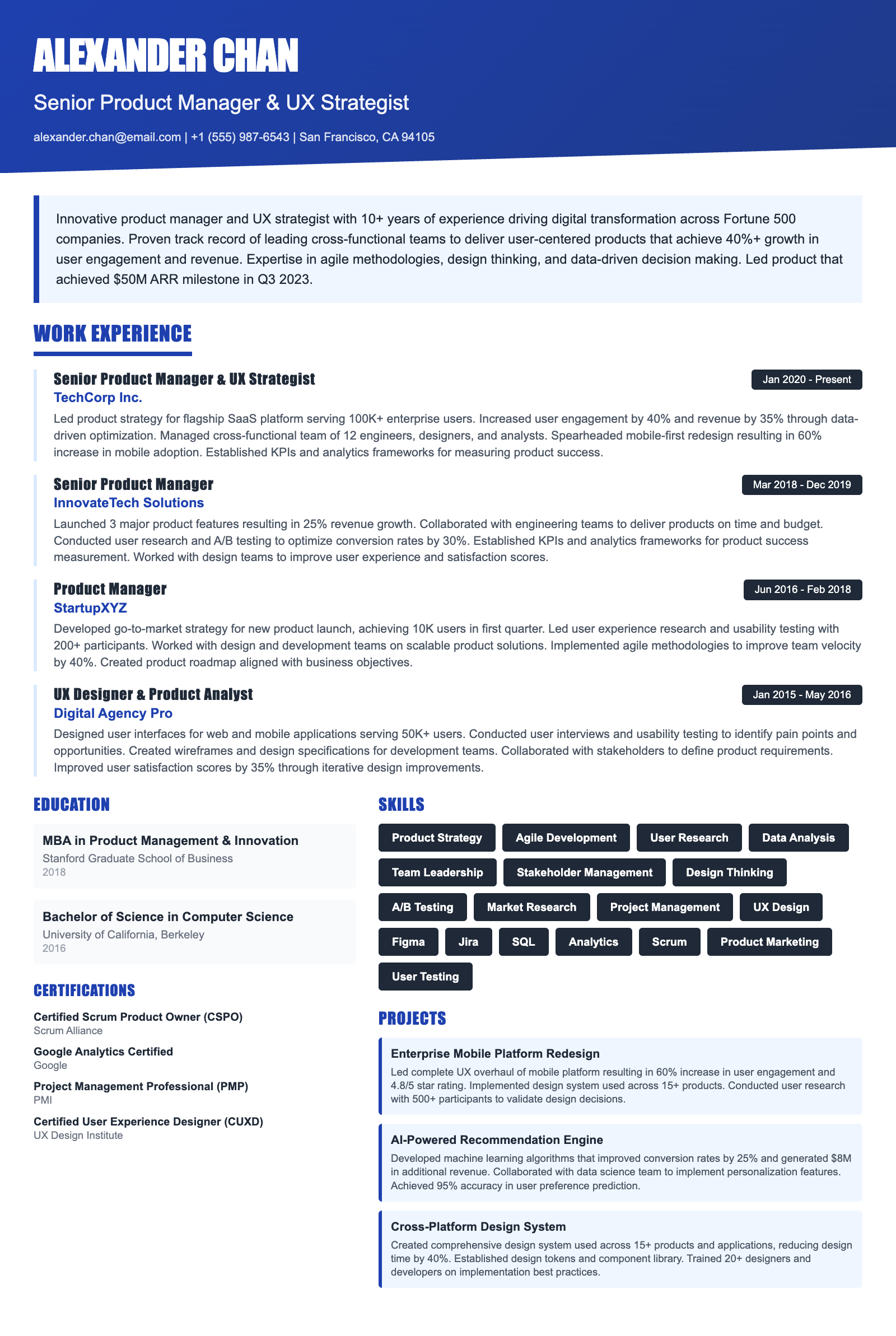
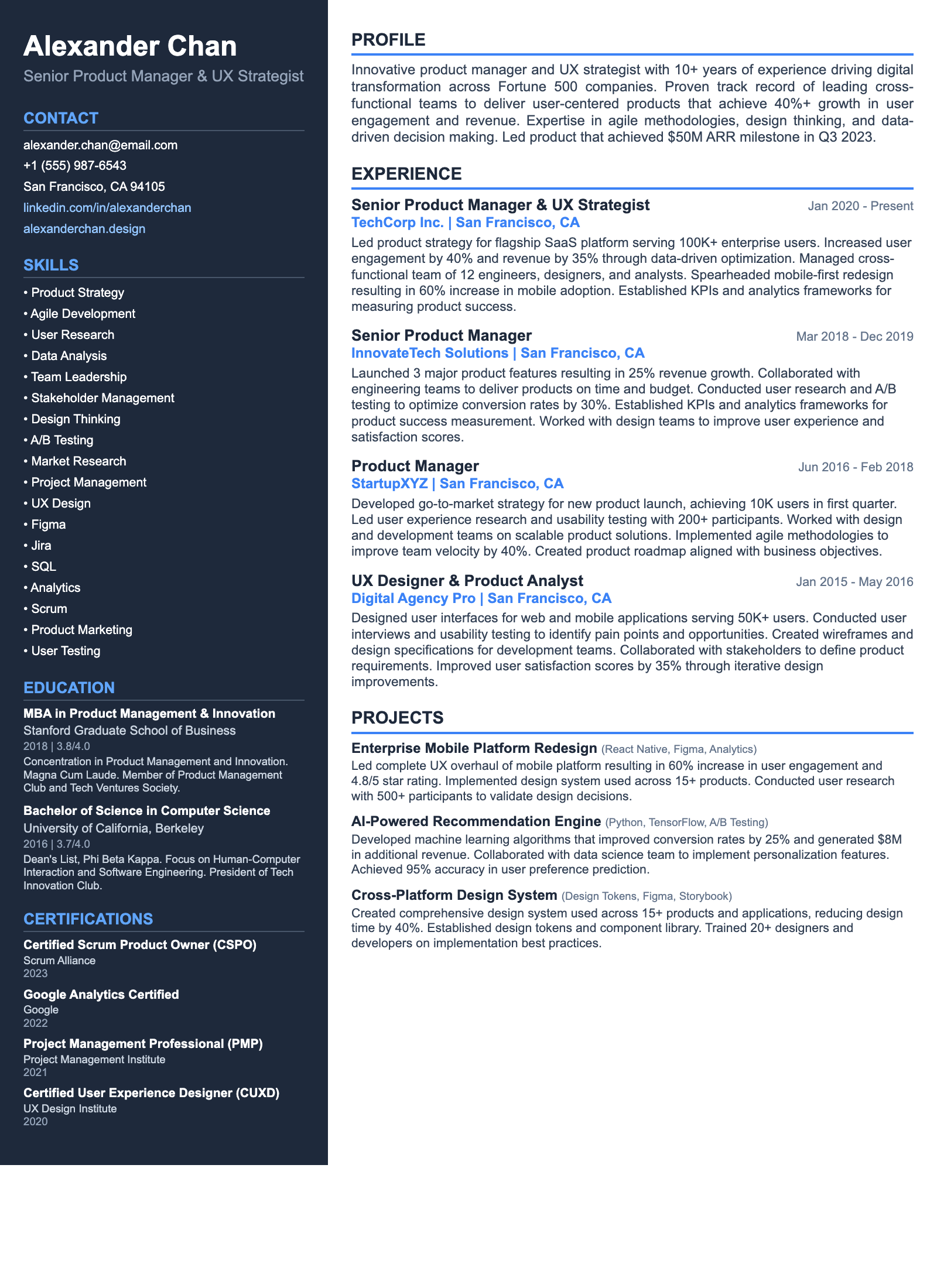
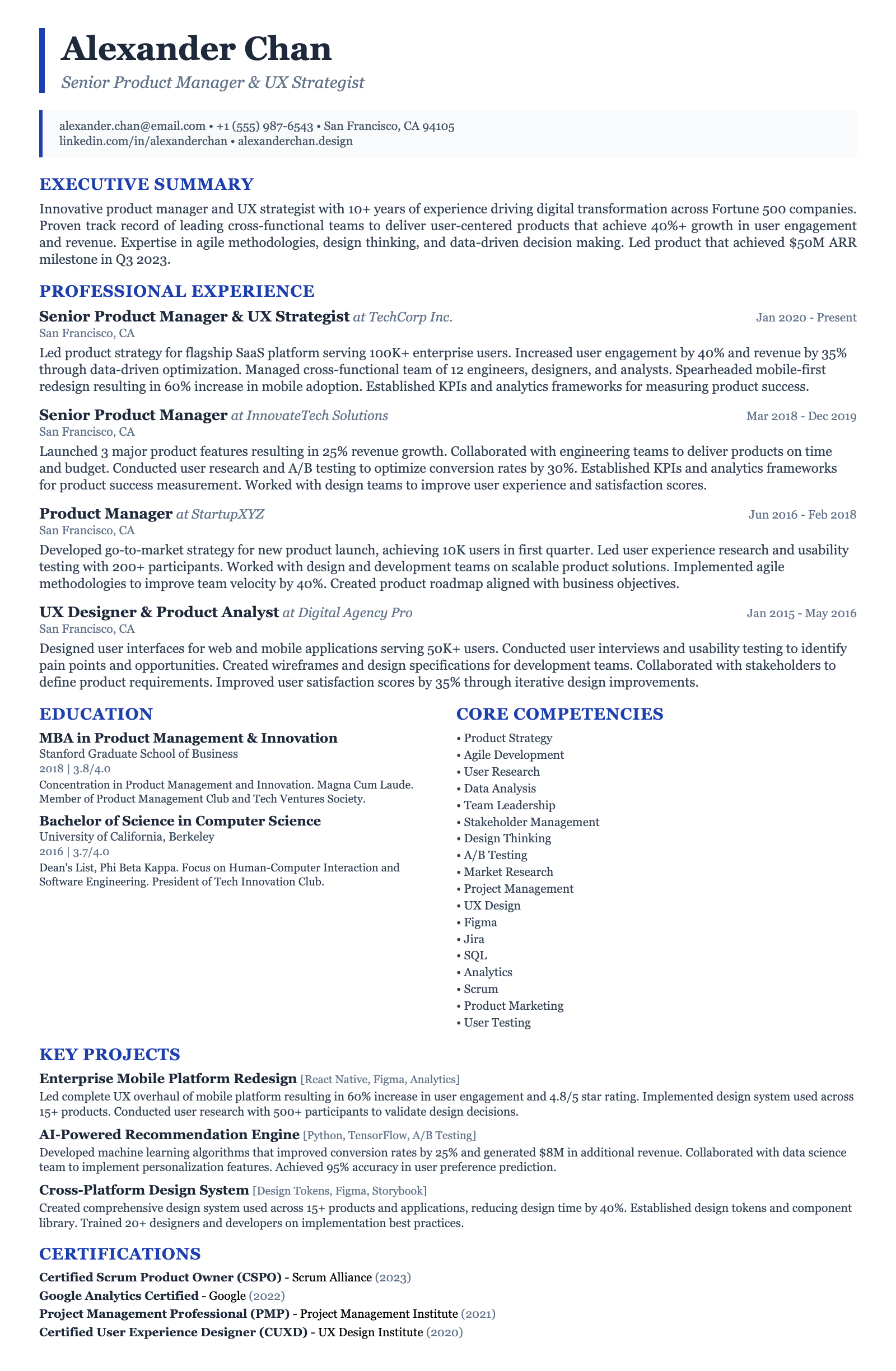
Recommended Resume Templates

ATS-friendly templates designed specifically for Lead Manufacturing Recruiter positions in the US market.
Frequently Asked Questions

What is the ideal length for a Lead Manufacturing Recruiter resume?

Ideally, your resume should be no more than two pages. Focus on the most relevant experiences and accomplishments that demonstrate your expertise in manufacturing recruitment. Prioritize quantifiable achievements and use concise language. Ensure all information is easily scannable by both humans and ATS systems. If you have extensive experience, summarize earlier roles briefly and elaborate on more recent, impactful positions. Use tools like Grammarly to check for clarity.

What are the most important skills to highlight on a Lead Manufacturing Recruiter resume?

Key skills include proficiency with ATS (e.g., Workday, Taleo), sourcing platforms (e.g., LinkedIn Recruiter, Indeed), strong communication and interpersonal skills for building relationships with hiring managers and candidates, data analysis skills for tracking recruitment metrics, and deep understanding of manufacturing roles and industry-specific certifications (e.g., Six Sigma, Lean Manufacturing). Leadership skills and project management experience are also crucial.

How can I optimize my resume for Applicant Tracking Systems (ATS)?

Use keywords from the job description throughout your resume. Format your resume with clear headings and bullet points. Avoid using tables, images, or text boxes, as these can be difficult for ATS to parse. Save your resume as a PDF to preserve formatting. Include a skills section with relevant keywords. Ensure your contact information is easily readable. Tools like Jobscan can help analyze your resume's ATS compatibility.

Are certifications relevant for a Lead Manufacturing Recruiter resume?

While not always mandatory, certifications can demonstrate your commitment to professional development and expertise in recruitment. Consider certifications like Certified Internet Recruiter (CIR) or Certified Personnel Consultant (CPC). Additionally, if you possess knowledge of manufacturing certifications (e.g., Six Sigma, Lean Manufacturing), highlight this as it demonstrates industry understanding and ability to source certified candidates.

What are some common mistakes to avoid on a Lead Manufacturing Recruiter resume?

Avoid generic descriptions of your responsibilities. Focus on quantifiable achievements and impact. Do not neglect to tailor your resume to each specific job description. Avoid using outdated or irrelevant information. Proofread carefully for typos and grammatical errors. Do not exaggerate your skills or experience. Avoid neglecting to include key skills that align with the job requirements.

How can I showcase a career transition into Lead Manufacturing Recruiting on my resume?

Highlight transferable skills from your previous role, such as communication, project management, and relationship building. Emphasize any experience you have with the manufacturing industry, even if it's not directly related to recruiting. Take online courses or certifications to demonstrate your commitment to the field. Craft a compelling summary that explains your career transition and highlights your enthusiasm for manufacturing recruitment. Quantify your impact with achievements to demonstrate your value to potential employers.

Ready to Build Your Lead Manufacturing Recruiter Resume?

Use our AI-powered resume builder to create an ATS-optimized resume tailored for Lead Manufacturing Recruiter positions in the US market.

Complete Lead Manufacturing Recruiter Career Toolkit

Everything you need for your Lead Manufacturing Recruiter job search — all in one platform.

Why choose ResumeGyani over Zety or Resume.io?

The only platform with AI mock interviews + resume builder + job search + career coaching — all in one.

See comparison

Last updated: March 2026 · Content reviewed by certified resume writers · Optimized for US job market

Lead Manufacturing Recruiter Resume Guide (2026) | ATS-Optimized Template