
ATS-Optimized for US Market

Lead Manufacturing Security Officer Career & Resume Guide

To craft a compelling resume as a Lead Manufacturing Security Officer, you need to showcase your expertise in safeguarding manufacturing facilities and personnel. Hiring managers seek candidates who can effectively manage security protocols, mitigate risks, and ensure compliance with industry standards. Your resume should highlight your experience in physical security, cybersecurity (OT/ICS), and regulatory compliance within a manufacturing environment. Include key sections such as a professional summary, security experience, technical skills, certifications (e.g., CPP, PSP, CISSP), and education. Quantify your accomplishments whenever possible, detailing the impact of your security initiatives on reducing incidents, improving safety, and enhancing operational efficiency. For instance, describe how you implemented a new access control system that decreased unauthorized entries by a specific percentage, or how your security training program reduced safety violations. Highlight your familiarity with industry-standard tools like SCADA systems, intrusion detection systems (IDS), video surveillance systems (VMS), and access control systems. Showcase your leadership abilities by detailing your experience in managing security teams, conducting risk assessments, and developing security policies. To stand out, tailor your resume to the specific requirements of the job description, emphasizing the skills and experience that align most closely with the employer's needs. Showcase relevant projects or initiatives where you successfully implemented security measures, resolved security breaches, or improved security awareness among employees. Mention any experience with frameworks like NIST Cybersecurity Framework or ISO 27001. Highlight your ability to analyze security data to identify trends and implement proactive security measures.
Average US Salary: $100k - $160k

Expert Tip: For Lead Manufacturing Security Officer positions in the US, recruiters increasingly look for technical execution and adaptability over simple job duties. This guide is tailored to highlight these specific traits to ensure your resume stands out in the competitive Lead Manufacturing Security Officer sector.

What US Hiring Managers Look For in a Lead Manufacturing Security Officer Resume

When reviewing Lead Manufacturing Security Officer candidates, recruiters and hiring managers in the US focus on a few critical areas. Making these elements clear and easy to find on your resume will improve your chances of moving to the interview stage.

  • Relevant experience and impact in Lead Manufacturing Security Officer or closely related roles.
  • Clear, measurable achievements (metrics, scope, outcomes) rather than duties.
  • Skills and keywords that match the job description and ATS requirements.
  • Professional formatting and no spelling or grammar errors.
  • Consistency between your resume, LinkedIn, and application.
  • Proficiency in key areas such as Communication, Time Management, Industry-Standard Tools.

Essential Skills for Lead Manufacturing Security Officer

Include these keywords in your resume to pass ATS screening and impress recruiters.

Must-Have Skills

  • CriticalCommunication
  • HighTime Management

Technical Skills

  • HighIndustry-Standard Tools
  • MediumData Analysis

Soft Skills

  • CriticalTeamwork
  • HighAdaptability
  • CriticalLeadership

A Day in the Life

A Day in the Life of a Lead Security Officer

Arrive early to review metrics or sprint progress. As a Lead Security Officer, you lead the 9 AM stand-up, addressing blockers and setting the strategic direction for handling core responsibilities, collaborating with cross-functional teams, and driving project success within the Manufacturing team. 10 AM-1 PM is for high-impact decisions. You're architecting solutions, reviewing critical deliverables, or negotiating priorities with Manufacturing stakeholders. Afternoons involve mentorship and cross-org coordination. You're the go-to expert for handling core responsibilities, collaborating with cross-functional teams, and driving project success, ensuring the team's output aligns with company goals. You finish by finalizing quarterly roadmaps or reviewing next steps. At this level in Manufacturing, your focus shifts from individual tasks to organizational impact.

Career Progression Path

Level 1

Security Officer I (Entry Level)

Level 2

Security Officer II (Junior)

Level 3

Senior Security Officer

Level 4

Lead Security Officer

Level 5

Security Officer Manager / Director

Interview Questions & Answers

Prepare for your Lead Manufacturing Security Officer interview with these commonly asked questions.

Describe a time you had to implement a new security protocol in a manufacturing environment. What challenges did you face, and how did you overcome them?

Medium
Behavioral
Sample Answer
In my previous role at XYZ Manufacturing, we needed to implement a new access control system to improve security. The main challenge was integrating the new system with our existing SCADA systems and training employees on the new procedures. I addressed this by conducting thorough risk assessments to identify potential vulnerabilities, developing a comprehensive training program, and working closely with IT to ensure seamless integration. We also established a feedback mechanism to address any issues that arose during the initial implementation phase. The result was a 20% reduction in unauthorized access attempts.

What is your experience with conducting security risk assessments in a manufacturing setting?

Medium
Technical
Sample Answer
I have extensive experience in conducting security risk assessments using methodologies aligned with NIST and ISO frameworks. At ABC Manufacturing, I led a comprehensive assessment that involved identifying potential threats, evaluating vulnerabilities, and determining the likelihood and impact of potential incidents. This included evaluating physical security measures, cybersecurity protocols for OT/ICS systems, and compliance with regulatory requirements like OSHA. The assessment resulted in a prioritized list of recommendations that were implemented to significantly reduce our overall risk profile. This included improved perimeter security, enhanced cybersecurity measures, and updated emergency response plans.

How would you approach developing a comprehensive security plan for a new manufacturing facility?

Hard
Situational
Sample Answer
Developing a security plan for a new manufacturing facility requires a proactive and holistic approach. First, I would conduct a thorough risk assessment to identify potential threats and vulnerabilities specific to the facility's location, operations, and assets. This would involve collaborating with stakeholders from different departments, including engineering, operations, and IT. Next, I would develop a security plan that addresses physical security, cybersecurity (OT/ICS), access control, surveillance, emergency response, and compliance with relevant regulations. The plan would include detailed procedures, training programs, and resource allocation to ensure its effective implementation. Finally, I would establish a process for ongoing monitoring, evaluation, and continuous improvement to adapt to evolving threats and vulnerabilities.

Explain your experience with incident response in a manufacturing environment. Can you describe a specific incident and how you handled it?

Medium
Behavioral
Sample Answer
I have significant experience in incident response, including developing incident response plans, conducting investigations, and coordinating with law enforcement and other agencies. At DEF Manufacturing, we experienced a cybersecurity incident where a rogue employee attempted to exfiltrate sensitive data from our SCADA system. I immediately activated our incident response plan, isolated the affected system, and launched a forensic investigation to determine the extent of the breach. We worked closely with law enforcement to identify the perpetrator and prevent further data loss. The incident highlighted the importance of robust cybersecurity measures and employee training, which we subsequently enhanced.

What are your strategies for improving security awareness among manufacturing employees?

Easy
Situational
Sample Answer
Improving security awareness is crucial to creating a culture of security. I would implement a multi-faceted approach that includes regular training sessions, security awareness campaigns, and simulated phishing exercises. Training sessions would cover topics such as physical security protocols, cybersecurity best practices, and incident reporting procedures. Security awareness campaigns would use posters, newsletters, and other communication channels to reinforce key security messages. Simulated phishing exercises would help employees recognize and avoid phishing attacks. I would also establish a feedback mechanism to address any questions or concerns from employees and continuously improve our security awareness program.

How do you stay up-to-date with the latest security threats and trends in the manufacturing industry, particularly concerning OT/ICS environments?

Medium
Technical
Sample Answer
Staying current with the latest security threats and trends requires continuous learning and professional development. I actively participate in industry conferences, webinars, and training courses focused on manufacturing security and OT/ICS cybersecurity. I also subscribe to security publications, threat intelligence feeds, and professional forums to stay informed about emerging threats, vulnerabilities, and best practices. Additionally, I maintain certifications such as CISSP and regularly engage with other security professionals to exchange knowledge and insights. This proactive approach allows me to anticipate and mitigate potential security risks effectively.

ATS Optimization Tips

Make sure your resume passes Applicant Tracking Systems used by US employers.

Incorporate industry-specific keywords like "OT Security", "ICS Security", "SCADA security", "HAZMAT", "OSHA compliance", and "Physical Security Assessments" directly from the job description.
Use clear, concise headings such as "Security Experience," "Technical Skills," "Certifications," and "Education" to help the ATS parse your resume accurately.
Quantify your achievements using numbers and metrics to demonstrate the impact of your security initiatives. For example, "Reduced security incidents by 30%" or "Improved security awareness training participation by 25%".
Format your skills section using bullet points and list both hard skills (e.g., access control systems, intrusion detection systems) and soft skills (e.g., communication, leadership).
List your certifications with the full name of the certification, the issuing organization, and the date you obtained it. This helps the ATS recognize your credentials.
Use a chronological resume format to showcase your career progression and experience in a clear and organized manner. ATS systems often prefer this format.
Save your resume as a PDF to preserve formatting and ensure that the ATS can accurately read your information. This prevents any formatting issues that might occur with other file types.
Ensure your contact information is clearly visible at the top of your resume, including your name, phone number, email address, and LinkedIn profile URL. An ATS needs to be able to easily extract this information.

Common Resume Mistakes to Avoid

Don't make these errors that get resumes rejected.

1
Failing to quantify accomplishments: Instead of saying "Improved security," state "Reduced security breaches by 15% through implementation of multi-factor authentication."
2
Not tailoring the resume to the specific job description: A generic resume won't highlight the skills and experience most relevant to the employer's needs. Customize it!
3
Omitting relevant certifications: Not including certifications like CPP, PSP, or CISSP can be a significant oversight, as these demonstrate expertise and commitment to the profession.
4
Ignoring the importance of OT/ICS security: Manufacturing security is increasingly reliant on cybersecurity, so neglecting to highlight skills in this area is a mistake.
5
Using a poorly formatted resume: A cluttered or difficult-to-read resume can make it hard for hiring managers to quickly assess your qualifications.
6
Not highlighting experience with specific security technologies: Failing to mention proficiency with tools like Genetec, Lenel, or SCADA systems leaves out crucial information.
7
Overlooking regulatory compliance experience: Neglecting to showcase your knowledge of regulations like OSHA, EPA, or HAZMAT protocols can be a significant omission.
8
Focusing solely on physical security and ignoring cybersecurity aspects: Modern manufacturing requires a blend of both. Neglecting cybersecurity is a major oversight.

Industry Outlook

The US Manufacturing sector is experiencing steady growth. Lead Security Officers are particularly sought after, with the Bureau of Labor Statistics projecting average job growth through 2030. Peak hiring occurs in Q1 (January-March) and Q3 (August-September).

Top Hiring Companies

Industry LeadersRegional FirmsFast-Growing Companies

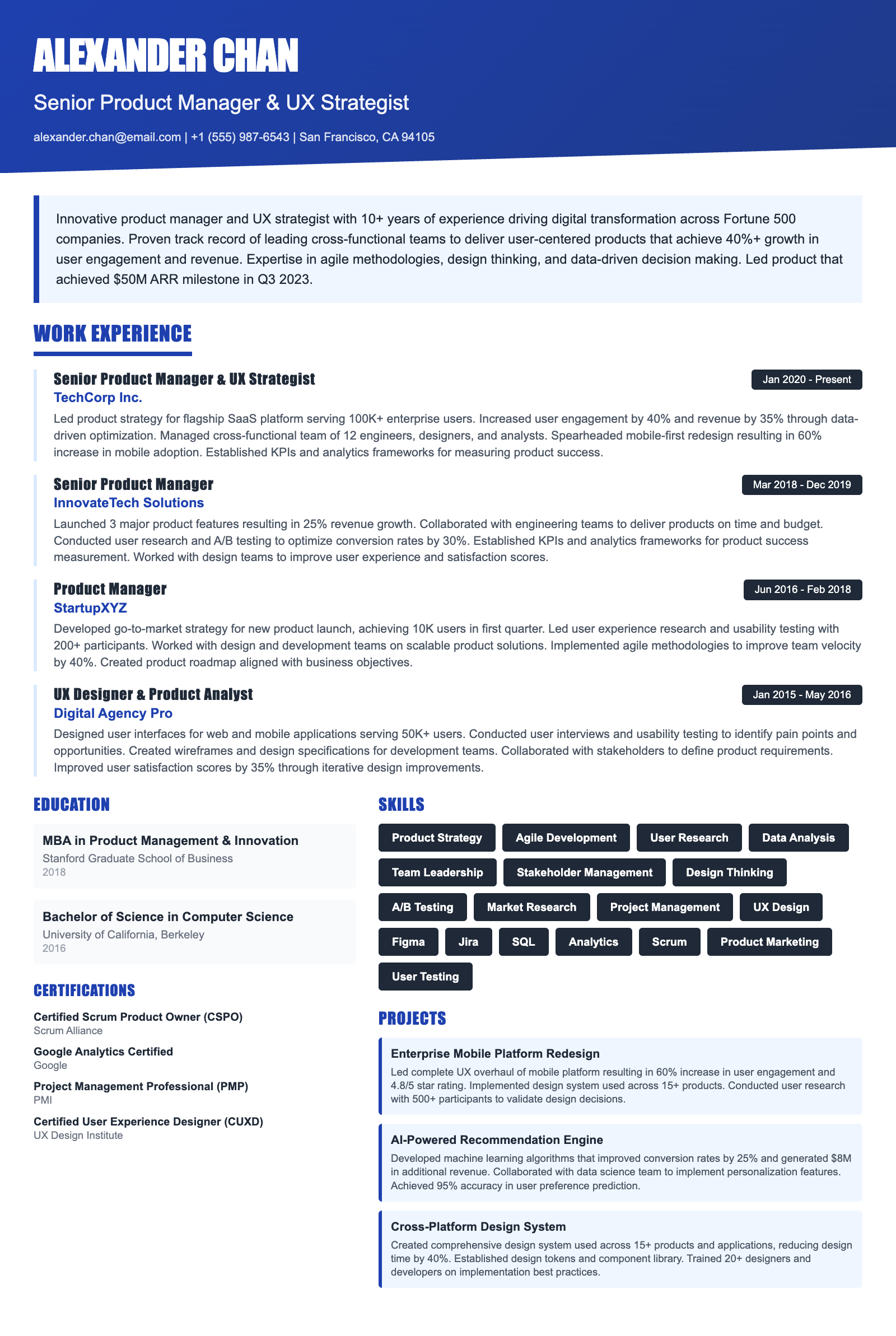
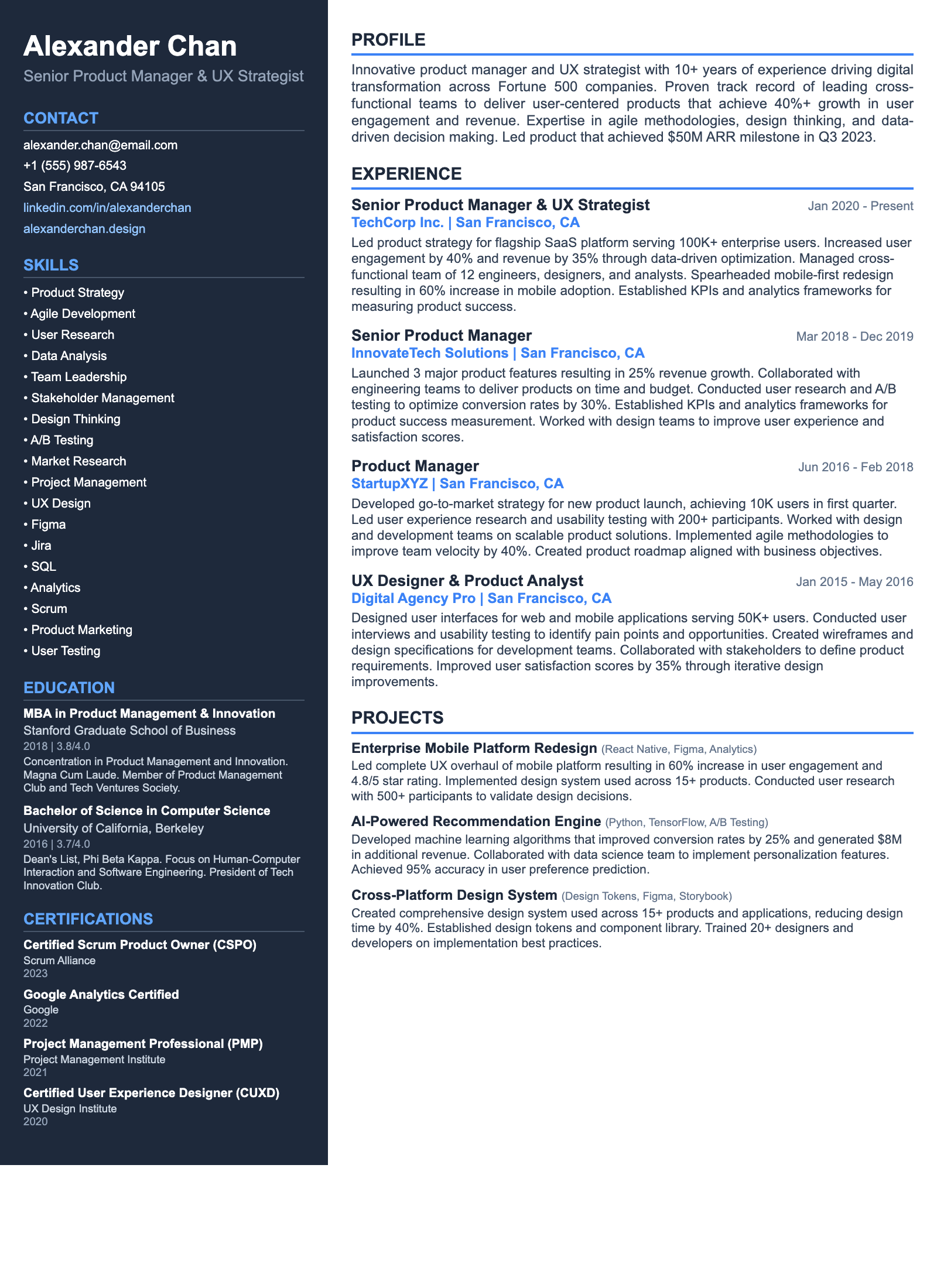
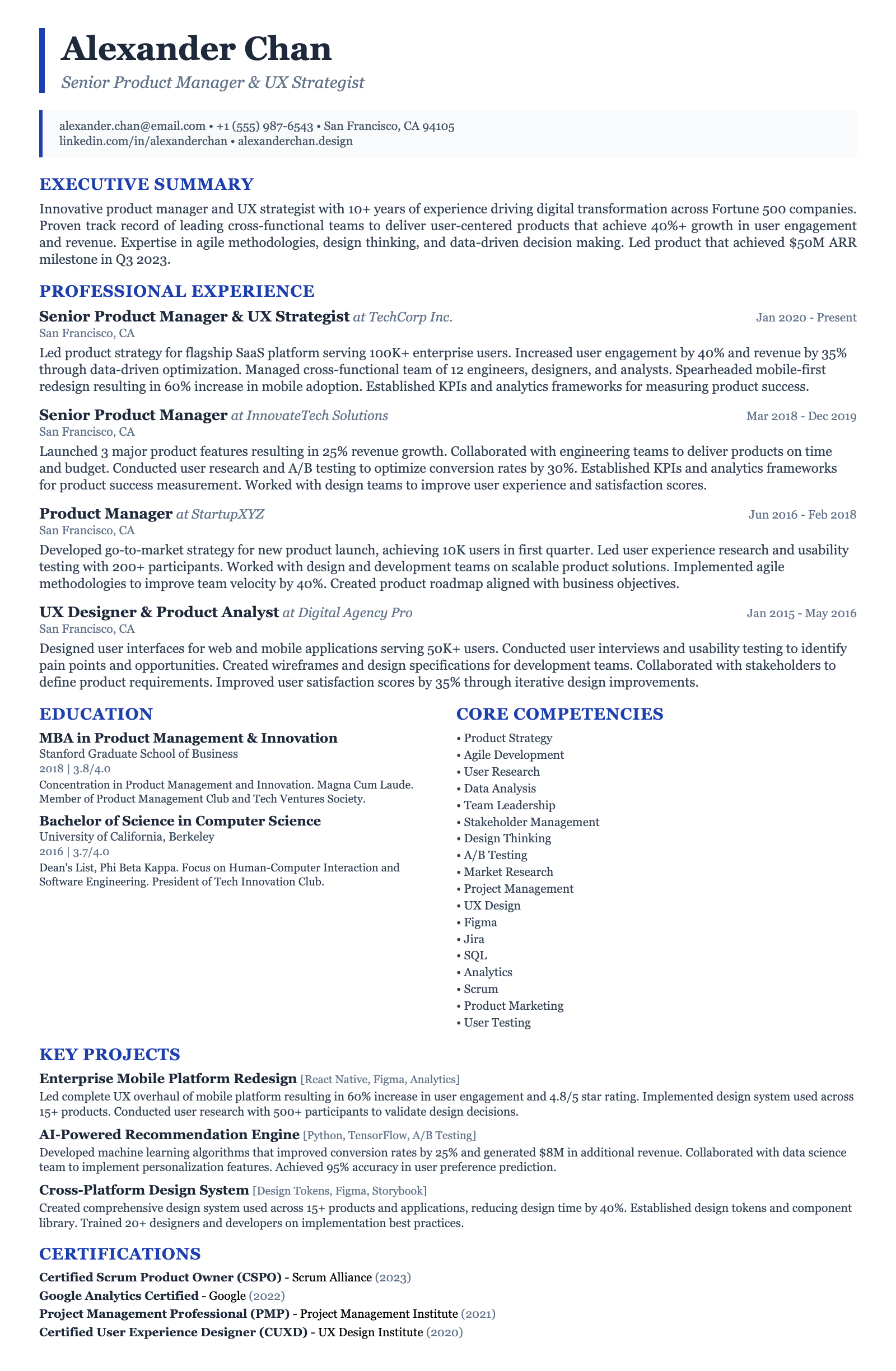
Recommended Resume Templates

ATS-friendly templates designed specifically for Lead Manufacturing Security Officer positions in the US market.
Frequently Asked Questions

What is the ideal resume length for a Lead Manufacturing Security Officer?

For a Lead Manufacturing Security Officer role, aim for a resume that is no more than two pages. Focus on relevant experience and quantifiable achievements. Highlight your security management experience, technical skills (like SCADA security), and leadership capabilities concisely. Prioritize the most recent and impactful roles.

What are the most critical skills to highlight on my resume?

Essential skills include physical security expertise, cybersecurity (OT/ICS) knowledge, risk management, incident response, regulatory compliance (e.g., OSHA, EPA), security policy development, and team leadership. Showcase your ability to use security tools like intrusion detection systems (IDS), video surveillance systems (VMS), and access control systems.

How can I optimize my resume for Applicant Tracking Systems (ATS)?

Use a clean, ATS-friendly format with clear headings and bullet points. Incorporate relevant keywords from the job description, such as "risk assessment," "security protocols," "incident management," and "SCADA security." Avoid using tables, graphics, or unusual fonts that may not be parsed correctly by ATS. Save your resume as a PDF to preserve formatting.

Which certifications are most valuable for a Lead Manufacturing Security Officer?

Relevant certifications include Certified Protection Professional (CPP), Physical Security Professional (PSP), Certified Information Systems Security Professional (CISSP), Certified Ethical Hacker (CEH), and certifications related to industrial control systems (ICS) security. Include the certification name, issuing organization, and date obtained (or expected).

What are common resume mistakes to avoid?

Avoid generic resumes that don't highlight your specific security experience in a manufacturing environment. Don't omit quantifiable achievements or fail to tailor your resume to the specific job requirements. Overstating your technical skills without providing concrete examples can also be detrimental. Finally, neglecting to proofread for errors is a major oversight.

How can I showcase a career transition into a Lead Manufacturing Security Officer role?

If transitioning from a related field (e.g., law enforcement, military, IT security), emphasize transferable skills like risk assessment, incident response, security management, and leadership. Highlight any relevant training or certifications you've obtained. Frame your experience in terms of how it applies to the security challenges specific to manufacturing environments. Showcase familiarity with frameworks like NIST or ISO.

Ready to Build Your Lead Manufacturing Security Officer Resume?

Use our AI-powered resume builder to create an ATS-optimized resume tailored for Lead Manufacturing Security Officer positions in the US market.

Complete Lead Manufacturing Security Officer Career Toolkit

Everything you need for your Lead Manufacturing Security Officer job search — all in one platform.

Why choose ResumeGyani over Zety or Resume.io?

The only platform with AI mock interviews + resume builder + job search + career coaching — all in one.

See comparison

Last updated: March 2026 · Content reviewed by certified resume writers · Optimized for US job market