
ATS-Optimized for US Market

Lead Media Graphic Designer Resume Format — ATS-Optimized for US Media

Landing a Lead Media Graphic Designer role in the competitive US Media market requires more than listing experience. This comprehensive guide provides ATS-optimized templates, real interview questions asked by top companies (Apple, Google, Airbnb), and insider tips from Media hiring managers. Whether targeting Fortune 500 or fast-growing startups, our format is tailored for Lead candidates who want to stand out in 2026.
Average US Salary: $90k-$130k

Expert Tip: For Lead Media Graphic Designer positions in the US, recruiters increasingly look for technical execution and adaptability over simple job duties. This guide is tailored to highlight these specific traits to ensure your resume stands out in the competitive Lead Media Graphic Designer sector.

What US Hiring Managers Look For in a Lead Media Graphic Designer Resume

When reviewing Lead Media Graphic Designer candidates, recruiters and hiring managers in the US focus on a few critical areas. Making these elements clear and easy to find on your resume will improve your chances of moving to the interview stage.

  • Relevant experience and impact in Lead Media Graphic Designer or closely related roles.
  • Clear, measurable achievements (metrics, scope, outcomes) rather than duties.
  • Skills and keywords that match the job description and ATS requirements.
  • Professional formatting and no spelling or grammar errors.
  • Consistency between your resume, LinkedIn, and application.
  • Proficiency in key areas such as Adobe Photoshop (Advanced), Adobe Illustrator, Figma / Sketch.

Essential Skills for Lead Media Graphic Designer

Include these keywords in your resume to pass ATS screening and impress recruiters.

Must-Have Skills

  • CriticalAdobe Photoshop (Advanced)
  • CriticalAdobe Illustrator
  • CriticalFigma / Sketch

Technical Skills

  • HighBrand Identity Design
  • HighTypography & Layout
  • HighPrint & Digital Media
  • MediumMotion Graphics (After Effects)
  • MediumUI Design Fundamentals

Soft Skills

  • CriticalCreative Problem Solving
  • HighClient Communication
  • HighTime Management (Multi-project)

A Day in the Life

A Day in the Life of a Lead Graphic Designer in Media

9 AM: review the design brief for a major rebrand project. 10 AM: lead brainstorming session with copywriters and strategists. 11:30 AM: deep work — develop 3 logo concepts with mood boards and rationale. 1 PM: present concepts to the creative director. 2:30 PM: mentor a junior designer on typography and grid systems. 4 PM: client call to present brand guidelines deck. 5 PM: review production files from the team for quality and consistency.

Key Success Metrics: For Lead Graphic Designers in the US Media sector, success is measured by output quality, stakeholder satisfaction, and continuous professional development.

Career Progression Path

Level 1

Junior Designer

Level 2

Graphic Designer

Level 3

Senior Designer

Level 4

Art Director

Level 5

Creative Director

Level 6

VP Creative / Chief Creative Officer

Interview Questions & Answers

Prepare for your Lead Media Graphic Designer interview with these commonly asked questions.

Describe a time you had to manage a design project with a tight deadline. How did you prioritize tasks and ensure quality?

Medium
Behavioral
Sample Answer
In my previous role at [Previous Company], we were tasked with redesigning the company website in just four weeks. I immediately created a detailed project timeline, breaking down tasks and assigning them to team members based on their expertise. I implemented daily stand-up meetings to track progress and address any roadblocks promptly. I prioritized key pages and features, ensuring they were completed first, and maintained open communication with stakeholders to manage expectations. Despite the tight deadline, we successfully launched the redesigned website on time and within budget, resulting in a 20% increase in user engagement.

Walk me through your process for developing a new brand identity for a company.

Medium
Technical
Sample Answer
My process begins with extensive research into the client's industry, target audience, and competitors. I then conduct stakeholder interviews to understand their vision and values. Next, I develop several initial design concepts, including logo options, color palettes, and typography. I present these concepts to the client, gather feedback, and refine the design based on their input. Once the core brand identity is established, I create brand guidelines to ensure consistency across all marketing materials. Finally, I work with the client to implement the new brand identity across their various channels, providing ongoing support and guidance.

Imagine a client is unhappy with a design you created. How do you handle the situation and ensure a positive outcome?

Easy
Behavioral
Sample Answer
First, I would actively listen to the client's concerns and ensure they feel heard and understood. I'd ask clarifying questions to pinpoint the specific aspects they dislike. Next, I would explain my design rationale, highlighting how it aligns with their initial brief and objectives. I'd then offer to revise the design based on their feedback, presenting alternative solutions and options. My goal is to collaborate with the client to reach a solution that meets their needs and exceeds their expectations. Maintaining a positive and professional attitude throughout the process is crucial.

How do you stay up-to-date with the latest design trends and technologies?

Easy
Technical
Sample Answer
I actively engage with the design community through online platforms like Behance and Dribbble, and I follow industry-leading blogs and publications, such as A List Apart and Smashing Magazine. I also attend design conferences and workshops to learn about emerging trends and techniques. Additionally, I continuously experiment with new software and tools, such as the latest features in Adobe Creative Suite and Figma, to expand my skillset and explore new creative possibilities. This helps me to ensure my skills remain relevant and adaptable.

Describe a situation where you had to balance creative vision with practical constraints, such as budget or technical limitations. What was the outcome?

Medium
Situational
Sample Answer
At [Previous Company], I was tasked with creating a series of animated social media ads with a very limited budget. We couldn't afford expensive stock footage or complex animation software. To overcome these constraints, I focused on creating visually appealing graphics using Adobe Illustrator and then used simple animation techniques in After Effects. I also leveraged free stock music and sound effects. By focusing on strong visuals and efficient animation, I delivered a series of engaging ads that generated a high click-through rate and helped us achieve our marketing goals, all within the allocated budget.

How do you ensure that your designs are accessible and inclusive for all users?

Hard
Technical
Sample Answer
Accessibility is a core principle in my design process. I adhere to WCAG guidelines, ensuring sufficient color contrast, using clear and concise language, and providing alternative text for images. I also prioritize usability by conducting user testing with diverse groups of people, gathering feedback on navigation, readability, and overall experience. I ensure that my designs are compatible with assistive technologies, such as screen readers, and I actively seek out resources and best practices to continuously improve the accessibility and inclusivity of my work.

ATS Optimization Tips

Make sure your resume passes Applicant Tracking Systems used by US employers.

Optimize your resume for Applicant Tracking Systems (ATS) by incorporating keywords like 'Brand Identity Design,' 'Motion Graphics,' 'UI Design,' and 'Print & Digital Media' within your skills and experience sections. Tailor your resume for each specific job posting.
Utilize a consistent, ATS-friendly format. Opt for standard section headings like 'Summary,' 'Skills,' 'Experience,' and 'Education' to ensure the ATS parses the information correctly.
Quantify your achievements whenever possible. Use metrics such as 'Increased brand awareness by X%' or 'Reduced design costs by Y%' to demonstrate your impact; ATS systems recognize quantifiable achievements.
Ensure your resume is easily readable by both humans and machines. Avoid excessive use of tables, graphics, and unusual fonts, which can confuse the ATS.
Submit your resume in a format that is easily processed by ATS, such as .doc or .pdf. Avoid image-based resumes, which are difficult for ATS to parse.
In your experience descriptions, use action verbs related to design leadership, such as 'Led,' 'Managed,' 'Oversaw,' and 'Directed,' to showcase your leadership skills.
Incorporate specific software proficiencies, such as 'Adobe Photoshop (Advanced),' 'Adobe Illustrator,' and 'Figma,' directly into your skills section to ensure ATS recognition.
Include a skills matrix or keywords section listing all relevant technical and soft skills. This ensures that even if the skills aren't explicitly mentioned in your experience, they are still captured by the ATS.

Common Resume Mistakes to Avoid

Don't make these errors that get resumes rejected.

1
Failing to showcase leadership experience. As a 'Lead' designer, the resume should clearly demonstrate experience managing teams or projects.
2
Neglecting to quantify design impact. Simply stating responsibilities without quantifying achievements doesn't highlight the value you brought to previous roles.
3
Overlooking the importance of brand consistency. Not demonstrating a track record of maintaining brand guidelines across various media can be a significant oversight.
4
Insufficiently showcasing both print and digital design skills. Neglecting to highlight experience in both print and digital media limits your perceived versatility.
5
Omitting a strong portfolio link. A portfolio is crucial for visual roles; failing to include a link prevents recruiters from assessing your work.
6
Using generic design terminology. Vague descriptions like 'creative designer' don't convey specific skills as effectively as 'expert in typography and layout'.
7
Focusing only on aesthetics and not on business goals. Not connecting design choices to business outcomes (e.g., increased conversions, improved user engagement) is a missed opportunity.
8
Ignoring UI Design Fundamentals. As Lead Media Graphic Designer, UI design understanding is highly valued. Omitting this reduces appeal to digitally-focused companies.

Industry Outlook

UI-savvy graphic designers are in high demand as companies invest in brand experience. The rise of AI design tools (Midjourney, DALL-E) means designers now need to be 'AI-assisted' — using generative tools for ideation while maintaining human creative direction and brand consistency.

Top Hiring Companies

AppleGoogleAirbnbSpotifyFigmaCanvaShopify

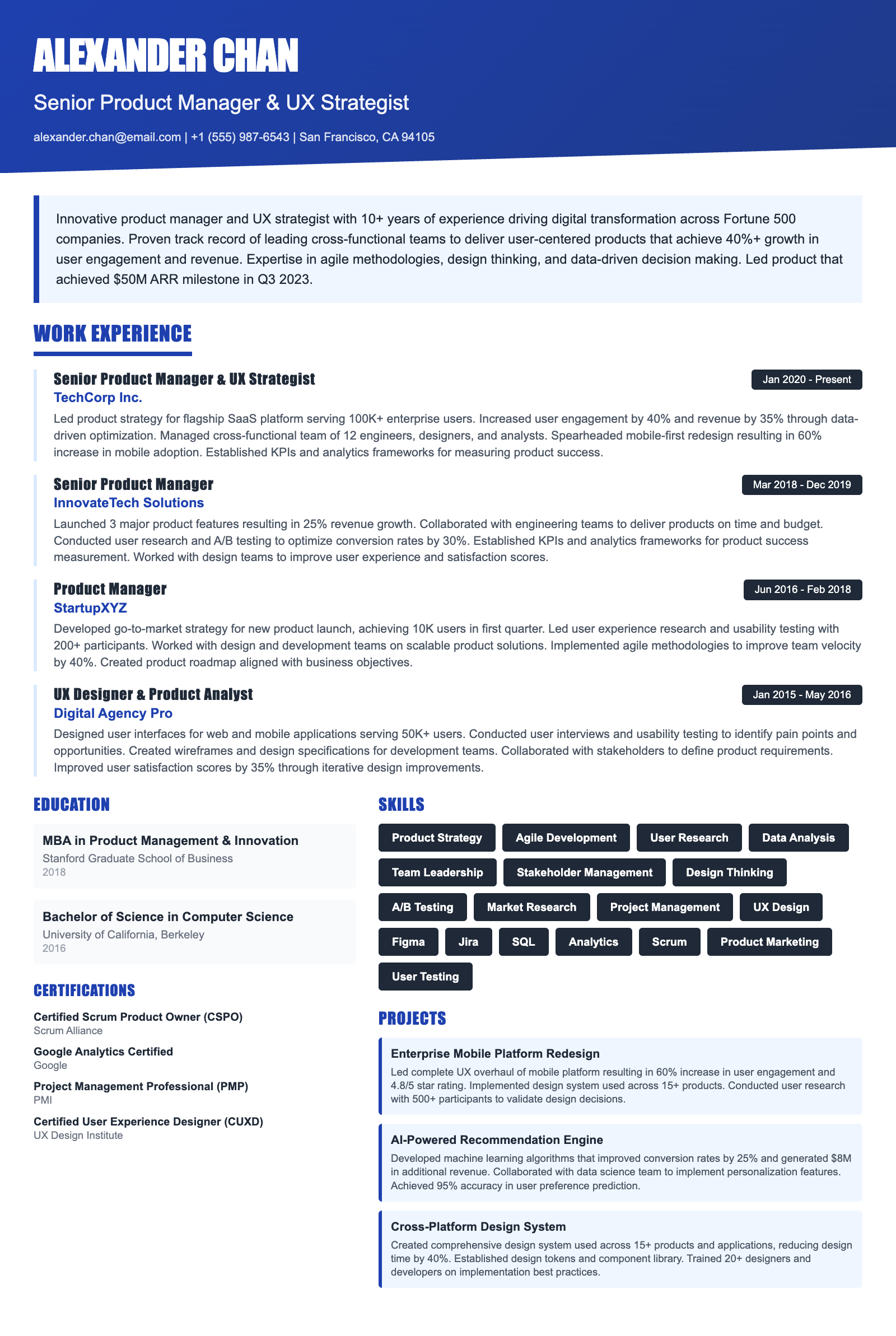
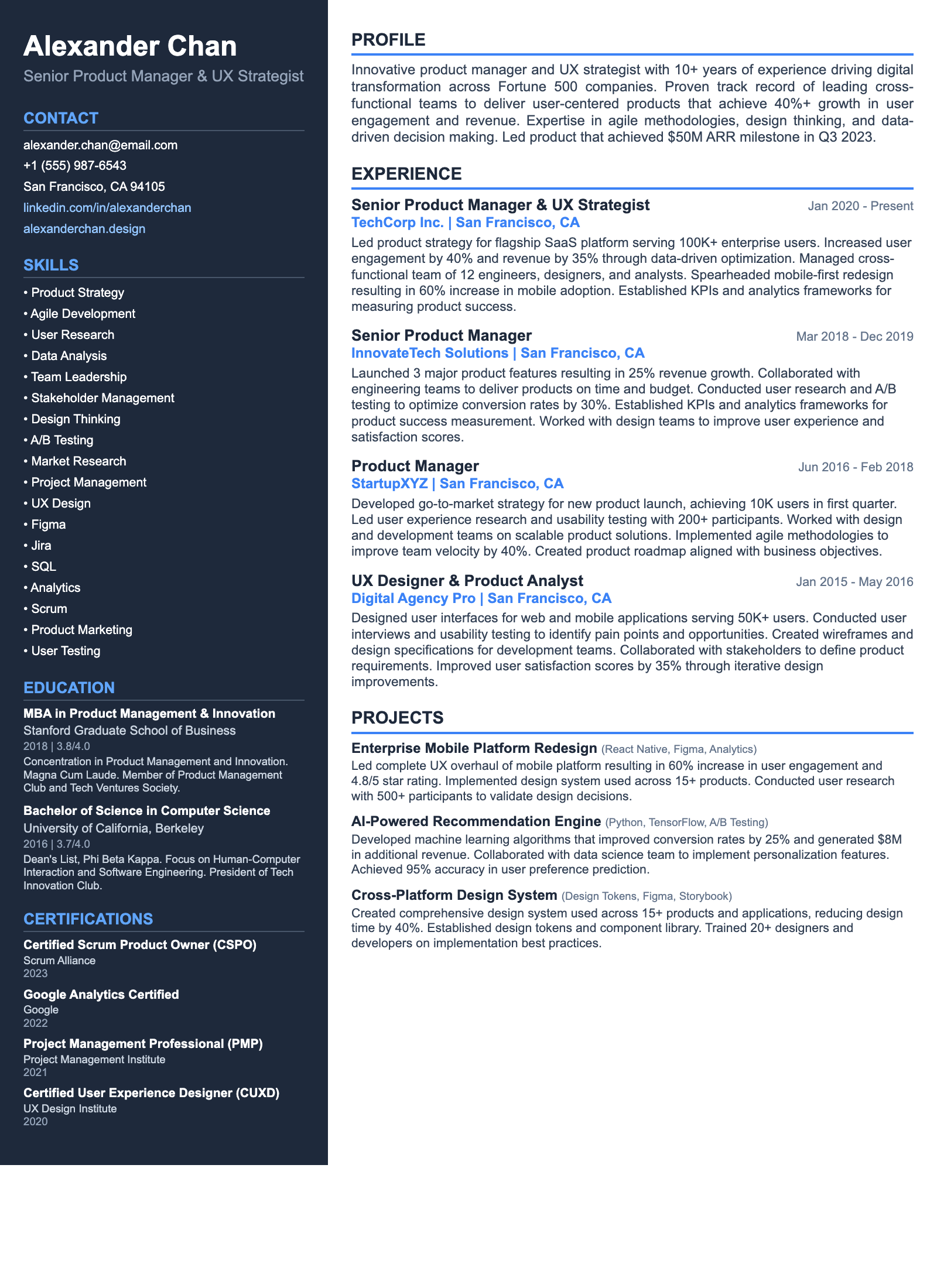
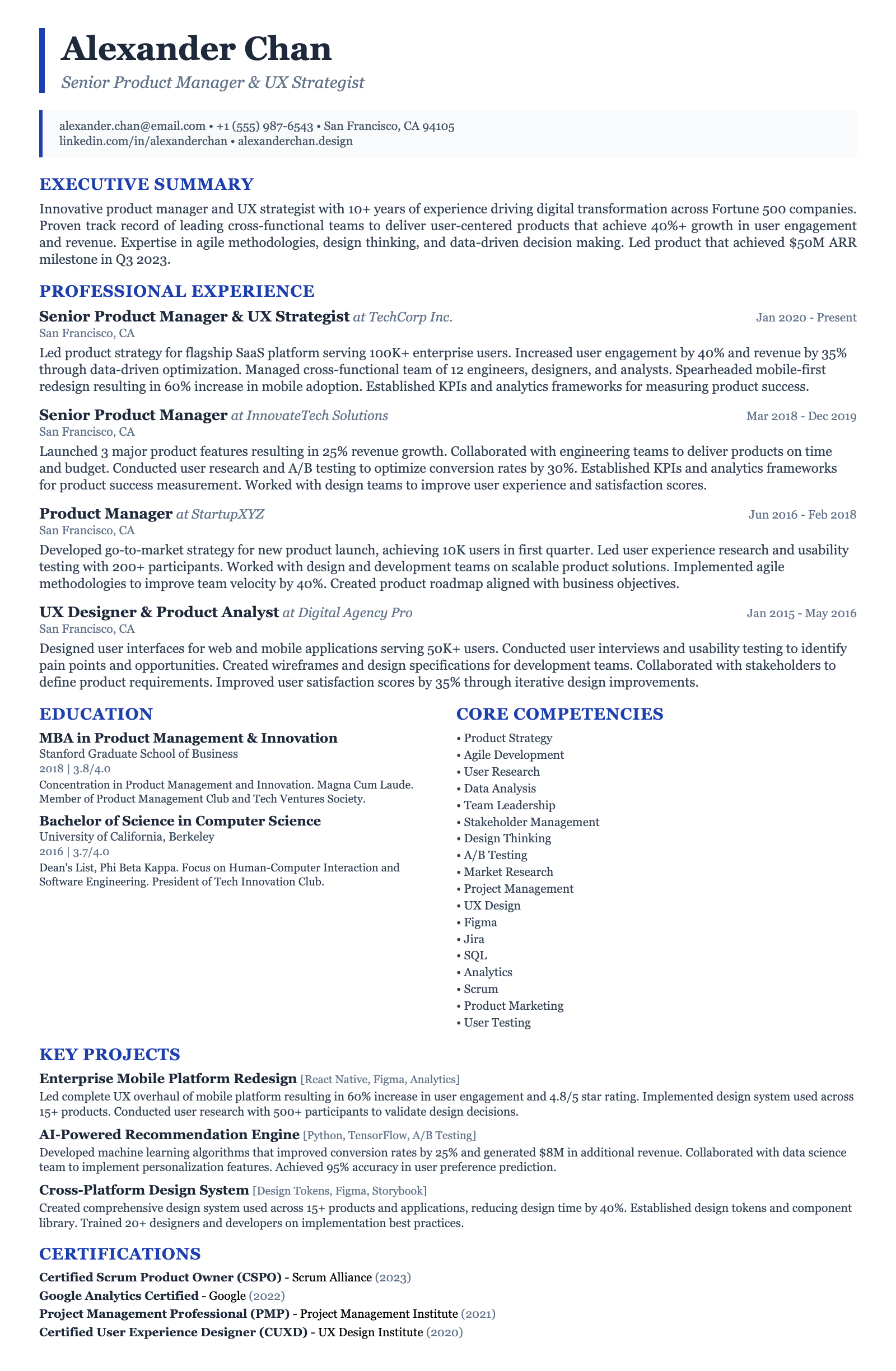
Recommended Resume Templates

ATS-friendly templates designed specifically for Lead Media Graphic Designer positions in the US market.
Frequently Asked Questions

What is the ideal resume length for a Lead Graphic Designer?

As a Lead Graphic Designer, 2 pages is standard. Page 1: recent impactful roles. Page 2: earlier career, certifications, and detailed technical skills. Prioritize achievements with measurable outcomes.

Should I include a photo on my US Media resume?

No. US resumes should not include photos to avoid bias. Focus on skills, achievements, and quantified impact. Save your professional headshot for LinkedIn.

What's the best resume format for Graphic Designer positions?

Reverse-chronological is the gold standard — 90% of US recruiters prefer it. It highlights career progression. For career changers, a hybrid (combination) format that leads with a skills summary may work better.

How do I make my resume ATS-friendly for Media?

Use standard section headings (Experience, Education, Skills). Avoid tables, graphics, and columns. Include exact keywords from the job description. Save as .docx or text-based PDF. Use simple fonts (Arial, Calibri). Include your job title from the posting.

What salary should I expect as a Lead Graphic Designer in the US?

Based on 2026 data, Lead Graphic Designers in US Media earn $90k-$130k annually. SF/NYC pay 25-40% above national average. Total compensation may include RSUs, bonus (10-20%), and benefits. Use Levels.fyi and Glassdoor for specifics.

What are common mistakes on Graphic Designer resumes?

Portfolio shows only final work without process (sketches, iterations, client feedback incorporation) Also: Not tailoring portfolio to the role — an agency wants variety; an in-house role wants brand consistency depth Also: Using outdated tools (no Figma experience in 2026 is a red flag for digital design roles)

Do I need certifications for a Graphic Designer role?

While not always required, certifications significantly boost your resume. They demonstrate commitment and validated expertise. Top certifications for this role vary by specialization — check the job description for specific requirements.

How do I quantify achievements on my Graphic Designer resume?

Use the formula: Action Verb + Metric + Context. Examples: 'Reduced deployment time by 40% using CI/CD automation' or 'Managed $2M annual budget with 98% forecast accuracy'. Numbers make your resume stand out from the competition.

Ready to Build Your Lead Media Graphic Designer Resume?

Use our AI-powered resume builder to create an ATS-optimized resume tailored for Lead Media Graphic Designer positions in the US market.

Complete Lead Media Graphic Designer Career Toolkit

Everything you need for your Lead Media Graphic Designer job search — all in one platform.

Why choose ResumeGyani over Zety or Resume.io?

The only platform with AI mock interviews + resume builder + job search + career coaching — all in one.

See comparison

Last updated: March 2026 · Content reviewed by certified resume writers · Optimized for US job market