
ATS-Optimized for US Market

Lead Retail Architect Career & Resume Guide

As a Lead Retail Architect, you shape the customer experience by designing and implementing innovative retail spaces and technology solutions. Your resume needs to showcase not only your architectural skills but also your leadership in driving retail strategy. Hiring managers seek candidates who can translate business needs into tangible store designs, integrate technology seamlessly, and manage cross-functional teams. A compelling resume includes sections like a professional summary that highlights your years of experience and key accomplishments. Detail your proficiency with industry-standard tools such as AutoCAD, Revit, SketchUp, and BIM software. Quantify your achievements whenever possible, such as 'Reduced construction costs by 15% through optimized space planning.' Emphasize your experience with data analysis, showcasing how you used data to improve store layouts or predict customer behavior. Furthermore, highlight your communication and teamwork skills, proving your ability to collaborate effectively with designers, contractors, and stakeholders. To stand out, include projects where you implemented innovative retail technologies like RFID, interactive displays, or AI-powered customer service solutions. Tailor your resume to each job description, emphasizing the skills and experiences most relevant to the specific retail environment and project requirements. Finally, demonstrate your adaptability by showcasing experience with different retail formats, such as flagship stores, pop-up shops, or omnichannel integration projects.
Average US Salary: $100k - $160k

Expert Tip: For Lead Retail Architect positions in the US, recruiters increasingly look for technical execution and adaptability over simple job duties. This guide is tailored to highlight these specific traits to ensure your resume stands out in the competitive Lead Retail Architect sector.

What US Hiring Managers Look For in a Lead Retail Architect Resume

When reviewing Lead Retail Architect candidates, recruiters and hiring managers in the US focus on a few critical areas. Making these elements clear and easy to find on your resume will improve your chances of moving to the interview stage.

  • Relevant experience and impact in Lead Retail Architect or closely related roles.
  • Clear, measurable achievements (metrics, scope, outcomes) rather than duties.
  • Skills and keywords that match the job description and ATS requirements.
  • Professional formatting and no spelling or grammar errors.
  • Consistency between your resume, LinkedIn, and application.
  • Proficiency in key areas such as Communication, Time Management, Industry-Standard Tools.

Essential Skills for Lead Retail Architect

Include these keywords in your resume to pass ATS screening and impress recruiters.

Must-Have Skills

  • CriticalCommunication
  • HighTime Management

Technical Skills

  • HighIndustry-Standard Tools
  • MediumData Analysis

Soft Skills

  • CriticalTeamwork
  • HighAdaptability
  • CriticalLeadership

A Day in the Life

A Day in the Life of a Lead Architect

Arrive early to review metrics or sprint progress. As a Lead Architect, you lead the 9 AM stand-up, addressing blockers and setting the strategic direction for handling core responsibilities, collaborating with cross-functional teams, and driving project success within the Retail team. 10 AM-1 PM is for high-impact decisions. You're architecting solutions, reviewing critical deliverables, or negotiating priorities with Retail stakeholders. Afternoons involve mentorship and cross-org coordination. You're the go-to expert for handling core responsibilities, collaborating with cross-functional teams, and driving project success, ensuring the team's output aligns with company goals. You finish by finalizing quarterly roadmaps or reviewing next steps. At this level in Retail, your focus shifts from individual tasks to organizational impact.

Career Progression Path

Level 1

Architect I (Entry Level)

Level 2

Architect II (Junior)

Level 3

Senior Architect

Level 4

Lead Architect

Level 5

Architect Manager / Director

Interview Questions & Answers

Prepare for your Lead Retail Architect interview with these commonly asked questions.

Describe a time you had to make a significant design change late in a retail project. How did you handle it?

Medium
Situational
Sample Answer
In a recent flagship store project, we discovered a structural issue that required a redesign of the central atrium just weeks before launch. I immediately gathered the design and construction teams to brainstorm alternative solutions. We explored several options, weighing the impact on cost, timeline, and aesthetics. Ultimately, we implemented a modified design that addressed the structural concerns while maintaining the overall design intent. I communicated proactively with the client, managing their expectations and ensuring their buy-in throughout the process. The store opened on time and within budget.

How do you stay current with the latest trends and technologies in retail design?

Medium
Behavioral
Sample Answer
I actively participate in industry conferences, read trade publications like Retail Design World and VMSD, and follow thought leaders on social media. I also invest time in experimenting with new software and technologies, such as VR and AR applications for retail space visualization. Recently, I attended a webinar on sustainable retail design practices and am exploring ways to incorporate those principles into our upcoming projects. Furthermore, I encourage my team to share their learnings and insights from external sources to foster a culture of continuous learning.

Explain your experience with BIM and how you've used it to improve retail design projects.

Technical
Technical
Sample Answer
I have extensive experience using BIM software, including Revit, to create detailed 3D models of retail spaces. BIM allows for better collaboration among stakeholders, clash detection, and improved construction documentation. On a recent project, we used BIM to identify potential conflicts between the mechanical and electrical systems early in the design phase, saving significant time and money during construction. I also used BIM to generate photorealistic renderings for client presentations, helping them visualize the final product and make informed decisions.

Describe a time you had to lead a team through a challenging retail design project. What were the challenges, and how did you overcome them?

Hard
Behavioral
Sample Answer
On a recent project involving the redesign of a large department store, we faced challenges related to integrating new technologies with the existing infrastructure. The building was old, and the existing electrical and data systems were not designed to support the new interactive displays and digital signage. I facilitated open communication among the design, IT, and construction teams to develop creative solutions. We ultimately implemented a hybrid approach, using a combination of wired and wireless technologies to overcome the infrastructure limitations. By fostering a collaborative environment and empowering team members to contribute their expertise, we successfully delivered the project on time and within budget.

How do you approach data analysis in the context of retail design?

Medium
Technical
Sample Answer
I use data analysis to inform design decisions and optimize the customer experience. This includes analyzing sales data to identify high-performing product categories, studying customer traffic patterns to optimize store layout, and using demographic data to tailor store design to the target market. For example, on a recent project, we used heatmaps generated from customer traffic data to identify areas of congestion and redesign the store layout to improve flow and reduce bottlenecks. This resulted in a 10% increase in sales in the redesigned area.

How do you handle conflicting priorities when working on multiple retail design projects simultaneously?

Hard
Situational
Sample Answer
I prioritize projects based on their strategic importance, deadlines, and resource availability. I use project management tools like Asana or Jira to track tasks, deadlines, and dependencies. I also communicate proactively with stakeholders to manage expectations and ensure alignment on priorities. When conflicts arise, I work with the project teams to identify creative solutions and reallocate resources as needed. I always strive to maintain a clear focus on delivering high-quality results while meeting deadlines.

ATS Optimization Tips

Make sure your resume passes Applicant Tracking Systems used by US employers.

Incorporate industry-specific keywords such as 'Retail Design,' 'Space Planning,' 'Visual Merchandising,' 'Omnichannel,' 'Revit,' 'AutoCAD,' 'BIM,' and 'LEED' throughout your resume.
Use a chronological format for your work experience section to clearly display your career progression and the duration of your roles.
Optimize the skills section by listing both technical and soft skills, ensuring they align with the requirements listed in the job description; separate categories for 'Technical Skills' and 'Soft Skills' can be effective.
Quantify your achievements whenever possible by including metrics such as percentage improvements in sales, cost reductions achieved, or space optimization metrics.
Use standard section headings like 'Summary,' 'Experience,' 'Skills,' 'Education,' and 'Certifications' to ensure the ATS can easily parse the information.
Save your resume as a PDF to preserve formatting and prevent any alteration of the content by the ATS system. Ensure the PDF is text-searchable, not just an image.
Include a 'Projects' section to showcase specific retail design projects you've led, detailing your role, the challenges you addressed, and the outcomes achieved. Mentioning project size, budget, and key stakeholders is beneficial.
Tailor your resume to each specific job posting by highlighting the skills and experiences that are most relevant to the role; generic resumes are often filtered out by ATS systems.

Common Resume Mistakes to Avoid

Don't make these errors that get resumes rejected.

1
Failing to quantify achievements. Instead of saying 'Managed retail design projects,' say 'Managed 15 retail design projects, reducing construction costs by 10% and improving space utilization by 15%'.
2
Listing skills without providing context. Simply stating 'AutoCAD' is not enough; mention how you've used it, e.g., 'Designed detailed store layouts using AutoCAD, optimizing space for high-traffic areas'.
3
Using a visually appealing but ATS-unfriendly resume template. Complex formatting can prevent ATS from correctly parsing your information.
4
Neglecting to tailor the resume to the specific retail environment. A resume geared toward luxury retail may not be suitable for a discount retailer.
5
Overlooking the importance of visual merchandising skills. This is a key aspect of retail design, so highlight your experience in this area.
6
Not including examples of innovative retail technology implementation. Showcase your experience with RFID, interactive displays, or AI-powered customer service solutions.
7
Omitting leadership experience. As a Lead Retail Architect, you're expected to lead teams and projects; highlight examples of your leadership skills and project management experience.
8
Ignoring data analysis skills. Modern retail design is data-driven, so showcase your ability to use data to improve store layouts and customer flow.

Industry Outlook

The US Retail sector is experiencing steady growth. Lead Architects are particularly sought after, with the Bureau of Labor Statistics projecting average job growth through 2030. Peak hiring occurs in Q1 (January-March) and Q3 (August-September).

Top Hiring Companies

Industry LeadersRegional FirmsFast-Growing Companies

Recommended Resume Templates

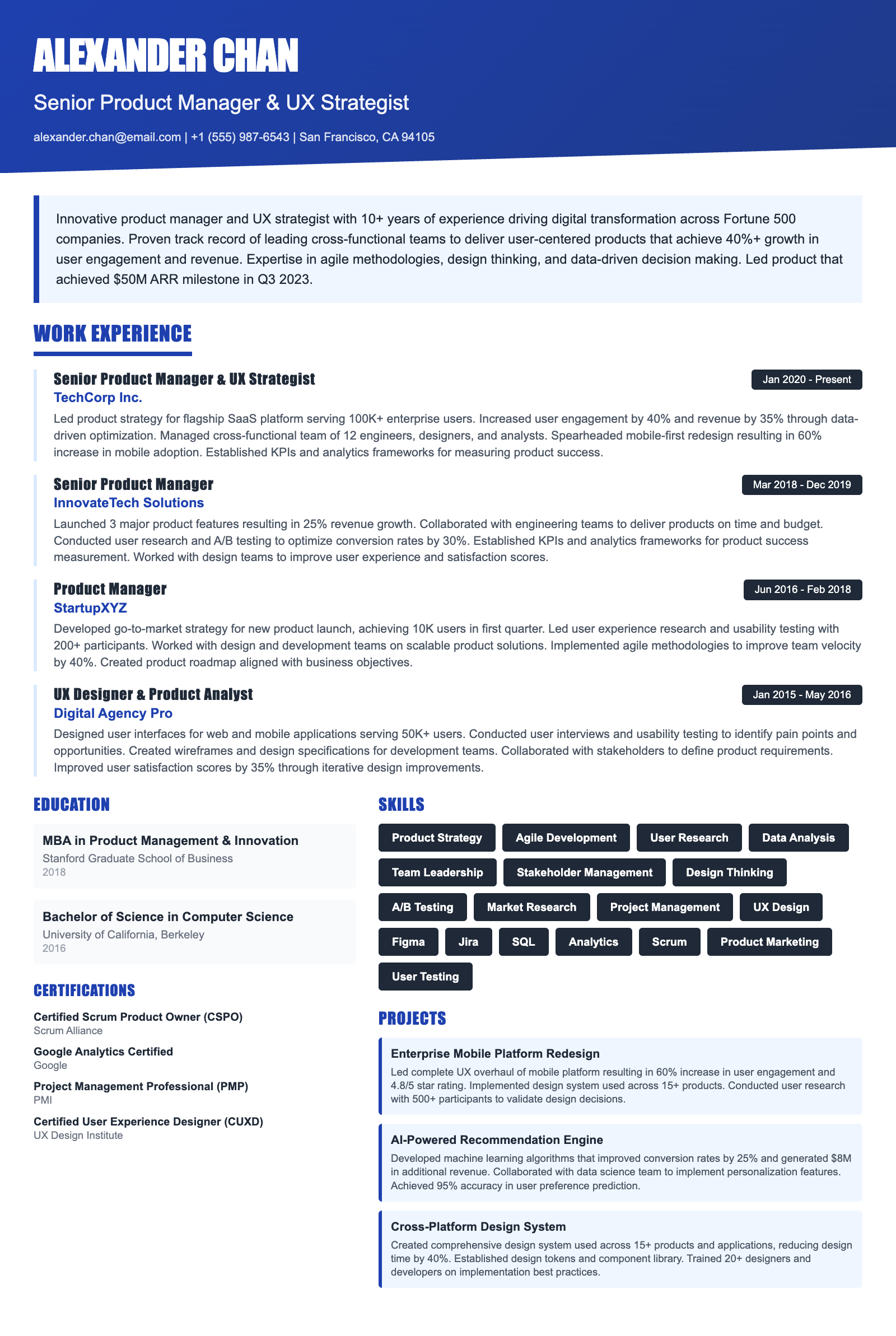
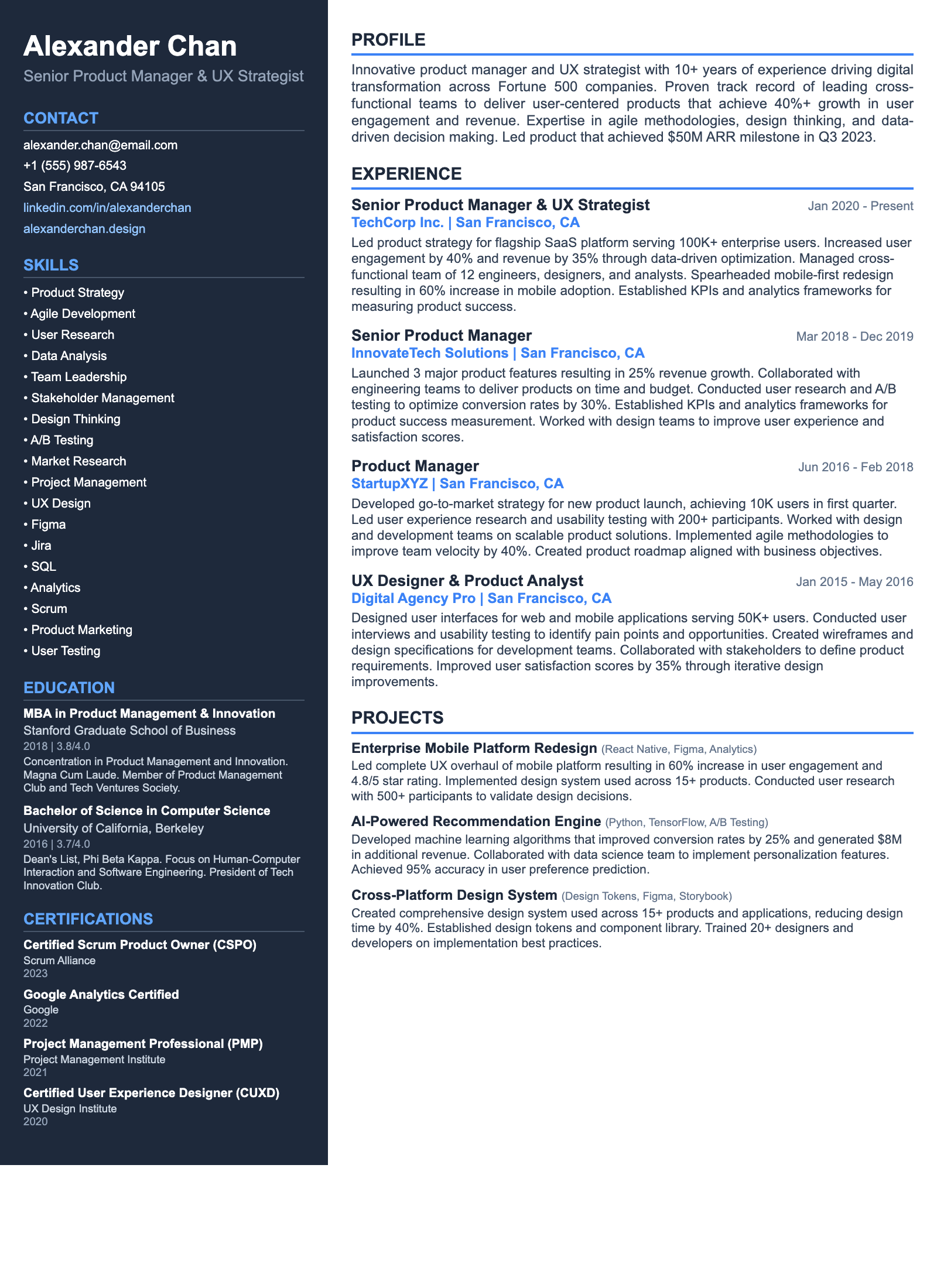
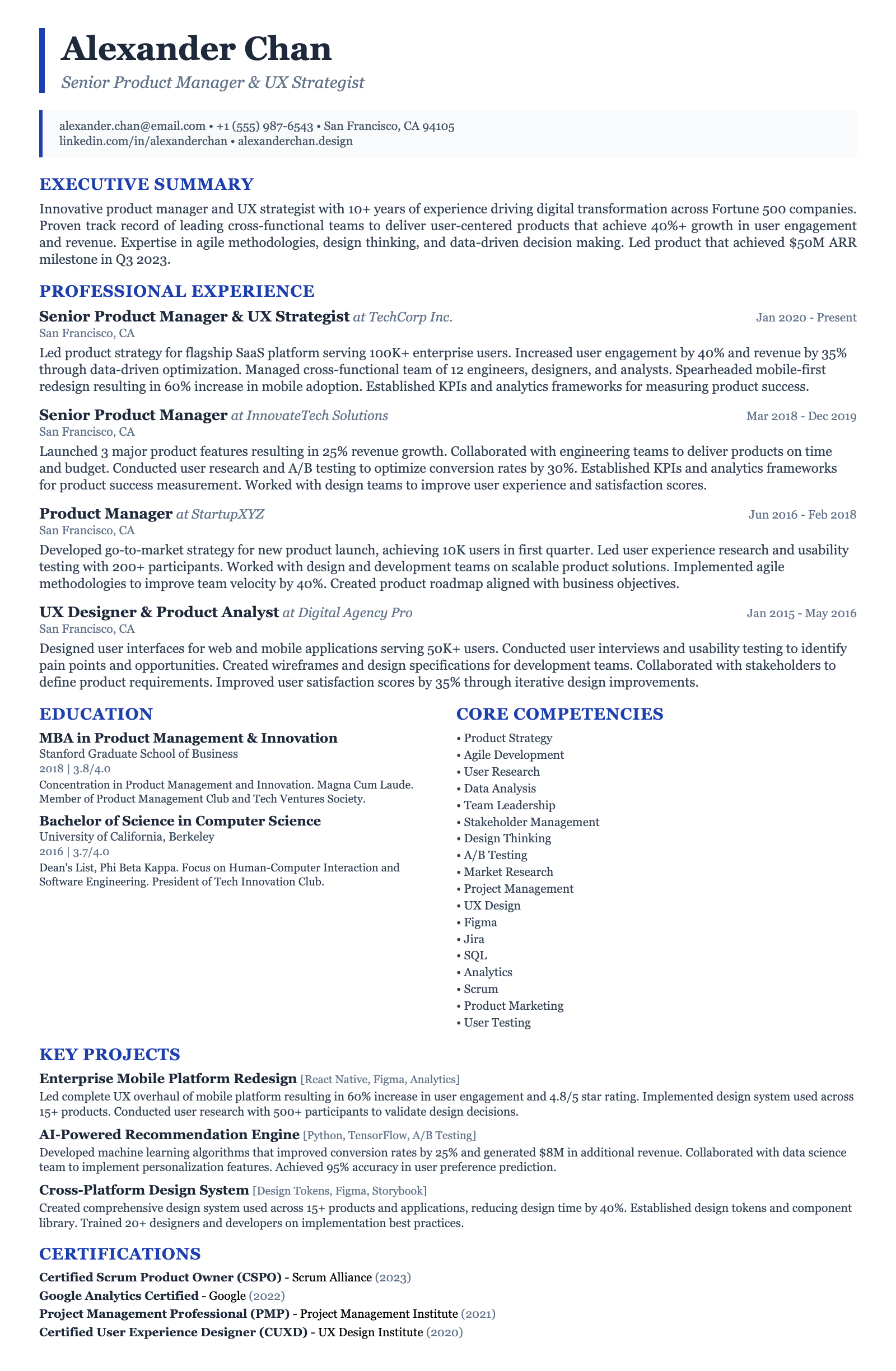
ATS-friendly templates designed specifically for Lead Retail Architect positions in the US market.
Frequently Asked Questions

What is the ideal length for a Lead Retail Architect resume?

Aim for a one- to two-page resume. If you have over 10 years of relevant experience, two pages are acceptable. Focus on the most impactful projects and accomplishments relevant to the specific role. Use metrics to quantify your contributions, especially in areas like cost reduction, space optimization, or customer experience improvement. Prioritize showcasing expertise in tools like Revit and AutoCAD.

What key skills should I emphasize on my Lead Retail Architect resume?

Highlight a blend of technical and soft skills. Technical skills should include proficiency in industry-standard tools such as AutoCAD, Revit, SketchUp, and BIM software. Also showcase your data analysis skills, particularly in using data to optimize store layouts and customer flow. Soft skills should include communication, teamwork, leadership, and adaptability. Demonstrate your ability to lead cross-functional teams and communicate effectively with stakeholders.

How can I format my resume to be ATS-friendly?

Use a clean, straightforward format with clear section headings like 'Summary,' 'Experience,' 'Skills,' and 'Education.' Avoid using tables, text boxes, or images, as these can confuse ATS systems. Use standard fonts like Arial or Times New Roman, and save your resume as a PDF. Incorporate keywords from the job description throughout your resume, especially in the skills and experience sections. Tools such as Jobscan can help analyze your resume's ATS compatibility.

Are certifications important for a Lead Retail Architect resume?

While not always mandatory, certifications can enhance your credibility. Consider certifications in project management (PMP), LEED accreditation for sustainable design, or specific software certifications (e.g., Autodesk Certified Professional). These certifications demonstrate your commitment to professional development and expertise in relevant areas. List them prominently in a dedicated 'Certifications' section.

What are some common mistakes to avoid on a Lead Retail Architect resume?

Avoid generic descriptions of your responsibilities. Instead, quantify your achievements and highlight your impact on the business. Do not neglect to tailor your resume to each job description. Failing to showcase relevant skills and experience will significantly reduce your chances. Also, avoid including irrelevant information or outdated technologies. Focus on your most recent and relevant accomplishments. Proofread carefully.

How can I showcase a career transition on my Lead Retail Architect resume?

If you are transitioning from a related field, highlight transferable skills and experiences. Focus on projects where you utilized architectural design principles, space planning, or data analysis, even if the context was different. Emphasize any relevant certifications or training you have undertaken to bridge the gap. For example, if transitioning from commercial architecture, showcase your experience in client management, regulatory compliance, and project delivery.

Ready to Build Your Lead Retail Architect Resume?

Use our AI-powered resume builder to create an ATS-optimized resume tailored for Lead Retail Architect positions in the US market.

Complete Lead Retail Architect Career Toolkit

Everything you need for your Lead Retail Architect job search — all in one platform.

Why choose ResumeGyani over Zety or Resume.io?

The only platform with AI mock interviews + resume builder + job search + career coaching — all in one.

See comparison

Last updated: March 2026 · Content reviewed by certified resume writers · Optimized for US job market

Lead Retail Architect Resume Guide (2026) | ATS-Optimized Template