
ATS-Optimized for US Market

Lead Retail Data Scientist Career & Resume Guide

As a Lead Retail Data Scientist, your resume needs to showcase your ability to drive business value through data insights in the retail sector. Hiring managers seek candidates who can not only analyze complex datasets but also communicate findings effectively to both technical and non-technical audiences. Your resume should clearly demonstrate leadership experience, showcasing your ability to mentor and guide data science teams. Highlight your proficiency in industry-standard tools like Python (with libraries such as Pandas, NumPy, Scikit-learn), R, SQL, and cloud platforms like AWS or Azure for data storage and processing. Emphasize your experience with statistical modeling, machine learning algorithms (e.g., regression, classification, clustering), and deep learning frameworks (e.g., TensorFlow, PyTorch). Quantify your achievements whenever possible, demonstrating how your data-driven solutions improved key retail metrics such as sales, customer retention, or inventory optimization. In the skills section, include communication, time management, industry-standard tools, data analysis, teamwork, adaptability, and leadership. To stand out, showcase your understanding of retail-specific challenges like supply chain optimization, personalized marketing, and fraud detection. Consider a projects section highlighting impactful projects where you utilized data science to solve real-world retail problems. Finally, ensure your resume highlights your ability to translate data insights into actionable strategies that drive business growth within a competitive retail landscape. Tailor your resume to each specific role, emphasizing the skills and experiences most relevant to the job description, to make a strong impression on potential employers. Companies like Walmart, Target, Amazon, and Kroger are actively hiring Lead Retail Data Scientists.
Average US Salary: $100k - $160k

Expert Tip: For Lead Retail Data Scientist positions in the US, recruiters increasingly look for technical execution and adaptability over simple job duties. This guide is tailored to highlight these specific traits to ensure your resume stands out in the competitive Lead Retail Data Scientist sector.

What US Hiring Managers Look For in a Lead Retail Data Scientist Resume

When reviewing Lead Retail Data Scientist candidates, recruiters and hiring managers in the US focus on a few critical areas. Making these elements clear and easy to find on your resume will improve your chances of moving to the interview stage.

  • Relevant experience and impact in Lead Retail Data Scientist or closely related roles.
  • Clear, measurable achievements (metrics, scope, outcomes) rather than duties.
  • Skills and keywords that match the job description and ATS requirements.
  • Professional formatting and no spelling or grammar errors.
  • Consistency between your resume, LinkedIn, and application.
  • Proficiency in key areas such as Communication, Time Management, Industry-Standard Tools.

Essential Skills for Lead Retail Data Scientist

Include these keywords in your resume to pass ATS screening and impress recruiters.

Must-Have Skills

  • CriticalCommunication
  • HighTime Management

Technical Skills

  • HighIndustry-Standard Tools
  • MediumData Analysis

Soft Skills

  • CriticalTeamwork
  • HighAdaptability
  • CriticalLeadership

A Day in the Life

A Day in the Life of a Lead Data Scientist

Arrive early to review metrics or sprint progress. As a Lead Data Scientist, you lead the 9 AM stand-up, addressing blockers and setting the strategic direction for handling core responsibilities, collaborating with cross-functional teams, and driving project success within the Retail team. 10 AM-1 PM is for high-impact decisions. You're architecting solutions, reviewing critical deliverables, or negotiating priorities with Retail stakeholders. Afternoons involve mentorship and cross-org coordination. You're the go-to expert for handling core responsibilities, collaborating with cross-functional teams, and driving project success, ensuring the team's output aligns with company goals. You finish by finalizing quarterly roadmaps or reviewing next steps. At this level in Retail, your focus shifts from individual tasks to organizational impact.

Career Progression Path

Level 1

Data Scientist I (Entry Level)

Level 2

Data Scientist II (Junior)

Level 3

Senior Data Scientist

Level 4

Lead Data Scientist

Level 5

Data Scientist Manager / Director

Interview Questions & Answers

Prepare for your Lead Retail Data Scientist interview with these commonly asked questions.

Describe a time when you had to explain a complex data science concept to a non-technical stakeholder in the retail industry. How did you approach it?

Medium
Behavioral
Sample Answer
In my previous role, I needed to explain the benefits of customer segmentation using machine learning to the marketing team. I avoided technical jargon and instead focused on how it would improve their campaign targeting and ROI. I used visual aids, like charts and graphs, to illustrate the different customer segments and their unique characteristics. I also framed the explanation in terms of tangible business outcomes, such as increased sales and customer loyalty, which resonated well with the team. The result was a successful implementation of personalized marketing strategies.

How would you approach building a model to predict customer churn in a retail setting?

Medium
Technical
Sample Answer
First, I'd define 'churn' based on business requirements (e.g., inactivity for a certain period). Then, I'd gather relevant data: purchase history, demographics, website activity, customer service interactions. I'd explore features for correlations with churn. For modeling, I might use logistic regression, random forests, or gradient boosting. Model evaluation would focus on precision, recall, and F1-score, optimizing for the right balance based on the cost of false positives/negatives. I'd also consider interpretability, presenting insights to stakeholders to drive retention strategies.

Imagine your model predicts a significant drop in sales for a specific product line. What steps would you take to validate and address this prediction?

Medium
Situational
Sample Answer
First, I'd check the data quality and ensure there are no anomalies or errors that could be skewing the model's output. I'd also review the model's assumptions and parameters to see if any adjustments are needed. Next, I'd compare the prediction to historical data and industry trends to assess its plausibility. If the prediction still seems valid, I'd communicate the findings to relevant stakeholders and collaborate on developing a plan to mitigate the potential impact, such as adjusting inventory levels or implementing promotional campaigns.

Describe your experience with A/B testing in a retail context. What metrics did you focus on, and what were the key learnings?

Medium
Behavioral
Sample Answer
In a previous role, we used A/B testing to optimize our website's product recommendation engine. We tested two different algorithms: one based on collaborative filtering and the other on content-based filtering. We focused on metrics such as click-through rate, conversion rate, and average order value. The results showed that the content-based filtering algorithm performed better for new users, while the collaborative filtering algorithm was more effective for returning customers. This led us to implement a hybrid approach, tailoring the recommendations based on user behavior, which significantly improved overall sales.

How do you stay up-to-date with the latest trends and technologies in retail data science?

Easy
Behavioral
Sample Answer
I actively participate in online communities, attend industry conferences, and follow leading researchers and practitioners on social media. I also read research papers and blogs related to retail analytics, machine learning, and artificial intelligence. Additionally, I dedicate time to experimenting with new tools and techniques through personal projects and online courses. This continuous learning approach helps me stay ahead of the curve and apply the latest advancements to solve retail challenges.

Explain a situation where you had to deal with missing or incomplete data in a retail project. What techniques did you use to handle it?

Medium
Technical
Sample Answer
In a project analyzing customer purchase patterns, we encountered a significant amount of missing data for customer demographics. To address this, we first tried to impute the missing values using techniques such as mean/median imputation and k-nearest neighbors imputation. We also considered using regression models to predict the missing values based on other available features. After imputation, we assessed the impact of the imputed data on the model's performance and adjusted our approach accordingly. We also documented the limitations of the analysis due to the missing data.

ATS Optimization Tips

Make sure your resume passes Applicant Tracking Systems used by US employers.

Incorporate industry-specific keywords like 'POS data', 'supply chain optimization', 'customer segmentation', and 'inventory management' throughout your resume.
Use a consistent format for dates and job titles (e.g., Month Year – Month Year) to ensure ATS can accurately parse the information.
List your skills using a dedicated 'Skills' section with clear categories such as 'Programming Languages', 'Machine Learning', and 'Data Visualization'.
Quantify your accomplishments with specific metrics and data-driven results to demonstrate the impact of your work.
Save your resume as a PDF to preserve formatting and ensure that the ATS can read the document correctly. Most modern ATS systems handle PDFs well.
Use standard section headings like 'Summary', 'Experience', 'Education', and 'Skills' to help the ATS categorize your information.
Tailor your resume to match the job description by including keywords and skills that are specifically mentioned in the job posting.
Check your resume's readability score to ensure it is easily scannable by both humans and ATS systems. Aim for a score that is easily understood.

Common Resume Mistakes to Avoid

Don't make these errors that get resumes rejected.

1
Failing to quantify accomplishments with specific metrics, such as revenue increases, cost savings, or efficiency improvements.
2
Using generic descriptions of responsibilities instead of highlighting specific achievements and contributions.
3
Not tailoring the resume to match the specific requirements of the Lead Retail Data Scientist role.
4
Neglecting to showcase experience with retail-specific data sources, such as POS data, customer transaction data, or inventory data.
5
Overemphasizing technical skills without demonstrating the ability to communicate insights to non-technical stakeholders.
6
Omitting experience with relevant retail-specific tools or platforms, such as demand forecasting software or customer relationship management (CRM) systems.
7
Not highlighting leadership experience or the ability to mentor and guide data science teams.
8
Ignoring the importance of showcasing business acumen and understanding of retail industry trends and challenges.

Industry Outlook

The US Retail sector is experiencing steady growth. Lead Data Scientists are particularly sought after, with the Bureau of Labor Statistics projecting average job growth through 2030. Peak hiring occurs in Q1 (January-March) and Q3 (August-September).

Top Hiring Companies

Industry LeadersRegional FirmsFast-Growing Companies

Recommended Resume Templates

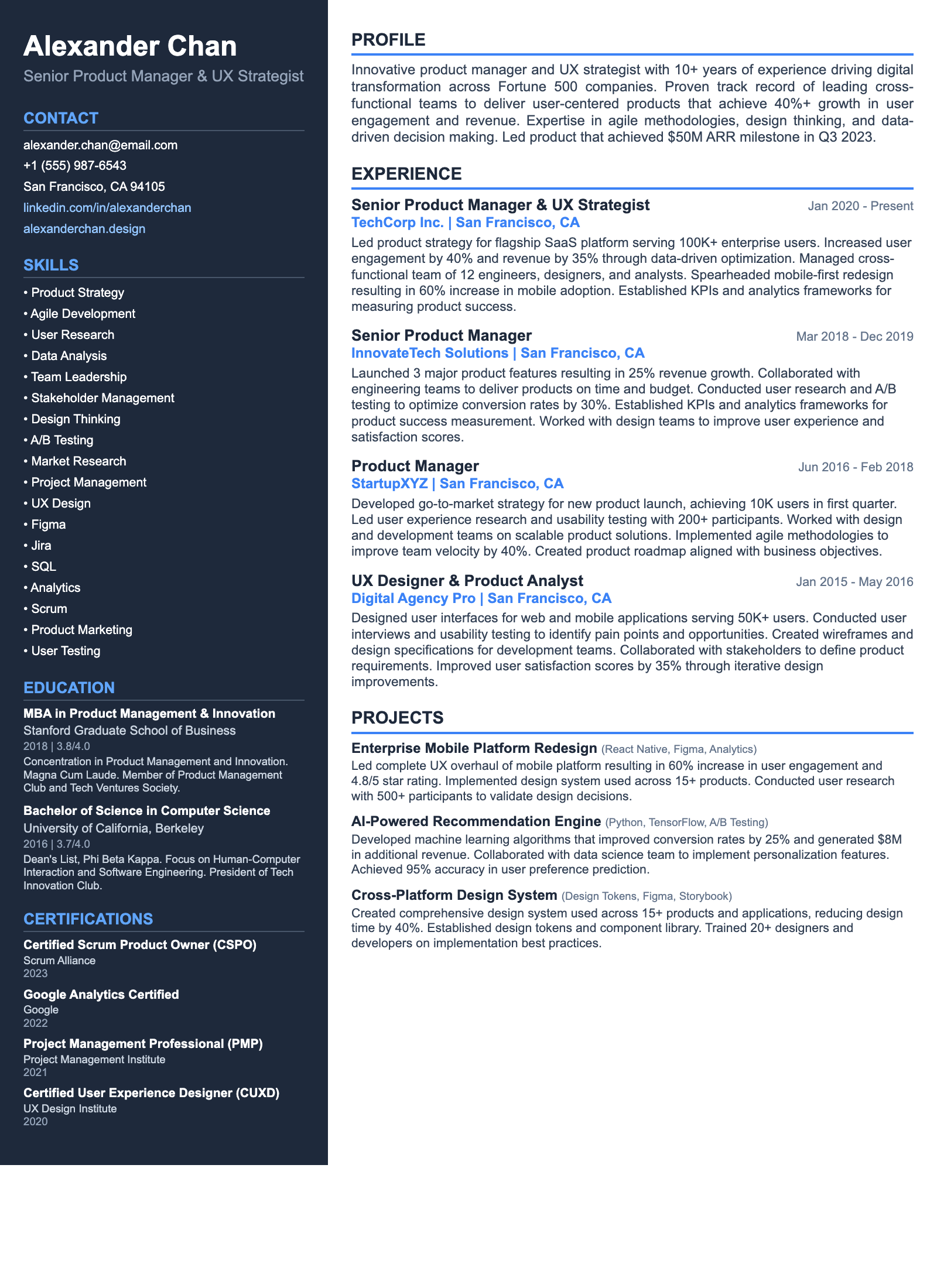
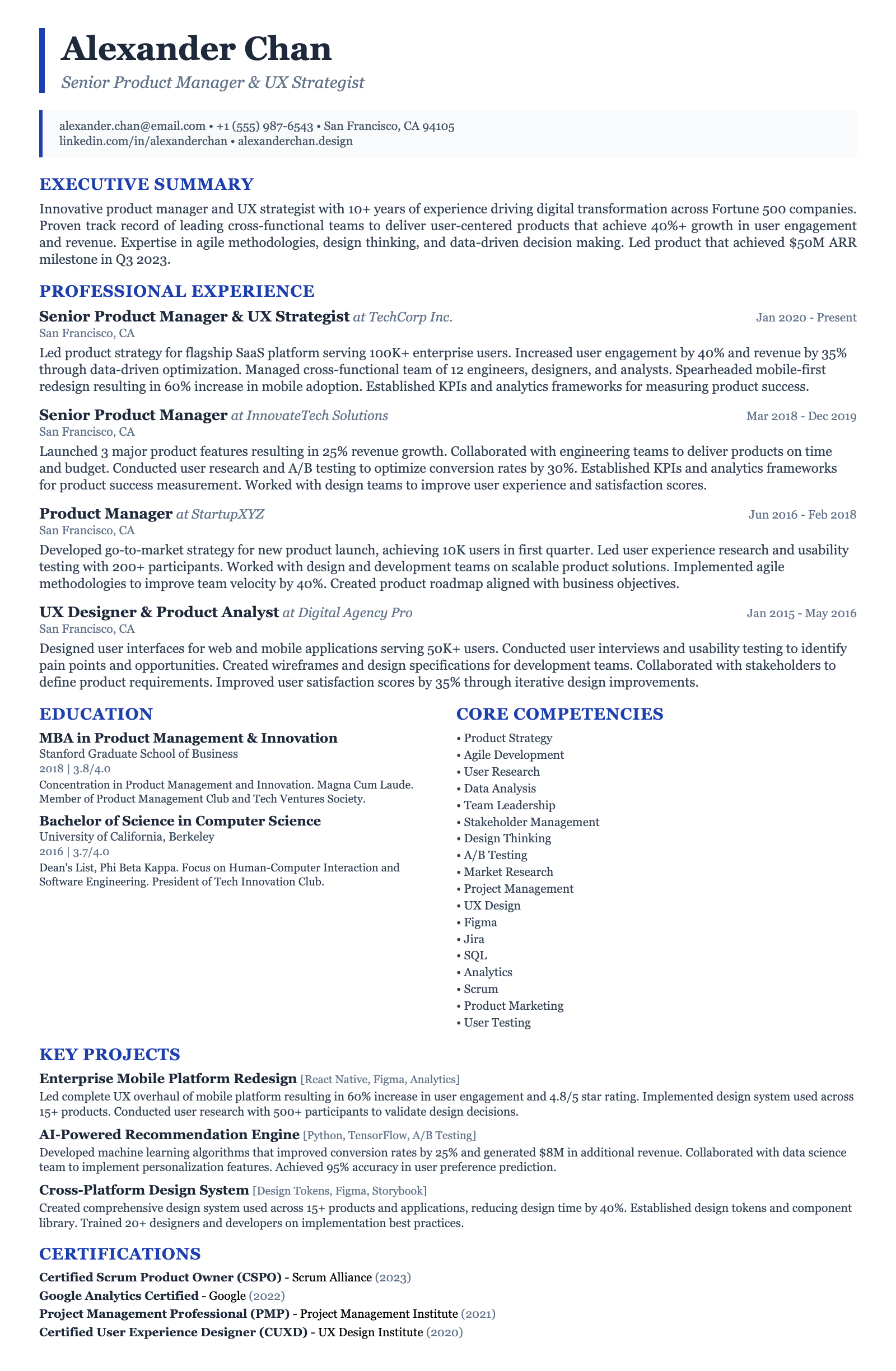
ATS-friendly templates designed specifically for Lead Retail Data Scientist positions in the US market.
Frequently Asked Questions

What is the ideal length for a Lead Retail Data Scientist resume?

For a Lead Retail Data Scientist role in the US, a one-page resume is often sufficient if you have less than 10 years of experience. If you have extensive experience, a two-page resume is acceptable. Focus on the most relevant experiences and quantify your accomplishments using metrics tied to revenue, customer satisfaction, or efficiency improvements. Prioritize clarity and conciseness to keep the reader engaged.

What key skills should I highlight on my Lead Retail Data Scientist resume?

Emphasize skills relevant to retail data science, including proficiency in Python (Pandas, Scikit-learn), R, SQL, machine learning (regression, classification, clustering), deep learning (TensorFlow, PyTorch), data visualization (Tableau, Power BI), and cloud platforms (AWS, Azure). Showcase your communication skills and ability to translate complex data into actionable business insights. Highlight experience with retail-specific challenges like supply chain optimization and personalized marketing.

How can I optimize my resume for Applicant Tracking Systems (ATS)?

Use a simple, clean format with standard fonts like Arial or Times New Roman. Avoid tables, images, and unusual formatting elements that ATS systems may not parse correctly. Incorporate keywords from the job description naturally throughout your resume, especially in the skills and experience sections. Save your resume as a PDF to preserve formatting. Tools like Jobscan can help analyze your resume's ATS compatibility.

Are certifications important for a Lead Retail Data Scientist role?

While not always required, relevant certifications can enhance your resume. Consider certifications in cloud platforms (AWS Certified Machine Learning – Specialty, Azure AI Engineer Associate), data science (e.g., Certified Analytics Professional - CAP), or specific tools like TensorFlow. Certifications demonstrate your commitment to continuous learning and validate your expertise in specific areas.

What are some common resume mistakes to avoid as a Lead Retail Data Scientist?

Avoid using generic descriptions of your responsibilities. Quantify your achievements with specific metrics. Don't neglect to tailor your resume to each specific job application. Do not exclude projects with real-world application even if completed during education. Do not forget to include industry-specific experience like POS (Point of Sale) systems. Do not overstate soft skills at the expense of hard skills.

How can I highlight a career transition into Lead Retail Data Science?

If you're transitioning into Lead Retail Data Science, highlight relevant skills and experiences from your previous roles. Emphasize transferable skills like data analysis, problem-solving, and communication. Consider completing relevant online courses or certifications to demonstrate your commitment to the field. Frame your resume to showcase how your previous experience makes you a strong candidate for the role. A strong cover letter can help explain your career transition.

Ready to Build Your Lead Retail Data Scientist Resume?

Use our AI-powered resume builder to create an ATS-optimized resume tailored for Lead Retail Data Scientist positions in the US market.

Complete Lead Retail Data Scientist Career Toolkit

Everything you need for your Lead Retail Data Scientist job search — all in one platform.

Why choose ResumeGyani over Zety or Resume.io?

The only platform with AI mock interviews + resume builder + job search + career coaching — all in one.

See comparison

Last updated: March 2026 · Content reviewed by certified resume writers · Optimized for US job market

Lead Retail Data Scientist Resume Guide (2026) | ATS-Optimized Template