
ATS-Optimized for US Market

Lead Tech Architect Career & Resume Guide

As a Lead Tech Architect, your resume must showcase your ability to design and implement complex technological solutions that align with business goals. Hiring managers seek candidates who demonstrate a deep understanding of architectural patterns, cloud technologies, and data management principles. Your resume should clearly articulate your experience in leading technical teams, making strategic technology decisions, and driving innovation. Key sections should include a compelling summary highlighting your expertise, a detailed work history showcasing your impact on previous projects, a skills section listing relevant technical proficiencies (e.g., AWS, Azure, GCP, Kubernetes, Docker, Terraform, Python, Java), and an education section. To stand out, quantify your accomplishments with metrics that demonstrate cost savings, performance improvements, or revenue generation. Showcase your knowledge of frameworks like TOGAF or Zachman. Highlight experience with specific industry regulations (e.g., HIPAA, GDPR) where applicable. Emphasize your problem-solving abilities and your adaptability to emerging technologies. Your resume is your sales pitch; make it clear you're the architect they need to build their technological future. Address specific projects or technologies that are in demand by the companies you are targeting; for example, if you are applying to a fintech company, clearly articulate your experience with blockchain, payment processing, or cybersecurity.
Average US Salary: $140k - $240k

Expert Tip: For Lead Tech Architect positions in the US, recruiters increasingly look for technical execution and adaptability over simple job duties. This guide is tailored to highlight these specific traits to ensure your resume stands out in the competitive Lead Tech Architect sector.

What US Hiring Managers Look For in a Lead Tech Architect Resume

When reviewing Lead Tech Architect candidates, recruiters and hiring managers in the US focus on a few critical areas. Making these elements clear and easy to find on your resume will improve your chances of moving to the interview stage.

  • Relevant experience and impact in Lead Tech Architect or closely related roles.
  • Clear, measurable achievements (metrics, scope, outcomes) rather than duties.
  • Skills and keywords that match the job description and ATS requirements.
  • Professional formatting and no spelling or grammar errors.
  • Consistency between your resume, LinkedIn, and application.
  • Proficiency in key areas such as Problem Solving, Time Management, Programming/Cloud Services.

Essential Skills for Lead Tech Architect

Include these keywords in your resume to pass ATS screening and impress recruiters.

Must-Have Skills

  • CriticalProblem Solving
  • HighTime Management

Technical Skills

  • HighProgramming/Cloud Services
  • MediumData Analysis

Soft Skills

  • CriticalTeamwork
  • HighAdaptability
  • CriticalLeadership

A Day in the Life

A Day in the Life of a Lead Architect

Arrive early to review metrics or sprint progress. As a Lead Architect, you lead the 9 AM stand-up, addressing blockers and setting the strategic direction for handling core responsibilities, collaborating with cross-functional teams, and driving project success within the Tech team. 10 AM-1 PM is for high-impact decisions. You're architecting solutions, reviewing critical deliverables, or negotiating priorities with Tech stakeholders. Afternoons involve mentorship and cross-org coordination. You're the go-to expert for handling core responsibilities, collaborating with cross-functional teams, and driving project success, ensuring the team's output aligns with company goals. You finish by finalizing quarterly roadmaps or reviewing next steps. At this level in Tech, your focus shifts from individual tasks to organizational impact.

Career Progression Path

Level 1

Architect I (Entry Level)

Level 2

Architect II (Junior)

Level 3

Senior Architect

Level 4

Lead Architect

Level 5

Architect Manager / Director

Interview Questions & Answers

Prepare for your Lead Tech Architect interview with these commonly asked questions.

Tell me about a time you handled a challenging situation as a Architect.

Medium
Behavioral
Sample Answer
Use the STAR method: Situation (context in Tech), Task (your responsibility), Action (specific steps you took), Result (quantified outcome, e.g., '15% cost reduction' or 'resolved in 24 hours'). For Lead roles, emphasize ownership and collaboration.

What are your salary expectations for a Lead Architect in Tech?

Medium
Compensation
Sample Answer
Based on industry benchmarks, Lead Architects in the US Tech sector typically earn $140k - $240k. I'm looking for a package in this range, but I'm flexible based on total compensation including benefits, PTO, and growth opportunities.

How do you stay updated with new technologies and best practices?

Easy
Professional Development
Sample Answer
I regularly read tech blogs (HackerNews, Dev.to), contribute to Open Source, attend conferences (React Conf, AWS re:Invent), and complete certifications on platforms like Coursera or Udemy. For Architect specifically, I follow thought leaders on Twitter/LinkedIn and participate in local meetups.

Describe your approach to system design for a Architect project.

Hard
Technical
Sample Answer
I start with requirements gathering, define scalability needs, choose appropriate architecture patterns (microservices vs monolith), select tech stack based on team expertise and project constraints, design data models, and plan for monitoring/observability from day one.

How do you mentor junior Architects and foster team growth?

Medium
Leadership
Sample Answer
I schedule regular 1-on-1s, set clear expectations, provide constructive feedback in real-time, champion their wins publicly, and create opportunities for skill development through stretch assignments. I believe in servant leadership - my role is to unblock them and create an environment where they can excel.

ATS Optimization Tips

Make sure your resume passes Applicant Tracking Systems used by US employers.

Use exact keywords from the job description, especially in the skills and experience sections. ATS systems prioritize candidates who match the specific requirements outlined by the hiring manager.
Format your resume with clear headings and bullet points to ensure the ATS can easily parse the information. Avoid using tables, images, or unusual fonts.
Incorporate keywords related to cloud technologies, such as AWS, Azure, GCP, Kubernetes, and Docker. ATS systems often search for these terms when identifying candidates with cloud architecture experience.
Quantify your accomplishments with metrics to demonstrate your impact on previous projects. Numbers and data stand out to ATS systems and showcase your ability to drive results.
List your technical skills in a dedicated skills section to make it easy for the ATS to identify your areas of expertise. Include both hard skills (e.g., programming languages, cloud platforms) and soft skills (e.g., leadership, communication).
Use action verbs to describe your responsibilities and accomplishments in your work experience section. Strong action verbs can help your resume stand out to the ATS.
Save your resume as a .docx or .pdf file to ensure it is compatible with most ATS systems. Avoid using older file formats like .doc.
Include relevant certifications, such as AWS Certified Solutions Architect, Microsoft Certified Azure Solutions Architect Expert, or Google Cloud Certified Professional Cloud Architect. These certifications are often used as keywords in ATS searches.

Common Resume Mistakes to Avoid

Don't make these errors that get resumes rejected.

1
Failing to quantify accomplishments with metrics. Instead of saying you "improved system performance," state "reduced system latency by 30% using optimized caching strategies."
2
Listing responsibilities instead of achievements. Don't just say you "managed cloud infrastructure;" say you "designed and implemented a multi-cloud architecture using Terraform, resulting in a 20% cost reduction."
3
Using generic language and buzzwords without providing context. Avoid phrases like "innovative leader" and instead describe specific leadership initiatives and their impact.
4
Neglecting to tailor the resume to the specific job description. A generic resume will likely be overlooked. Focus on the key requirements and highlight relevant experiences.
5
Omitting relevant technical skills. Include all relevant programming languages, cloud platforms, and architectural patterns, even if they weren't explicitly mentioned in the job description.
6
Poor formatting and grammatical errors. A poorly formatted resume with typos will create a negative impression. Proofread carefully and use a clean, ATS-friendly format.
7
Not showcasing leadership experience. As a Lead Tech Architect, your leadership abilities are crucial. Provide examples of how you have led technical teams and driven strategic technology decisions.
8
Overlooking security considerations in your experience descriptions. Today, security is paramount. Highlight your experience with implementing security best practices and addressing vulnerabilities.

Industry Outlook

The US Tech sector is experiencing rapid growth with 8% YoY expansion. Lead Architects are particularly sought after, with the Bureau of Labor Statistics projecting above-average job growth through 2030. Peak hiring occurs in Q1 (January-March) and Q3 (August-September).

Top Hiring Companies

GoogleAmazonMicrosoftMetaStartups

Recommended Resume Templates

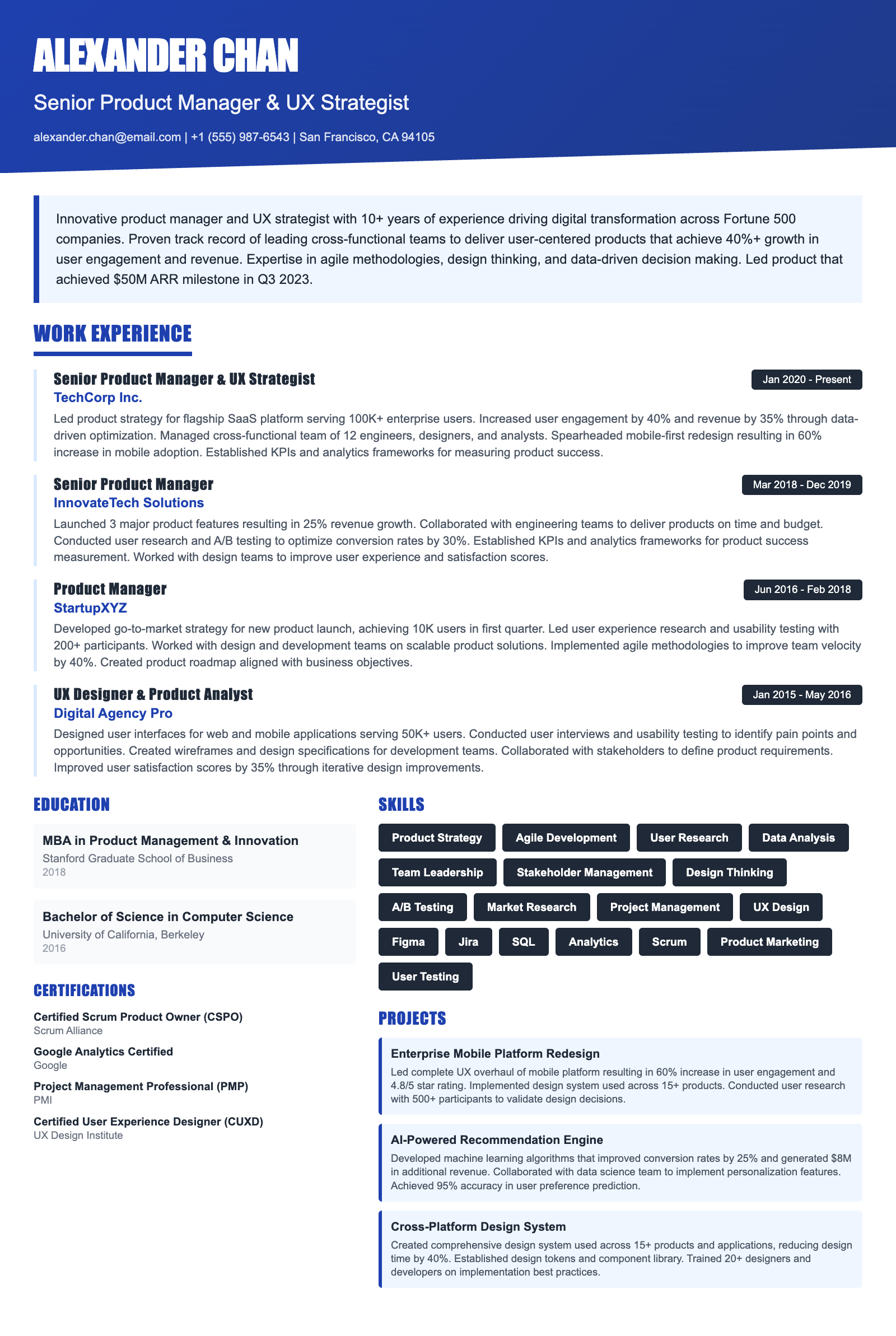
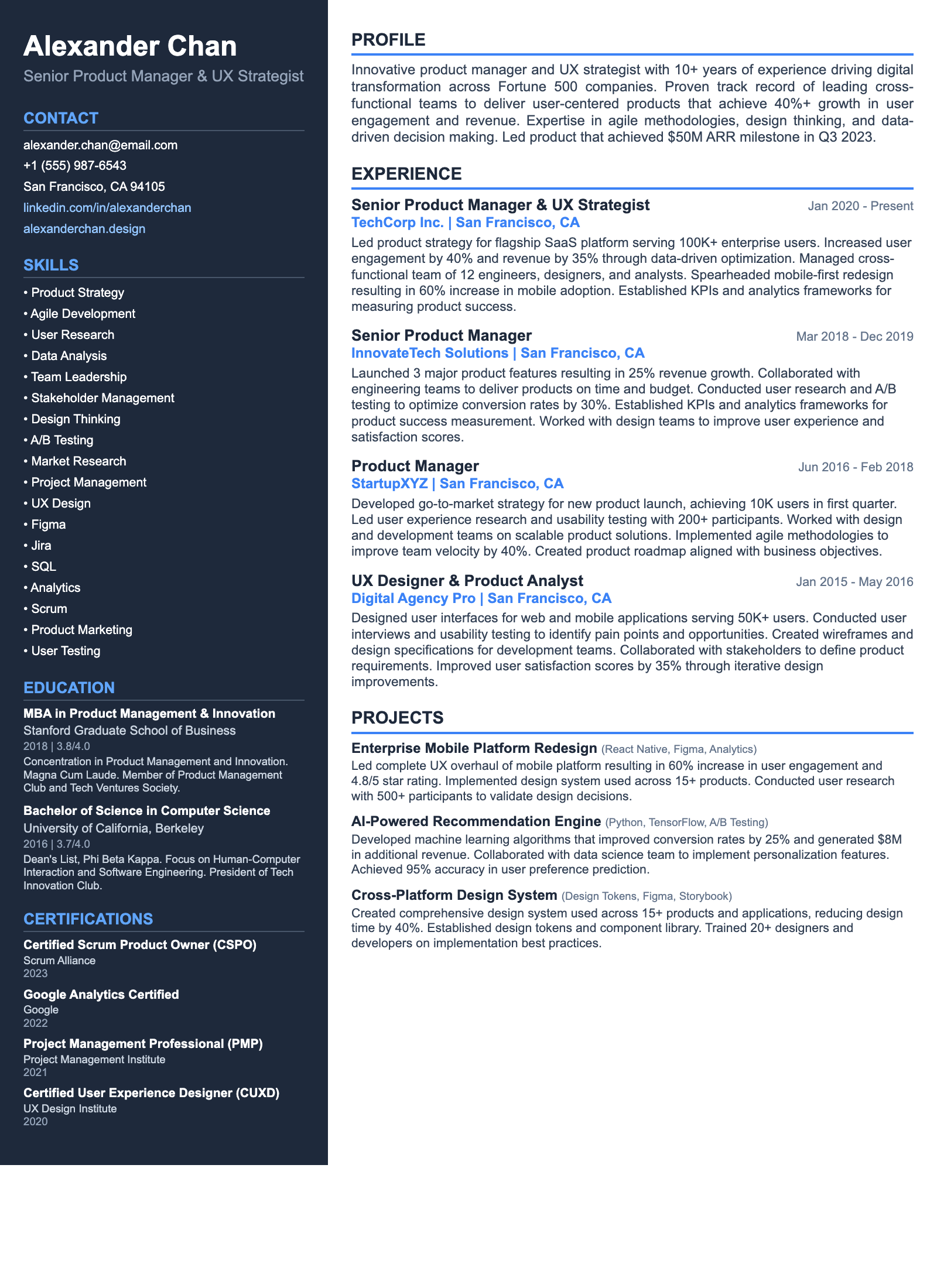
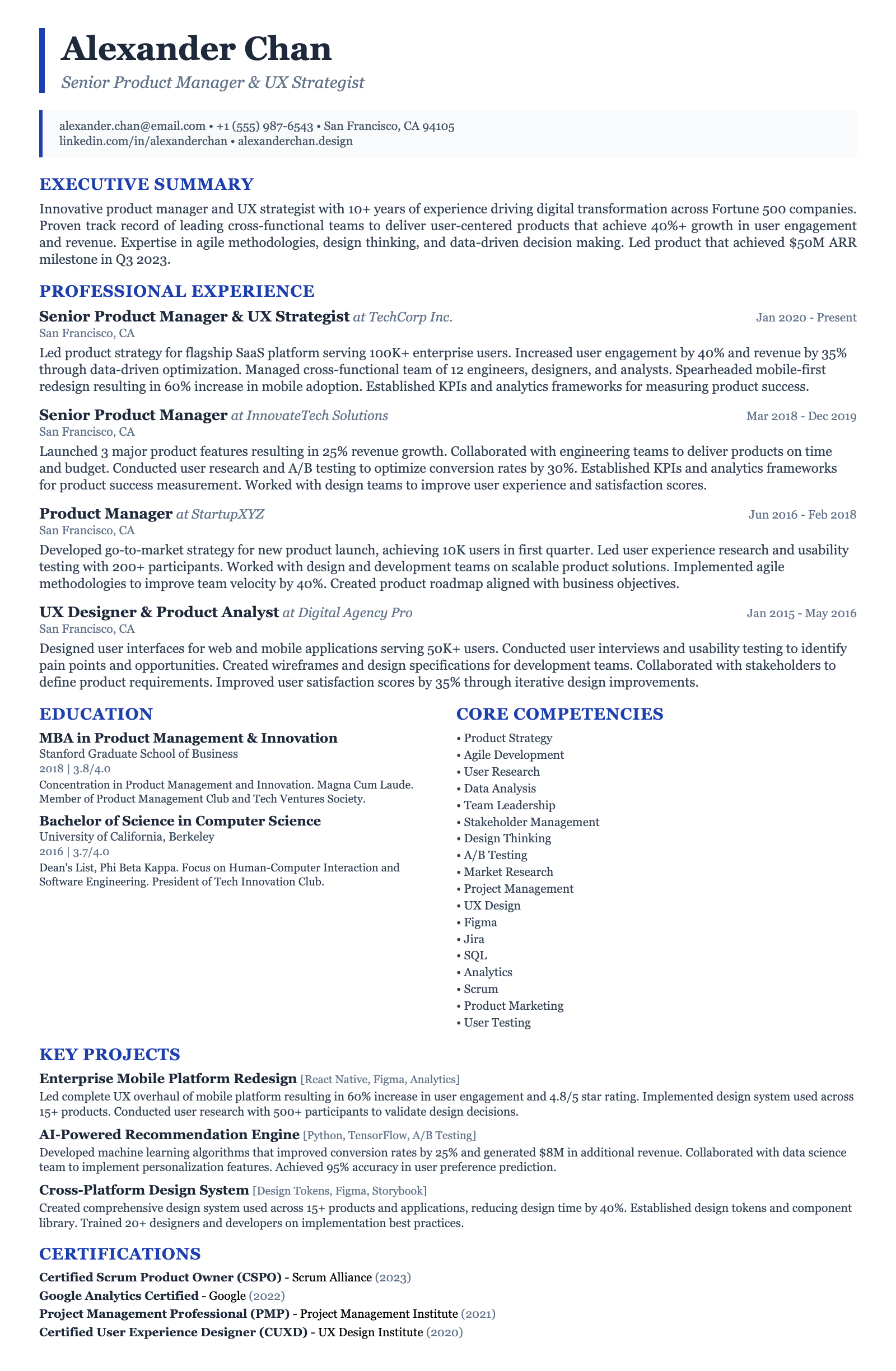
ATS-friendly templates designed specifically for Lead Tech Architect positions in the US market.
Frequently Asked Questions

How long should my Lead Tech Architect resume be?

Ideally, your resume should be no more than two pages. Focus on the most relevant experiences and accomplishments that demonstrate your technical expertise and leadership skills. Prioritize quality over quantity, ensuring each section is concise and impactful. If you've held multiple leadership positions, distill your contributions to the most recent and relevant roles, showcasing your knowledge of tools like Terraform, Kubernetes, or cloud platforms like AWS or Azure.

What are the most important skills to include on a Lead Tech Architect resume?

Highlight a mix of technical and soft skills. Technical skills should include cloud computing (AWS, Azure, GCP), programming languages (Python, Java), DevOps practices (CI/CD), containerization (Docker, Kubernetes), infrastructure-as-code (Terraform, CloudFormation), and data management (SQL, NoSQL). Soft skills should include leadership, communication, problem-solving, and strategic thinking. Emphasize your ability to translate business requirements into technical solutions and effectively communicate complex concepts to both technical and non-technical stakeholders.

How can I optimize my resume for Applicant Tracking Systems (ATS)?

Use a clean, ATS-friendly format with clear headings and bullet points. Avoid tables, images, and unusual fonts, as these can be difficult for ATS to parse. Incorporate relevant keywords from the job description throughout your resume, especially in the skills and experience sections. Save your resume as a .docx or .pdf file. Ensure your contact information is easily accessible. Tools like Jobscan can help you identify missing keywords.

Are certifications important for a Lead Tech Architect resume?

Yes, certifications can significantly enhance your credibility and demonstrate your commitment to professional development. Relevant certifications include AWS Certified Solutions Architect, Microsoft Certified Azure Solutions Architect Expert, Google Cloud Certified Professional Cloud Architect, TOGAF certification, and Certified Information Systems Security Professional (CISSP). Mention the certification name and the date you obtained it, showcasing expertise in areas like cloud architecture or security protocols.

What are some common mistakes to avoid on a Lead Tech Architect resume?

Avoid using generic language and clichés. Instead, quantify your accomplishments with specific metrics and data. Don't list responsibilities without highlighting your impact. Ensure your resume is free of grammatical errors and typos. Avoid including irrelevant information, such as outdated technologies or non-related job experiences. Neglecting to showcase your leadership experience is a crucial mistake. Instead, articulate your vision, strategy, and team achievements.

How can I showcase a career transition on my Lead Tech Architect resume?

If you're transitioning from a related role, highlight transferable skills and experiences. Focus on the technical expertise and leadership abilities that are relevant to the Lead Tech Architect position. Use a functional or combination resume format to emphasize your skills and accomplishments. Provide a brief explanation for the career change in your summary or cover letter, emphasizing your passion for technology architecture and your eagerness to contribute to the company's success. For example, if you transitioned from a software engineering leadership role, emphasize your experience in designing and implementing scalable systems using cloud technologies like AWS or Azure.

Ready to Build Your Lead Tech Architect Resume?

Use our AI-powered resume builder to create an ATS-optimized resume tailored for Lead Tech Architect positions in the US market.
Complete Lead Tech Architect Career Toolkit

Everything you need for your Lead Tech Architect job search — all in one platform.

Why choose ResumeGyani over Zety or Resume.io?

The only platform with AI mock interviews + resume builder + job search + career coaching — all in one.

See comparison

Last updated: March 2026 · Content reviewed by certified resume writers · Optimized for US job market

Lead Tech Architect Resume Guide (2026) | ATS-Optimized Template