
ATS-Optimized for US Market

Principal Construction Data Scientist Career & Resume Guide

As a Principal Construction Data Scientist, your resume needs to demonstrate your mastery of data analytics and its application to the construction industry. Hiring managers seek individuals who can translate complex data into actionable insights, driving project efficiency, cost reduction, and risk mitigation. Showcase your ability to lead data-driven initiatives, mentor junior data scientists, and collaborate effectively with construction professionals. Your resume should clearly highlight your experience with industry-standard tools like BIM (Building Information Modeling) software, advanced statistical modeling (using Python with libraries like Pandas, Scikit-learn), and data visualization platforms (Tableau, Power BI). Quantify your accomplishments whenever possible, such as reducing project costs by a specific percentage or improving schedule adherence through predictive analytics. Emphasize your understanding of construction processes, including cost estimating, scheduling, and quality control. Structure your resume with clear sections for your professional experience, education, skills, and relevant projects. To stand out, include specific examples of how you've used data to solve real-world construction challenges and how your leadership has impacted project outcomes. Highlight your experience with cloud platforms (AWS, Azure) for data storage and processing. Mention expertise in machine learning techniques relevant to construction, such as predictive maintenance, safety incident prediction, and resource optimization. Frame your experience to demonstrate not just technical prowess, but also business acumen and the ability to communicate complex findings to non-technical stakeholders. Proofread thoroughly; errors detract from your perceived expertise.
Average US Salary: $140k - $220k

Expert Tip: For Principal Construction Data Scientist positions in the US, recruiters increasingly look for technical execution and adaptability over simple job duties. This guide is tailored to highlight these specific traits to ensure your resume stands out in the competitive Principal Construction Data Scientist sector.

What US Hiring Managers Look For in a Principal Construction Data Scientist Resume

When reviewing Principal Construction Data Scientist candidates, recruiters and hiring managers in the US focus on a few critical areas. Making these elements clear and easy to find on your resume will improve your chances of moving to the interview stage.

  • Relevant experience and impact in Principal Construction Data Scientist or closely related roles.
  • Clear, measurable achievements (metrics, scope, outcomes) rather than duties.
  • Skills and keywords that match the job description and ATS requirements.
  • Professional formatting and no spelling or grammar errors.
  • Consistency between your resume, LinkedIn, and application.
  • Proficiency in key areas such as Communication, Time Management, Industry-Standard Tools.

Essential Skills for Principal Construction Data Scientist

Include these keywords in your resume to pass ATS screening and impress recruiters.

Must-Have Skills

  • CriticalCommunication
  • HighTime Management

Technical Skills

  • HighIndustry-Standard Tools
  • MediumData Analysis

Soft Skills

  • CriticalTeamwork
  • HighAdaptability
  • MediumLeadership

A Day in the Life

A Day in the Life of a Principal Data Scientist

Arrive early to review metrics or sprint progress. As a Principal Data Scientist, you lead the 9 AM stand-up, addressing blockers and setting the strategic direction for handling core responsibilities, collaborating with cross-functional teams, and driving project success within the Construction team. 10 AM-1 PM is for high-impact decisions. You're architecting solutions, reviewing critical deliverables, or negotiating priorities with Construction stakeholders. Afternoons involve mentorship and cross-org coordination. You're the go-to expert for handling core responsibilities, collaborating with cross-functional teams, and driving project success, ensuring the team's output aligns with company goals. You finish by finalizing quarterly roadmaps or reviewing next steps. At this level in Construction, your focus shifts from individual tasks to organizational impact.

Career Progression Path

Level 1

Data Scientist I (Entry Level)

Level 2

Data Scientist II (Junior)

Level 3

Senior Data Scientist

Level 4

Lead Data Scientist

Level 5

Data Scientist Manager / Director

Interview Questions & Answers

Prepare for your Principal Construction Data Scientist interview with these commonly asked questions.

Describe a time you had to present complex data insights to a non-technical audience in the construction industry. How did you ensure they understood the information and its implications?

Medium
Behavioral
Sample Answer
In my previous role at [Previous Company], I was tasked with presenting the findings of a predictive model for concrete strength to a team of project managers and engineers. I avoided technical jargon and instead focused on the practical implications of the model. I used visual aids, such as charts and graphs, to illustrate the key findings and explain how the model could help them optimize concrete mix designs and reduce the risk of structural failures. I also facilitated a Q&A session to address their concerns and ensure they felt comfortable using the model in their daily work. The result was a significant improvement in concrete quality and a reduction in material waste.

What machine learning algorithms are most applicable to solving problems in the construction industry, and can you provide an example of how you've used one?

Technical
Technical
Sample Answer
Several machine learning algorithms are highly relevant to construction. Regression models are useful for cost and schedule forecasting. Classification algorithms can predict safety risks or equipment failures. Clustering algorithms can identify patterns in project data to optimize resource allocation. For instance, I used a Random Forest model to predict the likelihood of safety incidents on a construction site based on historical data, weather conditions, and worker experience. This allowed us to implement targeted safety measures and reduce the number of incidents by 20%.

A project is experiencing significant cost overruns. How would you approach analyzing the data to identify the root causes and recommend solutions?

Hard
Situational
Sample Answer
First, I'd gather all relevant data, including budget estimates, actual costs, invoices, change orders, and resource allocation records. I would then use data visualization tools like Tableau or Power BI to identify trends and outliers. I'd perform a variance analysis to pinpoint specific areas contributing to the overruns. Next, I'd collaborate with project stakeholders to understand the context behind the data and identify potential root causes, such as inaccurate estimates, scope creep, or supply chain disruptions. Finally, I'd develop data-driven recommendations to mitigate the overruns, such as renegotiating contracts, optimizing resource allocation, or implementing stricter cost controls.

Describe your experience with Building Information Modeling (BIM) and how you've integrated data analytics with BIM workflows.

Medium
Technical
Sample Answer
I have extensive experience working with BIM software like Revit and Navisworks. I've developed custom scripts using Python to extract data from BIM models, such as material quantities, equipment locations, and spatial relationships. I then use this data to perform various analyses, such as cost estimating, clash detection, and energy performance simulations. For example, I integrated BIM data with a machine learning model to predict the energy consumption of a building based on its design and location, allowing the project team to optimize the building's energy efficiency.

You are tasked with building a data science team within a construction company that currently has limited data infrastructure. How would you approach this challenge?

Hard
Situational
Sample Answer
My initial focus would be on assessing the company's current data landscape and identifying key data sources. I'd then develop a data strategy aligned with the company's business goals, outlining the infrastructure, tools, and skills needed to build a robust data science capability. I would advocate for investment in cloud-based data storage and processing solutions (e.g., AWS, Azure). Next, I'd prioritize building a team with a mix of data science and construction expertise, focusing on individuals with strong analytical and communication skills. Finally, I'd establish clear processes for data governance and security to ensure data quality and compliance.

Tell me about a time you had to adapt your data analysis approach due to unforeseen challenges or data limitations on a construction project.

Medium
Behavioral
Sample Answer
On a project aiming to predict concrete curing times, we initially planned to use temperature and humidity sensors embedded in the concrete. However, sensor malfunctions led to incomplete data. I pivoted by leveraging historical weather data, material specifications, and concrete mix designs to build a surrogate model using regression techniques. We also incorporated data from visual inspections performed by experienced engineers. While less precise than the original plan, the revised approach still provided valuable insights and allowed the project team to make informed decisions about when to proceed with subsequent construction phases.

ATS Optimization Tips

Make sure your resume passes Applicant Tracking Systems used by US employers.

Incorporate construction-specific keywords such as "BIM," "LEED," "cost estimating," "scheduling," and "value engineering" alongside data science terms.
Use standard section headings like "Skills," "Experience," "Education," and "Projects" to facilitate ATS parsing; these are universally recognized.
Quantify your accomplishments whenever possible; ATS systems often prioritize resumes that demonstrate measurable results (e.g., "Reduced project costs by 12%").
Ensure your contact information is clearly visible and formatted in a simple, easily readable manner; ATS needs to accurately extract this data.
Tailor your resume to match the specific keywords and requirements listed in each job description; this significantly improves your ranking in ATS.
List your skills in a dedicated "Skills" section, categorizing them (e.g., "Programming Languages," "Data Visualization Tools," "Construction Management") for better organization.
Use a chronological or combination resume format, as these are generally preferred by ATS systems for their clarity and straightforward presentation.
Save your resume as a .docx or .pdf file, as these formats are widely supported by ATS software; avoid less common file types.

Common Resume Mistakes to Avoid

Don't make these errors that get resumes rejected.

1
Failing to quantify the impact of your data science projects on construction outcomes (e.g., cost savings, schedule improvements).
2
Omitting experience with industry-standard construction software (e.g., BIM, estimating software, project management platforms).
3
Not tailoring your resume to the specific requirements of each Principal Construction Data Scientist role.
4
Focusing solely on technical skills without demonstrating an understanding of construction processes and challenges.
5
Neglecting to highlight leadership experience and the ability to mentor junior data scientists.
6
Using overly technical jargon without explaining its relevance to construction stakeholders.
7
Failing to demonstrate experience with cloud platforms and data storage solutions relevant to construction data.
8
Not showcasing experience with predictive modeling techniques specific to construction, such as cost forecasting or risk assessment.

Industry Outlook

The US Construction sector is experiencing steady growth. Principal Data Scientists are particularly sought after, with the Bureau of Labor Statistics projecting average job growth through 2030. Peak hiring occurs in Q1 (January-March) and Q3 (August-September).

Top Hiring Companies

Industry LeadersRegional FirmsFast-Growing Companies

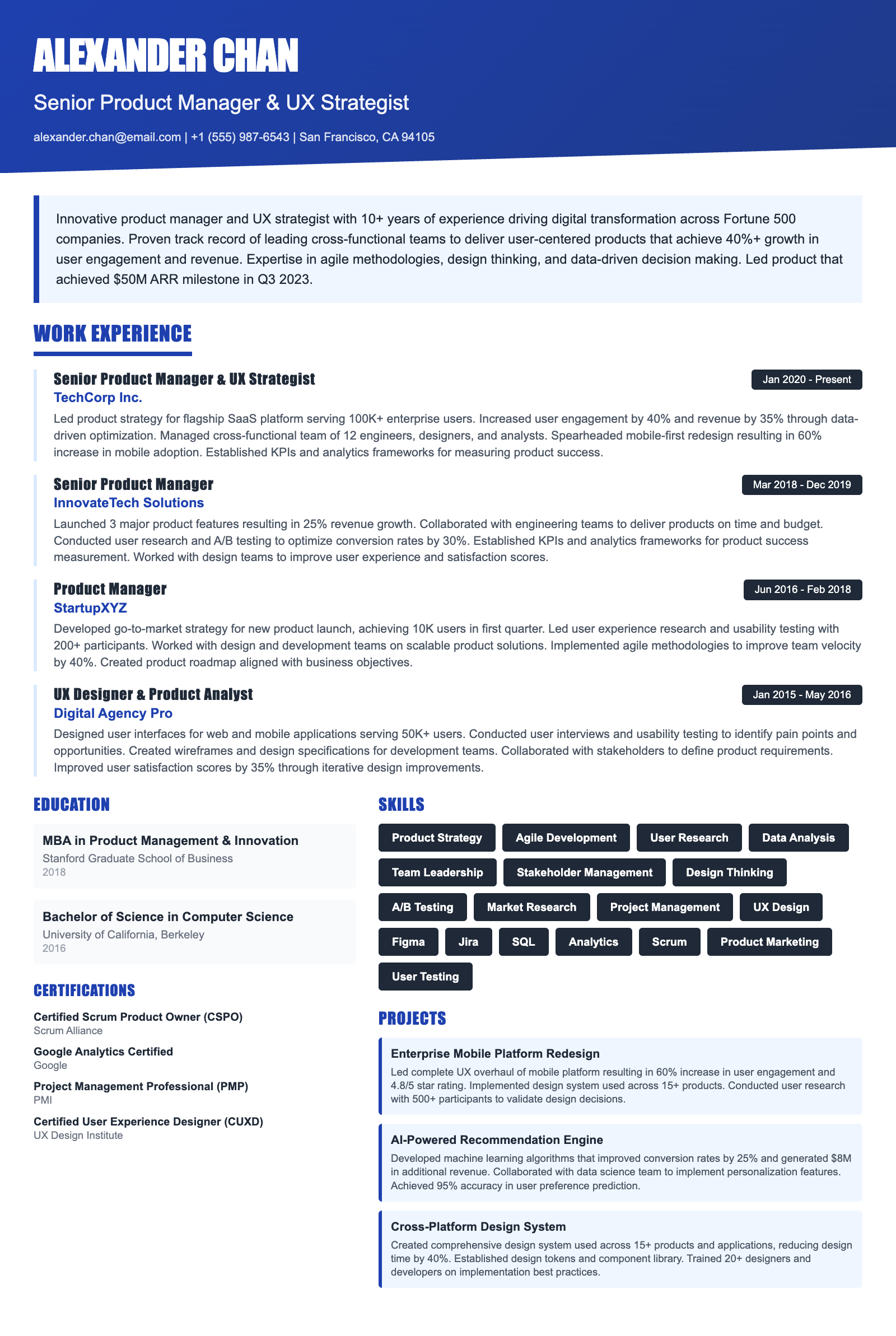
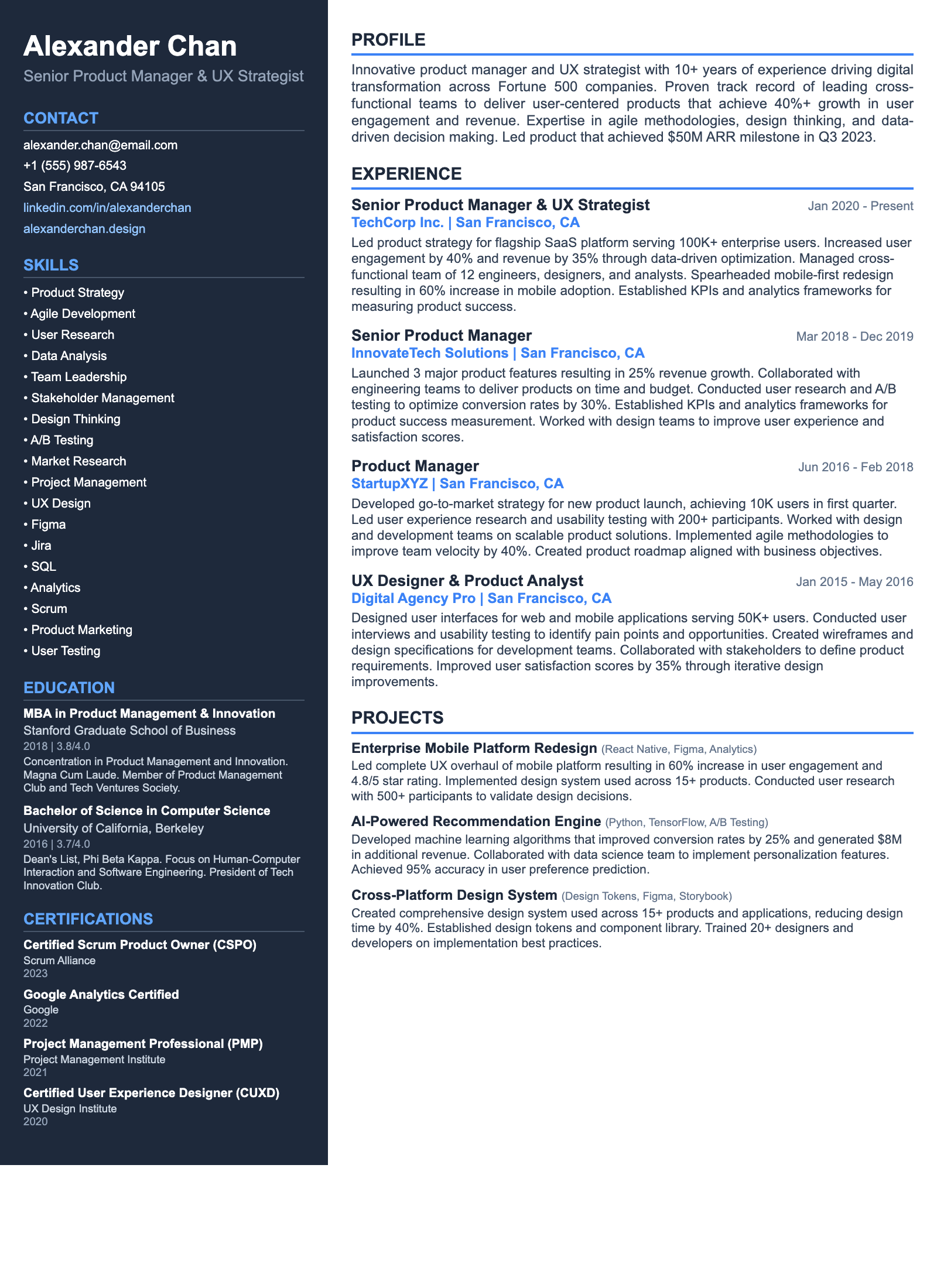
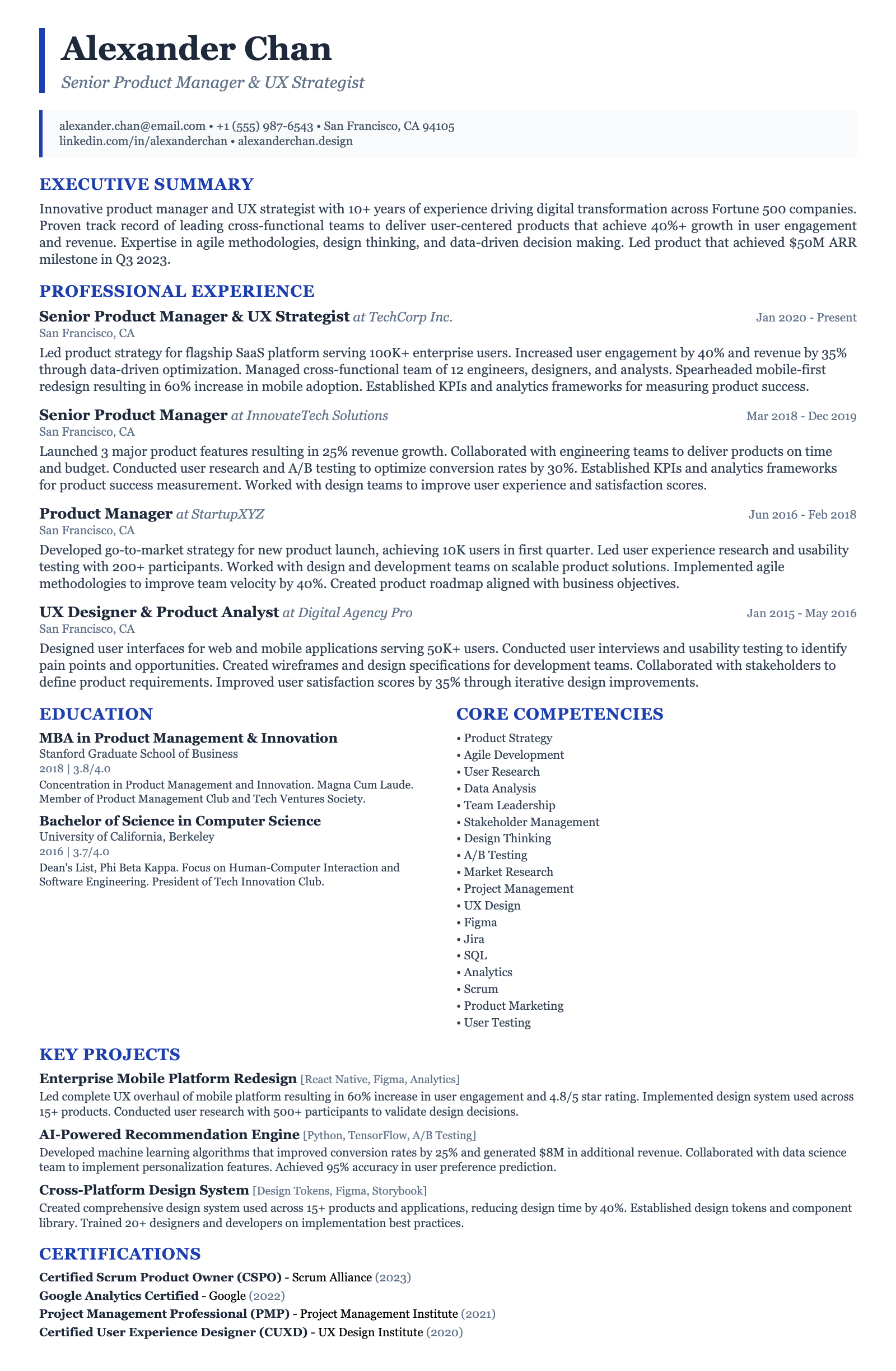
Recommended Resume Templates

ATS-friendly templates designed specifically for Principal Construction Data Scientist positions in the US market.
Frequently Asked Questions

What is the ideal resume length for a Principal Construction Data Scientist?

Given the seniority of the role, a two-page resume is generally acceptable. Focus on the most relevant and impactful experiences and projects. Prioritize quality over quantity, highlighting achievements that demonstrate your expertise in applying data science to construction challenges. Include quantifiable results whenever possible, for example, 'Reduced project cost overruns by 15% using predictive modeling with Python and Scikit-learn'.

What key skills should I emphasize on my Principal Construction Data Scientist resume?

Highlight a blend of technical and soft skills. Technical skills include proficiency in data analysis (Python, R, SQL), machine learning (Scikit-learn, TensorFlow), data visualization (Tableau, Power BI), and construction-specific tools (BIM software). Soft skills are crucial; emphasize communication, leadership, problem-solving, and the ability to translate data insights into actionable recommendations for construction teams.

How can I optimize my resume for Applicant Tracking Systems (ATS)?

Use a clean, ATS-friendly format with clear headings and bullet points. Avoid tables, images, and unusual fonts that ATS may not parse correctly. Incorporate relevant keywords from the job description throughout your resume, particularly in your skills section and work experience descriptions. Save your resume as a .docx or .pdf file, as these are generally ATS-compatible. Ensure your contact information is easily readable.

Are certifications important for a Principal Construction Data Scientist resume?

While not always mandatory, relevant certifications can enhance your credibility. Consider certifications in data science (e.g., Certified Analytics Professional), project management (e.g., PMP), or construction management. Also, certifications related to specific software or tools like BIM (Building Information Modeling) or cloud platforms (AWS Certified Machine Learning – Specialty) can be beneficial.

What are some common resume mistakes to avoid as a Principal Construction Data Scientist?

Avoid generic statements and focus on quantifiable achievements. Don't neglect to tailor your resume to each specific job application. Overstating your technical skills or omitting relevant construction experience can be detrimental. Ensure your resume is free of grammatical errors and typos. Failure to demonstrate leadership experience is also a major pitfall.

How can I showcase a career transition into a Principal Construction Data Scientist role?

If transitioning from a related field, emphasize transferable skills such as data analysis, problem-solving, and project management. Highlight any construction-related projects you've worked on, even if they were outside your primary role. Tailor your resume to showcase your understanding of construction processes and your ability to apply data science techniques to solve industry-specific challenges. Consider a brief career summary explaining your motivation for the transition.

Ready to Build Your Principal Construction Data Scientist Resume?

Use our AI-powered resume builder to create an ATS-optimized resume tailored for Principal Construction Data Scientist positions in the US market.

Complete Principal Construction Data Scientist Career Toolkit

Everything you need for your Principal Construction Data Scientist job search — all in one platform.

Why choose ResumeGyani over Zety or Resume.io?

The only platform with AI mock interviews + resume builder + job search + career coaching — all in one.

See comparison

Last updated: March 2026 · Content reviewed by certified resume writers · Optimized for US job market

Principal Construction Data Scientist Resume Guide (2026) | ATS-Optimized Template