
ATS-Optimized for US Market

Principal Construction Financial Analyst Career & Resume Guide

As a Principal Construction Financial Analyst, your resume needs to showcase your expertise in financial planning, analysis, and reporting within the construction industry. Hiring managers seek candidates with a deep understanding of construction accounting principles, cost control, and risk management. Your resume should immediately highlight your proficiency in using industry-standard tools like Sage 300 CRE, Procore, or Viewpoint Spectrum, demonstrating your ability to manage project budgets, analyze variances, and forecast financial performance. Key sections should include a compelling summary, quantifiable achievements in previous roles, technical skills, and relevant certifications (e.g., CFA, CPA). To stand out, emphasize your leadership experience in guiding financial teams, providing strategic financial insights to project managers, and improving financial processes. Quantify your accomplishments whenever possible, such as 'Reduced project cost overruns by 15% through enhanced variance analysis' or 'Improved cash flow forecasting accuracy by 20% using advanced modeling techniques.' Also, tailor your resume to reflect the specific requirements and keywords mentioned in the job description. Frame your experience to showcase how you've directly contributed to the financial success and stability of construction projects.
Average US Salary: $140k - $220k

Expert Tip: For Principal Construction Financial Analyst positions in the US, recruiters increasingly look for technical execution and adaptability over simple job duties. This guide is tailored to highlight these specific traits to ensure your resume stands out in the competitive Principal Construction Financial Analyst sector.

What US Hiring Managers Look For in a Principal Construction Financial Analyst Resume

When reviewing Principal Construction Financial Analyst candidates, recruiters and hiring managers in the US focus on a few critical areas. Making these elements clear and easy to find on your resume will improve your chances of moving to the interview stage.

  • Relevant experience and impact in Principal Construction Financial Analyst or closely related roles.
  • Clear, measurable achievements (metrics, scope, outcomes) rather than duties.
  • Skills and keywords that match the job description and ATS requirements.
  • Professional formatting and no spelling or grammar errors.
  • Consistency between your resume, LinkedIn, and application.
  • Proficiency in key areas such as Communication, Time Management, Industry-Standard Tools.

Essential Skills for Principal Construction Financial Analyst

Include these keywords in your resume to pass ATS screening and impress recruiters.

Must-Have Skills

  • CriticalCommunication
  • HighTime Management

Technical Skills

  • HighIndustry-Standard Tools
  • MediumData Analysis

Soft Skills

  • CriticalTeamwork
  • HighAdaptability
  • MediumLeadership

A Day in the Life

A Day in the Life of a Principal Financial Analyst

Arrive early to review metrics or sprint progress. As a Principal Financial Analyst, you lead the 9 AM stand-up, addressing blockers and setting the strategic direction for handling core responsibilities, collaborating with cross-functional teams, and driving project success within the Construction team. 10 AM-1 PM is for high-impact decisions. You're architecting solutions, reviewing critical deliverables, or negotiating priorities with Construction stakeholders. Afternoons involve mentorship and cross-org coordination. You're the go-to expert for handling core responsibilities, collaborating with cross-functional teams, and driving project success, ensuring the team's output aligns with company goals. You finish by finalizing quarterly roadmaps or reviewing next steps. At this level in Construction, your focus shifts from individual tasks to organizational impact.

Career Progression Path

Level 1

Financial Analyst I (Entry Level)

Level 2

Financial Analyst II (Junior)

Level 3

Senior Financial Analyst

Level 4

Lead Financial Analyst

Level 5

Financial Analyst Manager / Director

Interview Questions & Answers

Prepare for your Principal Construction Financial Analyst interview with these commonly asked questions.

Describe a time when you had to develop a financial recovery plan for a construction project that was significantly over budget. What steps did you take?

Medium
Situational
Sample Answer
In my previous role at [Previous Company Name], a $30 million commercial building project was facing a 20% budget overrun due to unforeseen material cost increases and scheduling delays. I conducted a thorough variance analysis to identify the root causes of the overspending. Then, I collaborated with project managers to implement cost-cutting measures, renegotiate supplier contracts, and optimize the construction schedule. I also developed a revised budget and cash flow forecast, which I presented to senior management. Ultimately, we were able to reduce the budget overrun to 8% and complete the project with minimal financial losses.

How do you ensure the accuracy and reliability of financial data used for project forecasting in a fast-paced construction environment?

Medium
Technical
Sample Answer
Accuracy in project forecasting hinges on robust data validation and consistent reporting processes. I implement rigorous quality control measures, including regular audits of financial data, reconciliation of accounts, and cross-validation with project management software like Procore or Viewpoint Spectrum. I also establish clear data governance policies and provide training to project teams on accurate data entry and reporting. Furthermore, I utilize sensitivity analysis and scenario planning to assess the impact of potential risks and uncertainties on project financials.

Tell me about a time you had to communicate complex financial information to a non-financial audience, such as project managers or construction workers. How did you ensure they understood the information?

Easy
Behavioral
Sample Answer
In a previous role, I needed to explain the implications of a revised project budget to a team of construction workers. I avoided using technical jargon and instead focused on practical examples and visual aids, such as charts and graphs. I explained how the budget changes would affect the project timeline, resource allocation, and overall job security. I also encouraged questions and provided clear, concise answers in plain language. By tailoring my communication to their level of understanding, I ensured that the team was fully informed and engaged in the project's financial performance.

Describe your experience with earned value management (EVM) in construction projects. How have you used EVM to track project performance and identify potential issues?

Hard
Technical
Sample Answer
I have extensive experience utilizing EVM techniques to monitor project progress and identify potential variances. In my previous role, I integrated EVM principles into our project management processes, using metrics like Planned Value (PV), Earned Value (EV), and Actual Cost (AC) to track project performance against the baseline budget and schedule. By regularly analyzing these metrics, I was able to identify potential cost overruns and schedule delays early on, allowing us to implement corrective actions before they significantly impacted the project's financial outcome. For example, on a large infrastructure project, EVM helped us identify a critical path delay, enabling us to reallocate resources and mitigate the impact on the overall project timeline.

Have you ever had to challenge a project manager's financial decisions? How did you approach the situation, and what was the outcome?

Medium
Situational
Sample Answer
During a recent project, the project manager proposed using a less expensive but unproven material to cut costs. Based on my analysis, this material posed significant long-term risks, including potential structural issues and increased maintenance costs. I approached the project manager with my findings, presenting a detailed cost-benefit analysis that demonstrated the long-term financial implications of their decision. I emphasized the importance of quality and durability over short-term cost savings. After a thorough discussion, the project manager agreed to reconsider their decision and ultimately chose the more reliable material. This saved the company a significant amount of money in future repairs.

What is your approach to developing and implementing financial controls to prevent fraud and ensure compliance with regulations in the construction industry?

Hard
Technical
Sample Answer
My approach to developing financial controls begins with a thorough risk assessment to identify potential vulnerabilities in the organization's financial processes. This involves reviewing existing policies, procedures, and systems to pinpoint areas where fraud or non-compliance could occur. Based on the assessment, I design and implement robust internal controls, such as segregation of duties, authorization limits, and regular audits. I also ensure that employees receive comprehensive training on ethical conduct and compliance requirements. Furthermore, I stay up-to-date on relevant regulations and industry best practices to continuously improve the effectiveness of our financial controls.

ATS Optimization Tips

Make sure your resume passes Applicant Tracking Systems used by US employers.

Incorporate industry-specific keywords such as 'Sage 300 CRE,' 'Procore,' 'Viewpoint Spectrum,' 'earned value management,' 'cost control,' and 'variance analysis' throughout your resume.
Use standard section headings like 'Summary,' 'Experience,' 'Skills,' and 'Education' for easy parsing by ATS systems; avoid creative or unconventional titles.
Format your skills section as a bulleted list, separating skills with commas. This allows the ATS to easily extract and categorize your proficiencies.
Quantify your accomplishments using numbers and percentages to demonstrate the impact of your work. For instance, 'Reduced project cost overruns by 15%' is more impactful than 'Improved cost control'.
Ensure your contact information is clearly visible and easily parsed by the ATS. Include your name, phone number, email address, and LinkedIn profile URL.
Submit your resume in PDF format to preserve formatting and prevent errors during the parsing process. This ensures the ATS receives the intended layout.
Tailor your resume to each specific job description by incorporating keywords and phrases directly from the job posting. This increases your chances of matching the job requirements.
Use a chronological format for your work experience, listing your most recent roles first. This helps the ATS track your career progression and experience level.

Common Resume Mistakes to Avoid

Don't make these errors that get resumes rejected.

1
Failing to quantify accomplishments: Instead of saying 'Managed project budgets,' say 'Managed project budgets totaling $50 million, resulting in a 5% reduction in cost overruns'.
2
Omitting industry-specific software proficiency: Not mentioning experience with tools like Sage 300 CRE, Procore, or Viewpoint Spectrum is a significant oversight.
3
Using generic financial analysis language: Avoid vague terms; specify how you applied your financial analysis skills within a construction context, such as 'Developed cash flow projections for $20M high-rise project'.
4
Neglecting to highlight cost control expertise: Construction companies highly value cost control. Explicitly detail strategies used to minimize costs and maximize profitability.
5
Ignoring risk management experience: Not showcasing your ability to identify and mitigate financial risks associated with construction projects is a missed opportunity.
6
Not tailoring the resume to the specific job description: A generic resume won't stand out. Customize your resume to match the requirements and keywords of each specific role.
7
Failing to demonstrate leadership experience: Principal roles require leadership skills. Showcase instances where you led financial teams or provided strategic financial guidance.
8
Overlooking relevant certifications: Not mentioning certifications like CPA, CFA or CCIFP. These credentials highlight your expertise.

Industry Outlook

The US Construction sector is experiencing steady growth. Principal Financial Analysts are particularly sought after, with the Bureau of Labor Statistics projecting average job growth through 2030. Peak hiring occurs in Q1 (January-March) and Q3 (August-September).

Top Hiring Companies

Industry LeadersRegional FirmsFast-Growing Companies

Recommended Resume Templates

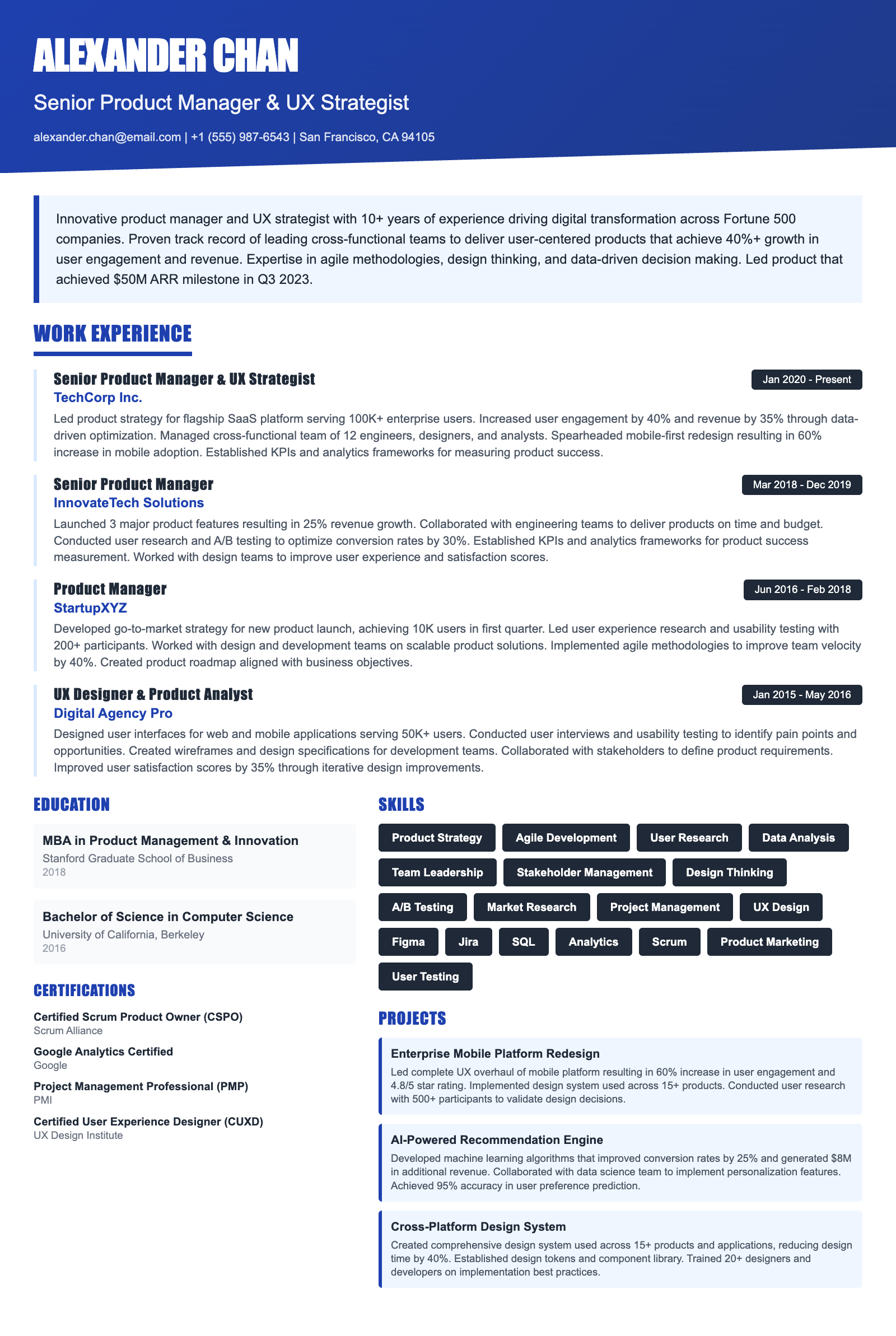
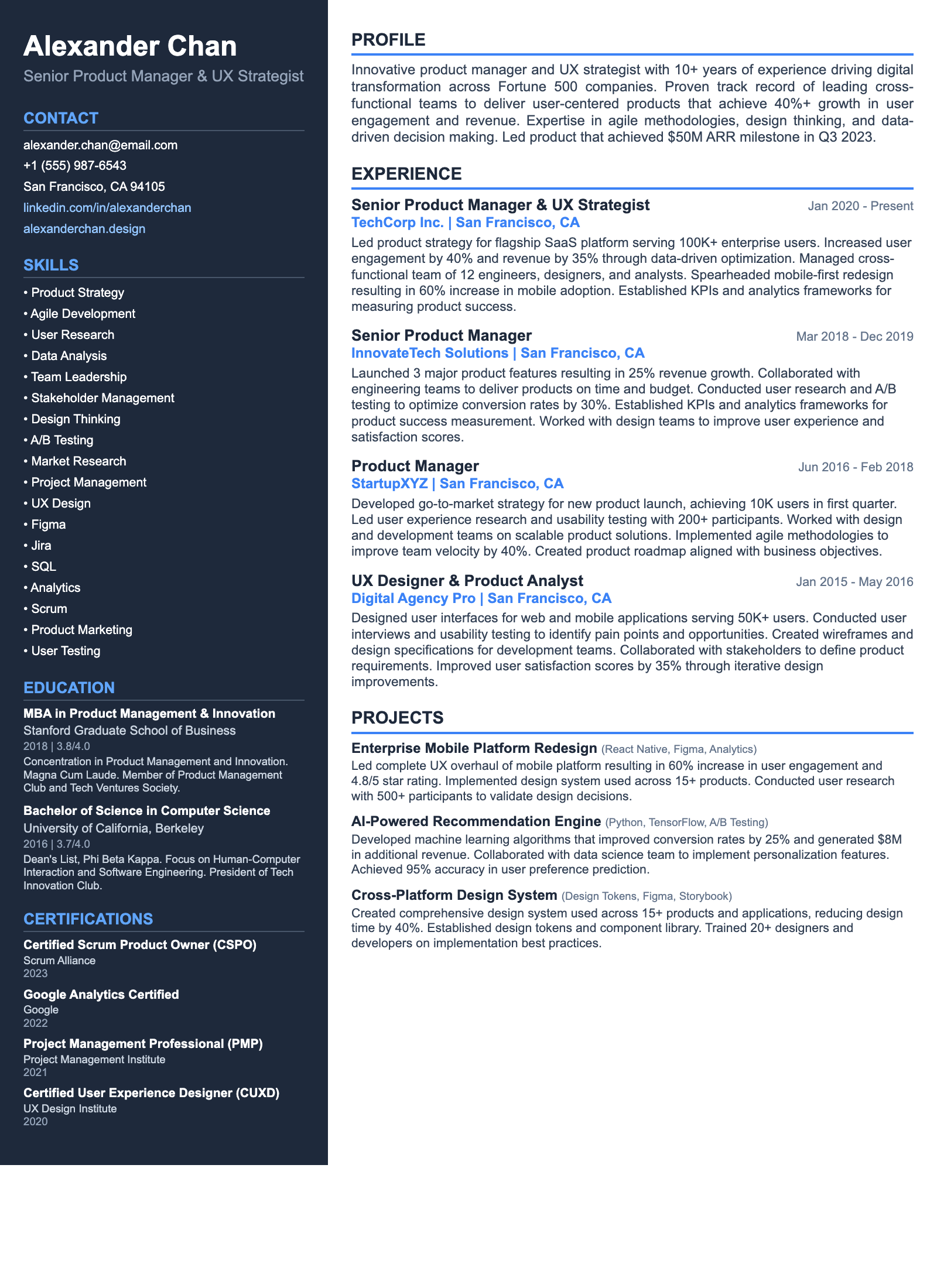
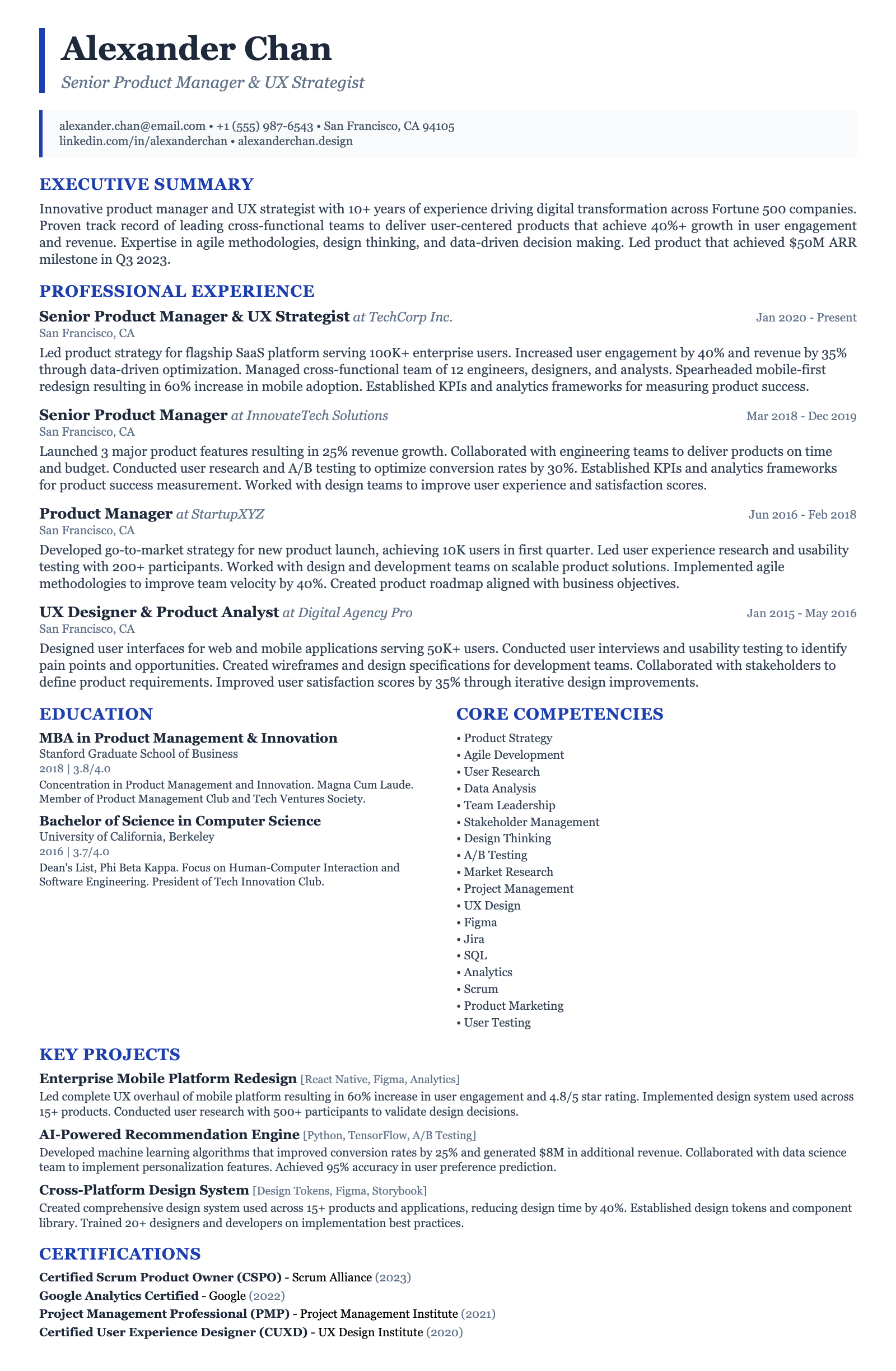
ATS-friendly templates designed specifically for Principal Construction Financial Analyst positions in the US market.
Frequently Asked Questions

What is the ideal length for a Principal Construction Financial Analyst resume?

Ideally, your resume should be no more than two pages. Given the seniority of the Principal level, hiring managers expect a comprehensive overview of your experience. Focus on the most relevant and impactful projects, quantifying your achievements whenever possible. Use a concise format and prioritize information that directly aligns with the job description, especially projects showcasing your expertise with tools like Sage 300 CRE or Procore.

What are the most critical skills to highlight on my resume?

The most critical skills include advanced data analysis, proficiency in construction accounting software (Sage 300 CRE, Viewpoint Spectrum, Procore), cost control, financial modeling, risk management, and leadership. Emphasize your ability to analyze project financials, identify cost-saving opportunities, and provide strategic financial guidance. Showcase your expertise in areas like variance analysis, cash flow forecasting, and earned value management.

How can I ensure my resume is ATS-friendly?

Use a clean, straightforward format with clear section headings. Avoid tables, images, and unusual fonts that may not be recognized by Applicant Tracking Systems (ATS). Incorporate relevant keywords from the job description throughout your resume, particularly in the skills and experience sections. Submit your resume as a PDF to preserve formatting. Tools like Jobscan can help you identify missing keywords and formatting issues.

Are certifications important for a Principal Construction Financial Analyst role?

Yes, certifications can significantly enhance your resume. Relevant certifications include Certified Public Accountant (CPA), Chartered Financial Analyst (CFA), or Certified Construction Industry Financial Professional (CCIFP). These certifications demonstrate your expertise and commitment to professional development. Highlight any relevant certifications prominently near the top of your resume.

What are some common resume mistakes to avoid?

Avoid generic statements and focus on quantifiable achievements. Do not neglect to tailor your resume to each specific job description. Overstating your skills or responsibilities is a major pitfall. Also, failing to highlight your experience with industry-specific software like Sage 300 CRE or Procore can be detrimental. Proofread carefully for any grammatical errors or typos.

How can I address a career transition into a Principal Construction Financial Analyst role?

If transitioning from a related field, highlight transferable skills such as financial analysis, budgeting, forecasting, and project management. Emphasize any experience you have with construction-related projects or industries. Obtain relevant certifications (e.g., CCIFP) to demonstrate your commitment to the construction industry. Tailor your resume to showcase how your skills and experience align with the requirements of a Principal Construction Financial Analyst role, mentioning specific software experience relevant to the role.

Ready to Build Your Principal Construction Financial Analyst Resume?

Use our AI-powered resume builder to create an ATS-optimized resume tailored for Principal Construction Financial Analyst positions in the US market.

Complete Principal Construction Financial Analyst Career Toolkit

Everything you need for your Principal Construction Financial Analyst job search — all in one platform.

Why choose ResumeGyani over Zety or Resume.io?

The only platform with AI mock interviews + resume builder + job search + career coaching — all in one.

See comparison

Last updated: March 2026 · Content reviewed by certified resume writers · Optimized for US job market

Principal Construction Financial Analyst Resume Guide (2026) | ATS-Optimized Template