
ATS-Optimized for US Market

Principal Education Web Developer Career & Resume Guide

As a Principal Education Web Developer, your resume needs to showcase expertise in building and maintaining educational web applications, platforms, and interactive learning tools. Hiring managers seek candidates proficient in front-end and back-end technologies, adept at leading development teams, and experienced in creating user-friendly and accessible educational resources. Key resume sections include a compelling summary highlighting your technical leadership and project management skills, a detailed experience section showcasing your impact on educational outcomes, and a skills section that emphasizes both technical proficiencies and soft skills. To stand out, quantify your achievements whenever possible. For example, instead of saying you “improved website performance,” state that you “improved website loading time by 30% using React and optimized database queries.” Highlight experience with learning management systems (LMS) like Canvas or Blackboard, content management systems (CMS) like Drupal or WordPress, and accessibility standards (WCAG). Also, showcase your ability to integrate educational technologies such as adaptive learning algorithms or personalized learning paths. Crucially, demonstrate your proficiency with modern JavaScript frameworks (React, Angular, Vue.js), back-end languages (Python, Java, Node.js), database technologies (SQL, NoSQL), and cloud platforms (AWS, Azure, Google Cloud). Mention your familiarity with CI/CD pipelines, testing frameworks (Jest, Mocha), and version control systems (Git). Finally, emphasize your understanding of pedagogical principles and how they translate into effective web design.
Average US Salary: $140k - $220k

Expert Tip: For Principal Education Web Developer positions in the US, recruiters increasingly look for technical execution and adaptability over simple job duties. This guide is tailored to highlight these specific traits to ensure your resume stands out in the competitive Principal Education Web Developer sector.

What US Hiring Managers Look For in a Principal Education Web Developer Resume

When reviewing Principal Education Web Developer candidates, recruiters and hiring managers in the US focus on a few critical areas. Making these elements clear and easy to find on your resume will improve your chances of moving to the interview stage.

  • Relevant experience and impact in Principal Education Web Developer or closely related roles.
  • Clear, measurable achievements (metrics, scope, outcomes) rather than duties.
  • Skills and keywords that match the job description and ATS requirements.
  • Professional formatting and no spelling or grammar errors.
  • Consistency between your resume, LinkedIn, and application.
  • Proficiency in key areas such as Communication, Time Management, Industry-Standard Tools.

Essential Skills for Principal Education Web Developer

Include these keywords in your resume to pass ATS screening and impress recruiters.

Must-Have Skills

  • CriticalCommunication
  • HighTime Management

Technical Skills

  • HighIndustry-Standard Tools
  • MediumData Analysis

Soft Skills

  • CriticalTeamwork
  • HighAdaptability
  • MediumLeadership

A Day in the Life

A Day in the Life of a Principal Web Developer

Arrive early to review metrics or sprint progress. As a Principal Web Developer, you lead the 9 AM stand-up, addressing blockers and setting the strategic direction for handling core responsibilities, collaborating with cross-functional teams, and driving project success within the Education team. 10 AM-1 PM is for high-impact decisions. You're architecting solutions, reviewing critical deliverables, or negotiating priorities with Education stakeholders. Afternoons involve mentorship and cross-org coordination. You're the go-to expert for handling core responsibilities, collaborating with cross-functional teams, and driving project success, ensuring the team's output aligns with company goals. You finish by finalizing quarterly roadmaps or reviewing next steps. At this level in Education, your focus shifts from individual tasks to organizational impact.

Career Progression Path

Level 1

Web Developer I (Entry Level)

Level 2

Web Developer II (Junior)

Level 3

Senior Web Developer

Level 4

Lead Web Developer

Level 5

Web Developer Manager / Director

Interview Questions & Answers

Prepare for your Principal Education Web Developer interview with these commonly asked questions.

Describe a time you led a team to overcome a significant technical challenge in developing an educational web application.

Medium
Behavioral
Sample Answer
In my previous role at [Previous Company], we faced a performance bottleneck in our adaptive learning platform, built with React and Node.js. The platform was struggling to handle the increasing number of concurrent users. As the tech lead, I initiated a comprehensive performance audit, identifying inefficient database queries and poorly optimized front-end components. I then delegated tasks to the team, guiding them in implementing caching strategies, optimizing database queries, and refactoring the React components. We also implemented load balancing using AWS. The result was a 40% reduction in response time and improved user experience.

How do you ensure that educational web applications are accessible to all users, including those with disabilities?

Medium
Technical
Sample Answer
Accessibility is a core principle in my development approach. I adhere to WCAG guidelines, conduct thorough accessibility audits using tools like WAVE and Axe, and incorporate semantic HTML to ensure screen reader compatibility. I also collaborate with UX designers to implement accessible UI components and provide alternative text for images. I would explain WCAG principles such as POUR and give examples. At [Previous Company], I led the effort to redesign our platform to be fully accessible, resulting in a significant increase in usage by users with disabilities.

Imagine you are tasked with selecting a new front-end framework for a critical educational platform. What factors would you consider, and how would you make your decision?

Hard
Situational
Sample Answer
I would first assess the specific requirements of the platform, including its scalability, performance needs, and complexity. I'd then evaluate potential frameworks like React, Angular, and Vue.js based on factors such as their learning curve, community support, ecosystem of libraries, and performance characteristics. I'd also consider the existing skills of the development team and the long-term maintainability of the codebase. To inform my decision, I would conduct POCs with each framework. Finally, I would present a comprehensive recommendation to stakeholders, outlining the pros and cons of each option and justifying my choice based on data and analysis.

Describe your experience with integrating educational web applications with learning management systems (LMS) like Canvas or Blackboard.

Medium
Technical
Sample Answer
I have extensive experience integrating web applications with various LMS platforms. At [Previous Company], I led the integration of our interactive learning module with Canvas, utilizing their API to seamlessly transfer student data and track progress. This involved developing custom LTI integrations, handling authentication and authorization, and ensuring data privacy and security. The integration significantly improved the user experience for students and instructors, reducing administrative overhead and providing a unified learning environment.

How do you approach the design and implementation of personalized learning paths within a web-based educational platform?

Hard
Technical
Sample Answer
Personalized learning paths are crucial for maximizing student engagement and outcomes. I start by gathering data on student performance, learning styles, and preferences. I then use this data to develop algorithms that recommend tailored learning content and activities. I implement these algorithms using technologies like Python and machine learning libraries, integrating them with the front-end using React. Iterative testing and feedback are essential to refine the learning paths and ensure they are effective. I also ensure these paths respect student privacy and adhere to FERPA guidelines.

Tell me about a time you had to advocate for a specific technology or approach when other team members had different opinions.

Medium
Behavioral
Sample Answer
During the development of a new educational game at [Previous Company], the team was divided on whether to use a NoSQL database or a traditional relational database. Some preferred SQL for its familiarity, while I advocated for MongoDB due to its flexibility in handling unstructured data and scalability for future growth. I presented a well-researched proposal outlining the benefits of MongoDB, including its ability to accommodate evolving data requirements and its superior performance for our specific use case. I also addressed concerns about learning curve by offering training and mentorship. Ultimately, the team agreed to adopt MongoDB, and it proved to be the right decision, enabling us to deliver a highly engaging and scalable educational game.

ATS Optimization Tips

Make sure your resume passes Applicant Tracking Systems used by US employers.

Incorporate keywords related to specific learning management systems (LMS) like Canvas, Blackboard, or Moodle.
Use standard section headers like 'Skills,' 'Experience,' 'Education,' and 'Projects' for optimal parsing.
Include specific technologies like React, Angular, Python, Java, AWS, Azure, and SQL as ATS keywords.
Format your experience section with clear job titles, company names, dates of employment, and bullet points detailing accomplishments.
Mention accessibility standards like WCAG and ADA compliance to demonstrate your commitment to inclusive design.
Quantify your achievements whenever possible (e.g., 'Increased student engagement by 20%', 'Reduced website loading time by 35%').
Save your resume as a .doc or .pdf file, as these formats are generally ATS-compatible.
Ensure consistent formatting throughout your resume, including font size, spacing, and bullet point styles.

Common Resume Mistakes to Avoid

Don't make these errors that get resumes rejected.

1
Failing to quantify accomplishments, leaving hiring managers guessing about your impact.
2
Using generic descriptions of projects instead of highlighting specific contributions and technologies used.
3
Omitting relevant certifications or training in educational technologies or accessibility standards.
4
Not tailoring the resume to the specific requirements of the Principal Education Web Developer role at each company.
5
Neglecting to showcase experience with learning management systems (LMS) or content management systems (CMS).
6
Overlooking the importance of accessibility standards (WCAG) in educational web development.
7
Failing to highlight experience with data analysis and its application to improving educational outcomes.
8
Submitting a resume with grammatical errors or typos, which reflects poorly on attention to detail.

Industry Outlook

The US Education sector is experiencing steady growth. Principal Web Developers are particularly sought after, with the Bureau of Labor Statistics projecting average job growth through 2030. Peak hiring occurs in Q1 (January-March) and Q3 (August-September).

Top Hiring Companies

Industry LeadersRegional FirmsFast-Growing Companies

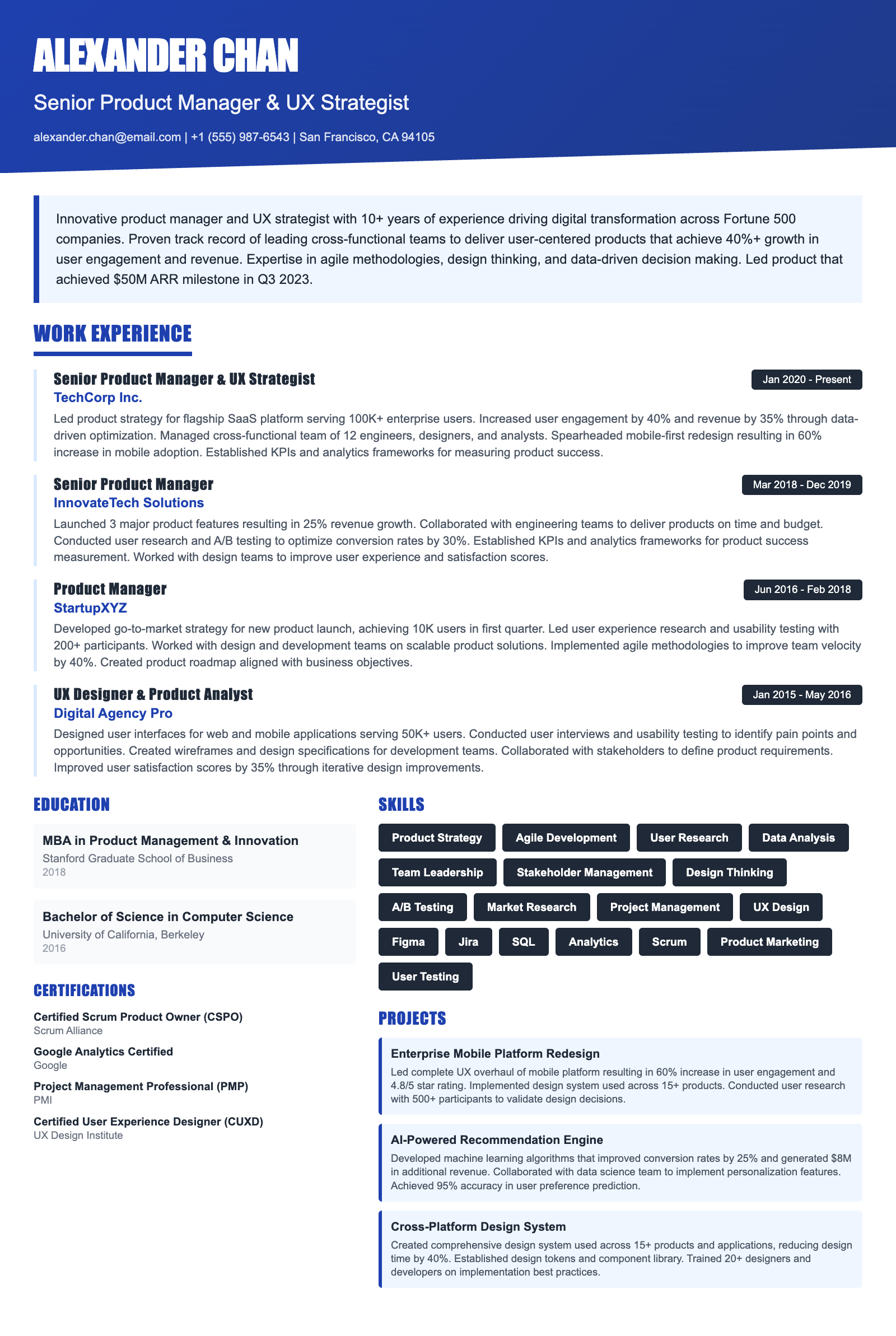
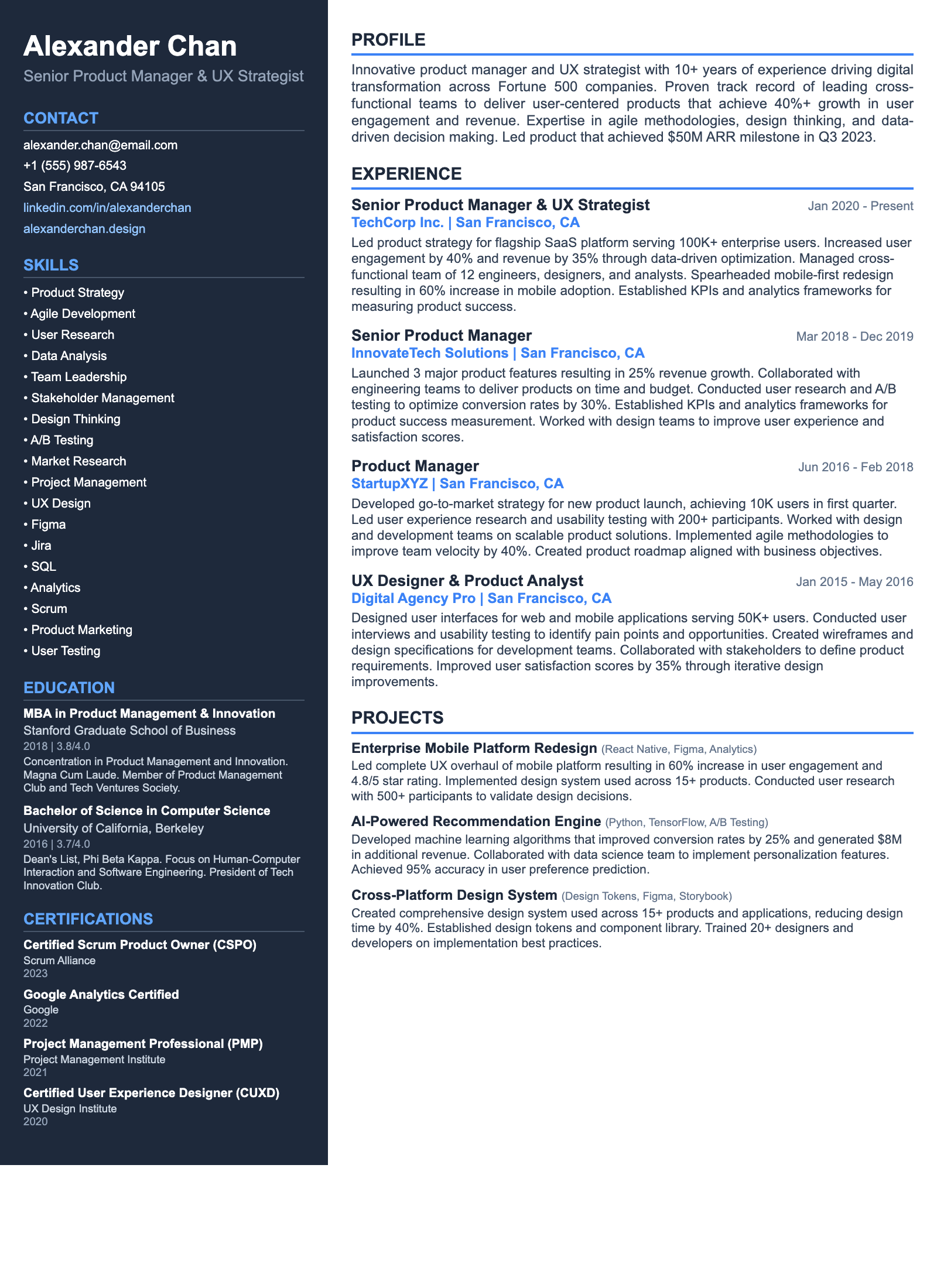
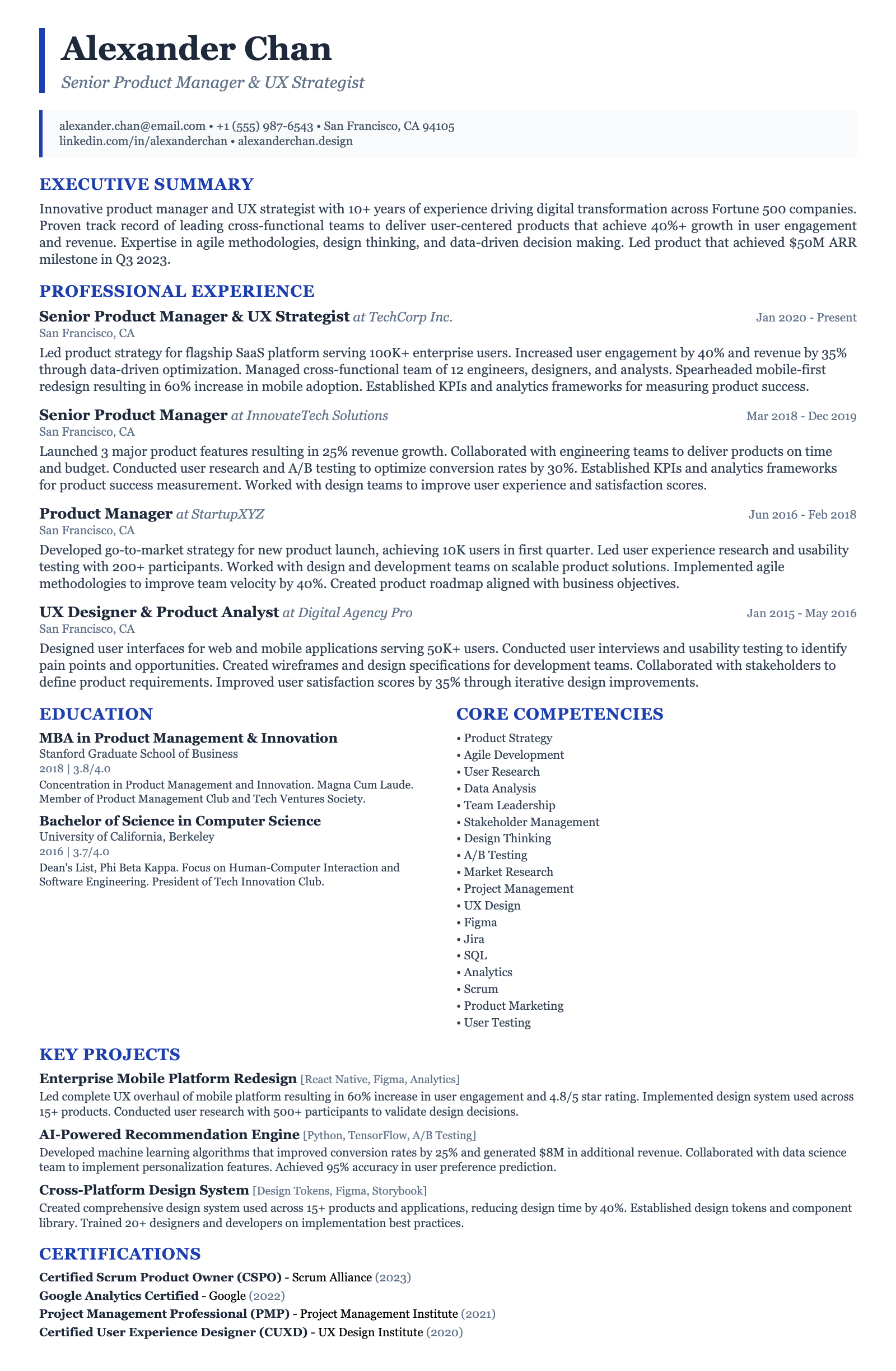
Recommended Resume Templates

ATS-friendly templates designed specifically for Principal Education Web Developer positions in the US market.
Frequently Asked Questions

How long should my Principal Education Web Developer resume be?

Given the senior nature of the role, aim for a two-page resume. Use the available space to thoroughly showcase your experience with technologies such as React, Python, and AWS, and how you've used them to build scalable and effective educational web applications. Include specific projects and quantifiable results to demonstrate your impact.

What are the most important skills to include on my resume?

Prioritize skills relevant to educational technology development. These include proficiency in front-end frameworks (React, Angular, Vue.js), back-end languages (Python, Java, Node.js), database technologies (SQL, NoSQL), cloud platforms (AWS, Azure, Google Cloud), LMS integration, accessibility standards (WCAG), and experience with CI/CD pipelines and testing frameworks like Jest or Mocha.

How can I optimize my resume for Applicant Tracking Systems (ATS)?

Use clear and concise language, and avoid overly creative formatting. Include relevant keywords from the job description, such as specific technologies (e.g., 'React', 'Python', 'AWS', 'LMS Integration', 'WCAG Compliance') and skills (e.g., 'Agile Development', 'Data Analysis', 'Team Leadership'). Ensure your resume is easily readable by ATS by using standard fonts and clear section headings.

Are certifications important for a Principal Education Web Developer resume?

While not always mandatory, relevant certifications can strengthen your application. Consider certifications in cloud platforms (AWS Certified Developer, Azure Developer Associate), project management (PMP, Agile certifications), or specific technologies (e.g., React, Node.js). These demonstrate your commitment to continuous learning and industry best practices.

What are some common mistakes to avoid on my resume?

Avoid vague descriptions of your experience. Quantify your achievements whenever possible, such as 'Improved student engagement by 15% through personalized learning paths implemented using React and a machine learning algorithm.' Also, ensure your resume is free of grammatical errors and typos, and tailored to the specific requirements of the Principal Education Web Developer role.

How can I highlight my career transition into a Principal Education Web Developer role?

If transitioning from a different field, emphasize transferable skills such as problem-solving, leadership, and technical expertise. Highlight projects where you applied these skills to educational contexts, even if they weren't in a formal education setting. Showcase any relevant coursework, bootcamps, or certifications that demonstrate your commitment to education technology.

Ready to Build Your Principal Education Web Developer Resume?

Use our AI-powered resume builder to create an ATS-optimized resume tailored for Principal Education Web Developer positions in the US market.

Complete Principal Education Web Developer Career Toolkit

Everything you need for your Principal Education Web Developer job search — all in one platform.

Why choose ResumeGyani over Zety or Resume.io?

The only platform with AI mock interviews + resume builder + job search + career coaching — all in one.

See comparison

Last updated: March 2026 · Content reviewed by certified resume writers · Optimized for US job market