
ATS-Optimized for US Market

Principal Manufacturing Chef Career & Resume Guide

Crafting a compelling resume as a Principal Manufacturing Chef requires highlighting your expertise in large-scale food production, quality control, and culinary innovation. Your resume should immediately showcase your proven ability to lead culinary teams in a manufacturing environment, optimize production processes, and ensure adherence to food safety standards. Hiring managers seek candidates with a strong understanding of food science, supply chain management, and cost-effective production techniques. Key sections include a professional summary that emphasizes your leadership experience, a detailed work history that quantifies your accomplishments (e.g., cost reductions, efficiency improvements), a skills section that showcases both culinary and managerial proficiencies, and potentially a certifications section (e.g., HACCP, ServSafe). To stand out, quantify your achievements using metrics like percentage improvements in yield, reductions in waste, or increases in production capacity. Showcase your experience with industry-standard tools like ERP systems (e.g., SAP, Oracle) for inventory management, statistical process control (SPC) software for quality monitoring, and specialized food processing equipment. Emphasize your experience with food safety regulations such as FSMA. Frame your accomplishments within the context of improving efficiency, maintaining quality, and driving innovation in a large-scale food manufacturing setting. Tailor your resume to align with the specific requirements of each job description, highlighting the skills and experiences that are most relevant to the position. Showcasing your leadership, understanding of manufacturing principles and culinary creativity will make you a top candidate.
Average US Salary: $140k - $220k

Expert Tip: For Principal Manufacturing Chef positions in the US, recruiters increasingly look for technical execution and adaptability over simple job duties. This guide is tailored to highlight these specific traits to ensure your resume stands out in the competitive Principal Manufacturing Chef sector.

What US Hiring Managers Look For in a Principal Manufacturing Chef Resume

When reviewing Principal Manufacturing Chef candidates, recruiters and hiring managers in the US focus on a few critical areas. Making these elements clear and easy to find on your resume will improve your chances of moving to the interview stage.

  • Relevant experience and impact in Principal Manufacturing Chef or closely related roles.
  • Clear, measurable achievements (metrics, scope, outcomes) rather than duties.
  • Skills and keywords that match the job description and ATS requirements.
  • Professional formatting and no spelling or grammar errors.
  • Consistency between your resume, LinkedIn, and application.
  • Proficiency in key areas such as Communication, Time Management, Industry-Standard Tools.

Essential Skills for Principal Manufacturing Chef

Include these keywords in your resume to pass ATS screening and impress recruiters.

Must-Have Skills

  • CriticalCommunication
  • HighTime Management

Technical Skills

  • HighIndustry-Standard Tools
  • MediumData Analysis

Soft Skills

  • CriticalTeamwork
  • HighAdaptability
  • MediumLeadership

A Day in the Life

A Day in the Life of a Principal Chef

Arrive early to review metrics or sprint progress. As a Principal Chef, you lead the 9 AM stand-up, addressing blockers and setting the strategic direction for handling core responsibilities, collaborating with cross-functional teams, and driving project success within the Manufacturing team. 10 AM-1 PM is for high-impact decisions. You're architecting solutions, reviewing critical deliverables, or negotiating priorities with Manufacturing stakeholders. Afternoons involve mentorship and cross-org coordination. You're the go-to expert for handling core responsibilities, collaborating with cross-functional teams, and driving project success, ensuring the team's output aligns with company goals. You finish by finalizing quarterly roadmaps or reviewing next steps. At this level in Manufacturing, your focus shifts from individual tasks to organizational impact.

Career Progression Path

Level 1

Chef I (Entry Level)

Level 2

Chef II (Junior)

Level 3

Senior Chef

Level 4

Lead Chef

Level 5

Chef Manager / Director

Interview Questions & Answers

Prepare for your Principal Manufacturing Chef interview with these commonly asked questions.

Describe a time when you had to implement a new food safety protocol in a manufacturing environment. What were the challenges, and how did you overcome them?

Medium
Behavioral
Sample Answer
In my previous role, we needed to implement a new HACCP plan to comply with updated FSMA regulations. The initial challenge was training the existing staff on the new procedures and ensuring buy-in. I organized comprehensive training sessions, created user-friendly guides, and implemented a system of regular audits to monitor compliance. We also faced some resistance from team members initially. I personally addressed concerns, emphasizing the importance of food safety for both customer safety and company reputation. This resulted in a successful implementation and a 10% reduction in product recalls within the first year.

How would you approach scaling up a recipe from a small batch to a large-scale manufacturing process while maintaining product quality and consistency?

Technical
Situational
Sample Answer
Scaling up a recipe requires careful consideration of ingredient ratios, equipment capabilities, and process controls. I would start by conducting thorough pilot testing to identify any potential issues with texture, flavor, or shelf life. I would then work closely with the engineering and quality control teams to optimize the manufacturing process and establish clear quality standards. I would utilize statistical process control (SPC) to monitor critical parameters and make adjustments as needed to ensure consistency and quality across all batches.

Tell me about a time you had to manage a food production crisis. What steps did you take to resolve the issue and minimize the impact on the company?

Hard
Behavioral
Sample Answer
During my time at [Previous Company], we had a temporary power outage which affected our cold storage, putting some ingredients at risk. I immediately activated our emergency response plan, which involved quickly assessing which ingredients were at risk, quarantining potentially compromised materials, and contacting alternate suppliers to replenish our stock. I worked closely with our quality control team to conduct thorough testing and ensure that any affected product was safely discarded. We communicated transparently with our customers to minimize any disruptions and maintain their trust. I also took the opportunity after the crisis to assess our backup power systems and revise our disaster plan to ensure better preparedness in the future.

Describe your experience with ERP systems (e.g., SAP, Oracle) in a food manufacturing environment. How have you used these systems to improve efficiency and reduce costs?

Medium
Technical
Sample Answer
I have extensive experience with SAP in previous food manufacturing environments. I have used SAP to manage inventory levels, track production costs, and optimize supply chain operations. For example, at [Previous Company], I implemented a new module in SAP that allowed us to better forecast demand and reduce waste. This resulted in a 10% reduction in inventory holding costs and a 5% improvement in on-time delivery performance. I'm also familiar with data analysis tools to extract useful insights.

How do you stay current with the latest trends and innovations in the food manufacturing industry, and how do you apply this knowledge to improve processes and products?

Easy
Behavioral
Sample Answer
I proactively stay updated by attending industry conferences, subscribing to trade publications, and participating in professional organizations like the Institute of Food Technologists (IFT). I actively research emerging technologies and ingredients that can improve our products and processes. For example, I recently explored the use of high-pressure processing (HPP) to extend the shelf life of our products while maintaining their nutritional value and flavor. I believe that continuous learning and innovation are crucial for staying competitive in the food industry.

Imagine we are experiencing an unexpected shortage of a key ingredient. Walk me through the steps you would take to mitigate the impact on production and ensure we meet our customer orders.

Hard
Situational
Sample Answer
First, I would immediately assess the severity and duration of the shortage, working with our supply chain team. I'd identify potential alternative suppliers and evaluate their ability to meet our quality standards and volume requirements. Simultaneously, I'd work with the recipe development team to explore potential reformulations using available ingredients, ensuring that the final product still meets our quality and flavor expectations. I would then communicate transparently with our sales and marketing teams to manage customer expectations and prioritize orders. Lastly, I'd analyze the root cause of the shortage to implement preventive measures and mitigate the risk of future disruptions.

ATS Optimization Tips

Make sure your resume passes Applicant Tracking Systems used by US employers.

Incorporate keywords directly from the job description, such as specific food safety regulations (FSMA, HACCP), equipment types (e.g., continuous cookers, packaging machines), and software (SAP, Oracle).
Use a reverse-chronological format to showcase your career progression and most recent accomplishments first, as ATS systems often prioritize this format.
Ensure your resume is easily readable by using standard fonts like Arial or Times New Roman, and avoid using excessive formatting or graphics that can confuse ATS parsers.
Use clear and concise language, avoiding jargon or overly technical terms that may not be recognized by ATS systems.
Quantify your achievements whenever possible, using numbers and metrics to demonstrate the impact of your work (e.g., "Reduced waste by 15% through process optimization").
Optimize the skills section by listing both technical and soft skills relevant to the Principal Manufacturing Chef role, separating them into categories like "Technical Skills" and "Management Skills."
Use consistent terminology throughout your resume, ensuring that job titles and skill descriptions match those used in the job description.
When submitting your resume online, save it as a PDF file to preserve formatting while still allowing the ATS to parse the text.

Common Resume Mistakes to Avoid

Don't make these errors that get resumes rejected.

1
Failing to quantify accomplishments: Instead of saying “Improved efficiency,” say “Improved efficiency by 15%, resulting in $50,000 annual savings.”
2
Not tailoring the resume to the specific job description: Generic resumes are easily overlooked. Customize each resume to match the specific requirements of the role.
3
Omitting relevant technical skills: Neglecting to mention experience with specific food processing equipment or software (e.g., ERP systems, SPC software) can be a significant oversight.
4
Focusing solely on culinary skills and neglecting managerial experience: This role requires a balance of both. Highlight leadership, team management, and process optimization skills.
5
Using a cluttered or poorly formatted resume: An unorganized resume is difficult to read and may be rejected by ATS systems.
6
Ignoring food safety certifications: Failing to include relevant certifications (e.g., HACCP, ServSafe) can undermine your credibility.
7
Not highlighting experience with regulatory compliance: Emphasize your understanding of food safety regulations and your ability to ensure compliance.
8
Overlooking supply chain management experience: Highlight your experience managing inventory, sourcing ingredients, and optimizing the supply chain to reduce costs.

Industry Outlook

The US Manufacturing sector is experiencing steady growth. Principal Chefs are particularly sought after, with the Bureau of Labor Statistics projecting average job growth through 2030. Peak hiring occurs in Q1 (January-March) and Q3 (August-September).

Top Hiring Companies

Industry LeadersRegional FirmsFast-Growing Companies

Recommended Resume Templates

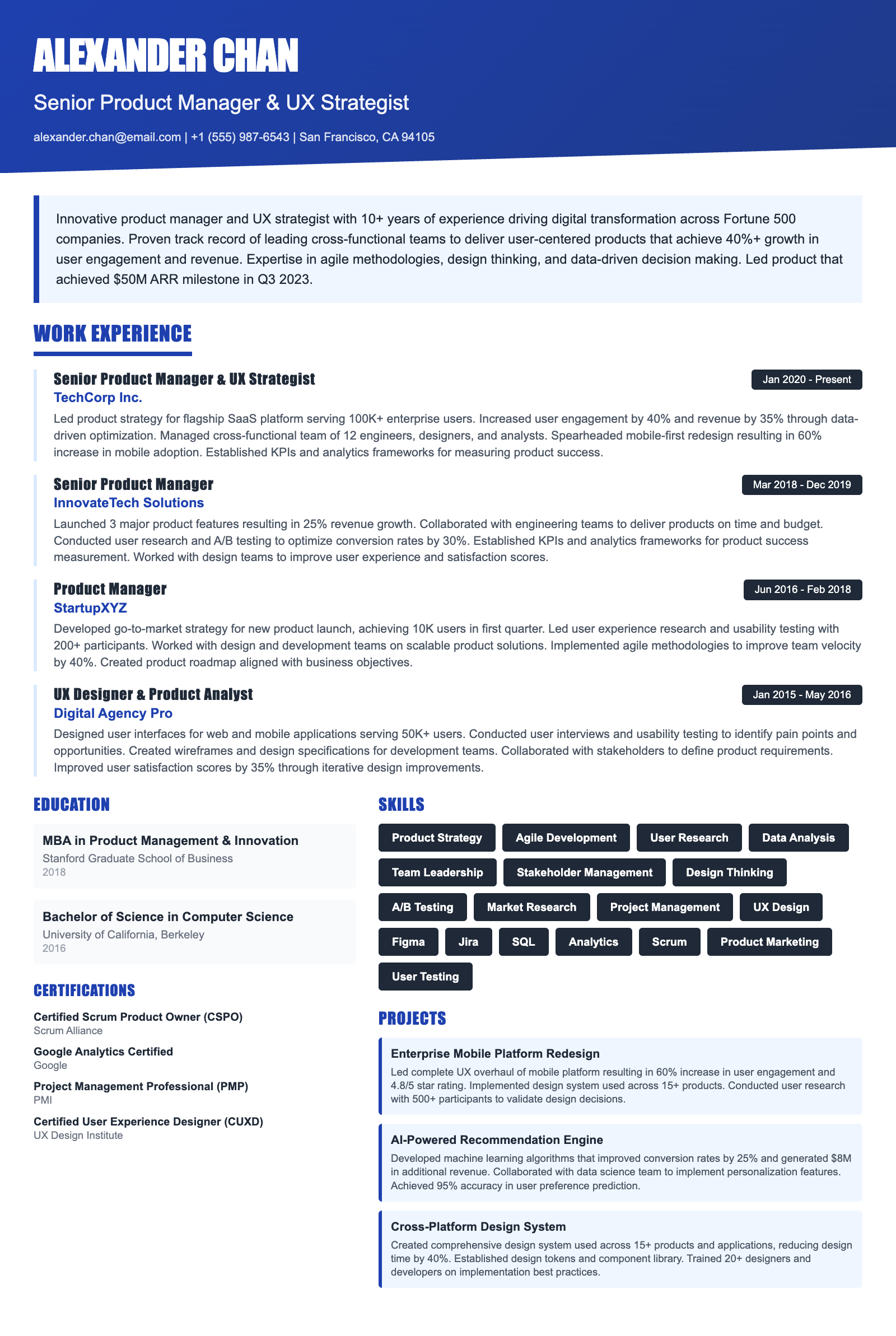
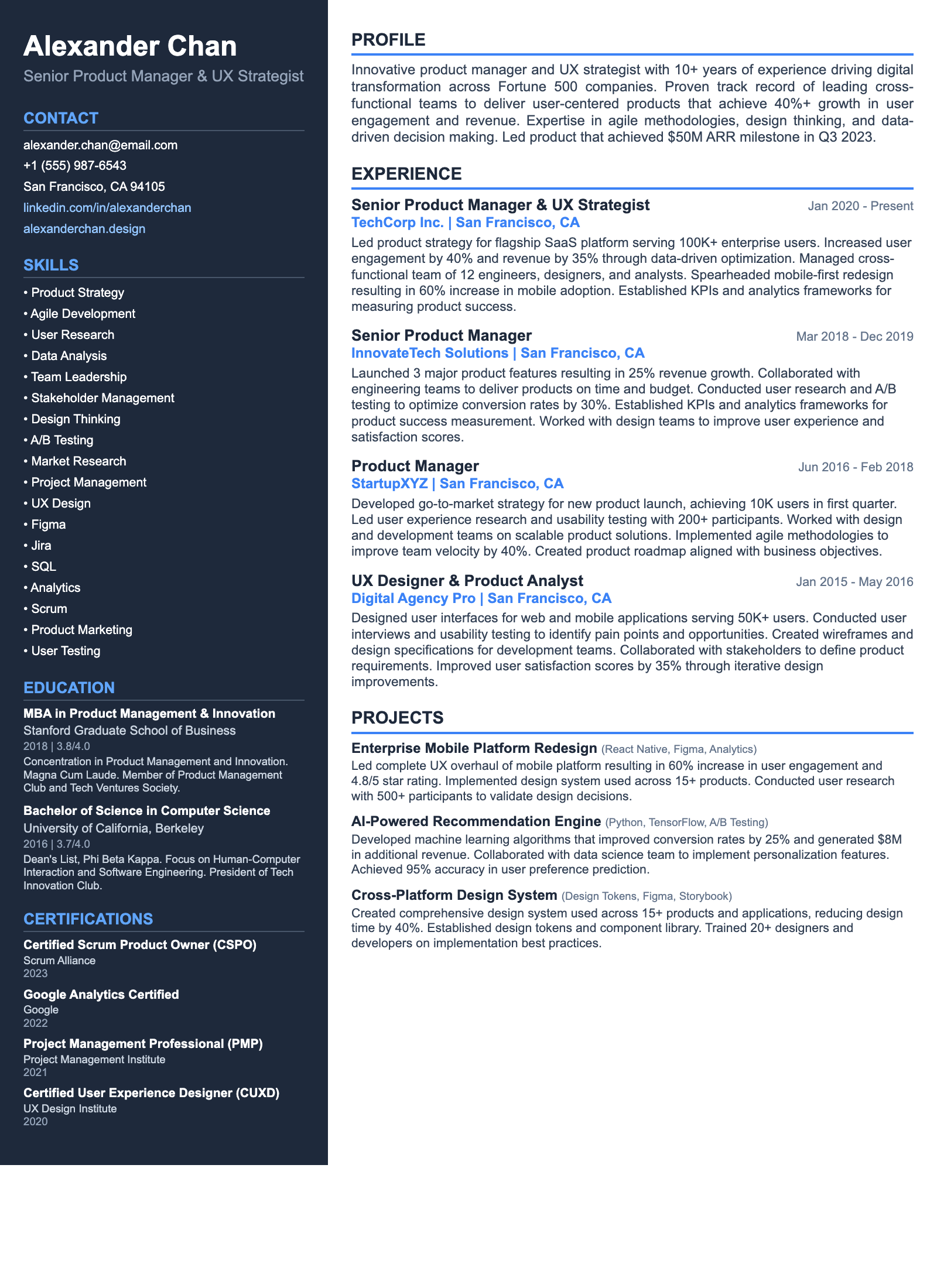
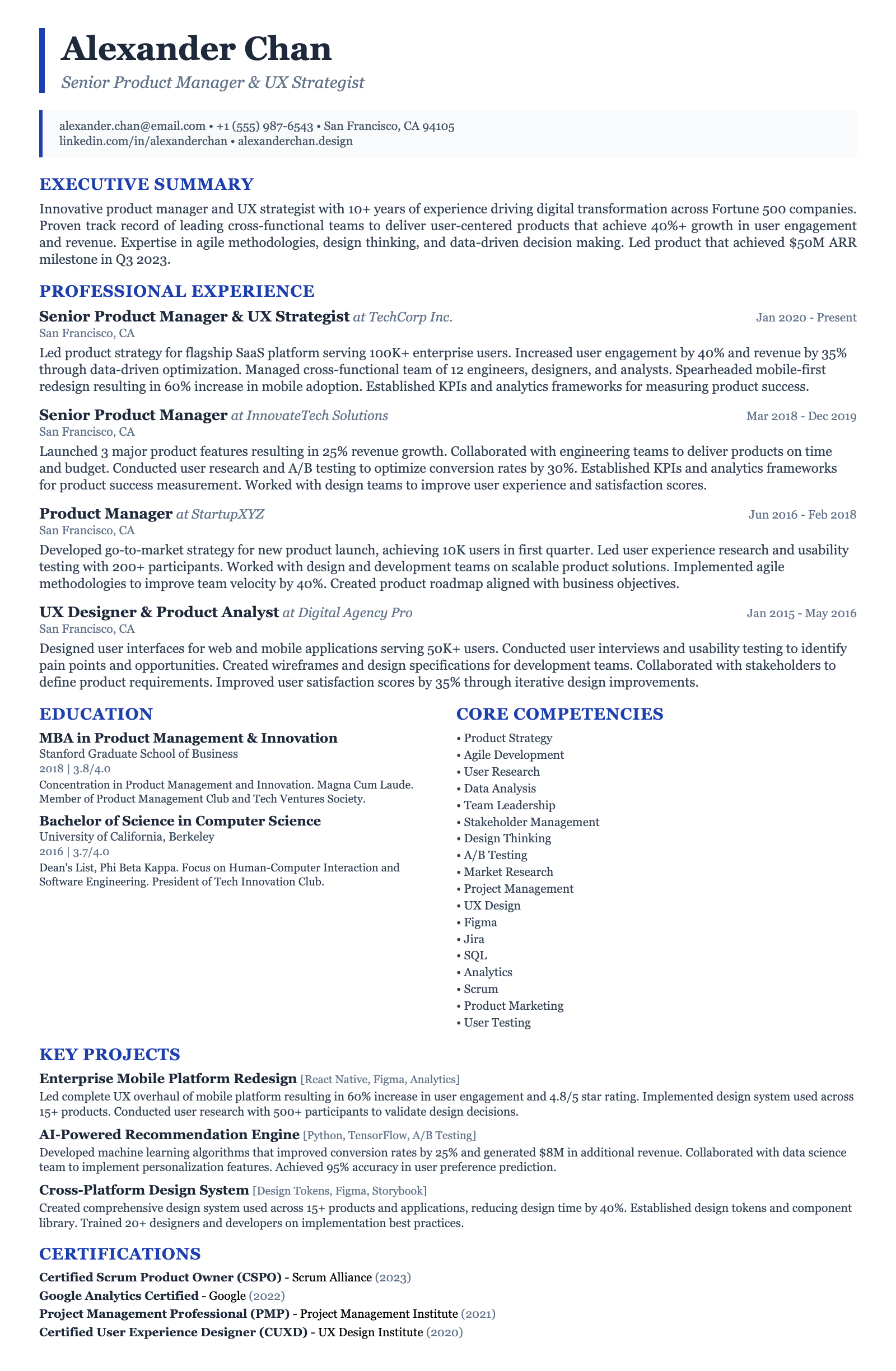
ATS-friendly templates designed specifically for Principal Manufacturing Chef positions in the US market.
Frequently Asked Questions

How long should my Principal Manufacturing Chef resume be?

Ideally, your resume should be no more than two pages. Focus on the most relevant experiences and accomplishments that demonstrate your expertise in manufacturing food production. Prioritize quantifiable achievements and tailor the content to match the specific requirements outlined in the job description. If you have extensive experience, a two-page resume allows you to showcase your career progression and leadership capabilities effectively. Skills like SAP or Oracle ERP experience should be highlighed if present.

What are the most important skills to highlight on a Principal Manufacturing Chef resume?

Emphasize a blend of culinary expertise and manufacturing management skills. Key skills include: food safety (HACCP, FSMA), recipe development and scaling, process optimization, cost control, supply chain management, quality control (SPC), regulatory compliance, ERP systems (SAP, Oracle), leadership, and communication. Showcase your ability to manage large teams, improve production efficiency, and maintain high food safety standards. Technical proficiency with specific food processing equipment is also crucial.

How can I optimize my resume for Applicant Tracking Systems (ATS)?

Use a clean, ATS-friendly format (e.g., avoid tables and graphics). Incorporate relevant keywords from the job description throughout your resume, especially in the skills section and work experience bullets. Use standard section headings (e.g., “Summary,” “Experience,” “Skills,” “Education”). Save your resume as a .doc or .pdf file, but ensure the PDF is text-searchable. List tools like SAP, Oracle, or specific industry equipment used.

Are certifications important for a Principal Manufacturing Chef resume?

Yes, certifications can significantly enhance your resume. Certifications such as HACCP (Hazard Analysis and Critical Control Points), ServSafe, and Certified Food Scientist (CFS) demonstrate your commitment to food safety and quality. Include the certification name, issuing organization, and expiration date (if applicable). These certifications can showcase your expertise to a hiring manager.

What are some common mistakes to avoid on a Principal Manufacturing Chef resume?

Avoid generic descriptions of your responsibilities. Instead, focus on quantifiable achievements and specific projects. Do not neglect to tailor your resume to each job description. Do not omit relevant certifications or technical skills. Avoid lengthy paragraphs; use bullet points to highlight key accomplishments. Proofread carefully for grammatical errors and typos. Not including SAP, Oracle or similar ERP experience is a mistake if it exists.

How do I showcase my career transition into a Principal Manufacturing Chef role?

If you're transitioning into this role from a related field (e.g., restaurant management, food science), highlight transferable skills such as leadership, process improvement, quality control, and cost management. Emphasize any experience you have with large-scale food production or manufacturing processes. Obtain relevant certifications (e.g., HACCP, ServSafe) to demonstrate your commitment to food safety. Consider a targeted resume summary to frame your transition.

Ready to Build Your Principal Manufacturing Chef Resume?

Use our AI-powered resume builder to create an ATS-optimized resume tailored for Principal Manufacturing Chef positions in the US market.

Complete Principal Manufacturing Chef Career Toolkit

Everything you need for your Principal Manufacturing Chef job search — all in one platform.

Why choose ResumeGyani over Zety or Resume.io?

The only platform with AI mock interviews + resume builder + job search + career coaching — all in one.

See comparison

Last updated: March 2026 · Content reviewed by certified resume writers · Optimized for US job market