
ATS-Optimized for US Market

Principal Manufacturing Data Scientist Career & Resume Guide

As a Principal Manufacturing Data Scientist, your resume should showcase your ability to leverage data to optimize manufacturing processes, improve efficiency, and reduce costs. Hiring managers seek candidates who possess a deep understanding of statistical modeling, machine learning, and data visualization techniques, and can apply them to real-world manufacturing challenges. Your resume should prominently feature your experience with industry-standard tools such as Python (with libraries like Pandas, NumPy, Scikit-learn), R, SQL, and cloud platforms like AWS, Azure, or Google Cloud. Highlight your experience with data warehousing solutions (e.g., Snowflake, Redshift) and ETL processes. Key sections include a compelling summary, detailed work experience emphasizing quantifiable achievements (e.g., reducing downtime by X%, improving yield by Y%), relevant projects, and a skills section that includes both technical and soft skills (communication, leadership). To stand out, quantify your impact using metrics whenever possible, tailor your resume to each specific job description, and showcase your ability to lead cross-functional teams to drive data-driven decision-making in a manufacturing environment. Focus on showcasing how you've solved specific problems using data analysis, predictive modeling, and process optimization, including experience with frameworks like Six Sigma, Lean Manufacturing, or similar methodologies. Also, include achievements in areas like predictive maintenance, quality control, or supply chain optimization.
Average US Salary: $140k - $220k

Expert Tip: For Principal Manufacturing Data Scientist positions in the US, recruiters increasingly look for technical execution and adaptability over simple job duties. This guide is tailored to highlight these specific traits to ensure your resume stands out in the competitive Principal Manufacturing Data Scientist sector.

What US Hiring Managers Look For in a Principal Manufacturing Data Scientist Resume

When reviewing Principal Manufacturing Data Scientist candidates, recruiters and hiring managers in the US focus on a few critical areas. Making these elements clear and easy to find on your resume will improve your chances of moving to the interview stage.

  • Relevant experience and impact in Principal Manufacturing Data Scientist or closely related roles.
  • Clear, measurable achievements (metrics, scope, outcomes) rather than duties.
  • Skills and keywords that match the job description and ATS requirements.
  • Professional formatting and no spelling or grammar errors.
  • Consistency between your resume, LinkedIn, and application.
  • Proficiency in key areas such as Communication, Time Management, Industry-Standard Tools.

Essential Skills for Principal Manufacturing Data Scientist

Include these keywords in your resume to pass ATS screening and impress recruiters.

Must-Have Skills

  • CriticalCommunication
  • HighTime Management

Technical Skills

  • HighIndustry-Standard Tools
  • MediumData Analysis

Soft Skills

  • CriticalTeamwork
  • HighAdaptability
  • MediumLeadership

A Day in the Life

A Day in the Life of a Principal Data Scientist

Arrive early to review metrics or sprint progress. As a Principal Data Scientist, you lead the 9 AM stand-up, addressing blockers and setting the strategic direction for handling core responsibilities, collaborating with cross-functional teams, and driving project success within the Manufacturing team. 10 AM-1 PM is for high-impact decisions. You're architecting solutions, reviewing critical deliverables, or negotiating priorities with Manufacturing stakeholders. Afternoons involve mentorship and cross-org coordination. You're the go-to expert for handling core responsibilities, collaborating with cross-functional teams, and driving project success, ensuring the team's output aligns with company goals. You finish by finalizing quarterly roadmaps or reviewing next steps. At this level in Manufacturing, your focus shifts from individual tasks to organizational impact.

Career Progression Path

Level 1

Data Scientist I (Entry Level)

Level 2

Data Scientist II (Junior)

Level 3

Senior Data Scientist

Level 4

Lead Data Scientist

Level 5

Data Scientist Manager / Director

Interview Questions & Answers

Prepare for your Principal Manufacturing Data Scientist interview with these commonly asked questions.

Describe a time you led a data science project that significantly improved a manufacturing process. What challenges did you face, and how did you overcome them?

Medium
Behavioral
Sample Answer
In my previous role at [Previous Company], I led a project focused on optimizing our injection molding process. We faced inconsistent product quality due to variations in temperature and pressure. I collected data from sensors, developed a predictive model using machine learning, and identified the key factors influencing quality. The challenge was integrating the model with the existing control system. I worked with the engineering team to implement real-time adjustments based on the model's predictions. This resulted in a 20% reduction in defects and a 10% increase in production efficiency.

How do you approach the problem of missing or incomplete data in a manufacturing dataset?

Medium
Technical
Sample Answer
When dealing with missing data, I first try to understand the reason behind it. If it's random, I might use imputation techniques like mean, median, or mode imputation. For more complex missing patterns, I use methods like multiple imputation or model-based imputation. If the data is incomplete due to sensor failures, I might use historical data or data from similar sensors to fill in the gaps. I always document the imputation methods used and assess the potential impact on the analysis results.

Imagine you are tasked with developing a predictive maintenance model for a critical piece of equipment. What steps would you take, from data collection to deployment?

Hard
Situational
Sample Answer
I would start by defining the specific goals and objectives of the model, like predicting failures or optimizing maintenance schedules. Next, I'd gather relevant data from sensors, maintenance logs, and historical records. I'd then perform data cleaning and feature engineering to prepare the data for modeling. I'd select an appropriate machine learning algorithm, train the model, and validate its performance. Finally, I'd work with the engineering team to deploy the model and integrate it with the existing maintenance management system, ensuring continuous monitoring and improvement.

Explain your experience with using machine learning for anomaly detection in a manufacturing setting.

Medium
Technical
Sample Answer
At [Previous Company], I used anomaly detection algorithms to identify defective products early in the production process. I employed techniques like Isolation Forests and One-Class SVMs to model the normal behavior of the manufacturing process based on sensor data. When a new data point deviated significantly from this normal behavior, it was flagged as a potential anomaly. This allowed us to proactively address issues before they led to significant defects, reducing waste and improving product quality. I also worked on reducing false positives by refining model thresholds and incorporating domain expertise.

Describe a situation where your data analysis led to a significant cost saving in a manufacturing environment.

Medium
Behavioral
Sample Answer
In a previous role, I analyzed the energy consumption patterns of our production line. By correlating energy usage with production volume and machine performance, I identified several areas where energy was being wasted. I recommended adjustments to machine settings and operational procedures, such as optimizing idle times and improving insulation. These changes resulted in a 15% reduction in energy consumption, which translated to a cost saving of $50,000 per year.

How do you stay up-to-date with the latest advancements in data science and machine learning, particularly as they apply to manufacturing?

Easy
Behavioral
Sample Answer
I actively participate in online courses and workshops to learn new techniques and tools. I follow industry leaders and researchers on social media and read their publications. I also attend conferences and webinars focused on data science and manufacturing. Moreover, I experiment with new algorithms and techniques on personal projects and share my findings with colleagues. Reading journals like 'IEEE Transactions on Automation Science and Engineering' also provides valuable insights.

ATS Optimization Tips

Make sure your resume passes Applicant Tracking Systems used by US employers.

Incorporate industry-specific keywords such as 'Predictive Maintenance', 'Statistical Process Control (SPC)', 'Root Cause Analysis', 'Six Sigma', 'Lean Manufacturing', 'OEE (Overall Equipment Effectiveness)' directly from the job description.
Use a chronological or combination resume format, as ATS systems typically prefer these structures. This allows the system to easily parse your work history and identify relevant experience.
Include a skills matrix or table that lists both technical and soft skills, ensuring that the skills align with the job requirements. Mention tools like Python, R, SQL, Tableau, and specific manufacturing software.
Use standard section headings (e.g., 'Summary', 'Experience', 'Skills', 'Education') to help the ATS correctly categorize the information in your resume.
Quantify your achievements with numbers and metrics to demonstrate the impact of your work. Mention improvements in efficiency, cost savings, or error reduction using specific data points.
Optimize your resume for keyword density by naturally incorporating relevant keywords throughout the document. Avoid keyword stuffing, which can negatively impact your ranking.
Ensure your contact information is easily parsable by the ATS. Use clear and consistent formatting for your name, phone number, email address, and LinkedIn profile URL.
Save your resume as a PDF file to preserve formatting and ensure that the ATS can accurately read the document. Avoid using complex formatting or graphics that may not be compatible with ATS systems.

Common Resume Mistakes to Avoid

Don't make these errors that get resumes rejected.

1
Failing to quantify achievements with specific metrics related to manufacturing improvements (e.g., 'Reduced downtime by 15%').
2
Listing generic skills without providing specific examples of how they were applied in a manufacturing setting.
3
Not tailoring the resume to match the specific requirements of the Principal Manufacturing Data Scientist role and the target company.
4
Omitting experience with relevant manufacturing data sources, such as sensor data, SCADA systems, or MES systems.
5
Neglecting to showcase experience with specific machine learning models used for predictive maintenance or quality control.
6
Not highlighting experience with data visualization tools and techniques used to communicate insights to stakeholders in manufacturing.
7
Failing to demonstrate experience leading cross-functional teams to implement data-driven solutions in a manufacturing environment.
8
Using overly technical jargon without explaining the practical implications of your work to a non-technical audience.

Industry Outlook

The US Manufacturing sector is experiencing steady growth. Principal Data Scientists are particularly sought after, with the Bureau of Labor Statistics projecting average job growth through 2030. Peak hiring occurs in Q1 (January-March) and Q3 (August-September).

Top Hiring Companies

Industry LeadersRegional FirmsFast-Growing Companies

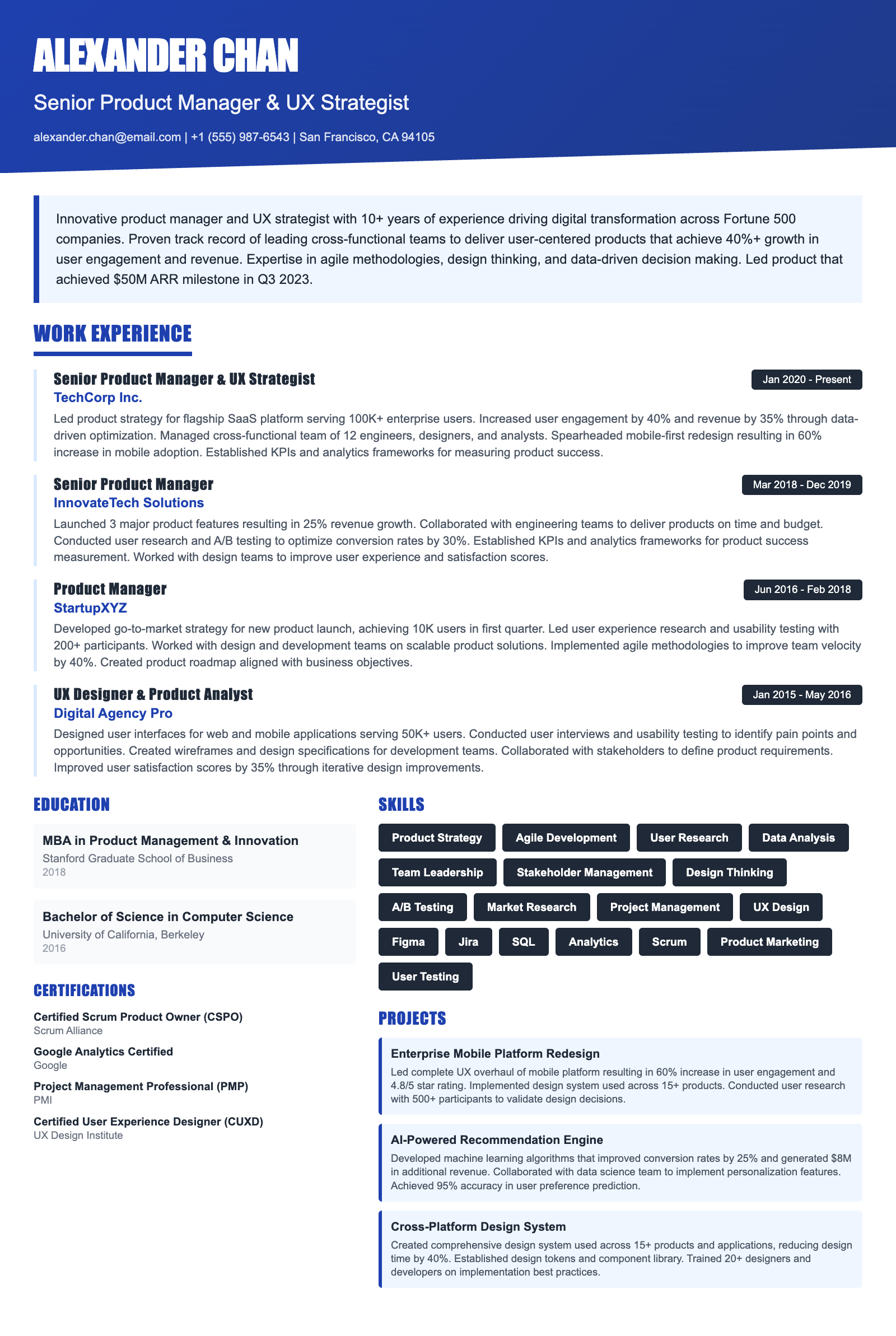
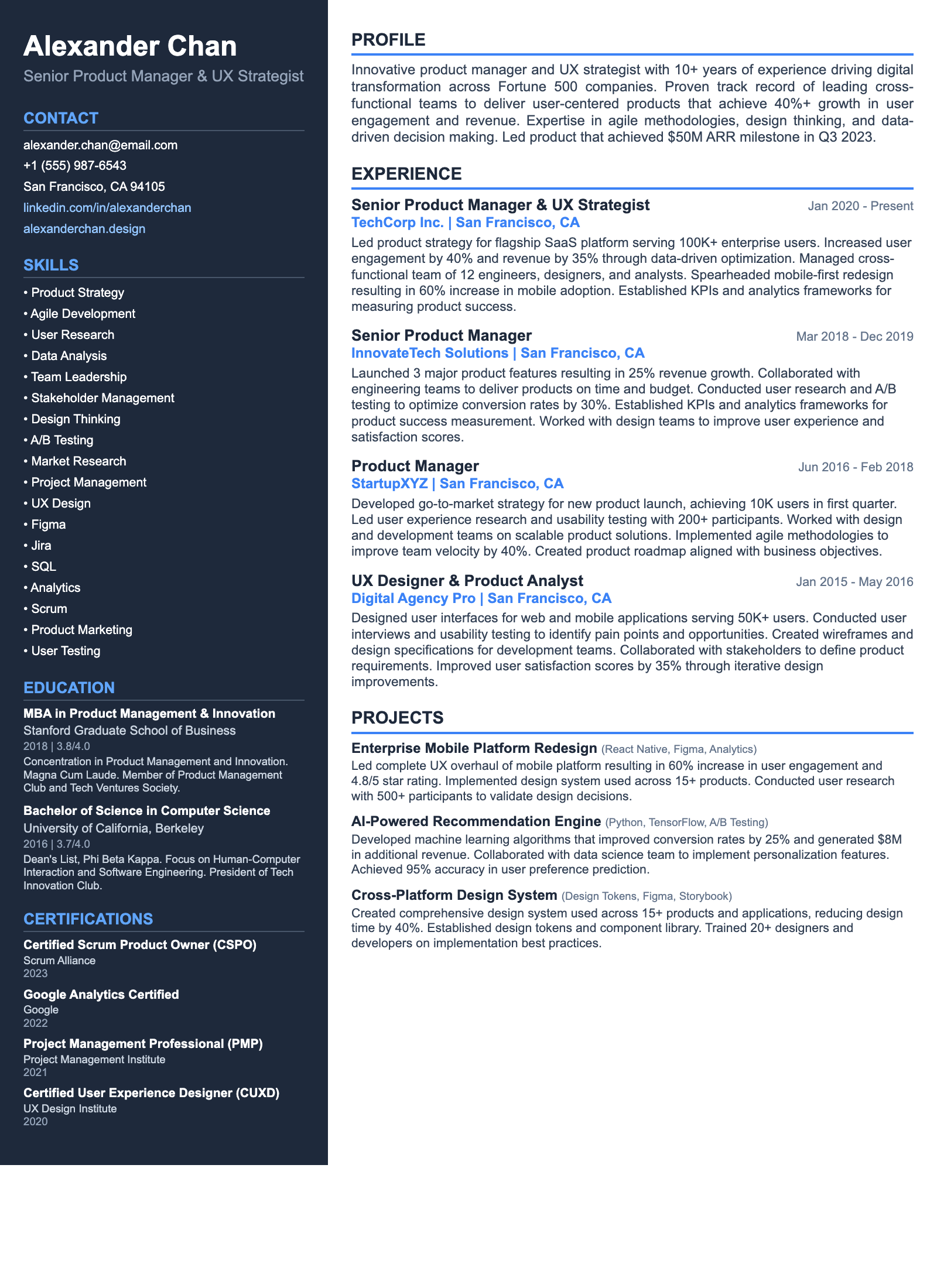
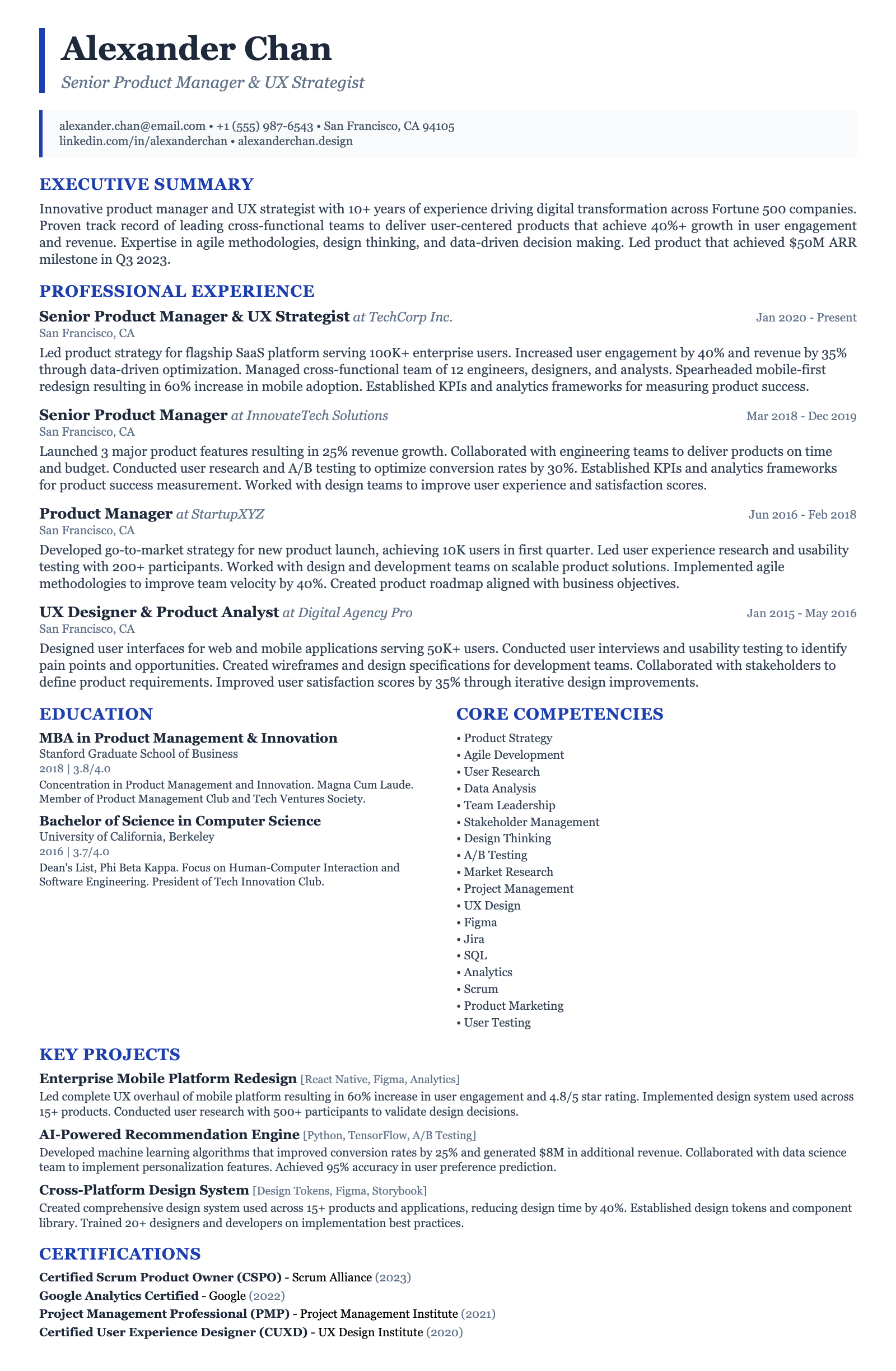
Recommended Resume Templates

ATS-friendly templates designed specifically for Principal Manufacturing Data Scientist positions in the US market.
Frequently Asked Questions

What is the ideal length for a Principal Manufacturing Data Scientist resume?

For a Principal Manufacturing Data Scientist role, a two-page resume is generally acceptable, especially if you have extensive experience (10+ years) and significant accomplishments. Focus on the most relevant experiences and quantify your contributions. Prioritize readability and ensure all information is concise and impactful. Use a clear and professional format to highlight your key skills and achievements related to manufacturing data science.

What are the most crucial skills to highlight on my resume?

Highlight technical skills like proficiency in Python (Pandas, NumPy, Scikit-learn), R, SQL, data visualization tools (Tableau, Power BI), machine learning algorithms, statistical modeling, and cloud computing (AWS, Azure, GCP). Emphasize soft skills like communication, leadership, teamwork, and problem-solving. Include your experience with specific manufacturing data applications like predictive maintenance, quality control, and process optimization. Experience with edge computing and IoT data is valuable.

How can I optimize my resume for Applicant Tracking Systems (ATS)?

Use a simple, clean format with standard fonts (Arial, Calibri). Avoid tables, images, and unusual formatting elements that ATS might not parse correctly. Include relevant keywords from the job description throughout your resume, particularly in your skills and experience sections. Use standard section headings like 'Summary,' 'Experience,' 'Skills,' and 'Education.' Save your resume as a PDF to preserve formatting.

Are certifications important for a Principal Manufacturing Data Scientist resume?

Certifications are valuable and can help you stand out. Consider certifications related to data science, machine learning, cloud computing (AWS Certified Machine Learning – Specialty), or manufacturing-specific methodologies like Six Sigma (Black Belt). Highlight these certifications prominently on your resume, along with the issuing organization and date of completion. Certifications demonstrate your commitment to professional development.

What are some common resume mistakes to avoid?

Avoid generic descriptions of your responsibilities. Instead, quantify your accomplishments with specific metrics. Do not neglect to tailor your resume to each job description. Do not use outdated skills or technologies. Failing to showcase your leadership experience or omitting relevant projects are also common mistakes. Ensure your resume is free of typos and grammatical errors.

How should I address a career transition from a different field into a Principal Manufacturing Data Scientist role?

Highlight transferable skills and experiences from your previous role that are relevant to manufacturing data science. Focus on data analysis, statistical modeling, and problem-solving skills. Complete relevant online courses or certifications to demonstrate your commitment to the field. Showcase any projects or initiatives where you applied data science techniques to solve real-world problems, even if outside of a manufacturing context. Emphasize your adaptability and willingness to learn.

Ready to Build Your Principal Manufacturing Data Scientist Resume?

Use our AI-powered resume builder to create an ATS-optimized resume tailored for Principal Manufacturing Data Scientist positions in the US market.

Complete Principal Manufacturing Data Scientist Career Toolkit

Everything you need for your Principal Manufacturing Data Scientist job search — all in one platform.

Why choose ResumeGyani over Zety or Resume.io?

The only platform with AI mock interviews + resume builder + job search + career coaching — all in one.

See comparison

Last updated: March 2026 · Content reviewed by certified resume writers · Optimized for US job market

Principal Manufacturing Data Scientist Resume Guide (2026) | ATS-Optimized Template