
ATS-Optimized for US Market

Principal Manufacturing Operations Manager Career & Resume Guide

As a Principal Manufacturing Operations Manager, your resume needs to showcase your ability to optimize complex manufacturing processes, lead cross-functional teams, and drive continuous improvement initiatives. Hiring managers seek candidates with a proven track record of increasing efficiency, reducing costs, and ensuring product quality within demanding production environments. Your resume should highlight your expertise in areas like lean manufacturing, Six Sigma, supply chain management, and EHS compliance. Key sections include a compelling summary highlighting your quantifiable achievements, a detailed work experience section showcasing your leadership and operational impact, and a skills section emphasizing both technical proficiency (e.g., statistical process control, ERP systems like SAP or Oracle, MES) and soft skills (communication, leadership). To stand out, quantify your accomplishments using metrics that demonstrate your impact on key performance indicators (KPIs) such as cycle time, yield, defect rates, and on-time delivery. Tailor your resume to each specific job description, emphasizing the skills and experiences most relevant to the role. Highlight your experience with industry-standard tools like statistical software (e.g., Minitab, JMP), project management software (e.g., MS Project), and simulation software. Showcase your ability to implement and manage change within a manufacturing setting, driving operational excellence.
Average US Salary: $140k - $220k

Expert Tip: For Principal Manufacturing Operations Manager positions in the US, recruiters increasingly look for technical execution and adaptability over simple job duties. This guide is tailored to highlight these specific traits to ensure your resume stands out in the competitive Principal Manufacturing Operations Manager sector.

What US Hiring Managers Look For in a Principal Manufacturing Operations Manager Resume

When reviewing Principal Manufacturing Operations Manager candidates, recruiters and hiring managers in the US focus on a few critical areas. Making these elements clear and easy to find on your resume will improve your chances of moving to the interview stage.

  • Relevant experience and impact in Principal Manufacturing Operations Manager or closely related roles.
  • Clear, measurable achievements (metrics, scope, outcomes) rather than duties.
  • Skills and keywords that match the job description and ATS requirements.
  • Professional formatting and no spelling or grammar errors.
  • Consistency between your resume, LinkedIn, and application.
  • Proficiency in key areas such as Communication, Time Management, Industry-Standard Tools.

Essential Skills for Principal Manufacturing Operations Manager

Include these keywords in your resume to pass ATS screening and impress recruiters.

Must-Have Skills

  • CriticalCommunication
  • HighTime Management

Technical Skills

  • HighIndustry-Standard Tools
  • MediumData Analysis

Soft Skills

  • CriticalTeamwork
  • HighAdaptability
  • MediumLeadership

A Day in the Life

A Day in the Life of a Principal Operations Manager

Arrive early to review metrics or sprint progress. As a Principal Operations Manager, you lead the 9 AM stand-up, addressing blockers and setting the strategic direction for handling core responsibilities, collaborating with cross-functional teams, and driving project success within the Manufacturing team. 10 AM-1 PM is for high-impact decisions. You're architecting solutions, reviewing critical deliverables, or negotiating priorities with Manufacturing stakeholders. Afternoons involve mentorship and cross-org coordination. You're the go-to expert for handling core responsibilities, collaborating with cross-functional teams, and driving project success, ensuring the team's output aligns with company goals. You finish by finalizing quarterly roadmaps or reviewing next steps. At this level in Manufacturing, your focus shifts from individual tasks to organizational impact.

Career Progression Path

Level 1

Operations Manager I (Entry Level)

Level 2

Operations Manager II (Junior)

Level 3

Senior Operations Manager

Level 4

Lead Operations Manager

Level 5

Operations Manager Manager / Director

Interview Questions & Answers

Prepare for your Principal Manufacturing Operations Manager interview with these commonly asked questions.

Describe a time when you had to implement a significant change in a manufacturing process. What challenges did you face, and how did you overcome them?

Medium
Behavioral
Sample Answer
In my previous role at Medtronic, I led the implementation of a new automated assembly line for our implantable devices. The biggest challenge was resistance from the existing workforce, who were accustomed to manual processes. To address this, I organized training sessions, involved key employees in the planning process, and clearly communicated the benefits of the new system (e.g., increased efficiency, improved product quality). We also provided ongoing support and mentorship to help employees adapt to the new technology. As a result, we successfully implemented the new line, increasing production capacity by 30% and reducing defects by 15%.

Walk me through your experience with lean manufacturing principles and methodologies.

Technical
Technical
Sample Answer
I have extensive experience implementing lean manufacturing principles in various roles. At Tesla, I led a kaizen event to optimize the material flow in our battery production line. We used value stream mapping to identify bottlenecks and waste. We then implemented solutions such as pull systems, standardized work, and 5S to improve efficiency and reduce lead time. The results were significant – we reduced cycle time by 20% and inventory levels by 15%. I am also a certified Six Sigma Black Belt and have used DMAIC methodology to solve complex manufacturing problems.

Imagine your team is consistently missing production targets. How would you approach analyzing the problem and implementing corrective actions?

Medium
Situational
Sample Answer
First, I would gather data to understand the root cause of the problem. This would involve analyzing production data, interviewing team members, and observing the manufacturing process. I would then use tools like Pareto charts and fishbone diagrams to identify the most significant factors contributing to the missed targets. Once I have a clear understanding of the problem, I would work with the team to develop and implement corrective actions. This might involve process improvements, equipment maintenance, or additional training. I would also establish key performance indicators (KPIs) to monitor progress and ensure that the corrective actions are effective.

How do you stay current with the latest trends and technologies in manufacturing operations?

Easy
Behavioral
Sample Answer
I am committed to continuous learning and professional development. I regularly attend industry conferences and webinars to stay up-to-date on the latest trends and technologies. I also subscribe to industry publications and participate in online forums and communities. Additionally, I actively network with other manufacturing professionals to share best practices and learn from their experiences. For example, I recently attended a conference on Industry 4.0 and learned about the potential of using AI and machine learning to optimize manufacturing processes.

Describe your experience with implementing and managing Environmental, Health, and Safety (EHS) programs in a manufacturing environment.

Medium
Technical
Sample Answer
EHS is a top priority for me. In my previous role at General Electric, I was responsible for implementing and managing our EHS program. This involved developing and implementing safety procedures, conducting risk assessments, and providing training to employees. I also worked closely with regulatory agencies to ensure compliance with all applicable regulations. One of my key achievements was reducing our incident rate by 25% through the implementation of a new safety management system and improvements to our hazard communication program.

Tell me about a time you had to make a difficult decision under pressure in a manufacturing setting.

Hard
Situational
Sample Answer
At Boeing, we faced a critical shortage of a key component that threatened to halt production. After quickly assessing the situation, it became clear our primary supplier couldn't deliver on time. I had to decide whether to approve a significantly more expensive alternative supplier to maintain production, or halt the line and potentially miss our delivery targets. I weighed the cost implications against the potential revenue loss and reputational damage, consulted with finance and supply chain, and ultimately decided to use the alternative supplier. This decision prevented a major production disruption, though it temporarily impacted margins. However, our on-time delivery performance remained intact, reinforcing our reliability with key clients.

ATS Optimization Tips

Make sure your resume passes Applicant Tracking Systems used by US employers.

Incorporate keywords directly from the job description throughout your resume, particularly in the skills and experience sections. ATS systems prioritize candidates who match the required qualifications.
Use a clean, ATS-friendly resume template with standard fonts like Arial or Times New Roman. Avoid using tables, images, or text boxes, as these can confuse ATS software.
Quantify your achievements whenever possible, using metrics and data to demonstrate your impact on key performance indicators (KPIs). ATS systems often look for quantifiable results.
Use clear and concise language, avoiding jargon or acronyms that the ATS might not recognize. Define any industry-specific terms or abbreviations.
Tailor your resume to each specific job application, highlighting the skills and experiences most relevant to the role. This demonstrates that you understand the requirements and are a strong fit.
Save your resume as a PDF file to preserve formatting and ensure it is readable by the ATS. Avoid using Word (.doc or .docx) format, as these can sometimes cause formatting issues.
Include a dedicated skills section that lists both technical and soft skills relevant to the Principal Manufacturing Operations Manager role. Use keywords from the job description to populate this section.
Optimize your resume for readability by using clear section headings, bullet points, and white space. ATS systems prioritize resumes that are easy to scan and understand.

Common Resume Mistakes to Avoid

Don't make these errors that get resumes rejected.

1
Failing to quantify accomplishments with specific metrics, such as cost savings, efficiency improvements, or defect reduction percentages. Without numbers, your impact is difficult to assess.
2
Not tailoring the resume to match the specific requirements of the Principal Manufacturing Operations Manager role. Generic resumes are easily overlooked.
3
Overemphasizing responsibilities instead of achievements. Hiring managers want to know what you accomplished, not just what you were assigned to do.
4
Omitting key technical skills or industry-specific knowledge. Be sure to highlight your expertise in areas like lean manufacturing, Six Sigma, and ERP systems.
5
Using outdated or irrelevant information. Focus on your most recent and relevant experiences, and remove anything that is no longer applicable.
6
Making grammatical errors or typos. These mistakes can make you appear unprofessional and detail-oriented.
7
Not including a strong summary statement that highlights your key qualifications and career goals. This is your chance to make a positive first impression.
8
Neglecting to showcase leadership experience and team management skills. As a Principal Manufacturing Operations Manager, you need to demonstrate your ability to lead and motivate teams.

Industry Outlook

The US Manufacturing sector is experiencing steady growth. Principal Operations Managers are particularly sought after, with the Bureau of Labor Statistics projecting average job growth through 2030. Peak hiring occurs in Q1 (January-March) and Q3 (August-September).

Top Hiring Companies

Industry LeadersRegional FirmsFast-Growing Companies

Recommended Resume Templates

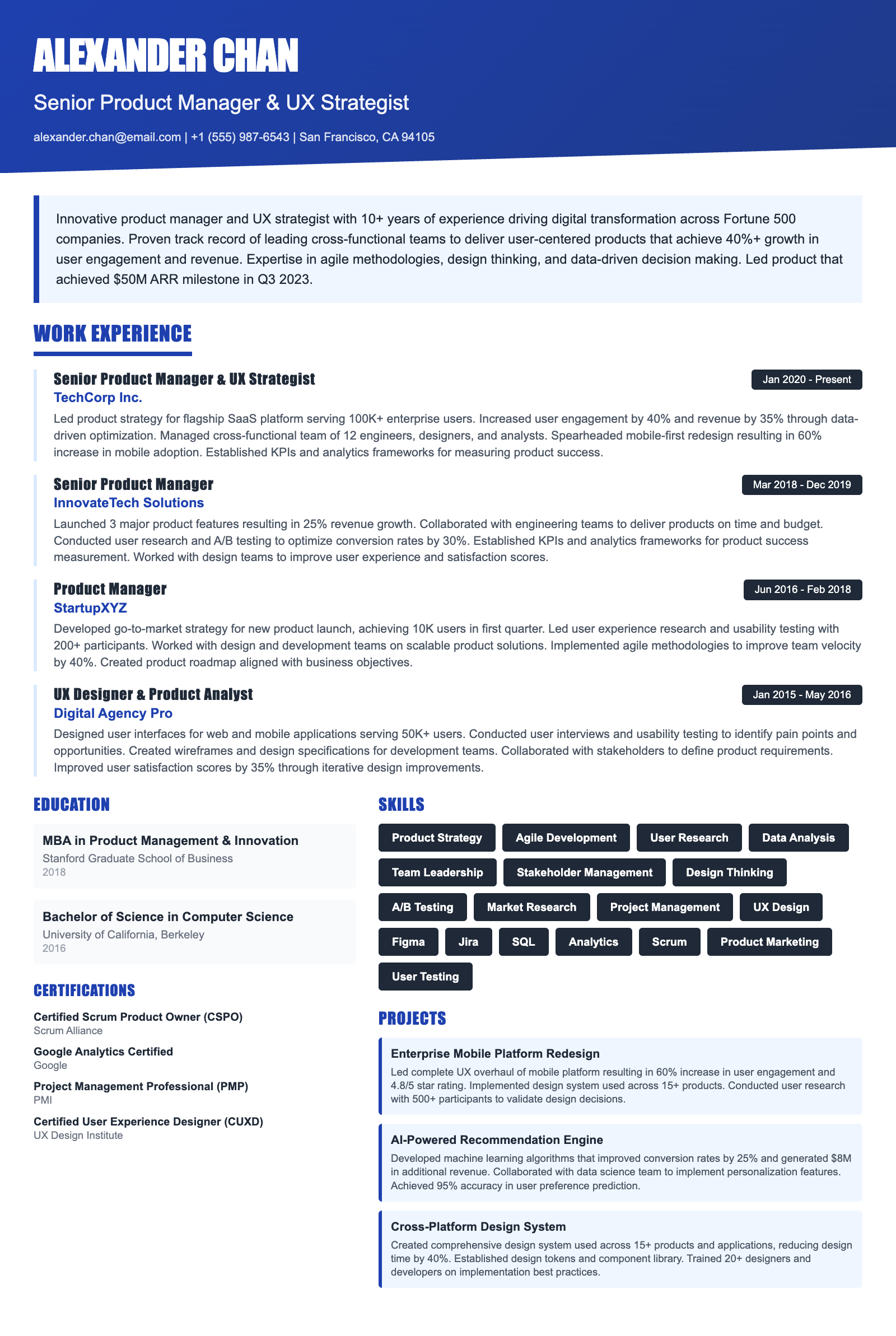
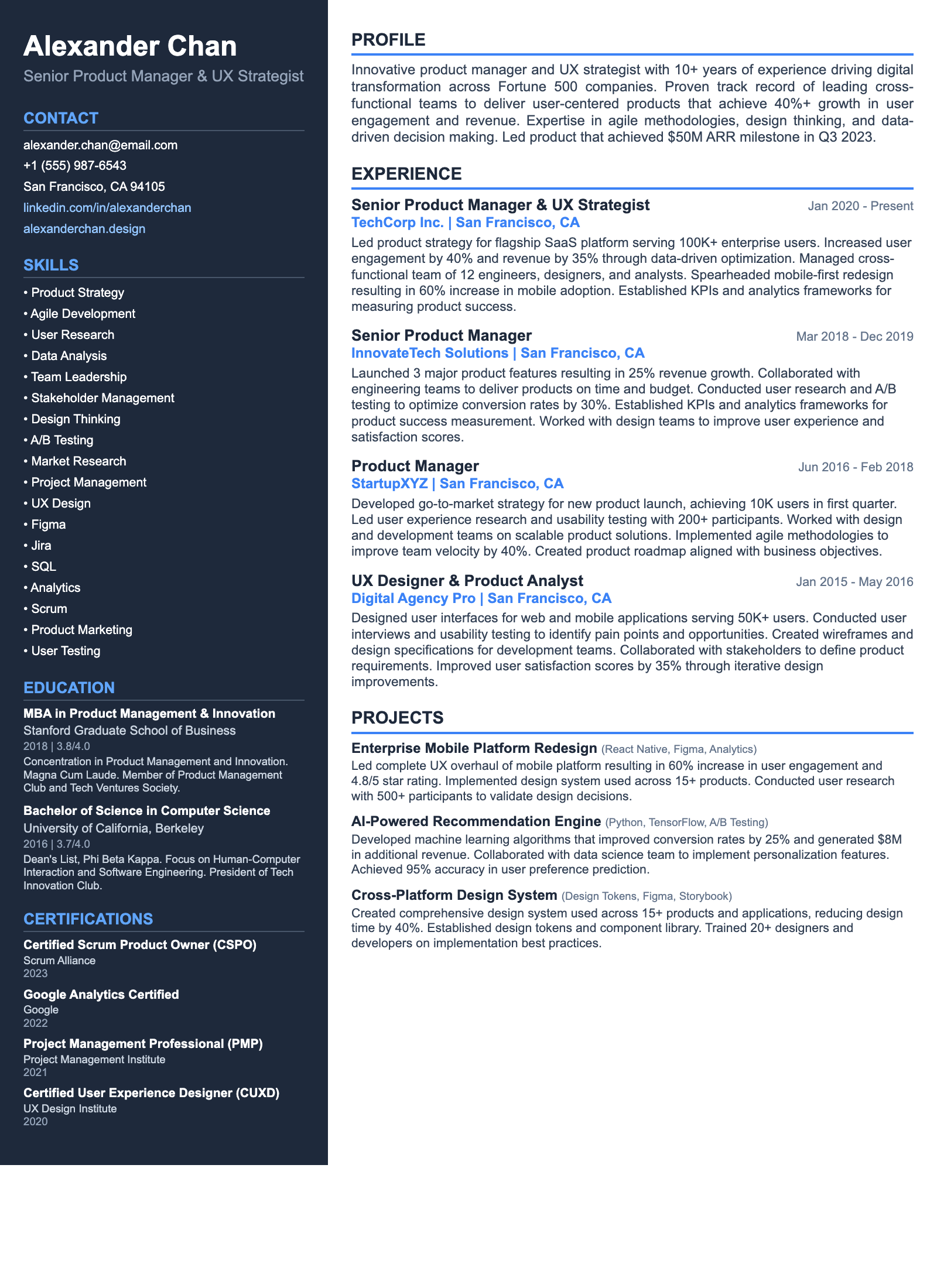
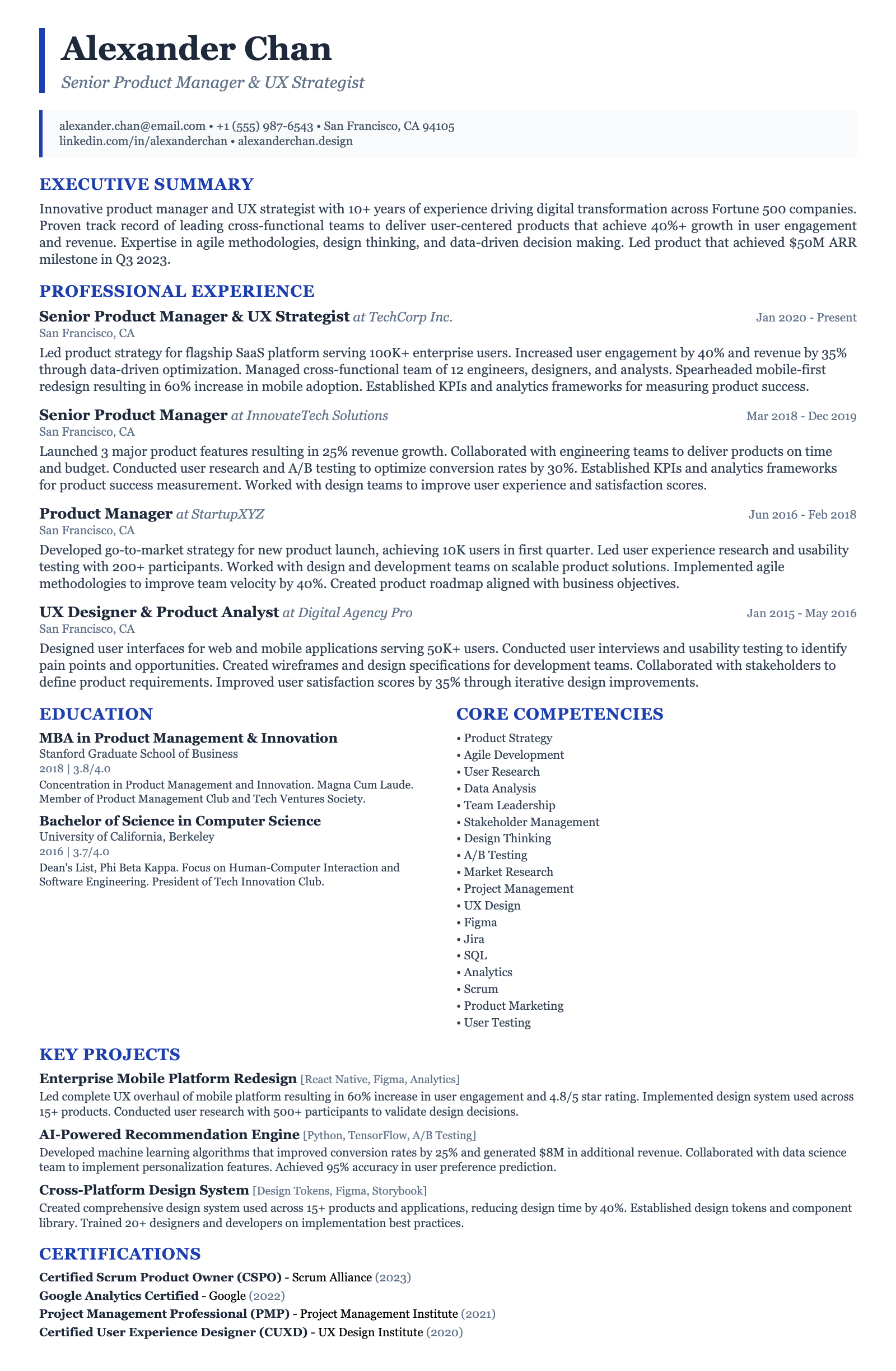
ATS-friendly templates designed specifically for Principal Manufacturing Operations Manager positions in the US market.
Frequently Asked Questions

What is the ideal length for a Principal Manufacturing Operations Manager resume?

For a Principal Manufacturing Operations Manager with substantial experience, a two-page resume is generally acceptable. Focus on the most relevant and impactful experiences, quantifying your achievements whenever possible. Prioritize accomplishments over responsibilities. If you have less than 10 years of experience, aim for a one-page resume, highlighting your most relevant skills and experiences.

What are the most important skills to highlight on a Principal Manufacturing Operations Manager resume?

Critical skills include leadership, communication, data analysis, problem-solving, and technical proficiency in areas such as lean manufacturing, Six Sigma, and statistical process control. Highlight your experience with industry-standard tools like ERP systems (SAP, Oracle), MES, and data analysis software (Minitab, JMP). Showcase your ability to analyze data, identify trends, and implement solutions to improve manufacturing processes.

How can I optimize my resume for Applicant Tracking Systems (ATS)?

Use keywords from the job description, format your resume using a standard template (avoid tables and graphics), and ensure your resume is easily readable by ATS software. Use clear section headings (e.g., "Experience," "Skills," "Education"), and save your resume as a PDF file. Proofread carefully to avoid errors that could be flagged by the ATS.

Are certifications important for a Principal Manufacturing Operations Manager resume?

Yes, relevant certifications can significantly enhance your resume. Common certifications include Six Sigma Black Belt, Lean Manufacturing Certification, PMP (Project Management Professional), and certifications related to specific industries (e.g., FDA regulations for pharmaceutical manufacturing). Highlight these certifications prominently, including the issuing organization and date of certification.

What are some common resume mistakes to avoid as a Principal Manufacturing Operations Manager?

Avoid generic descriptions of your responsibilities. Instead, focus on quantifiable achievements and the impact you had on key performance indicators (KPIs). Avoid using jargon or acronyms without explanation. Proofread carefully to avoid typos and grammatical errors. Don't include irrelevant information or outdated experience.

How can I highlight a career transition into a Principal Manufacturing Operations Manager role?

If you are transitioning from a related role (e.g., Manufacturing Engineer, Operations Supervisor), emphasize transferable skills and experiences that align with the requirements of a Principal Manufacturing Operations Manager. Highlight projects where you demonstrated leadership, problem-solving, and analytical skills. Quantify your achievements to demonstrate your ability to drive results.

Ready to Build Your Principal Manufacturing Operations Manager Resume?

Use our AI-powered resume builder to create an ATS-optimized resume tailored for Principal Manufacturing Operations Manager positions in the US market.

Complete Principal Manufacturing Operations Manager Career Toolkit

Everything you need for your Principal Manufacturing Operations Manager job search — all in one platform.

Why choose ResumeGyani over Zety or Resume.io?

The only platform with AI mock interviews + resume builder + job search + career coaching — all in one.

See comparison

Last updated: March 2026 · Content reviewed by certified resume writers · Optimized for US job market

Principal Manufacturing Operations Manager Resume Guide (2026) | ATS-Optimized Template