
ATS-Optimized for US Market

Principal Retail Data Scientist Career & Resume Guide

As a Principal Retail Data Scientist, your resume needs to showcase your expertise in leveraging data to drive business decisions within the retail sector. Hiring managers seek candidates who possess a strong understanding of retail operations, customer behavior, and supply chain dynamics, coupled with advanced analytical skills. Your resume should emphasize your ability to translate complex data insights into actionable strategies that improve sales, optimize inventory, and enhance customer experiences. Key sections to include are a compelling summary highlighting your accomplishments, a detailed experience section showcasing your projects and their impact (quantify results whenever possible), a skills section listing relevant tools (e.g., Python, R, SQL, TensorFlow, PyTorch, cloud platforms like AWS or Azure, and visualization tools like Tableau or Power BI), and an education section. Stand out by showcasing your leadership experience, your ability to mentor junior data scientists, and your contributions to developing innovative solutions using machine learning and AI techniques. Highlight your experience with specific retail datasets (e.g., point-of-sale data, customer loyalty data, e-commerce data) and your familiarity with industry-standard frameworks like CRISP-DM. Demonstrate your understanding of key retail metrics such as conversion rates, average order value, customer lifetime value, and inventory turnover. Emphasize your ability to communicate complex findings to both technical and non-technical audiences and to collaborate effectively with cross-functional teams.
Average US Salary: $140k - $220k

Expert Tip: For Principal Retail Data Scientist positions in the US, recruiters increasingly look for technical execution and adaptability over simple job duties. This guide is tailored to highlight these specific traits to ensure your resume stands out in the competitive Principal Retail Data Scientist sector.

What US Hiring Managers Look For in a Principal Retail Data Scientist Resume

When reviewing Principal Retail Data Scientist candidates, recruiters and hiring managers in the US focus on a few critical areas. Making these elements clear and easy to find on your resume will improve your chances of moving to the interview stage.

  • Relevant experience and impact in Principal Retail Data Scientist or closely related roles.
  • Clear, measurable achievements (metrics, scope, outcomes) rather than duties.
  • Skills and keywords that match the job description and ATS requirements.
  • Professional formatting and no spelling or grammar errors.
  • Consistency between your resume, LinkedIn, and application.
  • Proficiency in key areas such as Communication, Time Management, Industry-Standard Tools.

Essential Skills for Principal Retail Data Scientist

Include these keywords in your resume to pass ATS screening and impress recruiters.

Must-Have Skills

  • CriticalCommunication
  • HighTime Management

Technical Skills

  • HighIndustry-Standard Tools
  • MediumData Analysis

Soft Skills

  • CriticalTeamwork
  • HighAdaptability
  • MediumLeadership

A Day in the Life

A Day in the Life of a Principal Data Scientist

Arrive early to review metrics or sprint progress. As a Principal Data Scientist, you lead the 9 AM stand-up, addressing blockers and setting the strategic direction for handling core responsibilities, collaborating with cross-functional teams, and driving project success within the Retail team. 10 AM-1 PM is for high-impact decisions. You're architecting solutions, reviewing critical deliverables, or negotiating priorities with Retail stakeholders. Afternoons involve mentorship and cross-org coordination. You're the go-to expert for handling core responsibilities, collaborating with cross-functional teams, and driving project success, ensuring the team's output aligns with company goals. You finish by finalizing quarterly roadmaps or reviewing next steps. At this level in Retail, your focus shifts from individual tasks to organizational impact.

Career Progression Path

Level 1

Data Scientist I (Entry Level)

Level 2

Data Scientist II (Junior)

Level 3

Senior Data Scientist

Level 4

Lead Data Scientist

Level 5

Data Scientist Manager / Director

Interview Questions & Answers

Prepare for your Principal Retail Data Scientist interview with these commonly asked questions.

Describe a time when you had to present complex data insights to a non-technical audience. How did you ensure they understood the information and its implications?

Medium
Behavioral
Sample Answer
In my previous role, I had to present findings from a customer segmentation analysis to the marketing team. I focused on translating the technical details into actionable insights they could use to improve their campaigns. I used visualizations to illustrate the different customer segments and explained the key characteristics of each segment in simple terms. I also provided specific recommendations on how to target each segment with tailored messaging. The marketing team was able to use these insights to improve their campaign performance, resulting in a 10% increase in click-through rates.

Explain your approach to building a predictive model for forecasting sales in a retail setting. What factors would you consider, and what algorithms would you use?

Hard
Technical
Sample Answer
When building a predictive model for forecasting sales, I first gather historical sales data, promotional data, economic indicators, and seasonality trends. I then clean and preprocess the data, handle missing values, and engineer relevant features. I would consider using time series models like ARIMA or Prophet, as well as machine learning algorithms like Random Forest or Gradient Boosting. I would evaluate the performance of each model using metrics like RMSE and MAE and select the best-performing model for deployment. Regular retraining and monitoring of the model's performance are essential to maintain accuracy.

Imagine we're seeing a sudden drop in online sales for a specific product category. How would you approach analyzing the data to identify the root cause of the decline?

Medium
Situational
Sample Answer
I would start by examining recent changes in website traffic, conversion rates, and average order value. I'd segment the data by customer demographics, geography, and acquisition channel to identify any patterns. I'd also look at external factors like competitor promotions, market trends, and social media sentiment. Tools like SQL and Tableau would be used to analyze the data, identify correlations, and visualize trends. The goal is to pinpoint the specific factors contributing to the sales decline and recommend targeted interventions.

Tell me about a time you led a project that significantly improved a key retail metric, such as customer lifetime value or inventory turnover.

Medium
Behavioral
Sample Answer
At my previous company, I led a project to optimize our customer loyalty program. By analyzing customer purchase history, demographics, and engagement data, we identified key factors that drove customer lifetime value. We then redesigned the loyalty program to incentivize those behaviors, such as rewarding repeat purchases and offering personalized discounts. As a result, we saw a 15% increase in customer lifetime value and a 10% increase in customer retention within six months. This involved using Python for data analysis and machine learning, and Power BI for visualization and reporting.

Describe your experience with A/B testing in a retail context. What are some of the challenges you've encountered, and how did you overcome them?

Hard
Technical
Sample Answer
I have extensive experience with A/B testing in the context of optimizing website layouts, product recommendations, and marketing campaigns. One challenge I've encountered is ensuring that the test groups are truly random and representative of the target population. To overcome this, I use statistical methods to verify the balance of the test groups and implement stratification techniques to control for confounding variables. Another challenge is determining the appropriate sample size and test duration to achieve statistical significance. I use power analysis to calculate the required sample size and monitor the results closely to ensure the test runs long enough to detect meaningful differences. I use tools like Optimizely and Google Analytics for this.

How do you stay updated with the latest trends and technologies in data science and their application to the retail industry?

Easy
Behavioral
Sample Answer
I stay updated by regularly reading industry publications like Retail Dive and Chain Store Age, following data science blogs and research papers (e.g., arXiv), attending industry conferences such as NRF and ShopTalk, and participating in online communities and forums like Kaggle and Reddit's r/datascience. I also take online courses and certifications to learn new skills and technologies, such as TensorFlow or PyTorch. Furthermore, I actively experiment with new tools and techniques in personal projects to gain hands-on experience and apply them to retail-specific problems.

ATS Optimization Tips

Make sure your resume passes Applicant Tracking Systems used by US employers.

Use exact keywords from the job description, especially in the skills and experience sections. ATS systems scan for these keywords to match candidates with relevant roles.
Format your resume with clear section headings such as 'Summary,' 'Experience,' 'Skills,' and 'Education.' This helps ATS parse the information correctly.
Use a simple and clean resume template. Avoid complex formatting, tables, images, or special characters, as these can confuse ATS systems.
Save your resume as a PDF file. This ensures that the formatting remains consistent across different systems and prevents any accidental changes.
Incorporate industry-specific keywords like 'supply chain optimization,' 'customer segmentation,' 'market basket analysis,' and 'inventory management.'
Mention specific software and tools like 'Python,' 'R,' 'SQL,' 'Tableau,' 'Power BI,' 'AWS,' 'Azure,' and 'TensorFlow.'
Quantify your achievements whenever possible. Use numbers and metrics to demonstrate the impact of your work (e.g., 'Increased sales by 15%,' 'Reduced inventory costs by 10%').
Ensure your contact information is clearly visible and accurate. ATS needs to be able to extract this information to contact you.

Common Resume Mistakes to Avoid

Don't make these errors that get resumes rejected.

1
Failing to quantify accomplishments and demonstrate the impact of your projects. Use metrics to showcase your contributions to the business.
2
Using generic descriptions of your responsibilities instead of highlighting specific achievements and contributions.
3
Not tailoring your resume to the specific job description and requirements.
4
Omitting relevant skills and tools that are essential for the role, such as proficiency in Python, R, or SQL.
5
Neglecting to highlight your experience with retail-specific data and projects.
6
Not showcasing your leadership experience and ability to mentor junior data scientists.
7
Failing to demonstrate your understanding of key retail metrics such as conversion rates and customer lifetime value.
8
Using outdated or irrelevant information that does not align with the current job market.

Industry Outlook

The US Retail sector is experiencing steady growth. Principal Data Scientists are particularly sought after, with the Bureau of Labor Statistics projecting average job growth through 2030. Peak hiring occurs in Q1 (January-March) and Q3 (August-September).

Top Hiring Companies

Industry LeadersRegional FirmsFast-Growing Companies

Recommended Resume Templates

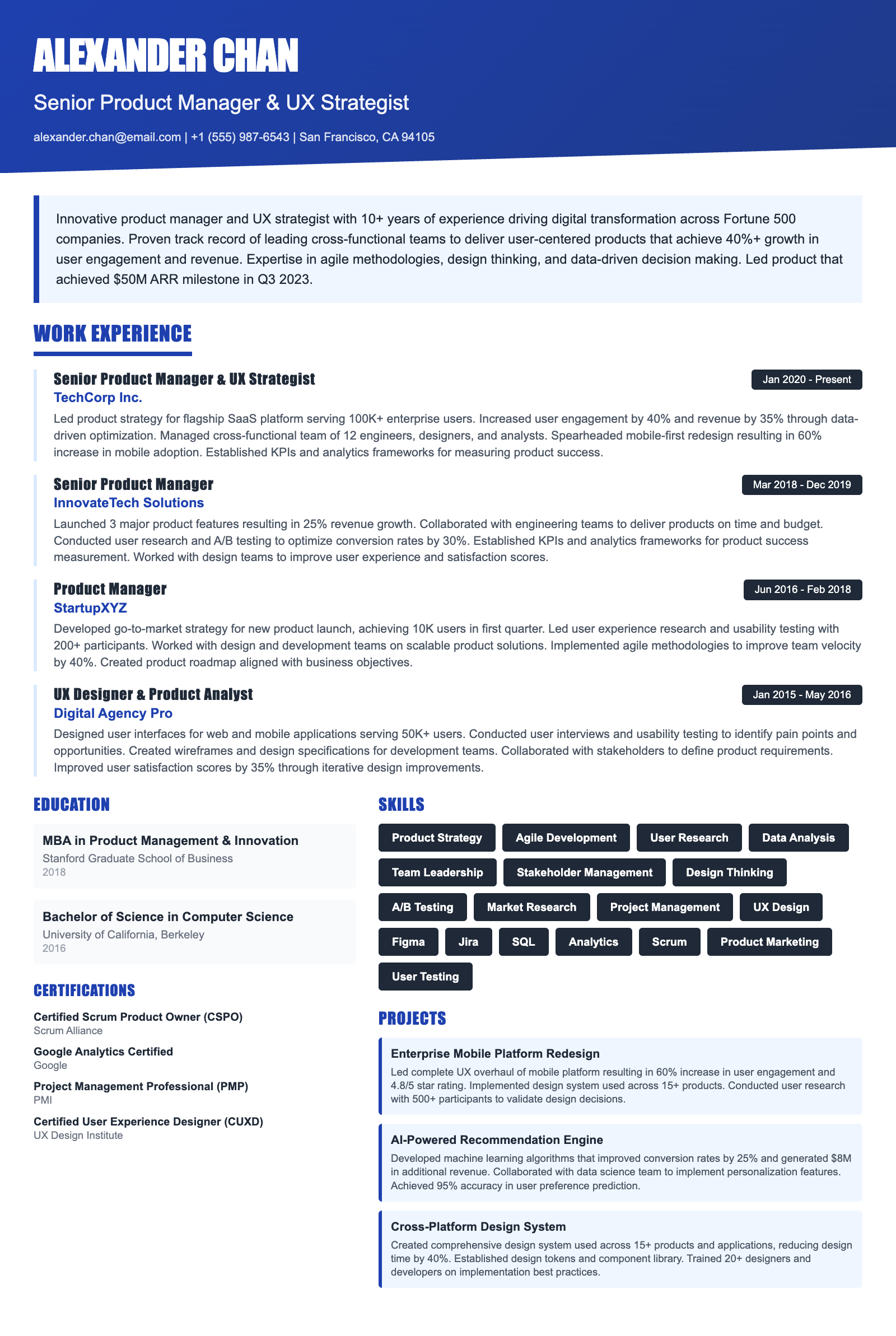
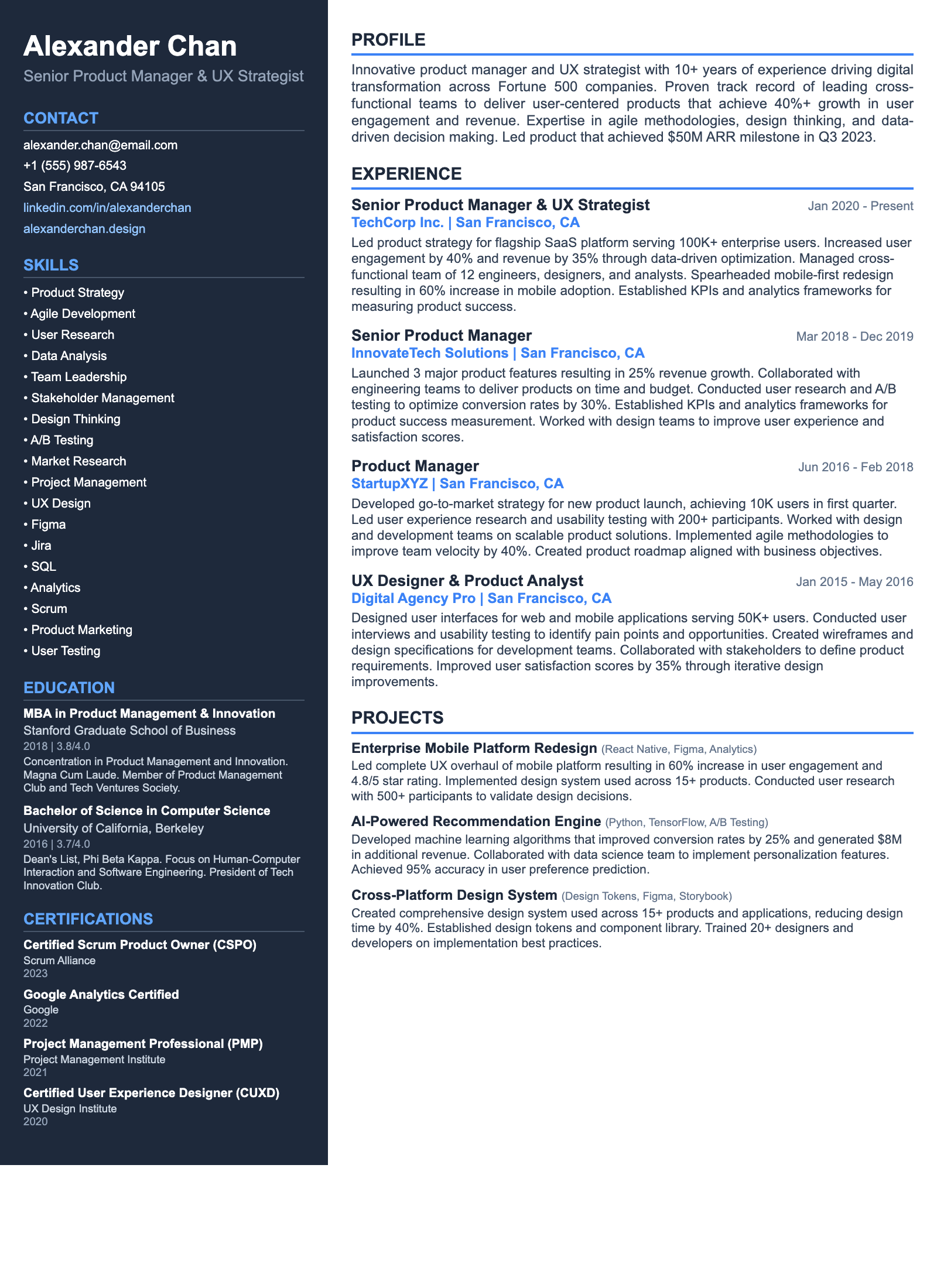
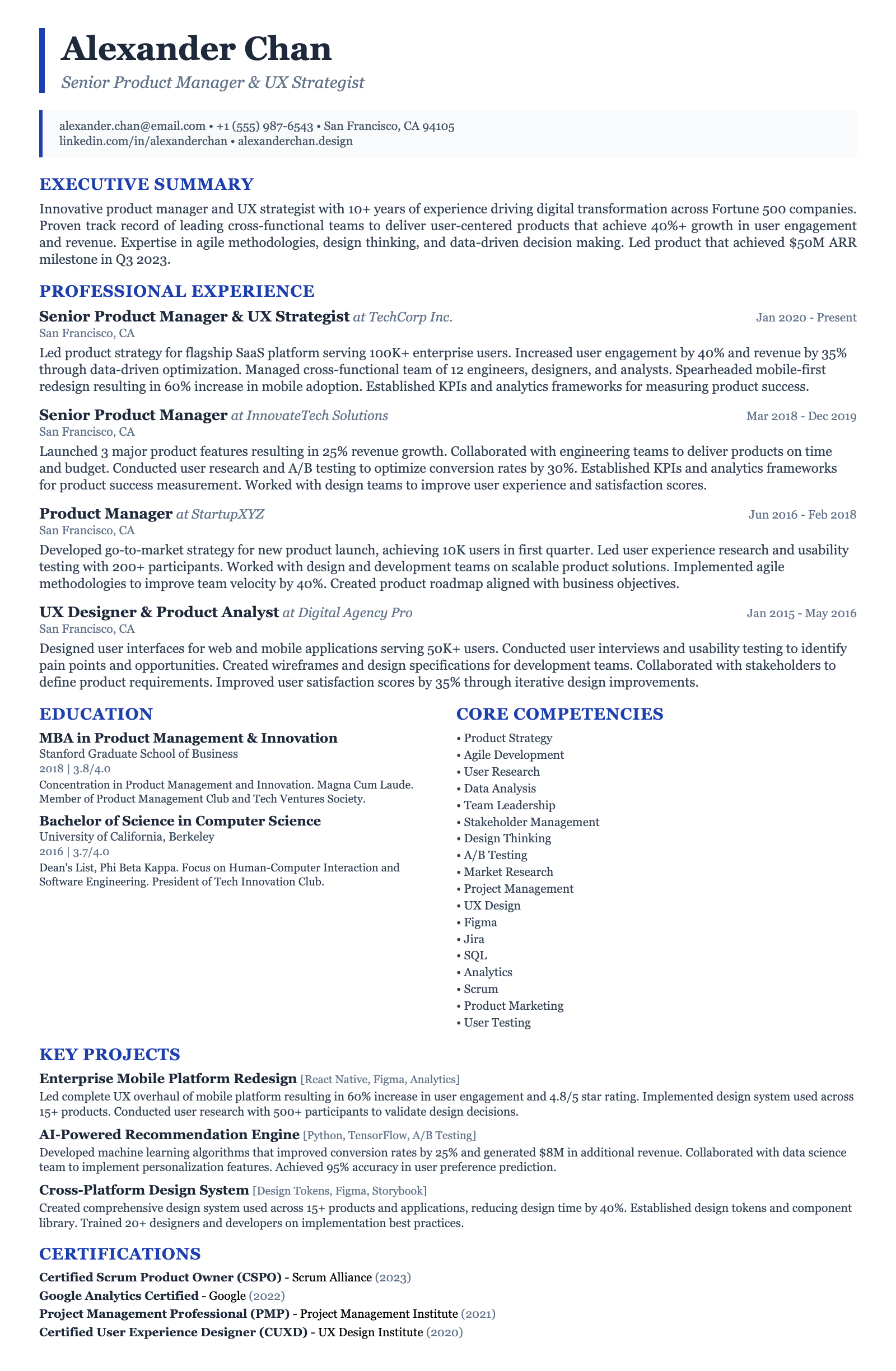
ATS-friendly templates designed specifically for Principal Retail Data Scientist positions in the US market.
Frequently Asked Questions

What is the ideal length for a Principal Retail Data Scientist resume?

For a Principal Data Scientist role, a two-page resume is generally acceptable. Focus on showcasing the most relevant and impactful experiences, projects, and skills. Prioritize quantifiable achievements and avoid unnecessary details. Ensure the information is well-organized and easy to read, making it easy for recruiters to quickly assess your qualifications. Highlight projects that demonstrate your expertise with tools like Python, R, and SQL, as well as experience with cloud platforms.

What are the most important skills to highlight on a Principal Retail Data Scientist resume?

The most important skills include advanced data analysis techniques (regression, classification, clustering), machine learning algorithms (deep learning, natural language processing), statistical modeling, strong programming skills (Python, R, SQL), experience with cloud platforms (AWS, Azure, GCP), data visualization (Tableau, Power BI), and excellent communication skills. Also, highlight retail-specific knowledge such as understanding of supply chain optimization, customer segmentation, and pricing strategies.

How can I optimize my resume for Applicant Tracking Systems (ATS)?

To optimize for ATS, use a clean and simple format, avoid tables and images, and use standard section headings (e.g., "Summary," "Experience," "Skills," "Education"). Incorporate relevant keywords from the job description throughout your resume. Submit your resume as a PDF unless otherwise specified. Be sure to mention the specific tools and technologies you've used (e.g., TensorFlow, PyTorch, scikit-learn).

Are certifications important for a Principal Retail Data Scientist resume?

Certifications can enhance your resume, especially if they demonstrate expertise in specific tools or methodologies. Consider certifications in cloud computing (AWS Certified Machine Learning – Specialty, Azure AI Engineer Associate), data science (e.g., Certified Analytics Professional), or specific software (Tableau Certified Data Analyst). These certifications can validate your skills and make you stand out. However, experience is key.

What are some common resume mistakes to avoid as a Principal Retail Data Scientist?

Common mistakes include not quantifying accomplishments, using generic language, failing to tailor your resume to the specific job description, omitting relevant skills and tools, and neglecting to proofread for errors. Also, avoid using outdated or irrelevant information. Ensure you highlight your experience with relevant retail data and projects, such as predicting customer churn or optimizing inventory levels.

How can I transition my resume to a Principal Retail Data Scientist role from a related field?

If transitioning from a related field, highlight transferable skills and experiences. Focus on projects where you utilized data analysis, machine learning, or statistical modeling techniques. Emphasize your ability to solve complex problems and drive business outcomes. Consider taking online courses or certifications to demonstrate your commitment to the field. Tailor your resume to highlight your understanding of retail-specific challenges and opportunities. For example, describe how you used data analysis in a previous role to improve efficiency or increase revenue.

Ready to Build Your Principal Retail Data Scientist Resume?

Use our AI-powered resume builder to create an ATS-optimized resume tailored for Principal Retail Data Scientist positions in the US market.

Complete Principal Retail Data Scientist Career Toolkit

Everything you need for your Principal Retail Data Scientist job search — all in one platform.

Why choose ResumeGyani over Zety or Resume.io?

The only platform with AI mock interviews + resume builder + job search + career coaching — all in one.

See comparison

Last updated: March 2026 · Content reviewed by certified resume writers · Optimized for US job market

Principal Retail Data Scientist Resume Guide (2026) | ATS-Optimized Template