
ATS-Optimized for US Market

Senior Construction Architect Career & Resume Guide

As a Senior Construction Architect, your resume is your blueprint for career success. Hiring managers seek experienced professionals who can lead projects from conception to completion, ensuring structural integrity, aesthetic appeal, and adherence to regulations. Your resume must showcase your technical proficiency, leadership abilities, and problem-solving skills. Start with a compelling summary highlighting your years of experience and key accomplishments, quantifying your impact whenever possible (e.g., 'Reduced construction costs by 15% through value engineering'). Key sections include: Project Portfolio (detailed descriptions, budgets, timelines, outcomes), Technical Skills (proficiency in BIM software like Revit and ArchiCAD, knowledge of construction methods, understanding of building codes), and Leadership Experience (leading teams, mentoring junior architects, managing stakeholders). Stand out by highlighting your experience with sustainable design principles (LEED certification) and your ability to navigate complex regulatory environments. Emphasize your data analysis skills by describing how you use data to optimize designs and improve project outcomes. Demonstrate your proficiency with industry-standard tools like Bluebeam Revu for document management and project collaboration platforms like Procore. Showcase your adaptability by highlighting experience with different project types (residential, commercial, industrial) and construction delivery methods (design-build, CM at Risk). Frame your experience to demonstrate how you contribute to efficiency, cost savings, and client satisfaction.
Average US Salary: $80k - $130k

Expert Tip: For Senior Construction Architect positions in the US, recruiters increasingly look for technical execution and adaptability over simple job duties. This guide is tailored to highlight these specific traits to ensure your resume stands out in the competitive Senior Construction Architect sector.

What US Hiring Managers Look For in a Senior Construction Architect Resume

When reviewing Senior Construction Architect candidates, recruiters and hiring managers in the US focus on a few critical areas. Making these elements clear and easy to find on your resume will improve your chances of moving to the interview stage.

  • Relevant experience and impact in Senior Construction Architect or closely related roles.
  • Clear, measurable achievements (metrics, scope, outcomes) rather than duties.
  • Skills and keywords that match the job description and ATS requirements.
  • Professional formatting and no spelling or grammar errors.
  • Consistency between your resume, LinkedIn, and application.
  • Proficiency in key areas such as Communication, Time Management, Industry-Standard Tools.

Essential Skills for Senior Construction Architect

Include these keywords in your resume to pass ATS screening and impress recruiters.

Must-Have Skills

  • CriticalCommunication
  • HighTime Management

Technical Skills

  • HighIndustry-Standard Tools
  • MediumData Analysis

Soft Skills

  • CriticalTeamwork
  • HighAdaptability
  • CriticalLeadership

A Day in the Life

A Day in the Life of a Senior Architect

Arrive early to review metrics or sprint progress. As a Senior Architect, you lead the 9 AM stand-up, addressing blockers and setting the strategic direction for handling core responsibilities, collaborating with cross-functional teams, and driving project success within the Construction team. 10 AM-1 PM is for high-impact decisions. You're architecting solutions, reviewing critical deliverables, or negotiating priorities with Construction stakeholders. Afternoons involve mentorship and cross-org coordination. You're the go-to expert for handling core responsibilities, collaborating with cross-functional teams, and driving project success, ensuring the team's output aligns with company goals. You finish by finalizing quarterly roadmaps or reviewing next steps. At this level in Construction, your focus shifts from individual tasks to organizational impact.

Career Progression Path

Level 1

Architect I (Entry Level)

Level 2

Architect II (Junior)

Level 3

Senior Architect

Level 4

Lead Architect

Level 5

Architect Manager / Director

Interview Questions & Answers

Prepare for your Senior Construction Architect interview with these commonly asked questions.

Describe a time when you had to make a critical decision under pressure during a construction project. What were the stakes, and how did you arrive at your decision?

Medium
Situational
Sample Answer
In a recent project, we discovered a significant soil instability issue during excavation, which threatened to delay the project and increase costs substantially. The stakes were high, as any delay would impact the client's occupancy timeline and budget. I quickly gathered the geotechnical engineers, structural engineers, and construction team to assess the situation. After reviewing various options and weighing the risks and benefits, we decided to implement a soil stabilization technique using ground anchors. This involved additional costs but ultimately mitigated the risk of collapse and kept the project on schedule. My ability to facilitate communication, analyze complex data, and make a decisive decision saved the project from significant setbacks.

How do you stay up-to-date with the latest trends and technologies in the construction industry?

Easy
Behavioral
Sample Answer
I am a firm believer in continuous learning and professional development. I regularly attend industry conferences, such as the AIA Conference on Architecture and Greenbuild. I subscribe to relevant publications, such as Architectural Record and Construction Dive. I am also an active member of professional organizations like the US Green Building Council (USGBC). Furthermore, I actively participate in webinars and online courses focused on emerging technologies like advanced BIM techniques, drone-based site surveying, and modular construction methods. This allows me to bring the latest knowledge and best practices to my projects.

Explain your experience with Building Information Modeling (BIM) and how you have used it to improve project outcomes.

Medium
Technical
Sample Answer
I have extensive experience with BIM software, particularly Revit and ArchiCAD. I have used BIM to create detailed 3D models of buildings, which allow for better coordination between different disciplines (architectural, structural, MEP). I have also used BIM for clash detection, which helps identify and resolve potential conflicts before construction begins. On one project, using BIM, we were able to identify and resolve over 200 clashes before construction, which saved the client significant time and money in change orders and rework. I can also leverage BIM for quantity takeoff, cost estimation, and project scheduling, resulting in better project management and reduced risks.

Describe a situation where you had to resolve a conflict between different stakeholders (e.g., client, contractor, engineers) on a construction project.

Hard
Behavioral
Sample Answer
On a recent project, the client and the contractor disagreed on the selection of a particular building material. The client preferred a more expensive material for aesthetic reasons, while the contractor favored a less expensive material for cost savings. As the lead architect, I facilitated a meeting between the client and the contractor to discuss their concerns. I presented the pros and cons of each material, including cost, durability, and aesthetic appeal. I also proposed a compromise solution that met the client's aesthetic requirements while staying within the budget. Ultimately, we were able to reach a consensus that satisfied both parties.

How do you ensure that your designs comply with all relevant building codes and regulations?

Medium
Technical
Sample Answer
Ensuring compliance with building codes is a critical aspect of my role. I maintain a thorough understanding of relevant codes and regulations, including the International Building Code (IBC), Americans with Disabilities Act (ADA), and local zoning ordinances. I use code-checking software and work closely with code consultants to ensure that my designs meet all requirements. I also conduct regular reviews of my designs to identify and address any potential code violations. Furthermore, I actively participate in continuing education programs to stay up-to-date with the latest code changes.

Discuss your experience with sustainable design principles and how you integrate them into your projects.

Hard
Technical
Sample Answer
I am a strong advocate for sustainable design and have extensive experience with LEED principles. I integrate sustainable design strategies into my projects from the initial design phase, considering factors such as energy efficiency, water conservation, and material selection. For example, on a recent project, I implemented a high-performance building envelope, installed a rainwater harvesting system, and specified locally sourced, recycled materials. These measures resulted in a significant reduction in the building's environmental impact and achieved LEED Gold certification. I also stay current with the latest sustainable building technologies and practices through continuing education and professional development.

ATS Optimization Tips

Make sure your resume passes Applicant Tracking Systems used by US employers.

Incorporate industry-specific keywords throughout your resume, mirroring the language used in the job description such as "BIM", "Revit", "LEED", "ADA Compliance", and specific construction methods.
Use standard section headings like "Experience", "Skills", "Education", and "Certifications". ATS systems are programmed to recognize these common headings, and it helps them parse your resume accurately.
Quantify your accomplishments whenever possible, using metrics like project budget, square footage, cost savings, or percentage improvements. ATS systems can often recognize and prioritize quantifiable results.
List your skills in a dedicated "Skills" section, separating them into categories like "Technical Skills", "Software Skills", and "Soft Skills". This allows ATS to quickly identify your key competencies.
Save your resume as a PDF file, but ensure it is text-based and not image-based. Some older ATS versions cannot properly parse image-based PDFs.
Use a consistent date format throughout your resume (e.g., MM/YYYY) to avoid confusion for the ATS. Inconsistencies can lead to misinterpretation of your work history.
Tailor your resume to each specific job application by adjusting keywords and emphasizing the skills and experiences most relevant to the role. Generic resumes are less likely to be parsed effectively.
When describing your experience, use action verbs (e.g., "Managed", "Designed", "Implemented") at the beginning of each bullet point. This makes your accomplishments more impactful and easier for the ATS to identify.

Common Resume Mistakes to Avoid

Don't make these errors that get resumes rejected.

1
Failing to quantify accomplishments, leaving hiring managers to guess the scale and impact of your work. For example, instead of 'Managed projects,' use 'Managed construction projects totaling over $5 million'.
2
Not tailoring the resume to the specific job description, resulting in a generic document that doesn't highlight relevant skills and experience. Each application should have a slightly modified resume.
3
Omitting key technical skills, such as proficiency in specific BIM software (e.g., Revit, ArchiCAD) or knowledge of specific building codes (e.g., IBC, ADA). List all relevant software and codes.
4
Using overly technical jargon without providing context, making it difficult for non-technical recruiters to understand your accomplishments. Explain acronyms and technical terms.
5
Neglecting to showcase leadership experience, especially when applying for senior-level positions. Highlight instances where you led teams, mentored junior architects, or managed stakeholders.
6
Not including relevant certifications, such as LEED AP or Architect Registration Examination (ARE), which demonstrate your commitment to professional development. List all certifications and their expiration dates.
7
Poor formatting and layout, making the resume difficult to read and navigate. Use clear headings, bullet points, and white space to improve readability. Avoid using too many fonts or colors.
8
Ignoring the importance of a professional summary. The summary should highlight your key skills, years of experience, and career goals. It's the first thing a hiring manager sees.

Industry Outlook

The US Construction sector is experiencing steady growth. Senior Architects are particularly sought after, with the Bureau of Labor Statistics projecting average job growth through 2030. Peak hiring occurs in Q1 (January-March) and Q3 (August-September).

Top Hiring Companies

Industry LeadersRegional FirmsFast-Growing Companies

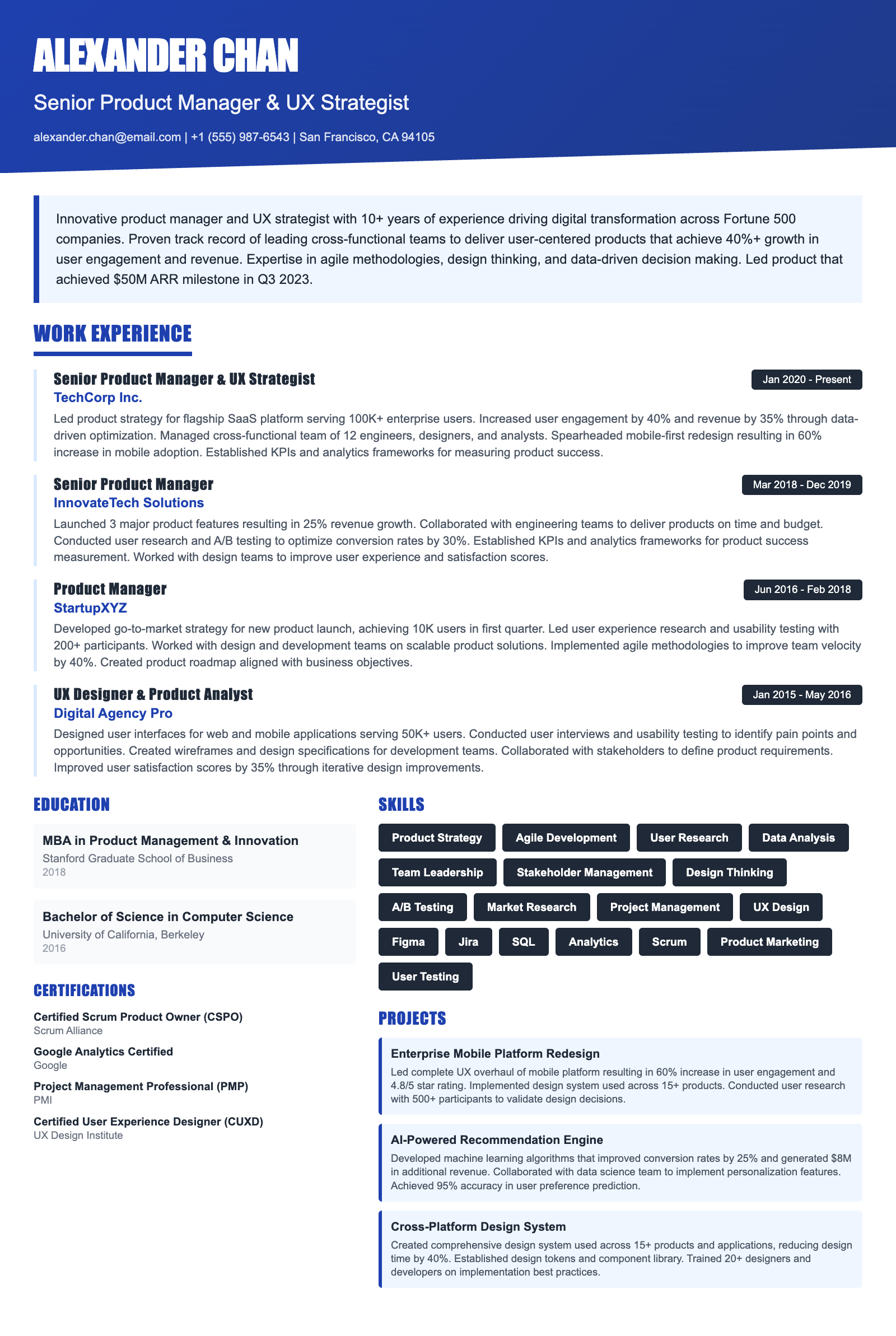
Recommended Resume Templates

ATS-friendly templates designed specifically for Senior Construction Architect positions in the US market.
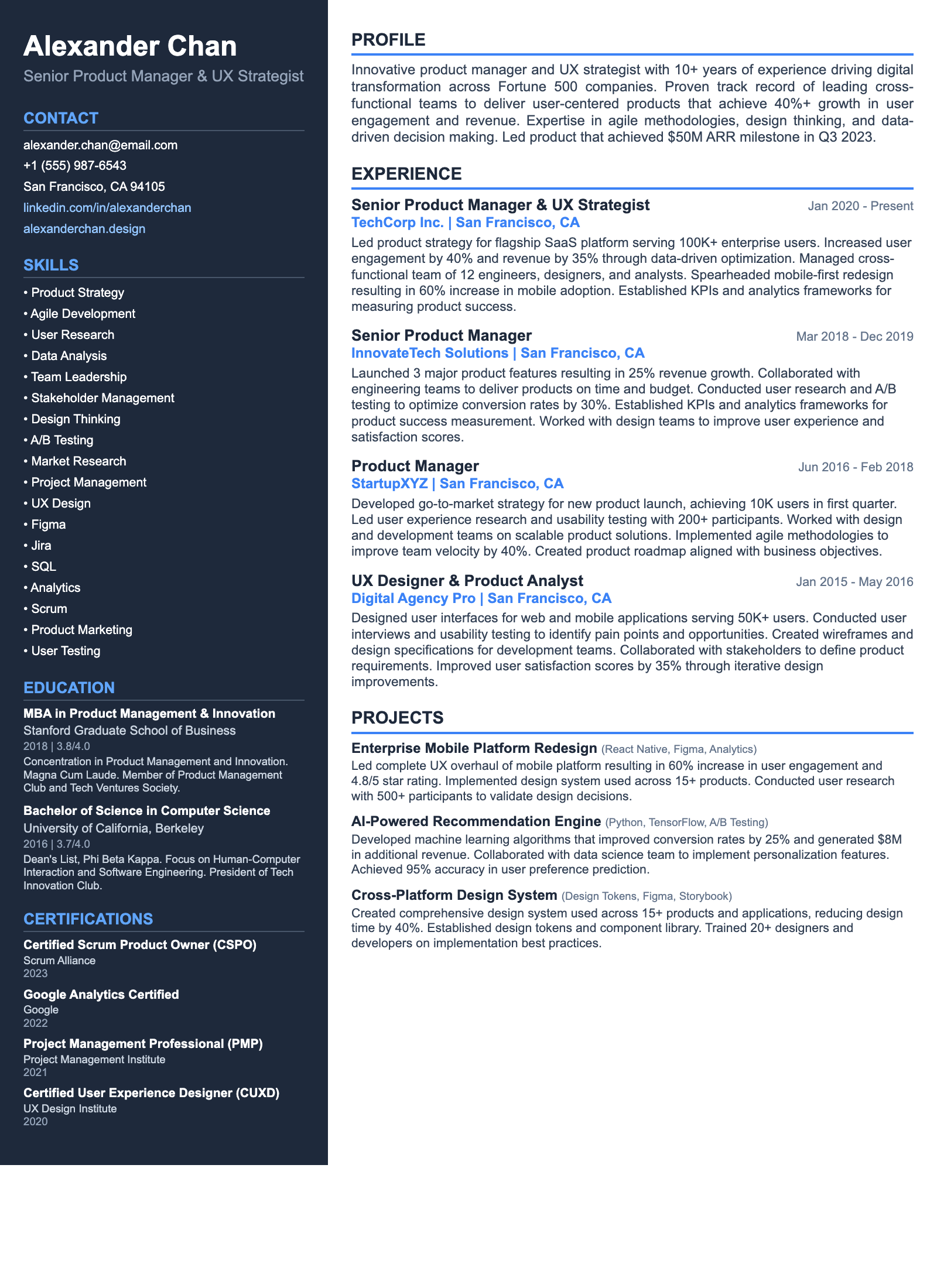
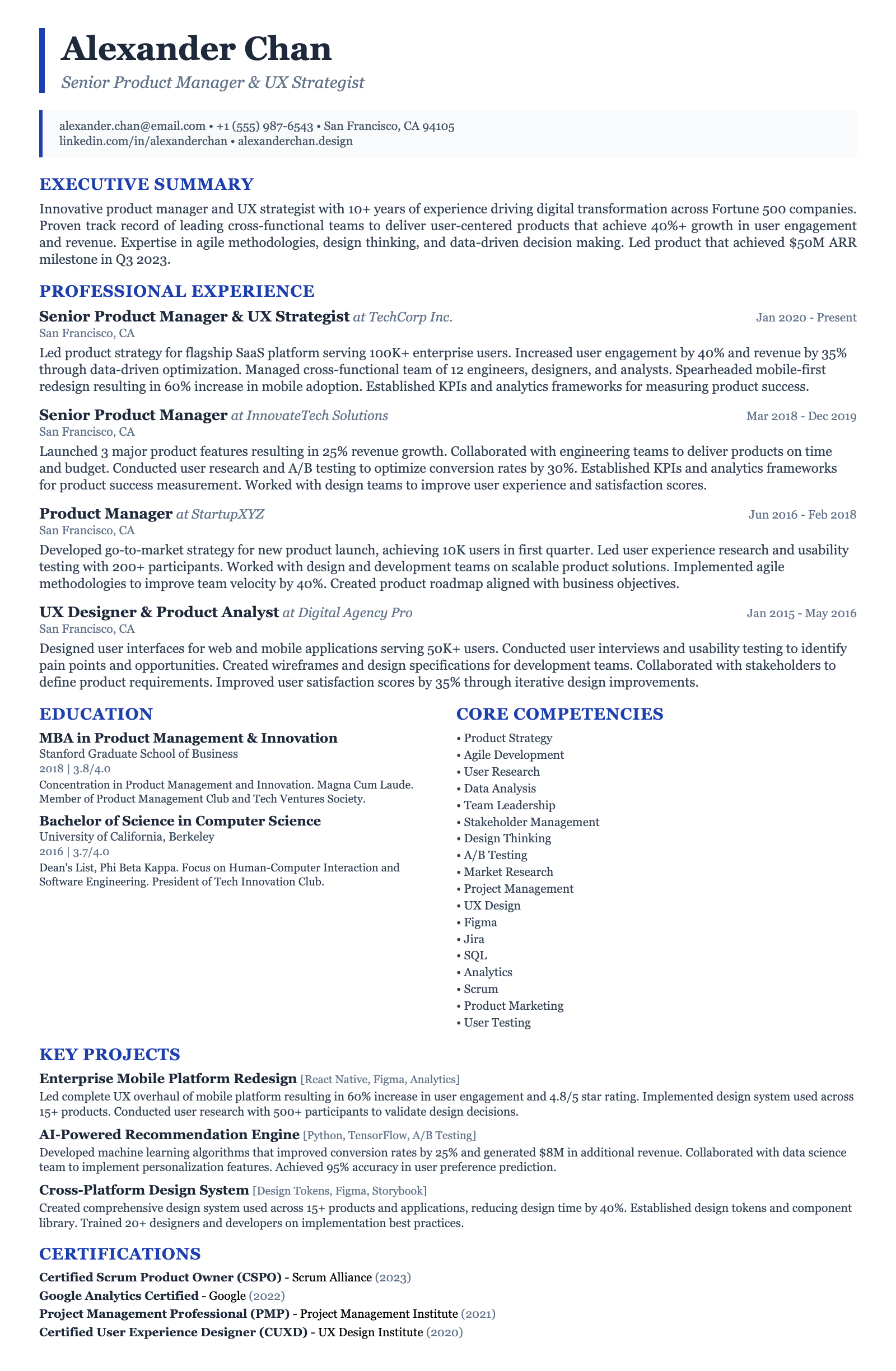
Frequently Asked Questions

What is the ideal resume length for a Senior Construction Architect?

Typically, a two-page resume is acceptable for a Senior Construction Architect, especially if you have extensive experience. Focus on the most relevant and impactful projects, achievements, and skills. Prioritize quality over quantity. Ensure that all information is concise, easy to read, and tailored to the specific job requirements. Consider using a one-page resume if you've only been in the field for 5-7 years.

What are the most important skills to highlight on a Senior Construction Architect resume?

Highlight both technical and soft skills. Key technical skills include proficiency in BIM software (Revit, ArchiCAD), knowledge of construction methods and materials, understanding of building codes and regulations (IBC, ADA), and experience with sustainable design principles (LEED). Soft skills include communication, leadership, teamwork, problem-solving, and time management. Provide concrete examples of how you have used these skills to achieve positive outcomes on past projects.

How can I optimize my resume for Applicant Tracking Systems (ATS)?

Use keywords directly from the job description. Format your resume using a simple, ATS-friendly layout with clear headings and bullet points. Avoid using tables, images, or complex formatting that can confuse ATS software. Save your resume as a .doc or .pdf file (depending on the application instructions). Use standard section headings like 'Experience,' 'Skills,' and 'Education.' Also, ensure your contact information is readily available.

Should I include certifications on my Senior Construction Architect resume?

Yes, absolutely. Certifications demonstrate your commitment to professional development and validate your expertise. Prominently list relevant certifications such as LEED AP, Architect Registration Examination (ARE), or any other certifications related to construction management or specific building codes. Include the issuing organization and the date of certification or expiration date. For example: 'LEED AP BD+C, USGBC, Valid through 2025.'

What are some common resume mistakes that Senior Construction Architect candidates should avoid?

Avoid generic resumes that don't highlight specific achievements. Don't neglect to quantify your accomplishments (e.g., 'Managed projects with budgets up to $10 million'). Don't use outdated or irrelevant information. Don't use unprofessional email addresses. Proofread carefully for grammar and spelling errors. Avoid lengthy paragraphs; use bullet points to present information concisely. Failing to tailor your resume to the specific job description is a significant mistake. Omitting key skills, such as familiarity with construction contracts, is a detriment.

How should I address a career transition (e.g., from project management to architecture) on my resume?

Highlight transferable skills and relevant experience. For example, if you're transitioning from project management, emphasize your experience with budgeting, scheduling, and team leadership. Take courses or certifications to bolster your skills and demonstrate your commitment to the new field. Clearly state your career objective in your resume summary. Consider a functional or combination resume format to emphasize your skills rather than chronological work history. Showcase projects that demonstrate architectural understanding, even if they were personal projects.

Ready to Build Your Senior Construction Architect Resume?

Use our AI-powered resume builder to create an ATS-optimized resume tailored for Senior Construction Architect positions in the US market.

Complete Senior Construction Architect Career Toolkit

Everything you need for your Senior Construction Architect job search — all in one platform.

Why choose ResumeGyani over Zety or Resume.io?

The only platform with AI mock interviews + resume builder + job search + career coaching — all in one.

See comparison

Last updated: March 2026 · Content reviewed by certified resume writers · Optimized for US job market

Senior Construction Architect Resume Guide (2026) | ATS-Optimized Template