
ATS-Optimized for US Market

Senior Construction Real Estate Agent Career & Resume Guide

As a Senior Construction Real Estate Agent, your resume needs to demonstrate a nuanced understanding of both real estate and construction, showcasing your ability to bridge the gap between development and sales. Hiring managers prioritize candidates who can navigate complex construction projects, understand zoning regulations, and effectively communicate with developers, contractors, and potential buyers. Your resume should emphasize your experience in areas such as site selection, contract negotiation, and project management, quantifying your successes with metrics like deal volume, project size, and revenue generated. Key sections include a compelling summary highlighting your expertise, a detailed work history showcasing your accomplishments, a skills section highlighting your proficiency with industry-standard tools like CoStar, LoopNet, and CRM software (e.g., Salesforce), and relevant certifications like LEED AP or CCIM. To stand out, tailor your resume to each specific job description, focusing on the aspects most relevant to the role, such as experience with specific types of construction projects (e.g., commercial, residential, industrial) or particular market segments. Showcase your ability to analyze market data, conduct feasibility studies, and develop effective marketing strategies for new construction developments. Illustrate your leadership skills through examples of team management and mentorship within the construction real estate sector. Highlight your understanding of construction financing and investment strategies. Frame your experience to showcase how you have successfully facilitated construction projects, driving sales and achieving organizational goals. Your adaptability and problem-solving skills are crucial in navigating the dynamic real estate landscape, especially in the construction sector. Show how you have addressed challenges related to project delays, budget overruns, or regulatory hurdles.
Average US Salary: $80k - $130k

Expert Tip: For Senior Construction Real Estate Agent positions in the US, recruiters increasingly look for technical execution and adaptability over simple job duties. This guide is tailored to highlight these specific traits to ensure your resume stands out in the competitive Senior Construction Real Estate Agent sector.

What US Hiring Managers Look For in a Senior Construction Real Estate Agent Resume

When reviewing Senior Construction Real Estate Agent candidates, recruiters and hiring managers in the US focus on a few critical areas. Making these elements clear and easy to find on your resume will improve your chances of moving to the interview stage.

  • Relevant experience and impact in Senior Construction Real Estate Agent or closely related roles.
  • Clear, measurable achievements (metrics, scope, outcomes) rather than duties.
  • Skills and keywords that match the job description and ATS requirements.
  • Professional formatting and no spelling or grammar errors.
  • Consistency between your resume, LinkedIn, and application.
  • Proficiency in key areas such as Communication, Time Management, Industry-Standard Tools.

Essential Skills for Senior Construction Real Estate Agent

Include these keywords in your resume to pass ATS screening and impress recruiters.

Must-Have Skills

  • CriticalCommunication
  • HighTime Management

Technical Skills

  • HighIndustry-Standard Tools
  • MediumData Analysis

Soft Skills

  • CriticalTeamwork
  • HighAdaptability
  • CriticalLeadership

A Day in the Life

A Day in the Life of a Senior Real Estate Agent

Arrive early to review metrics or sprint progress. As a Senior Real Estate Agent, you lead the 9 AM stand-up, addressing blockers and setting the strategic direction for handling core responsibilities, collaborating with cross-functional teams, and driving project success within the Construction team. 10 AM-1 PM is for high-impact decisions. You're architecting solutions, reviewing critical deliverables, or negotiating priorities with Construction stakeholders. Afternoons involve mentorship and cross-org coordination. You're the go-to expert for handling core responsibilities, collaborating with cross-functional teams, and driving project success, ensuring the team's output aligns with company goals. You finish by finalizing quarterly roadmaps or reviewing next steps. At this level in Construction, your focus shifts from individual tasks to organizational impact.

Career Progression Path

Level 1

Real Estate Agent I (Entry Level)

Level 2

Real Estate Agent II (Junior)

Level 3

Senior Real Estate Agent

Level 4

Lead Real Estate Agent

Level 5

Real Estate Agent Manager / Director

Interview Questions & Answers

Prepare for your Senior Construction Real Estate Agent interview with these commonly asked questions.

Describe a time you had to navigate a complex zoning regulation issue on a construction project. What was your approach, and what was the outcome?

Medium
Situational
Sample Answer
In a recent project, we encountered strict zoning regulations that threatened to delay construction. I initiated a series of meetings with local authorities, legal experts, and our construction team. I thoroughly researched the regulations, identified potential solutions, and presented a revised plan that complied with all requirements while minimizing the impact on the project timeline and budget. Ultimately, we obtained the necessary permits and kept the project on schedule.

How do you stay updated on the latest trends and technologies in the construction real estate market?

Easy
Behavioral
Sample Answer
I stay informed through a variety of channels. I regularly read industry publications like Construction Dive and GlobeSt.com. I attend industry conferences and webinars to learn about new technologies and best practices. I'm also actively involved in professional organizations like the Urban Land Institute (ULI) and the National Association of Realtors (NAR). These resources help me stay ahead of the curve and provide valuable insights to my clients.

Tell me about a time you had to mediate a conflict between a developer and a contractor. What steps did you take, and what was the resolution?

Medium
Behavioral
Sample Answer
I once encountered a conflict between a developer and a contractor over change orders. To resolve the issue, I facilitated a series of meetings to understand each party's perspective. I reviewed the original contract, identified the root cause of the dispute, and proposed a compromise that addressed both parties' concerns. By fostering open communication and focusing on finding a mutually agreeable solution, we were able to resolve the conflict and keep the project moving forward.

Explain your process for conducting a market analysis for a new construction project.

Technical
Technical
Sample Answer
My market analysis process begins with gathering demographic and economic data for the target area. I analyze factors such as population growth, employment rates, and income levels. Then, I research comparable properties to identify market trends and pricing strategies. I use tools like CoStar and LoopNet to gather data on sales, leases, and vacancy rates. Finally, I develop a comprehensive report that provides insights into market demand, potential risks, and opportunities for the project.

Describe a time you had to adapt your sales strategy due to unexpected changes in the construction timeline or budget.

Hard
Situational
Sample Answer
On one project, we experienced significant delays due to supply chain issues. This required me to adjust my sales strategy to manage client expectations and maintain sales momentum. I proactively communicated with potential buyers, provided regular updates on the project's progress, and offered alternative options to maintain their interest. I also focused on highlighting the long-term value of the property and its unique features. This approach helped us retain a high percentage of pre-sales despite the delays.

How do you approach building relationships with developers and contractors in the construction real estate industry?

Medium
Behavioral
Sample Answer
Building strong relationships is crucial in this industry. I prioritize clear and consistent communication, actively listen to their needs, and demonstrate my understanding of their business goals. I attend industry events to network and stay informed about new projects. I also focus on providing value by sharing market insights and connecting them with potential clients. By building trust and establishing myself as a reliable partner, I foster long-term relationships that benefit both parties.

ATS Optimization Tips

Make sure your resume passes Applicant Tracking Systems used by US employers.

Use exact keywords from the job description, especially in the skills and experience sections. ATS systems scan for these keywords to determine your qualifications.
Format your resume with clear headings such as "Summary," "Experience," "Skills," and "Education." This helps ATS parse the information accurately.
List your skills as individual keywords rather than in paragraph form. For example, list "Contract Negotiation," "Project Management," "Financial Modeling" instead of writing a sentence about your skills.
Quantify your achievements whenever possible. Use numbers and metrics to demonstrate the impact of your work, such as "Increased sales by 20%" or "Managed projects totaling $5 million."
Use a chronological or combination resume format. These formats are easier for ATS to read than functional formats.
Save your resume as a PDF to preserve formatting, but make sure the text is selectable. ATS needs to be able to extract the text from the document.
Include a skills section with both hard skills (e.g., CoStar, LoopNet, Salesforce) and soft skills (e.g., Communication, Leadership, Negotiation).
Check your resume for common errors like typos and grammatical mistakes. These errors can negatively impact your ATS score.

Common Resume Mistakes to Avoid

Don't make these errors that get resumes rejected.

1
Failing to quantify achievements: Instead of saying "Managed projects," say "Managed 5 construction projects totaling $10 million, delivering them 10% under budget."
2
Using generic descriptions: Don't just say "Responsible for sales." Instead, "Generated $1.5 million in sales in Q3 2023 by implementing a new targeted marketing strategy."
3
Not tailoring the resume to the job description: Use the exact keywords and phrases from the job posting to show you're a good fit.
4
Omitting relevant certifications: If you have a CCIM or LEED AP certification, make sure it's prominently displayed.
5
Ignoring industry-specific software: Failing to mention proficiency in tools like Procore, Bluebeam, or CoStar is a major oversight.
6
Poor formatting: Using excessive graphics, tables, or unusual fonts can make your resume difficult to read and parse by ATS.
7
Focusing on responsibilities instead of accomplishments: Highlight what you achieved, not just what you were responsible for.
8
Not showcasing construction project experience: Clearly outline your involvement with specific construction projects, including the type of project, your role, and the outcomes.

Industry Outlook

The US Construction sector is experiencing steady growth. Senior Real Estate Agents are particularly sought after, with the Bureau of Labor Statistics projecting average job growth through 2030. Peak hiring occurs in Q1 (January-March) and Q3 (August-September).

Top Hiring Companies

Industry LeadersRegional FirmsFast-Growing Companies

Recommended Resume Templates

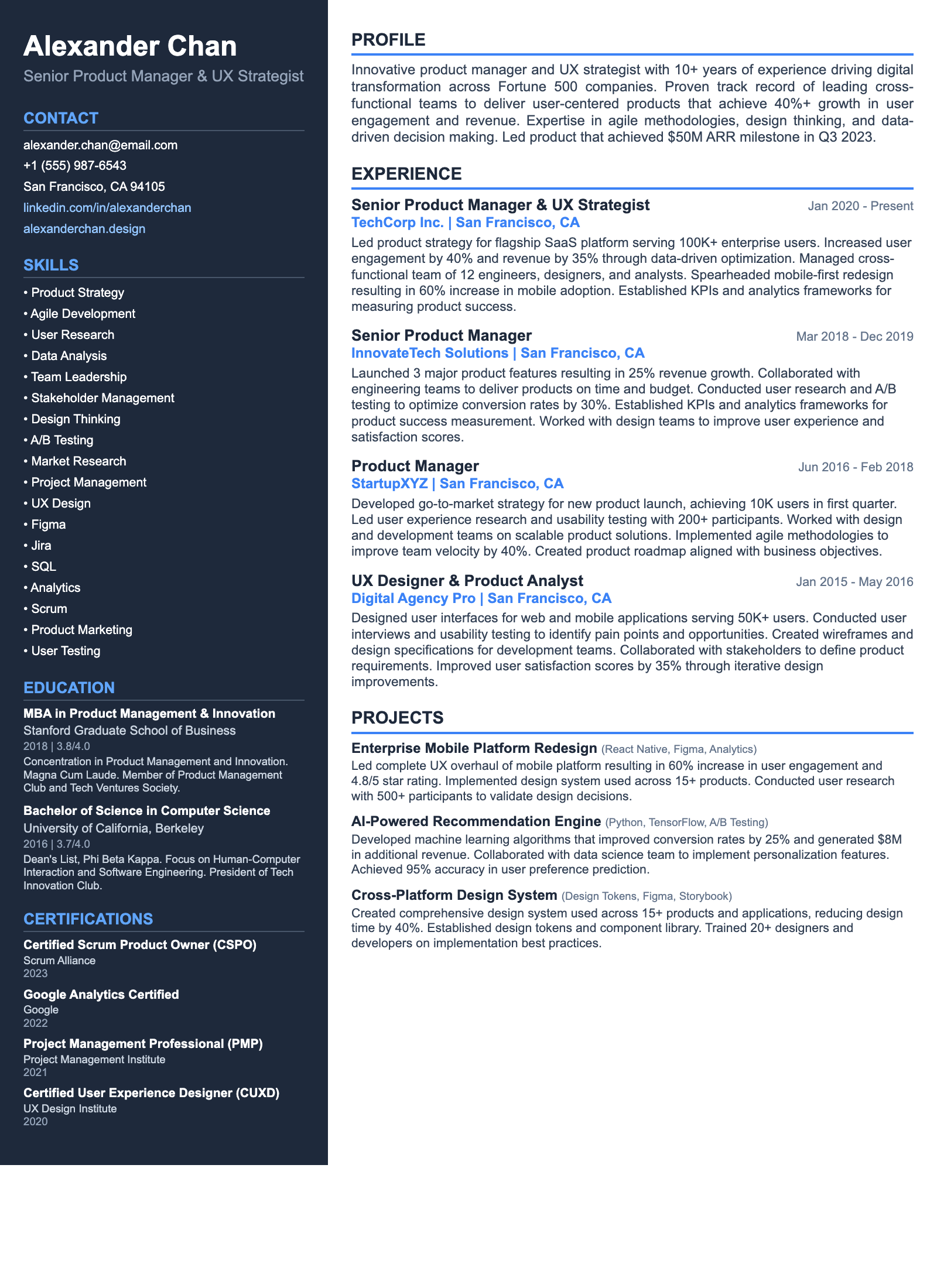
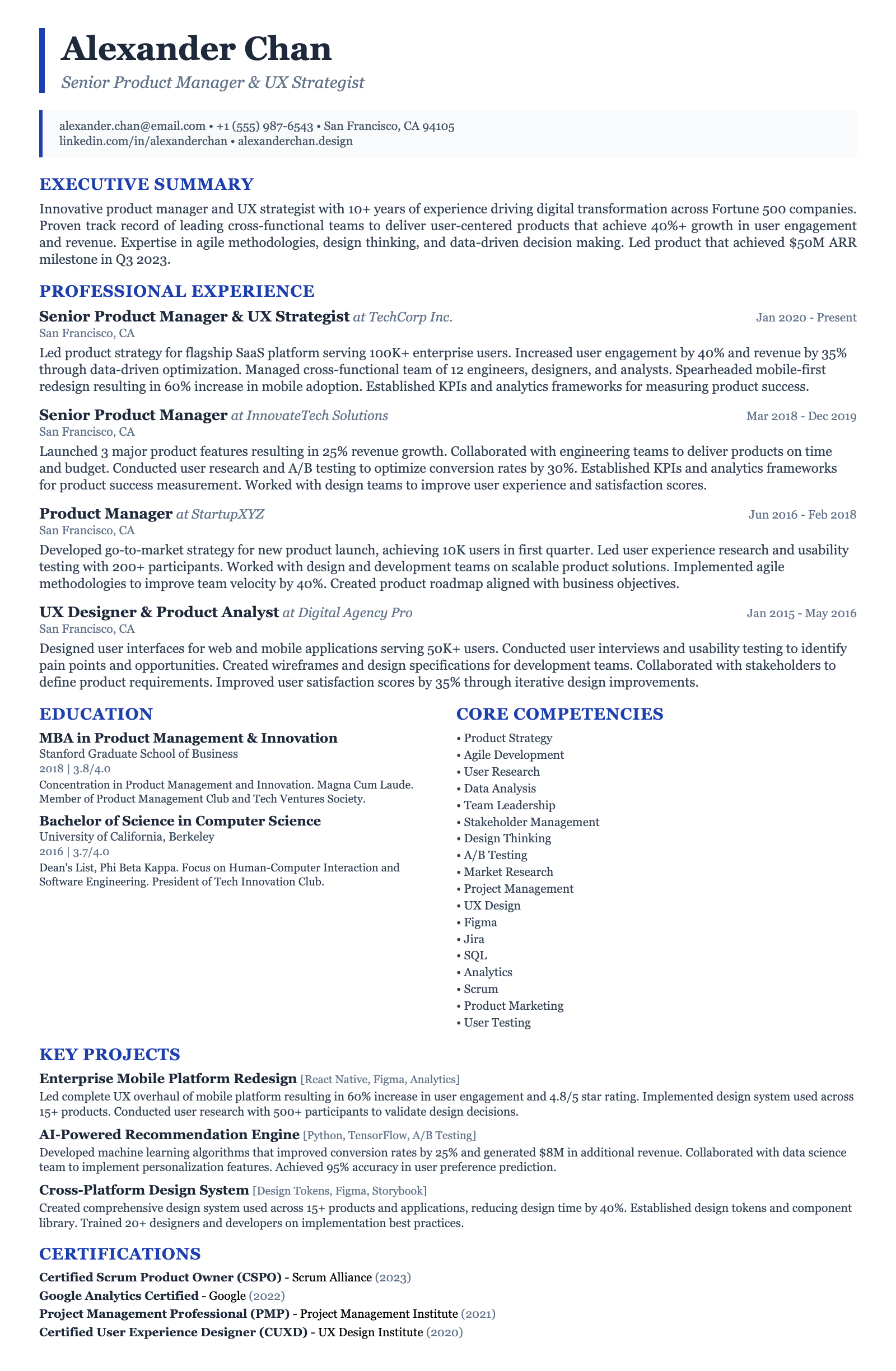
ATS-friendly templates designed specifically for Senior Construction Real Estate Agent positions in the US market.
Frequently Asked Questions

What is the ideal length for a Senior Construction Real Estate Agent resume?

Ideally, your resume should be no more than two pages. Given your senior-level experience, it's important to provide sufficient detail on your relevant accomplishments without overwhelming the reader. Focus on highlighting your most impactful contributions, such as successful project completions, high-value transactions, or significant revenue generation. Prioritize quantifiable achievements, like percentage increases in sales or reductions in construction costs. Use the limited space to showcase your expertise in tools like Procore and Bluebeam.

What key skills should I emphasize on my resume?

Highlight both hard and soft skills relevant to the construction real estate industry. Hard skills include proficiency in financial modeling, market analysis, contract negotiation, and project management. Mention industry-specific software like Autodesk Construction Cloud, PlanGrid, and Yardi. Soft skills such as communication, negotiation, leadership, and problem-solving are crucial for building relationships with developers, contractors, and clients. Showcase your ability to interpret construction plans, understand zoning regulations, and navigate the permitting process.

How can I optimize my resume for Applicant Tracking Systems (ATS)?

Use a simple, ATS-friendly format with clear headings and bullet points. Avoid using tables, images, or unusual fonts, as these can be difficult for ATS to parse. Incorporate relevant keywords from the job description throughout your resume, especially in the skills and experience sections. Tailor your resume to each specific job, focusing on the keywords and skills that are most relevant. Submit your resume as a PDF to preserve formatting, but ensure the text is selectable.

Should I include certifications on my resume, and which ones are most valuable?

Yes, including relevant certifications can significantly enhance your credibility. Consider adding certifications such as LEED AP (Leadership in Energy and Environmental Design Accredited Professional), CCIM (Certified Commercial Investment Member), or PMP (Project Management Professional). These certifications demonstrate your expertise and commitment to the industry. Also mention any relevant real estate licenses held, specifying the state and license number.

What are some common mistakes to avoid when writing a Senior Construction Real Estate Agent resume?

Avoid generic descriptions of your responsibilities. Instead, focus on quantifying your achievements and showcasing the impact you had on projects. Don't neglect to tailor your resume to each specific job. Ensure your resume is free of grammatical errors and typos. Neglecting to showcase your proficiency with construction-specific tools like BIM software is a crucial oversight. Ensure your summary highlights your specific accomplishments in construction real estate.

How can I showcase a career transition into a Senior Construction Real Estate Agent role?

If you're transitioning into a Senior Construction Real Estate Agent role, highlight transferable skills from your previous experience. Emphasize any experience in project management, sales, negotiation, or customer service. Showcase any relevant coursework or certifications you've obtained. Quantify your accomplishments in your previous role to demonstrate your ability to achieve results. Clearly articulate your passion for construction real estate and your understanding of the industry. Use your cover letter to explain your career transition and how your skills and experience make you a strong candidate.

Ready to Build Your Senior Construction Real Estate Agent Resume?

Use our AI-powered resume builder to create an ATS-optimized resume tailored for Senior Construction Real Estate Agent positions in the US market.

Complete Senior Construction Real Estate Agent Career Toolkit

Everything you need for your Senior Construction Real Estate Agent job search — all in one platform.

Why choose ResumeGyani over Zety or Resume.io?

The only platform with AI mock interviews + resume builder + job search + career coaching — all in one.

See comparison

Last updated: March 2026 · Content reviewed by certified resume writers · Optimized for US job market

Senior Construction Real Estate Agent Resume Guide (2026) | ATS-Optimized Template