
ATS-Optimized for US Market

Senior Hospitality Mechanical Engineer Career & Resume Guide

As a Senior Hospitality Mechanical Engineer crafting your resume for the US market, you need to showcase a blend of technical expertise and industry-specific knowledge. Hiring managers in the hospitality sector seek candidates who can optimize building systems for energy efficiency, occupant comfort, and operational cost savings. Your resume should highlight experience with HVAC systems, plumbing, fire protection, and building automation systems (BAS). Quantify your accomplishments whenever possible, using metrics to demonstrate your impact on energy consumption, maintenance costs, and system performance. Key sections include a strong summary highlighting your years of experience and expertise, a detailed work history showcasing project leadership and technical skills, and a skills section that includes both hard and soft skills. Emphasize your proficiency with industry-standard tools such as AutoCAD, Revit, Trane Trace, Carrier HAP, and energy modeling software. To stand out, tailor your resume to each specific job description, highlighting the skills and experiences most relevant to the role. Showcase your understanding of hospitality-specific challenges, such as managing systems in high-occupancy environments and addressing the unique requirements of restaurants, guest rooms, and public spaces. Don't forget to mention certifications like LEED AP or PE, and consider including a portfolio of relevant projects.
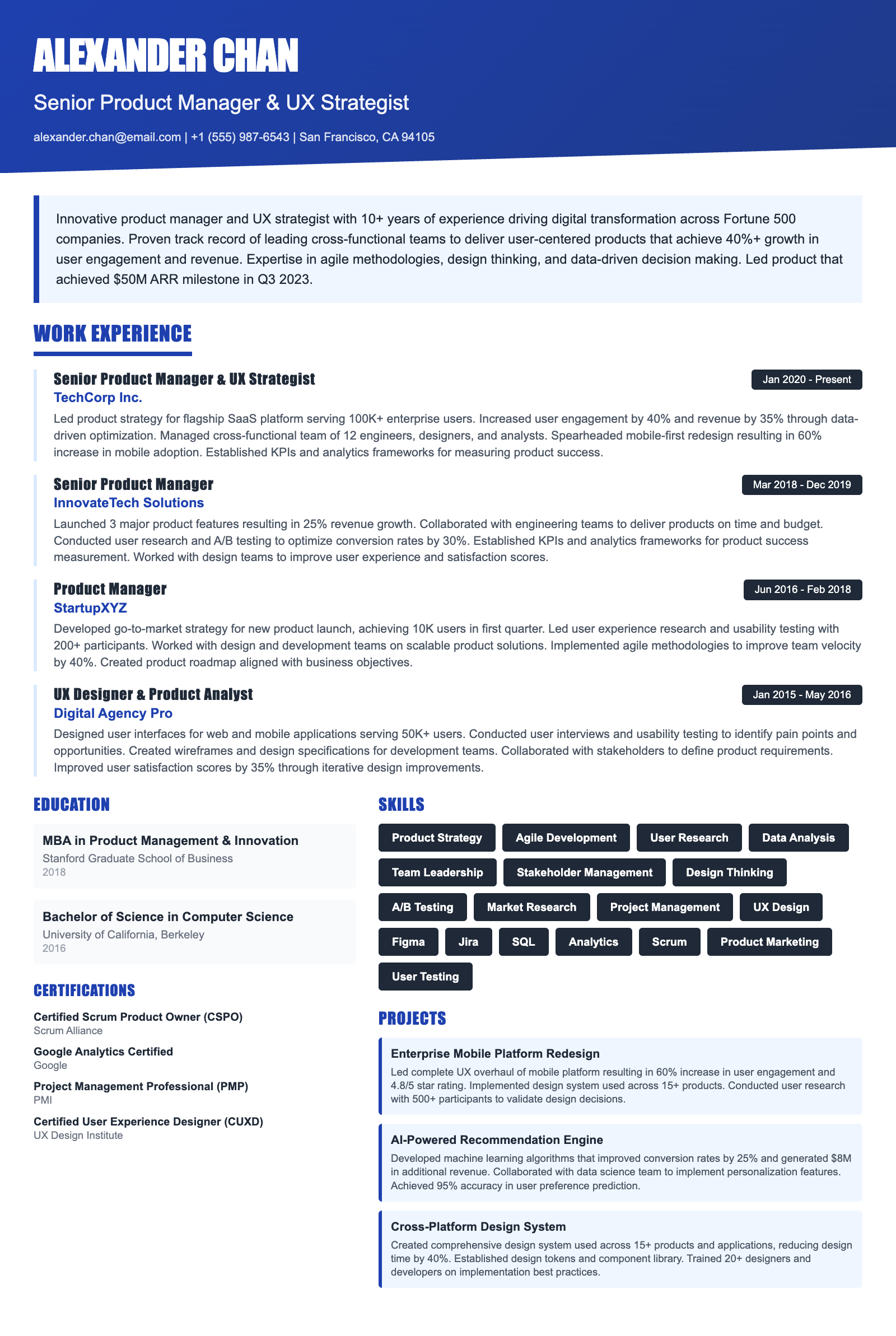
Average US Salary: $80k - $130k

Expert Tip: For Senior Hospitality Mechanical Engineer positions in the US, recruiters increasingly look for technical execution and adaptability over simple job duties. This guide is tailored to highlight these specific traits to ensure your resume stands out in the competitive Senior Hospitality Mechanical Engineer sector.

What US Hiring Managers Look For in a Senior Hospitality Mechanical Engineer Resume

When reviewing Senior Hospitality Mechanical Engineer candidates, recruiters and hiring managers in the US focus on a few critical areas. Making these elements clear and easy to find on your resume will improve your chances of moving to the interview stage.

  • Relevant experience and impact in Senior Hospitality Mechanical Engineer or closely related roles.
  • Clear, measurable achievements (metrics, scope, outcomes) rather than duties.
  • Skills and keywords that match the job description and ATS requirements.
  • Professional formatting and no spelling or grammar errors.
  • Consistency between your resume, LinkedIn, and application.
  • Proficiency in key areas such as Communication, Time Management, Industry-Standard Tools.

Essential Skills for Senior Hospitality Mechanical Engineer

Include these keywords in your resume to pass ATS screening and impress recruiters.

Must-Have Skills

  • CriticalCommunication
  • HighTime Management

Technical Skills

  • HighIndustry-Standard Tools
  • MediumData Analysis

Soft Skills

  • CriticalTeamwork
  • HighAdaptability
  • CriticalLeadership

A Day in the Life

A Day in the Life of a Senior Mechanical Engineer

Arrive early to review metrics or sprint progress. As a Senior Mechanical Engineer, you lead the 9 AM stand-up, addressing blockers and setting the strategic direction for handling core responsibilities, collaborating with cross-functional teams, and driving project success within the Hospitality team. 10 AM-1 PM is for high-impact decisions. You're architecting solutions, reviewing critical deliverables, or negotiating priorities with Hospitality stakeholders. Afternoons involve mentorship and cross-org coordination. You're the go-to expert for handling core responsibilities, collaborating with cross-functional teams, and driving project success, ensuring the team's output aligns with company goals. You finish by finalizing quarterly roadmaps or reviewing next steps. At this level in Hospitality, your focus shifts from individual tasks to organizational impact.

Career Progression Path

Level 1

Mechanical Engineer I (Entry Level)

Level 2

Mechanical Engineer II (Junior)

Level 3

Senior Mechanical Engineer

Level 4

Lead Mechanical Engineer

Level 5

Mechanical Engineer Manager / Director

Interview Questions & Answers

Prepare for your Senior Hospitality Mechanical Engineer interview with these commonly asked questions.

Describe a time when you had to troubleshoot a complex HVAC system issue in a hospitality setting under pressure. What steps did you take to diagnose the problem and implement a solution?

Medium
Situational
Sample Answer
In my previous role at a large hotel, we experienced a complete failure of the HVAC system during a peak occupancy weekend. The system was critical, especially as it was summer. I immediately assembled a team and began by systematically checking the main components, starting with the chillers. Using thermal imaging, we identified a faulty compressor. We quickly sourced a replacement and worked through the night to install it, minimizing disruption to guests. The key was a calm, methodical approach and effective teamwork.

How do you stay up-to-date with the latest technologies and trends in mechanical engineering within the hospitality sector?

Easy
Behavioral
Sample Answer
I actively participate in industry conferences and workshops, such as those offered by ASHRAE. I also subscribe to relevant publications and online forums to stay informed about new technologies and best practices. For example, I recently attended a webinar on the use of AI in building management systems, and I'm exploring how we can implement similar solutions to optimize energy consumption in our facilities.

Explain your experience with energy modeling software and how you have used it to improve energy efficiency in hospitality buildings.

Technical
Technical
Sample Answer
I have extensive experience with energy modeling software such as Trane Trace and Carrier HAP. In my previous role, I used Trane Trace to analyze the energy performance of a hotel building and identify opportunities for improvement. By implementing measures such as upgrading HVAC equipment and optimizing building controls, we were able to reduce energy consumption by 15% and save the company $50,000 annually.

Describe a situation where you had to balance cost constraints with the need to implement a high-quality mechanical engineering solution in a hospitality project. How did you approach this challenge?

Medium
Situational
Sample Answer
In a recent renovation project for a restaurant, we had a limited budget but needed to upgrade the ventilation system to meet health and safety standards. I conducted a thorough cost-benefit analysis of different options, considering both upfront costs and long-term operational expenses. We ultimately chose a system that used energy-efficient fans and optimized ductwork design, which allowed us to meet the requirements while staying within budget and reducing energy consumption.

Tell me about a time you had to lead a team of engineers and technicians to complete a complex mechanical engineering project in a hospitality setting. What were the key challenges, and how did you overcome them?

Hard
Behavioral
Sample Answer
I led a team during the construction of a new hotel wing that involved installing a new HVAC system and integrating it with the existing building automation system. The biggest challenge was coordinating the work of multiple contractors and ensuring that the system was commissioned on time and within budget. I held regular team meetings, clearly communicated expectations, and proactively addressed any issues that arose. As a result, we completed the project successfully and received positive feedback from the client.

Explain the importance of indoor air quality in hospitality environments and describe the measures you have taken to ensure optimal air quality in your previous roles.

Medium
Technical
Sample Answer
Indoor air quality is crucial in hospitality settings to ensure the health and comfort of guests and staff. In my previous role, I implemented several measures to improve air quality, including regular maintenance of HVAC systems, the use of high-efficiency filters, and the implementation of CO2 monitoring systems to ensure adequate ventilation. We also conducted regular air quality testing to identify and address any potential issues, such as mold or pollutants.

ATS Optimization Tips

Make sure your resume passes Applicant Tracking Systems used by US employers.

Use keywords from the job description, especially in the skills and experience sections. ATS systems scan for these terms to match qualified candidates.
Format your resume with clear headings like "Summary," "Experience," "Skills," and "Education." This helps the ATS parse the information correctly.
Use a simple, chronological or functional format. Avoid complex tables, graphics, or templates that can confuse the ATS.
List your skills in a dedicated skills section. Include both hard skills (e.g., AutoCAD, Revit, Trane Trace) and soft skills (e.g., communication, teamwork).
Quantify your accomplishments whenever possible. Use numbers and metrics to demonstrate the impact of your work (e.g., "Reduced energy consumption by 15%").
Save your resume as a PDF file to preserve formatting. Ensure the text is selectable so the ATS can read it.
Use standard fonts like Arial, Calibri, or Times New Roman. Avoid decorative fonts that may not be recognized by the ATS.
Tailor your resume to each specific job application. Highlight the skills and experiences that are most relevant to the position.

Common Resume Mistakes to Avoid

Don't make these errors that get resumes rejected.

1
Failing to quantify accomplishments. Use numbers to showcase the impact of your work on energy savings, cost reduction, or system performance.
2
Omitting relevant certifications such as PE, LEED AP, or CEM. These certifications demonstrate your expertise and commitment to the field.
3
Using generic language and not tailoring your resume to the specific requirements of the hospitality industry. Highlight your understanding of hospitality-specific challenges.
4
Not showcasing experience with industry-standard tools like AutoCAD, Revit, Trane Trace, and Carrier HAP. These are essential skills for the role.
5
Neglecting to mention experience with building automation systems (BAS). BAS is crucial for managing building systems in hospitality settings.
6
Not highlighting project management experience. Senior Mechanical Engineers often lead projects and manage teams.
7
Failing to demonstrate an understanding of energy efficiency and sustainability. These are increasingly important considerations in the hospitality industry.
8
Not proofreading the resume for typos and grammatical errors. Errors can create a negative impression.

Industry Outlook

The US Hospitality sector is experiencing steady growth. Senior Mechanical Engineers are particularly sought after, with the Bureau of Labor Statistics projecting average job growth through 2030. Peak hiring occurs in Q1 (January-March) and Q3 (August-September).

Top Hiring Companies

Industry LeadersRegional FirmsFast-Growing Companies

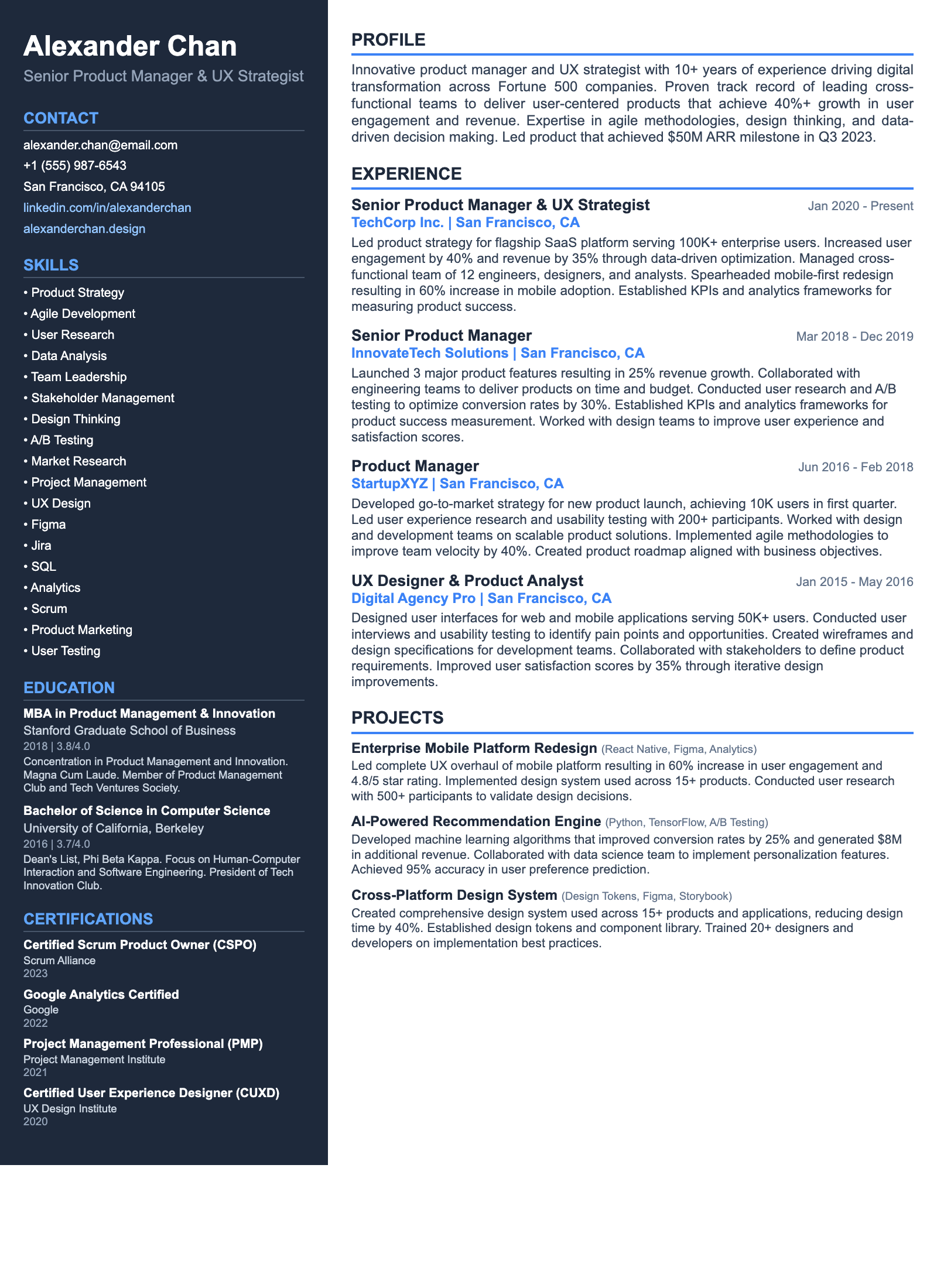
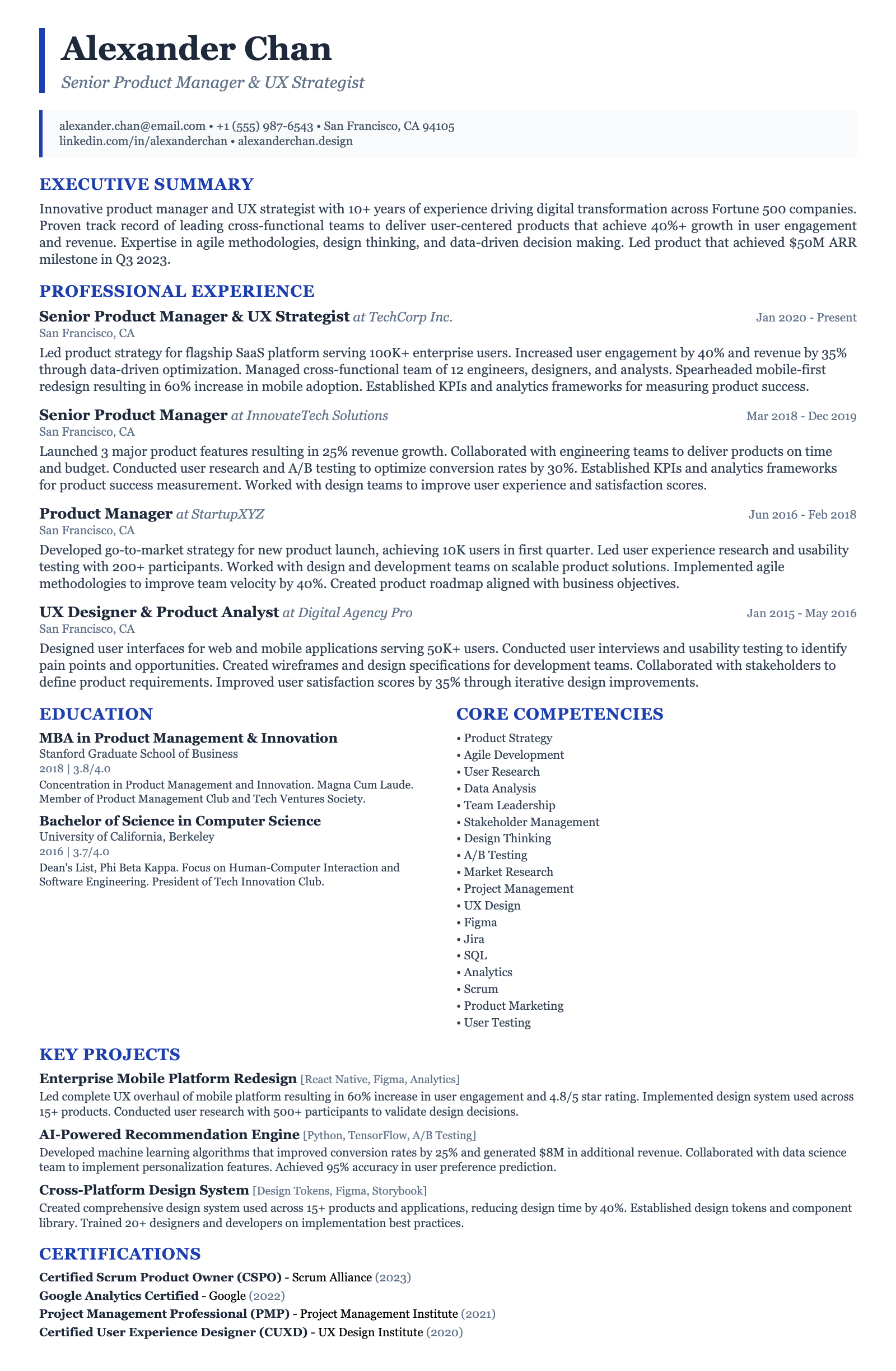
Recommended Resume Templates

ATS-friendly templates designed specifically for Senior Hospitality Mechanical Engineer positions in the US market.
Frequently Asked Questions

What is the ideal length for a Senior Hospitality Mechanical Engineer resume?

For a Senior Hospitality Mechanical Engineer with several years of experience, a two-page resume is generally acceptable. Focus on showcasing your most relevant and impactful accomplishments. Ensure that every piece of information on your resume supports your candidacy and demonstrates your value to a potential employer. Use concise language and prioritize the information that aligns with the specific requirements of the job description. If you have less than 10 years of experience, a one-page resume might suffice.

What are the most important skills to highlight on my resume?

The most important skills to highlight include a mix of technical and soft skills. Technically, emphasize your proficiency in HVAC systems, plumbing, fire protection, building automation systems (BAS), energy modeling, and industry-standard software like AutoCAD, Revit, Trane Trace, and Carrier HAP. Soft skills such as communication, teamwork, leadership, problem-solving, and adaptability are also crucial. Provide specific examples of how you have used these skills to achieve positive outcomes in your previous roles.

How can I optimize my resume for Applicant Tracking Systems (ATS)?

To optimize your resume for ATS, use a clean and simple format with clear headings and bullet points. Avoid using tables, images, or unusual fonts, as these can confuse the system. Incorporate relevant keywords from the job description throughout your resume, particularly in the skills section and work experience descriptions. Save your resume as a PDF to preserve formatting, but ensure the text is selectable. Also, use standard section headings like "Summary," "Experience," and "Skills."

Are certifications important for a Senior Hospitality Mechanical Engineer?

Yes, certifications can significantly enhance your credibility and demonstrate your commitment to professional development. Relevant certifications include Professional Engineer (PE) license, LEED AP, Certified Energy Manager (CEM), and certifications related to specific HVAC or building automation systems. Highlight these certifications prominently on your resume, typically in a dedicated section or near your name and contact information.

What are some common resume mistakes to avoid?

Common mistakes include using generic language, failing to quantify accomplishments, omitting relevant skills, and having typos or grammatical errors. Also, avoid using an objective statement instead of a strong summary. Focus on showcasing your achievements and how you have contributed to the success of your previous employers. Proofread your resume carefully and ask a friend or colleague to review it as well.

How should I address a career transition on my resume?

When transitioning from a different industry or role, highlight the transferable skills and experiences that are relevant to the Senior Hospitality Mechanical Engineer position. Focus on your technical skills, problem-solving abilities, and experience with similar systems or technologies. If you have completed any relevant training or certifications, be sure to include them. In your summary, explain your career transition and express your enthusiasm for the hospitality industry. For example, highlight project management experience and experience working with AutoCAD or Revit.

Ready to Build Your Senior Hospitality Mechanical Engineer Resume?

Use our AI-powered resume builder to create an ATS-optimized resume tailored for Senior Hospitality Mechanical Engineer positions in the US market.

Complete Senior Hospitality Mechanical Engineer Career Toolkit

Everything you need for your Senior Hospitality Mechanical Engineer job search — all in one platform.

Why choose ResumeGyani over Zety or Resume.io?

The only platform with AI mock interviews + resume builder + job search + career coaching — all in one.

See comparison

Last updated: March 2026 · Content reviewed by certified resume writers · Optimized for US job market

Senior Hospitality Mechanical Engineer Resume Guide (2026) | ATS-Optimized Template