
ATS-Optimized for US Market

Senior Legal Software Engineer Career & Resume Guide

As a Senior Legal Software Engineer, your resume needs to showcase your ability to develop and maintain software solutions tailored to the legal industry's unique needs. Hiring managers look for a blend of technical expertise and an understanding of legal workflows, data security, and compliance requirements. Key sections include a strong summary, a detailed experience section highlighting quantifiable achievements, a skills section emphasizing relevant technologies, and an education section. To stand out, emphasize your experience with specific legal software platforms like Clio, LexisNexis, or Westlaw, and frameworks relevant to legal tech such as Natural Language Processing (NLP) for document analysis or AI-driven legal research tools. Quantify your impact by detailing how your software solutions improved efficiency, reduced costs, or enhanced data security. Showcasing your experience in building scalable and secure applications, integrating them with existing legal systems, and adhering to stringent data privacy regulations like GDPR or CCPA is crucial. Highlight your proficiency in languages like Java, Python, or C++, database management systems like SQL or NoSQL, and cloud platforms such as AWS or Azure. Leadership experience, particularly in guiding junior developers or managing complex projects, is also highly valued.
Average US Salary: $96k - $169k

Expert Tip: For Senior Legal Software Engineer positions in the US, recruiters increasingly look for technical execution and adaptability over simple job duties. This guide is tailored to highlight these specific traits to ensure your resume stands out in the competitive Senior Legal Software Engineer sector.

What US Hiring Managers Look For in a Senior Legal Software Engineer Resume

When reviewing Senior Legal Software Engineer candidates, recruiters and hiring managers in the US focus on a few critical areas. Making these elements clear and easy to find on your resume will improve your chances of moving to the interview stage.

  • Relevant experience and impact in Senior Legal Software Engineer or closely related roles.
  • Clear, measurable achievements (metrics, scope, outcomes) rather than duties.
  • Skills and keywords that match the job description and ATS requirements.
  • Professional formatting and no spelling or grammar errors.
  • Consistency between your resume, LinkedIn, and application.
  • Proficiency in key areas such as Communication, Time Management, Industry-Standard Tools.

Essential Skills for Senior Legal Software Engineer

Include these keywords in your resume to pass ATS screening and impress recruiters.

Must-Have Skills

  • CriticalCommunication
  • HighTime Management

Technical Skills

  • HighIndustry-Standard Tools
  • MediumData Analysis

Soft Skills

  • CriticalTeamwork
  • HighAdaptability
  • CriticalLeadership

A Day in the Life

A Day in the Life of a Senior Software Engineer

Arrive early to review metrics or sprint progress. As a Senior Software Engineer, you lead the 9 AM stand-up, addressing blockers and setting the strategic direction for debugging complex codebases, participating in sprint planning, and writing clean, scalable microservices within the Legal team. 10 AM-1 PM is for high-impact decisions. You're architecting solutions, reviewing critical deliverables, or negotiating priorities with Legal stakeholders. Afternoons involve mentorship and cross-org coordination. You're the go-to expert for debugging complex codebases, participating in sprint planning, and writing clean, scalable microservices, ensuring the team's output aligns with company goals. You finish by finalizing quarterly roadmaps or reviewing next steps. At this level in Legal, your focus shifts from individual tasks to organizational impact.

Career Progression Path

Level 1

Software Engineer I (Entry Level)

Level 2

Software Engineer II (Junior)

Level 3

Senior Software Engineer

Level 4

Lead Software Engineer

Level 5

Software Engineer Manager / Director

Interview Questions & Answers

Prepare for your Senior Legal Software Engineer interview with these commonly asked questions.

Describe a time when you had to develop a software solution to address a specific challenge in the legal field. What was the challenge, and how did you approach solving it?

Medium
Behavioral
Sample Answer
In my previous role, I was tasked with developing a solution to automate the process of extracting key information from legal documents for a large-scale eDiscovery project. The challenge was the sheer volume and variety of document formats. I led a team to implement an NLP-based solution using Python and libraries like NLTK and SpaCy. We pre-processed the documents, trained a custom model to identify relevant entities, and integrated it into a user-friendly interface. This reduced processing time by 60% and improved accuracy by 25%.

Explain your understanding of data privacy regulations such as GDPR or CCPA, and how you ensure compliance in your software development practices.

Medium
Technical
Sample Answer
I understand that GDPR and CCPA are crucial regulations that protect personal data. To ensure compliance, I incorporate privacy by design principles into every stage of the software development lifecycle. This includes implementing data encryption, anonymization techniques, and access controls. I also ensure that data processing activities are transparent and aligned with user consent. Regular security audits and vulnerability assessments are conducted to identify and address potential risks.

How do you stay updated with the latest trends and technologies in both software engineering and the legal industry?

Easy
Behavioral
Sample Answer
I actively participate in industry conferences, read relevant publications, and take online courses to stay informed about the latest trends in both software engineering and the legal field. I follow thought leaders on social media and engage in online forums to learn from others. I also experiment with new technologies and frameworks in personal projects to gain hands-on experience. Regularly review legal tech publications like Law Technology News.

Imagine you are tasked with integrating a new AI-powered legal research tool into an existing legacy system. What steps would you take to ensure a smooth integration process?

Hard
Situational
Sample Answer
First, I would thoroughly assess the legacy system's architecture and identify any potential compatibility issues. Next, I'd work with the AI tool vendor to understand its integration requirements and APIs. A phased approach would be adopted, starting with a pilot project to test the integration in a controlled environment. Continuous monitoring and testing would be conducted to identify and address any issues. Clear communication with stakeholders would be maintained throughout the process.

Describe a time when you had to debug a complex issue in a legal software application under pressure. What was your approach, and what was the outcome?

Medium
Behavioral
Sample Answer
During the rollout of a new contract management system, we encountered a critical bug that caused data corruption when users attempted to modify existing contracts. With a tight deadline looming, I systematically analyzed the code, using debugging tools and log files to identify the root cause. I discovered a race condition in the data update process. I implemented a locking mechanism to prevent concurrent access and deployed a hotfix. This resolved the issue and prevented further data corruption.

How would you approach designing a scalable and secure database for storing sensitive legal documents and client information?

Hard
Technical
Sample Answer
I would start by carefully analyzing the data requirements and access patterns. Based on this, I'd choose a database technology that provides the necessary scalability, security, and performance, such as PostgreSQL with appropriate extensions or a NoSQL database like MongoDB if document structure is highly variable. Data encryption at rest and in transit would be implemented. Access controls would be enforced using role-based access control (RBAC). Regular backups and disaster recovery mechanisms would be put in place to ensure data availability.

ATS Optimization Tips

Make sure your resume passes Applicant Tracking Systems used by US employers.

Incorporate keywords related to legal technology, such as 'eDiscovery', 'contract management systems', 'legal research tools', and 'compliance software'.
Use a chronological or combination resume format to clearly showcase your career progression and experience in legal software development.
Ensure that your skills section includes both technical skills (Java, Python, SQL) and legal-specific skills (data privacy, compliance, legal workflow automation).
Use standard section headings like 'Summary', 'Experience', 'Skills', and 'Education' to ensure the ATS can easily parse the information.
Quantify your accomplishments using metrics and data to demonstrate the impact of your work, such as 'Improved data processing speed by 30%' or 'Reduced system downtime by 15%'.
List your skills as keywords, but also include them within the context of your job descriptions for better recognition by ATS.
Check the job description for preferred file formats and submit your resume accordingly; .docx or .pdf are generally safe choices.
Use action verbs (e.g., 'Developed', 'Implemented', 'Managed') to start each bullet point in your experience section, making it easier for ATS to identify your responsibilities and achievements.

Common Resume Mistakes to Avoid

Don't make these errors that get resumes rejected.

1
Failing to quantify achievements, making it difficult to assess the impact of your work on legal processes and software performance.
2
Using generic descriptions of job duties instead of highlighting specific accomplishments and contributions to legal tech projects.
3
Omitting experience with specific legal software platforms (e.g., Clio, LexisNexis) or legal-specific technologies like eDiscovery tools.
4
Neglecting to mention data security and compliance experience, which is crucial in the legal industry due to sensitive client information.
5
Not tailoring the resume to match the specific requirements of the legal software engineer role, resulting in a lack of relevant keywords.
6
Ignoring soft skills such as communication and teamwork, which are essential for collaborating with legal professionals and other engineers.
7
Overlooking the importance of showcasing problem-solving skills related to legal tech challenges, such as data integration or workflow automation.
8
Listing skills without providing context or examples of how they were applied in previous legal software projects.

Industry Outlook

The US Legal sector is experiencing steady growth. Senior Software Engineers are particularly sought after, with the Bureau of Labor Statistics projecting average job growth through 2030. Peak hiring occurs in Q1 (January-March) and Q3 (August-September).

Top Hiring Companies

Industry LeadersRegional FirmsFast-Growing Companies

Recommended Resume Templates

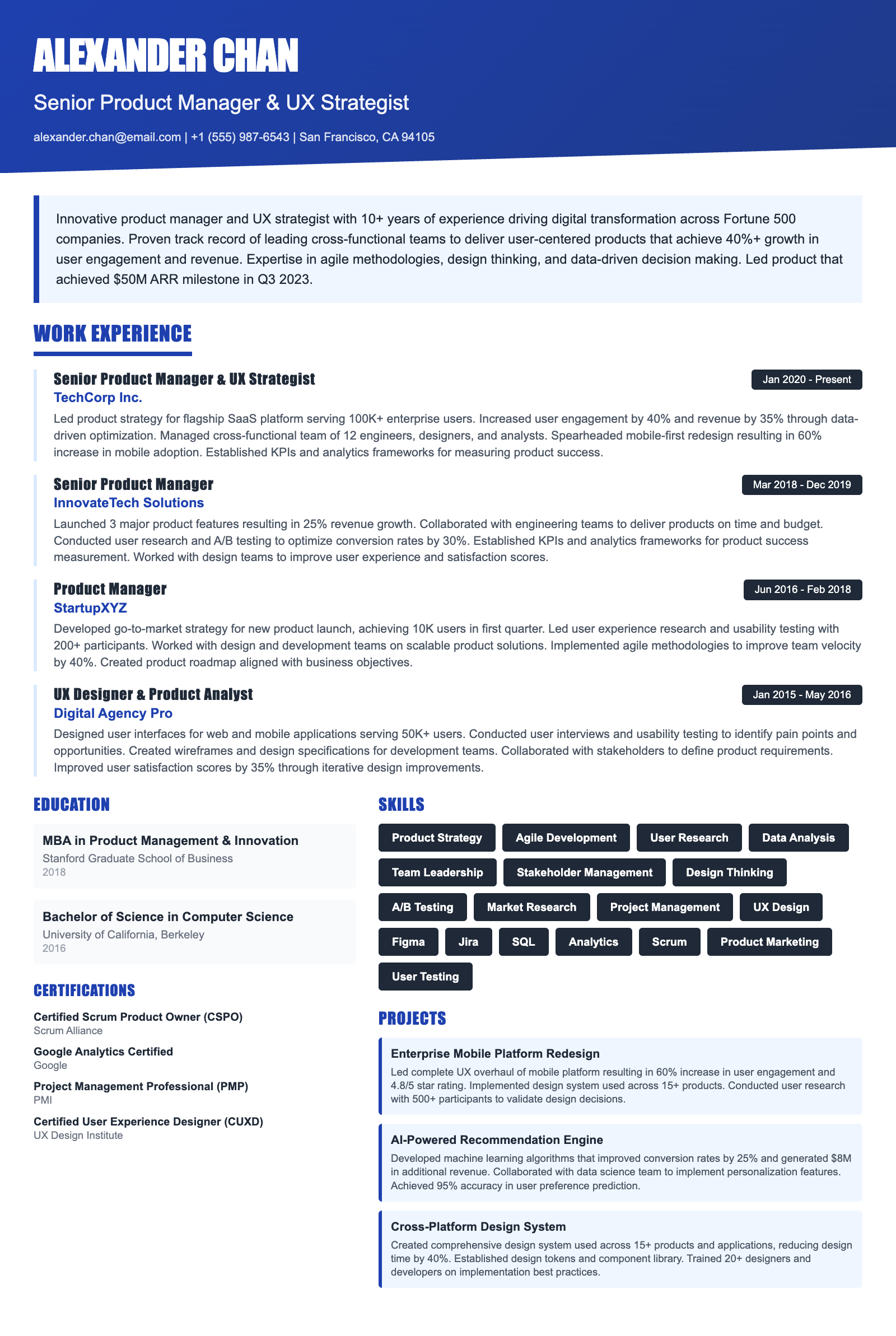
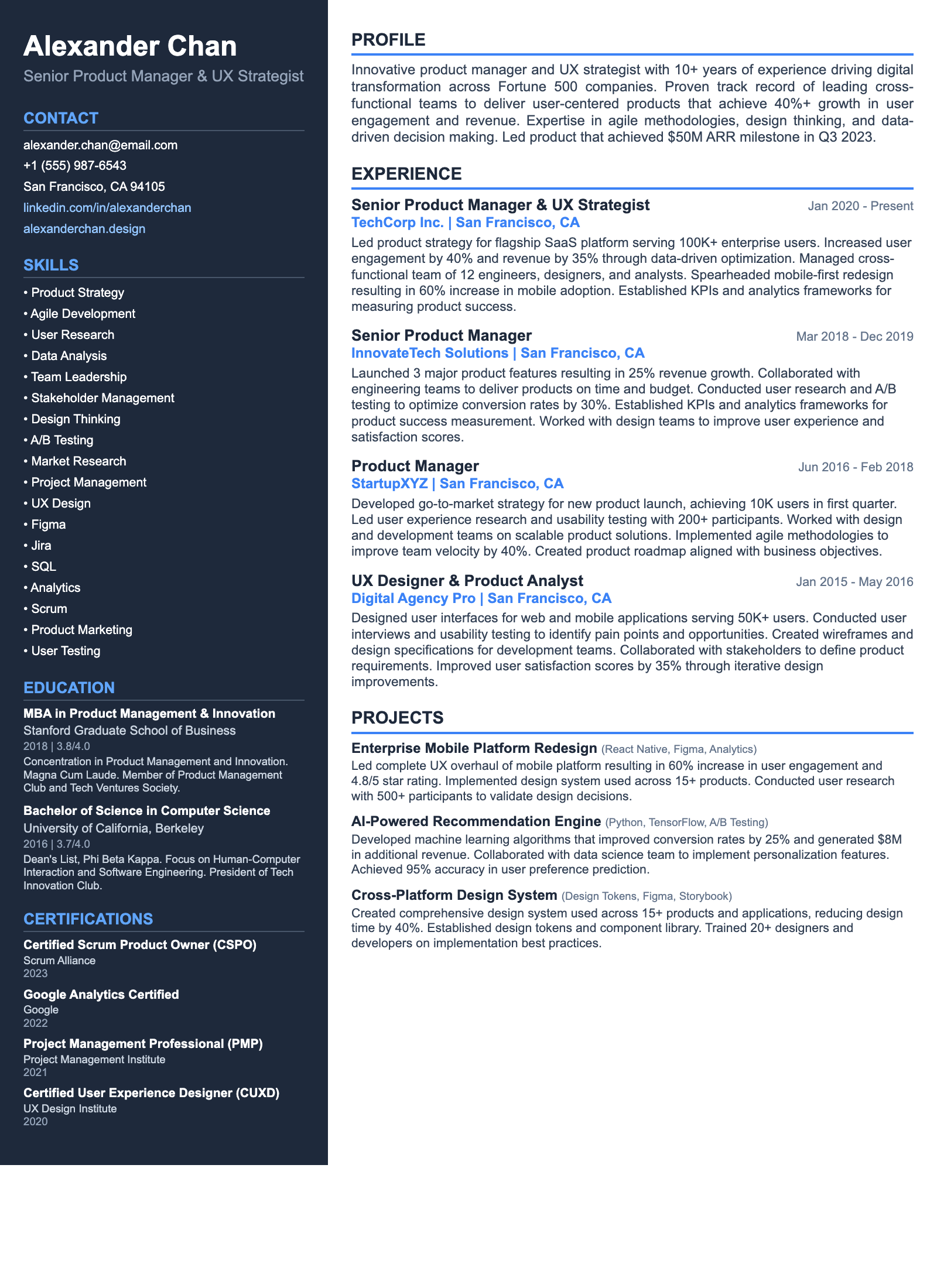
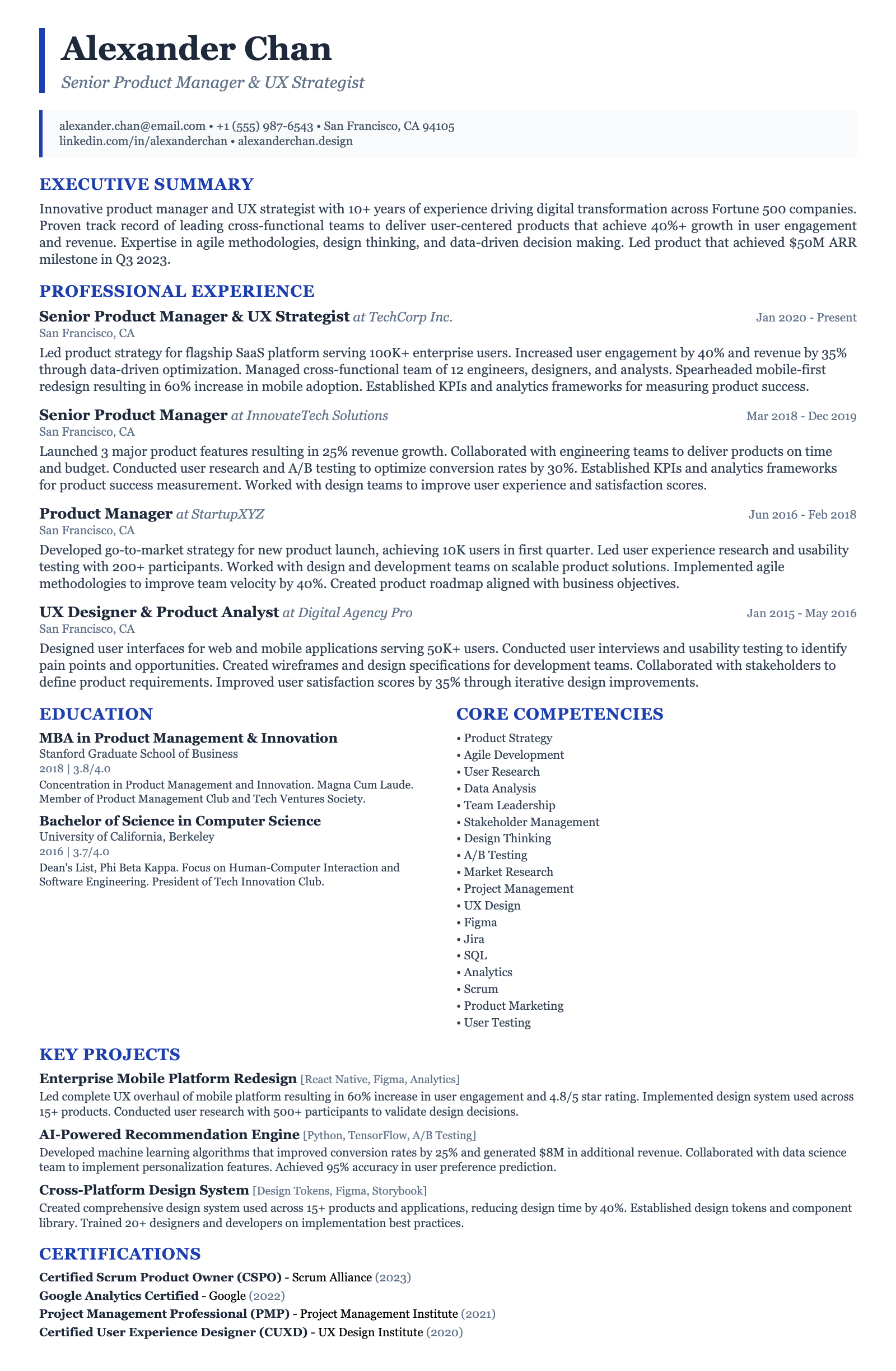
ATS-friendly templates designed specifically for Senior Legal Software Engineer positions in the US market.
Frequently Asked Questions

What is the ideal length for a Senior Legal Software Engineer resume?

For a Senior Legal Software Engineer with several years of experience, a two-page resume is generally acceptable. Ensure that every piece of information is relevant and contributes to showcasing your skills and accomplishments. Prioritize quantifiable achievements and tailor your content to the specific job description. Use a clear and concise writing style to maximize readability. Focus on demonstrating the impact you've made in previous roles using metrics and data.

What are the most important skills to highlight on a Senior Legal Software Engineer resume?

Key skills include proficiency in relevant programming languages (Java, Python, C++), experience with legal software platforms (Clio, LexisNexis), database management (SQL, NoSQL), cloud computing (AWS, Azure), data security (GDPR, CCPA compliance), and knowledge of legal workflows. Soft skills like communication, teamwork, and problem-solving are also crucial. Highlight experience with NLP, machine learning, and AI-driven legal tools.

How can I optimize my resume for Applicant Tracking Systems (ATS)?

Use a simple, chronological format. Avoid tables, graphics, and unusual fonts that ATS may not parse correctly. Incorporate relevant keywords from the job description throughout your resume, especially in the skills and experience sections. Save your resume as a .docx or .pdf file, as these formats are generally ATS-friendly. Ensure your contact information is easily readable and located at the top of your resume. Avoid headers and footers.

Are certifications important for a Senior Legal Software Engineer resume?

While not always mandatory, relevant certifications can strengthen your resume. Consider certifications in cloud computing (AWS Certified Developer, Azure Developer Associate), data security (CISSP, CISM), or specific programming languages (Oracle Certified Java Programmer). Certifications demonstrate your commitment to professional development and can validate your skills to potential employers. Tailor your certifications to the specific requirements of the role.

What are some common mistakes to avoid on a Senior Legal Software Engineer resume?

Avoid using generic language and focusing solely on job duties rather than accomplishments. Don't neglect to quantify your achievements with metrics and data. Ensure your resume is free of typos and grammatical errors. Avoid including irrelevant information, such as outdated skills or hobbies. Failing to tailor your resume to the specific job description is a significant mistake. Do not exaggerate your skills or experience.

How can I transition into a Senior Legal Software Engineer role from a general software engineering background?

Highlight any experience you have with data security, compliance, or legal-related projects. Take online courses or certifications in legal tech or relevant areas. Network with professionals in the legal tech industry. Tailor your resume to emphasize skills relevant to the legal field, such as data privacy, regulatory compliance, and experience with specific legal software platforms. Showcase your ability to learn new technologies and adapt to industry-specific requirements.

Ready to Build Your Senior Legal Software Engineer Resume?

Use our AI-powered resume builder to create an ATS-optimized resume tailored for Senior Legal Software Engineer positions in the US market.

Complete Senior Legal Software Engineer Career Toolkit

Everything you need for your Senior Legal Software Engineer job search — all in one platform.

Why choose ResumeGyani over Zety or Resume.io?

The only platform with AI mock interviews + resume builder + job search + career coaching — all in one.

See comparison

Last updated: March 2026 · Content reviewed by certified resume writers · Optimized for US job market

Senior Legal Software Engineer Resume Guide (2026) | ATS-Optimized Template