
ATS-Optimized for US Market

Senior Manufacturing Accountant Career & Resume Guide

As a Senior Manufacturing Accountant, your resume is your key to unlocking opportunities in a competitive market. Hiring managers seek professionals adept at managing the financial complexities inherent in manufacturing. Your resume must showcase your expertise in cost accounting, inventory valuation, variance analysis, and financial reporting within a manufacturing environment. Highlight your proficiency with industry-standard ERP systems like SAP, Oracle, or NetSuite, and your ability to leverage data analytics tools such as Power BI or Tableau to provide actionable insights. Emphasize your experience in areas like standard costing, bill of materials (BOM) analysis, and production order costing. A winning resume includes a compelling summary highlighting quantifiable achievements, such as cost reductions or process improvements you've driven. Structure your experience section to demonstrate increasing responsibilities and the impact you've had on the bottom line. Detail your experience with month-end close processes, budgeting, forecasting, and internal controls. Showcase your communication and teamwork skills by providing examples of how you've collaborated with cross-functional teams to achieve organizational goals. A resume that clearly articulates your expertise in manufacturing accounting principles and your ability to contribute to financial stability and growth will resonate with potential employers. Consider adding relevant certifications like CMA or CPA to further enhance your credibility.
Average US Salary: $80k - $130k

Expert Tip: For Senior Manufacturing Accountant positions in the US, recruiters increasingly look for technical execution and adaptability over simple job duties. This guide is tailored to highlight these specific traits to ensure your resume stands out in the competitive Senior Manufacturing Accountant sector.

What US Hiring Managers Look For in a Senior Manufacturing Accountant Resume

When reviewing Senior Manufacturing Accountant candidates, recruiters and hiring managers in the US focus on a few critical areas. Making these elements clear and easy to find on your resume will improve your chances of moving to the interview stage.

  • Relevant experience and impact in Senior Manufacturing Accountant or closely related roles.
  • Clear, measurable achievements (metrics, scope, outcomes) rather than duties.
  • Skills and keywords that match the job description and ATS requirements.
  • Professional formatting and no spelling or grammar errors.
  • Consistency between your resume, LinkedIn, and application.
  • Proficiency in key areas such as Communication, Time Management, Industry-Standard Tools.

Essential Skills for Senior Manufacturing Accountant

Include these keywords in your resume to pass ATS screening and impress recruiters.

Must-Have Skills

  • CriticalCommunication
  • HighTime Management

Technical Skills

  • HighIndustry-Standard Tools
  • MediumData Analysis

Soft Skills

  • CriticalTeamwork
  • HighAdaptability
  • CriticalLeadership

A Day in the Life

A Day in the Life of a Senior Accountant

Arrive early to review metrics or sprint progress. As a Senior Accountant, you lead the 9 AM stand-up, addressing blockers and setting the strategic direction for handling core responsibilities, collaborating with cross-functional teams, and driving project success within the Manufacturing team. 10 AM-1 PM is for high-impact decisions. You're architecting solutions, reviewing critical deliverables, or negotiating priorities with Manufacturing stakeholders. Afternoons involve mentorship and cross-org coordination. You're the go-to expert for handling core responsibilities, collaborating with cross-functional teams, and driving project success, ensuring the team's output aligns with company goals. You finish by finalizing quarterly roadmaps or reviewing next steps. At this level in Manufacturing, your focus shifts from individual tasks to organizational impact.

Career Progression Path

Level 1

Accountant I (Entry Level)

Level 2

Accountant II (Junior)

Level 3

Senior Accountant

Level 4

Lead Accountant

Level 5

Accountant Manager / Director

Interview Questions & Answers

Prepare for your Senior Manufacturing Accountant interview with these commonly asked questions.

Describe a time when you identified a significant cost-saving opportunity within a manufacturing process. What steps did you take to implement the change, and what were the results?

Medium
Behavioral
Sample Answer
In my previous role, I noticed inconsistencies in raw material usage that were inflating production costs. I conducted a thorough analysis of the bill of materials (BOM) and production processes, identifying areas where materials were being wasted or used inefficiently. I collaborated with the engineering and production teams to implement revised processes, reducing material waste by 12% and saving the company $50,000 annually. I also implemented a tracking system to monitor material usage and identify any future discrepancies.

Explain your experience with standard costing and variance analysis. How have you used these tools to improve manufacturing profitability?

Medium
Technical
Sample Answer
I have extensive experience with standard costing, using it to establish benchmarks for material, labor, and overhead costs. I've also used variance analysis to identify deviations from these standards, investigating the root causes of these variances. For example, at my last company, I identified a significant unfavorable labor variance due to inefficiencies in the assembly line. By working with the production team to streamline processes, we reduced the variance by 20%, leading to improved profitability.

Walk me through your experience with implementing or upgrading an ERP system in a manufacturing environment. What challenges did you face, and how did you overcome them?

Hard
Situational
Sample Answer
I was part of the team that implemented SAP at my previous company. One of the biggest challenges was data migration from the legacy system. We addressed this by creating a detailed data cleansing plan, working with each department to ensure data accuracy and completeness. We also provided extensive training to employees on the new system, which helped to minimize disruption and ensure a smooth transition. The implementation resulted in improved data visibility and streamlined reporting processes.

How do you ensure the accuracy and integrity of inventory valuation in a manufacturing setting?

Medium
Technical
Sample Answer
Ensuring accurate inventory valuation is critical. I implement robust cycle counting procedures and reconcile physical inventory counts with the ERP system regularly. I also perform detailed reviews of inventory obsolescence and write-downs, adhering to GAAP principles. I use techniques such as FIFO and weighted average costing methods, and ensure proper segregation of duties to prevent fraud. Furthermore, I maintain thorough documentation of all inventory transactions and reconciliations.

Describe a time when you had to make a difficult ethical decision related to manufacturing accounting. What factors did you consider, and what was the outcome?

Hard
Behavioral
Sample Answer
During an audit, I discovered that a colleague had been improperly allocating costs to a different project to meet budget targets. I knew that this was a violation of accounting principles and could have serious consequences for the company. After careful consideration, I reported the issue to my supervisor, providing evidence to support my concerns. An internal investigation was conducted, and the improper allocation was corrected, ensuring financial transparency and compliance.

Imagine you're tasked with improving the budgeting and forecasting process for a manufacturing plant. What steps would you take to achieve this?

Medium
Situational
Sample Answer
First, I'd gather historical data on production costs, sales, and market trends to establish a baseline. Next, I would collaborate with department heads to understand their operational plans and anticipated expenses. Using this information, I'd develop a comprehensive budget and forecast, incorporating key performance indicators (KPIs) to track progress. I would use rolling forecasts to update projections regularly. Finally, I would present the budget to leadership, ensuring everyone understands their roles in achieving financial goals. Tools like Excel, coupled with ERP data, are essential for accuracy.

ATS Optimization Tips

Make sure your resume passes Applicant Tracking Systems used by US employers.

Incorporate specific keywords related to manufacturing accounting, such as 'cost accounting,' 'variance analysis,' 'inventory valuation,' and 'ERP systems,' directly from the job description.
Use a chronological resume format to clearly showcase your career progression and experience in manufacturing accounting roles; this is easily parsed by ATS.
Include a dedicated skills section that lists both technical and soft skills relevant to the Senior Manufacturing Accountant role, enhancing ATS keyword matching.
Quantify your achievements whenever possible, using numbers and metrics to demonstrate the impact of your work in cost reduction, process improvement, and financial analysis; ATS can easily identify and extract these metrics.
Use standard section headings such as 'Summary,' 'Experience,' 'Skills,' and 'Education' to ensure that the ATS can accurately parse and categorize the information on your resume.
Save your resume as a PDF file to preserve formatting while ensuring it is still readable by most ATS systems; a PDF prevents formatting issues that can occur with DOC or DOCX files.
Ensure your contact information is clearly visible and easily parsable by the ATS, including your name, phone number, email address, and LinkedIn profile URL.
Tailor your resume to each job application by adjusting the keywords and skills listed to match the specific requirements of the Senior Manufacturing Accountant role.

Common Resume Mistakes to Avoid

Don't make these errors that get resumes rejected.

1
Failing to quantify achievements with specific numbers and metrics, making it difficult for hiring managers to assess the impact of your work.
2
Using a generic resume summary that doesn't highlight your specific experience and expertise in manufacturing accounting.
3
Neglecting to list proficiency with specific ERP systems such as SAP, Oracle, or NetSuite, which are essential tools for manufacturing accountants.
4
Omitting relevant certifications such as CMA or CPA, which can significantly enhance your credibility and demonstrate your expertise.
5
Not tailoring the resume to match the specific requirements of the job description, resulting in a lack of relevant keywords and skills.
6
Using overly technical jargon or acronyms that may not be understood by recruiters or hiring managers outside of manufacturing accounting.
7
Focusing solely on responsibilities rather than accomplishments, failing to showcase the value you've brought to previous employers.
8
Having errors in grammar, spelling, or formatting, which can create a negative impression and detract from your qualifications.

Industry Outlook

The US Manufacturing sector is experiencing steady growth. Senior Accountants are particularly sought after, with the Bureau of Labor Statistics projecting average job growth through 2030. Peak hiring occurs in Q1 (January-March) and Q3 (August-September).

Top Hiring Companies

Industry LeadersRegional FirmsFast-Growing Companies

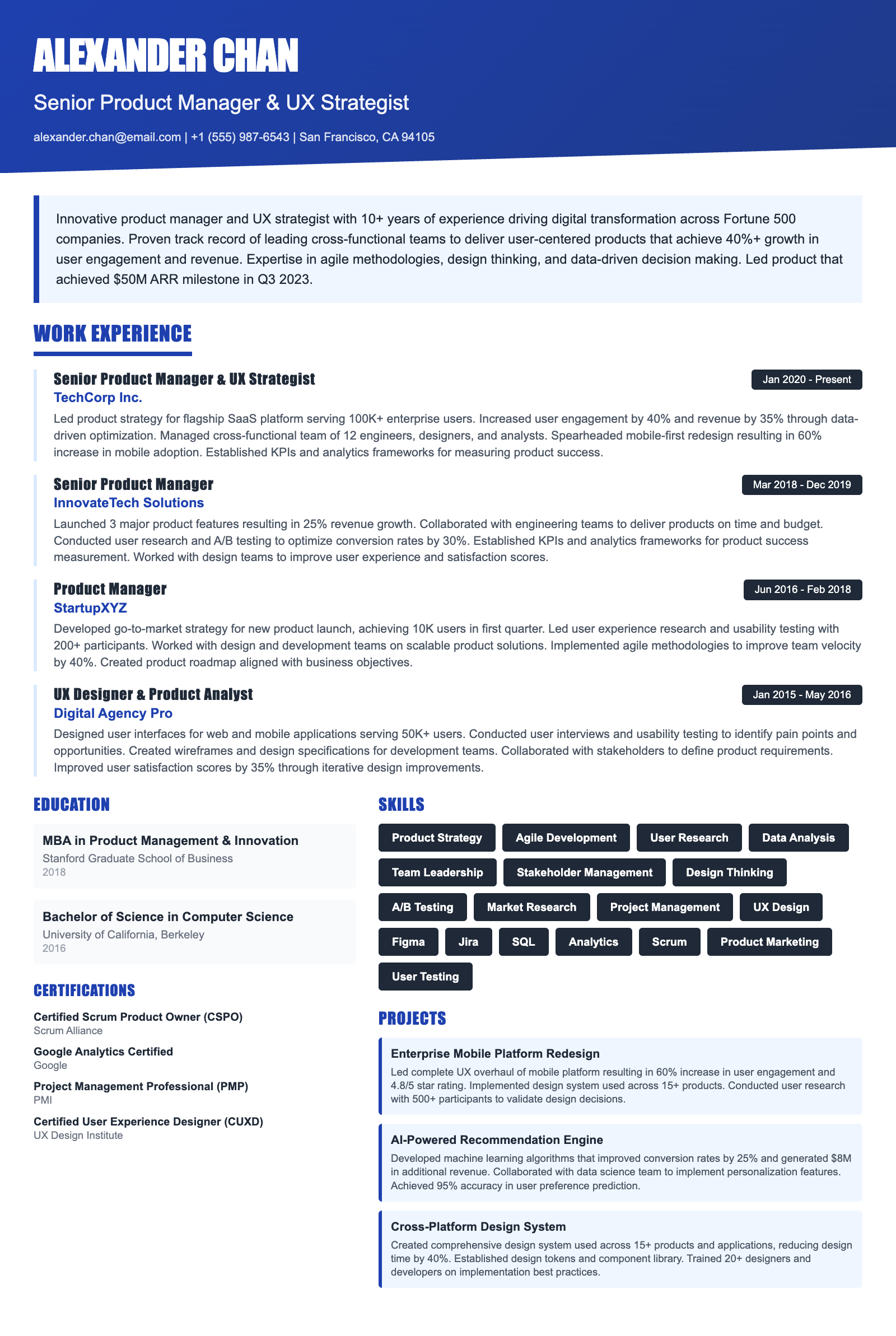
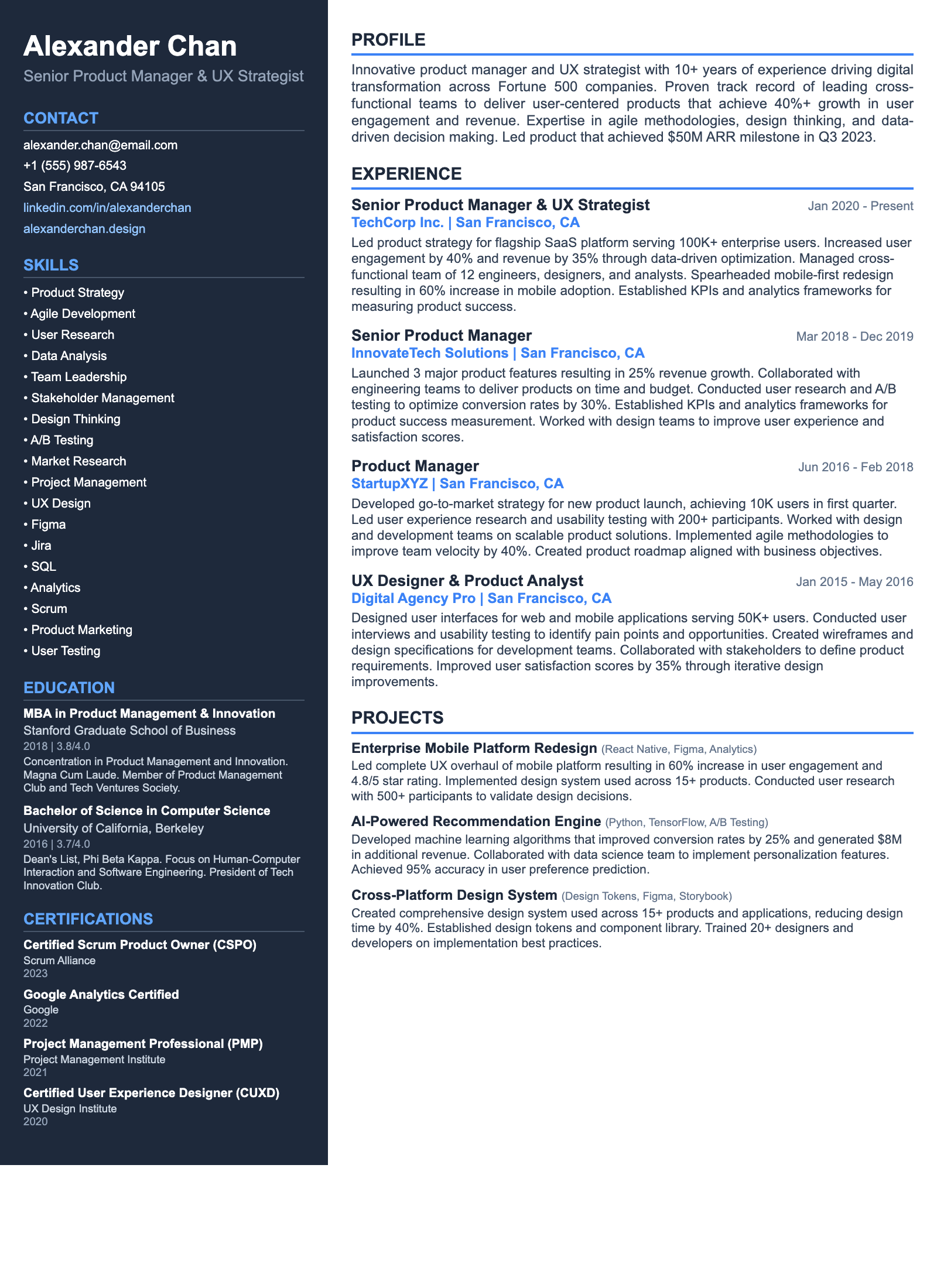
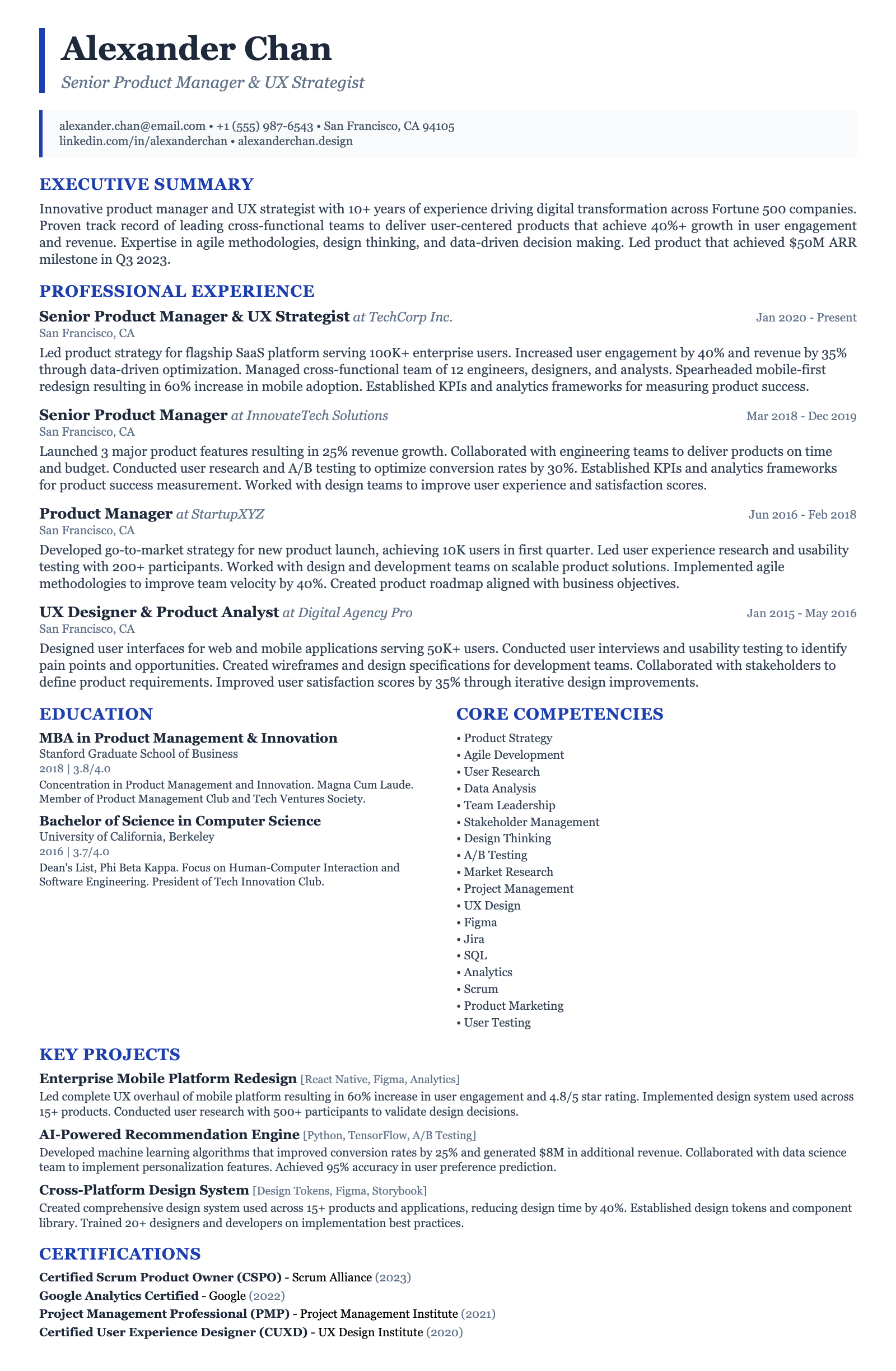
Recommended Resume Templates

ATS-friendly templates designed specifically for Senior Manufacturing Accountant positions in the US market.
Frequently Asked Questions

What is the ideal length for a Senior Manufacturing Accountant resume?

Ideally, your resume should be no more than two pages. Focus on showcasing your most relevant and impactful experiences and skills. Senior Manufacturing Accountants often have extensive experience, but prioritizing achievements and quantifiable results over simply listing responsibilities keeps the resume concise and engaging. Use clear and concise language, and ensure that all information presented is directly relevant to the target role.

Which key skills should I emphasize on my resume?

Emphasize technical skills like cost accounting, variance analysis, inventory management, and experience with ERP systems such as SAP or Oracle. Highlight your proficiency in data analysis tools like Excel, Power BI, or Tableau. Soft skills such as communication, teamwork, and problem-solving are also crucial. Quantify your skills whenever possible; for example, 'Reduced inventory costs by 15% through improved forecasting using advanced Excel modeling.'

How should I format my resume to be ATS-friendly?

Use a clean and simple format with clear headings and bullet points. Avoid tables, images, and unusual fonts, as these can confuse ATS systems. Save your resume as a PDF or DOCX file, depending on the job posting instructions. Incorporate relevant keywords from the job description naturally throughout your resume, focusing on skills and experience. Use standard section titles like 'Summary,' 'Experience,' 'Skills,' and 'Education.'

Are certifications important for a Senior Manufacturing Accountant resume?

Yes, certifications such as Certified Management Accountant (CMA) or Certified Public Accountant (CPA) can significantly enhance your resume. They demonstrate your commitment to professional development and your expertise in accounting principles. Include your certification details in a dedicated 'Certifications' section, along with the issuing organization and date of certification.

What are some common mistakes to avoid on a Senior Manufacturing Accountant resume?

Avoid generic summaries that don't highlight your specific experience in manufacturing. Don't neglect to quantify your achievements with numbers and metrics. Avoid using overly technical jargon that may not be understood by recruiters. Ensure your skills section includes both technical and soft skills. Proofread carefully for errors in grammar and spelling.

How can I showcase a career transition into Senior Manufacturing Accounting?

Highlight transferable skills from your previous role that are relevant to manufacturing accounting, such as budgeting, forecasting, data analysis, and financial reporting. Emphasize any relevant coursework, certifications, or training you've completed. Frame your experience in terms of how it aligns with the requirements of the Senior Manufacturing Accountant role. For example, if you previously worked in supply chain, showcase how your understanding of inventory management and cost control can benefit the manufacturing environment.

Ready to Build Your Senior Manufacturing Accountant Resume?

Use our AI-powered resume builder to create an ATS-optimized resume tailored for Senior Manufacturing Accountant positions in the US market.

Complete Senior Manufacturing Accountant Career Toolkit

Everything you need for your Senior Manufacturing Accountant job search — all in one platform.

Why choose ResumeGyani over Zety or Resume.io?

The only platform with AI mock interviews + resume builder + job search + career coaching — all in one.

See comparison

Last updated: March 2026 · Content reviewed by certified resume writers · Optimized for US job market