
ATS-Optimized for US Market

Senior Manufacturing Content Writer Career & Resume Guide

As a Senior Manufacturing Content Writer, your resume must showcase your ability to translate complex technical information into clear, engaging content that drives business results. Hiring managers seek candidates who not only possess exceptional writing skills but also a deep understanding of manufacturing processes, equipment, and industry regulations. Your resume should highlight your experience in creating various content formats, including white papers, case studies, blog posts, website copy, and technical documentation. Emphasize your ability to collaborate with subject matter experts, conduct thorough research, and adapt your writing style to different audiences. Key sections include a compelling summary, quantifiable achievements, a detailed skills section (featuring tools like Adobe Creative Suite, content management systems, and data analysis software), and a work history demonstrating progressive responsibility. To stand out, quantify your impact by showing how your content has increased website traffic, generated leads, or improved customer engagement. Illustrate your proficiency with search engine optimization (SEO) best practices and your ability to leverage data analytics to optimize content performance. Experience with frameworks like APQC's Process Classification Framework or similar industry standards is a plus. Show your leadership skills by highlighting projects where you mentored junior writers or spearheaded content strategy initiatives. Showcase your adaptability by including varied experiences across manufacturing verticals.
Average US Salary: $80k - $130k

Expert Tip: For Senior Manufacturing Content Writer positions in the US, recruiters increasingly look for technical execution and adaptability over simple job duties. This guide is tailored to highlight these specific traits to ensure your resume stands out in the competitive Senior Manufacturing Content Writer sector.

What US Hiring Managers Look For in a Senior Manufacturing Content Writer Resume

When reviewing Senior Manufacturing Content Writer candidates, recruiters and hiring managers in the US focus on a few critical areas. Making these elements clear and easy to find on your resume will improve your chances of moving to the interview stage.

  • Relevant experience and impact in Senior Manufacturing Content Writer or closely related roles.
  • Clear, measurable achievements (metrics, scope, outcomes) rather than duties.
  • Skills and keywords that match the job description and ATS requirements.
  • Professional formatting and no spelling or grammar errors.
  • Consistency between your resume, LinkedIn, and application.
  • Proficiency in key areas such as Communication, Time Management, Industry-Standard Tools.

Essential Skills for Senior Manufacturing Content Writer

Include these keywords in your resume to pass ATS screening and impress recruiters.

Must-Have Skills

  • CriticalCommunication
  • HighTime Management

Technical Skills

  • HighIndustry-Standard Tools
  • MediumData Analysis

Soft Skills

  • CriticalTeamwork
  • HighAdaptability
  • CriticalLeadership

A Day in the Life

A Day in the Life of a Senior Content Writer

Arrive early to review metrics or sprint progress. As a Senior Content Writer, you lead the 9 AM stand-up, addressing blockers and setting the strategic direction for handling core responsibilities, collaborating with cross-functional teams, and driving project success within the Manufacturing team. 10 AM-1 PM is for high-impact decisions. You're architecting solutions, reviewing critical deliverables, or negotiating priorities with Manufacturing stakeholders. Afternoons involve mentorship and cross-org coordination. You're the go-to expert for handling core responsibilities, collaborating with cross-functional teams, and driving project success, ensuring the team's output aligns with company goals. You finish by finalizing quarterly roadmaps or reviewing next steps. At this level in Manufacturing, your focus shifts from individual tasks to organizational impact.

Career Progression Path

Level 1

Content Writer I (Entry Level)

Level 2

Content Writer II (Junior)

Level 3

Senior Content Writer

Level 4

Lead Content Writer

Level 5

Content Writer Manager / Director

Interview Questions & Answers

Prepare for your Senior Manufacturing Content Writer interview with these commonly asked questions.

Describe a time you had to explain a complex manufacturing process to a non-technical audience. How did you approach it?

Medium
Behavioral
Sample Answer
In my previous role at [Previous Company], I was tasked with creating a series of blog posts explaining our advanced robotic welding process. To make it accessible, I started by breaking down the process into its core components and creating visual aids like diagrams and flowcharts. I avoided technical jargon and used analogies to relatable concepts. I then had engineers review to ensure accuracy. The resulting blog posts saw a 40% increase in reader engagement, demonstrating a better understanding of our capabilities.

What SEO strategies have you used to improve the visibility of manufacturing content?

Technical
Technical
Sample Answer
I've employed several SEO strategies, including keyword research using tools like SEMrush and Ahrefs to identify high-volume, low-competition keywords related to manufacturing. I optimize website content, blog posts, and product descriptions with those keywords. I also focus on building backlinks from reputable industry websites and monitoring content performance using Google Analytics to make data-driven adjustments. At my last company, these efforts resulted in a 25% increase in organic traffic to our website.

How do you stay up-to-date with the latest trends and technologies in the manufacturing industry?

Medium
Behavioral
Sample Answer
I actively participate in industry conferences and webinars, subscribe to relevant trade publications and newsletters, and follow thought leaders on social media. I also network with engineers and other experts within the manufacturing sector to stay informed about emerging technologies and best practices. I use this knowledge to inform the content I create, ensuring it is accurate, relevant, and valuable to our target audience. I also use platforms like LinkedIn Learning to upskill continuously.

Describe a time you had to adapt your writing style to meet the needs of different audiences.

Medium
Situational
Sample Answer
I once had to write a white paper targeted at C-level executives and a blog post on the same topic for engineers. For the white paper, I focused on the strategic benefits and ROI, using high-level language and visuals. For the blog post, I delved into the technical specifications and practical applications, using detailed diagrams and technical terms. Both pieces were successful in engaging their respective audiences and driving leads, demonstrating my adaptability.

How do you approach data analysis to improve content performance?

Technical
Technical
Sample Answer
I use Google Analytics and other data analysis tools to track key metrics such as website traffic, bounce rate, time on page, and conversion rates. I analyze this data to identify high-performing and underperforming content. I then use this information to optimize existing content, identify new content opportunities, and refine our content strategy. For example, I identified a series of blog posts with high bounce rates and rewrote them with clearer calls to action, which resulted in a 15% increase in lead generation.

Tell me about a time you had to manage a large content project with a tight deadline. What were the key steps you took to ensure its success?

Hard
Situational
Sample Answer
At [Previous Company], I was tasked with creating a comprehensive set of product documentation within a three-month timeframe. I began by creating a detailed project plan with clear milestones and deadlines. I then assembled a team of writers, editors, and subject matter experts and delegated tasks based on their expertise. I held regular progress meetings to track progress, identify roadblocks, and make necessary adjustments. By using project management tools and maintaining open communication, we successfully delivered the project on time and within budget, improving customer satisfaction by 20%.

ATS Optimization Tips

Make sure your resume passes Applicant Tracking Systems used by US employers.

Incorporate industry-specific keywords related to manufacturing processes, equipment, and regulations throughout your resume.
Use a chronological or combination resume format, as these are generally easier for ATS to parse.
Ensure your contact information is clear and easily accessible at the top of your resume.
Use standard section headings like "Summary," "Experience," "Skills," and "Education."
Quantify your achievements whenever possible, using metrics like website traffic, lead generation, or customer engagement rates. ATS systems recognize numeric data.
Submit your resume as a PDF to preserve formatting while ensuring the text is selectable. Test text extraction with a free online tool.
Include a skills section that lists both hard and soft skills relevant to the Senior Manufacturing Content Writer role. Use a bulleted list.
Tailor your resume to each job application by incorporating keywords and phrases from the job description. Consider using a tool like Jobscan to check your resume's match rate.

Common Resume Mistakes to Avoid

Don't make these errors that get resumes rejected.

1
Failing to quantify accomplishments with specific metrics, such as increased website traffic or lead generation from your content.
2
Using overly technical jargon that may not be understood by recruiters or hiring managers without a manufacturing background.
3
Not tailoring the resume to each specific job application, resulting in a generic and uncompelling document.
4
Neglecting to showcase experience with relevant content management systems (CMS) or SEO tools.
5
Omitting examples of successful collaboration with subject matter experts or cross-functional teams.
6
Focusing solely on responsibilities rather than highlighting the impact and results of your work.
7
Not including a portfolio or samples of your best writing work, especially for content-heavy roles.
8
Ignoring the importance of SEO optimization and keyword research in crafting effective manufacturing content.

Industry Outlook

The US Manufacturing sector is experiencing steady growth. Senior Content Writers are particularly sought after, with the Bureau of Labor Statistics projecting average job growth through 2030. Peak hiring occurs in Q1 (January-March) and Q3 (August-September).

Top Hiring Companies

Industry LeadersRegional FirmsFast-Growing Companies

Recommended Resume Templates

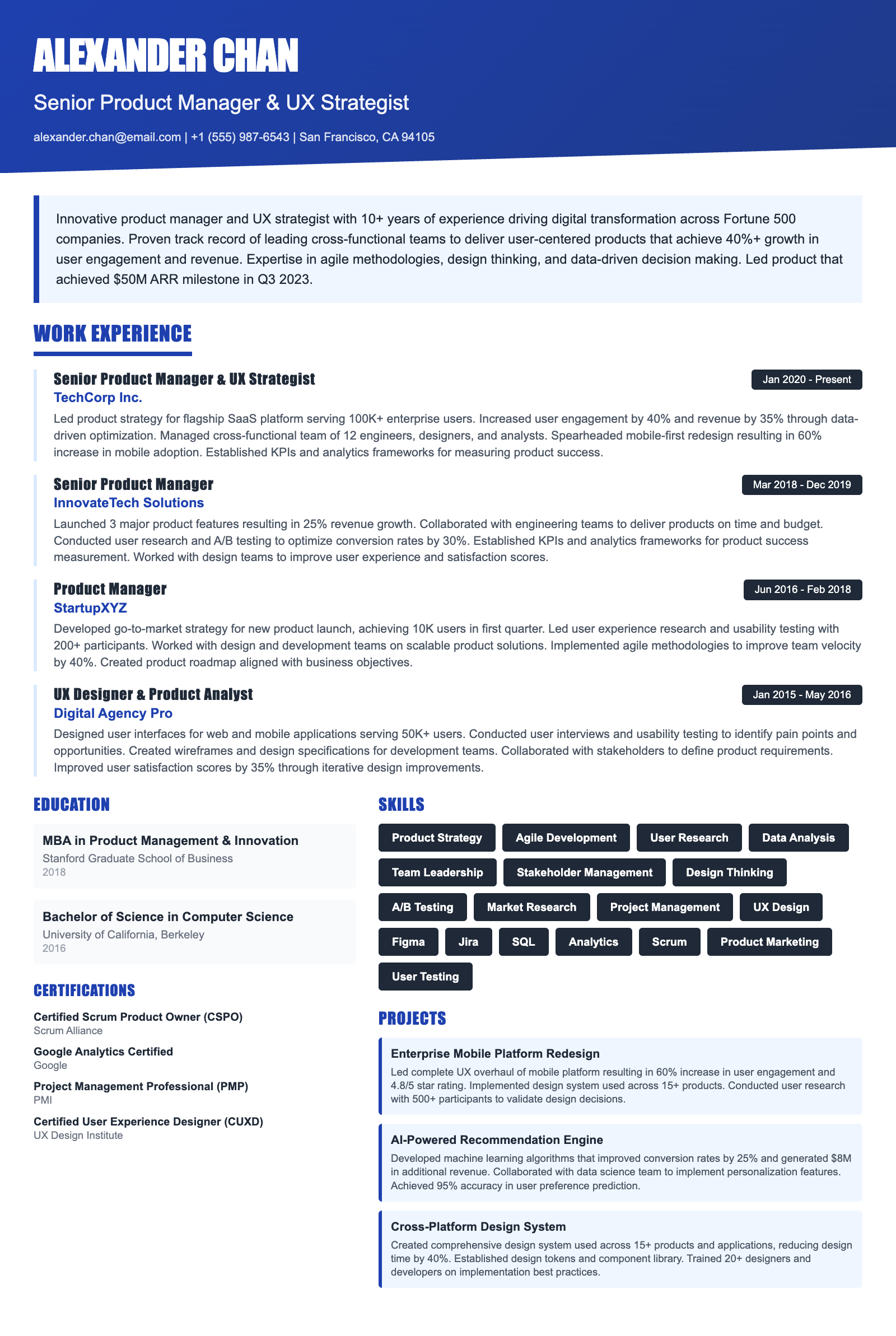
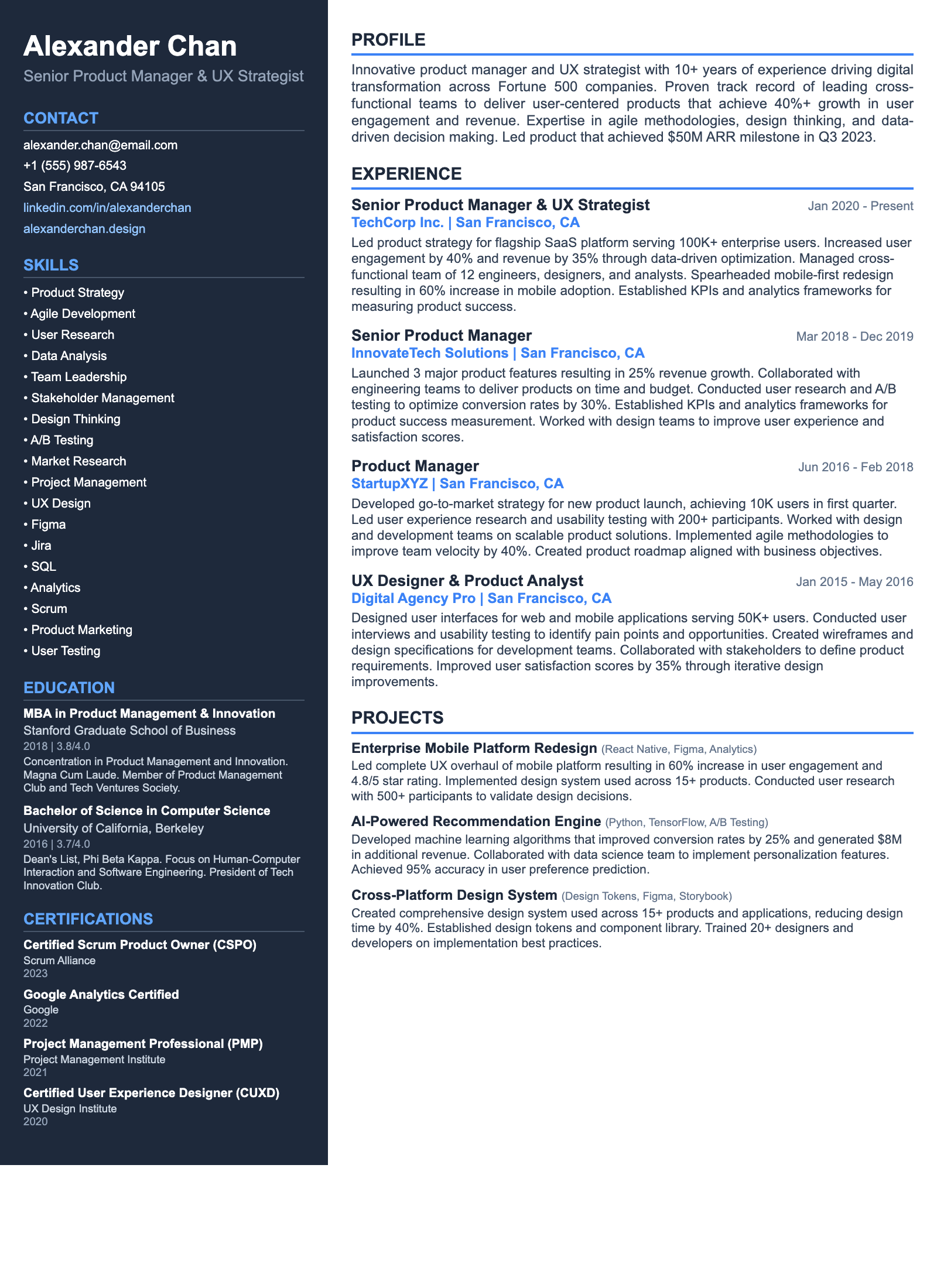
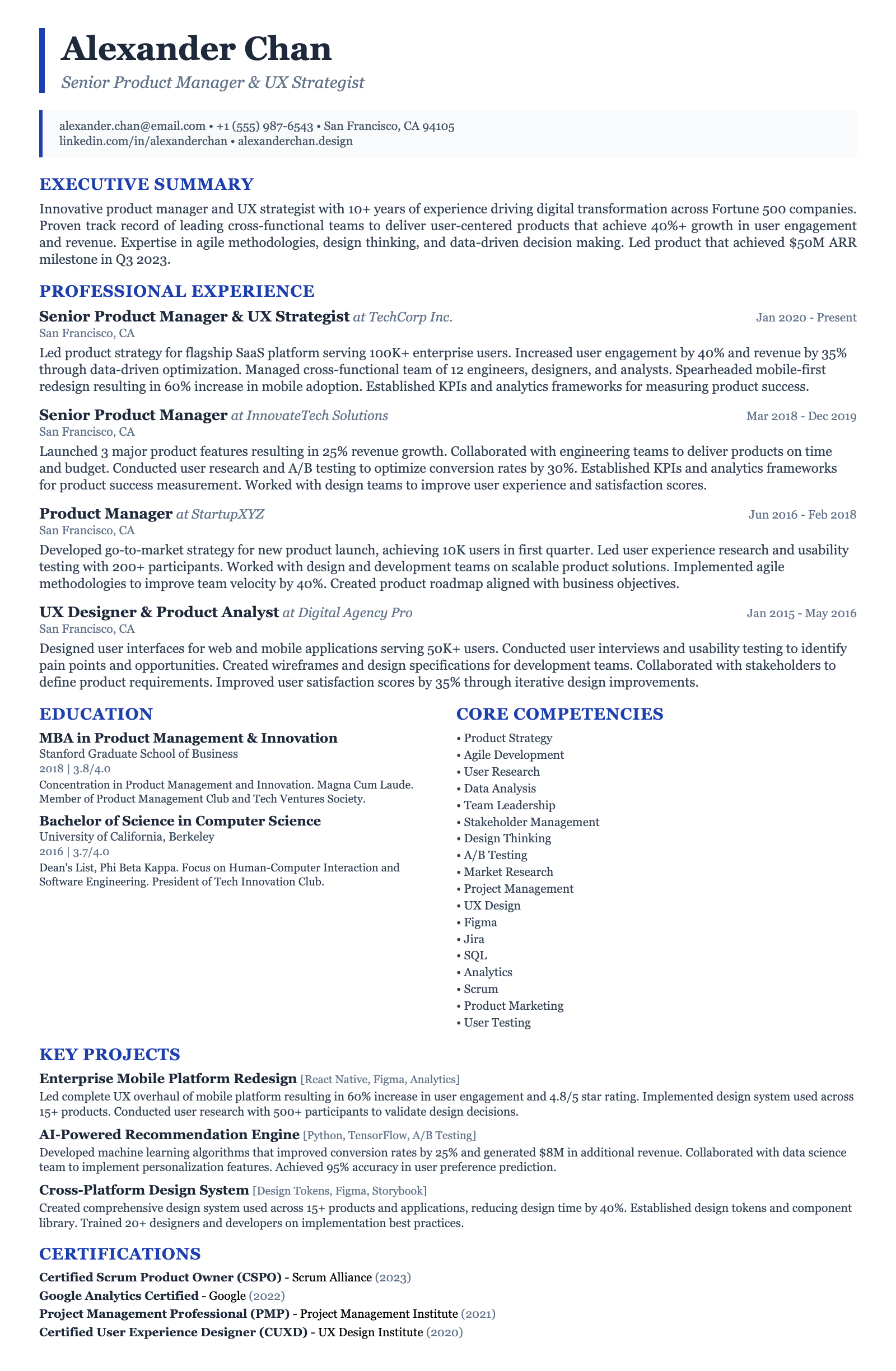
ATS-friendly templates designed specifically for Senior Manufacturing Content Writer positions in the US market.
Frequently Asked Questions

How long should my resume be as a Senior Manufacturing Content Writer?

Ideally, your resume should be no more than two pages. Focus on the most relevant and impactful experiences and skills. Given your senior level, showcasing substantial accomplishments and leadership is crucial. Prioritize clarity and conciseness, ensuring each bullet point demonstrates your value. If you have extensive experience, tailor the resume to each specific job application, highlighting achievements most relevant to the role's requirements. Use industry-specific keywords to optimize for Applicant Tracking Systems (ATS).

What are the most important skills to highlight on my resume?

Emphasize both hard and soft skills. Hard skills include technical writing proficiency, knowledge of manufacturing processes (e.g., lean manufacturing, Six Sigma), experience with content management systems (CMS) like WordPress or Drupal, proficiency in SEO tools like SEMrush or Ahrefs, and data analysis skills using tools like Google Analytics. Soft skills like communication, time management, adaptability, teamwork, and leadership are equally important. Provide specific examples of how you've used these skills to achieve results in previous roles.

How can I optimize my resume for Applicant Tracking Systems (ATS)?

Use a clean, ATS-friendly format with clear headings and bullet points. Avoid using tables, images, or fancy formatting that may not be parsed correctly. Incorporate relevant keywords from the job description throughout your resume, including in your skills section and work experience descriptions. Save your resume as a PDF to preserve formatting, but ensure the text is selectable. Use industry-standard terminology and avoid jargon that may not be recognized by ATS systems. Tools like Jobscan can help analyze your resume's ATS compatibility.

Are certifications necessary for a Senior Manufacturing Content Writer?

While not always mandatory, certifications can enhance your resume and demonstrate your commitment to professional development. Consider certifications in technical writing, content marketing, or specific manufacturing methodologies (e.g., Six Sigma Green Belt). Certifications related to SEO or digital marketing can also be valuable. Highlight these certifications prominently in a dedicated section on your resume. Mention specific tools or frameworks you learned during your certification process.

What are some common resume mistakes to avoid as a Senior Manufacturing Content Writer?

Avoid generic descriptions of your responsibilities. Instead, focus on quantifiable achievements and the impact you made in previous roles. Don't neglect to tailor your resume to each job application, highlighting the skills and experiences most relevant to the specific position. Avoid using overly technical jargon that may not be understood by a non-technical recruiter. Proofread carefully for grammatical errors and typos. Do not omit metrics showcasing your value to previous employers.

How can I highlight a career transition into a Senior Manufacturing Content Writer role?

If transitioning from a related field (e.g., journalism, marketing, engineering), emphasize transferable skills and experiences. Highlight any projects where you created technical content or worked with manufacturing-related topics. Quantify your achievements whenever possible, demonstrating the impact of your work. Consider taking relevant courses or certifications to demonstrate your commitment to the field. Tailor your resume and cover letter to showcase your understanding of the manufacturing industry and your passion for content creation. Include portfolio samples to prove your capabilities.

Ready to Build Your Senior Manufacturing Content Writer Resume?

Use our AI-powered resume builder to create an ATS-optimized resume tailored for Senior Manufacturing Content Writer positions in the US market.

Complete Senior Manufacturing Content Writer Career Toolkit

Everything you need for your Senior Manufacturing Content Writer job search — all in one platform.

Why choose ResumeGyani over Zety or Resume.io?

The only platform with AI mock interviews + resume builder + job search + career coaching — all in one.

See comparison

Last updated: March 2026 · Content reviewed by certified resume writers · Optimized for US job market

Senior Manufacturing Content Writer Resume Guide (2026) | ATS-Optimized Template