
ATS-Optimized for US Market

Senior Manufacturing Operations Manager Career & Resume Guide

As a Senior Manufacturing Operations Manager, your resume must demonstrate a blend of technical expertise, leadership acumen, and business savvy. Hiring managers seek candidates who can optimize production processes, drive efficiency, and ensure product quality while adhering to safety standards and regulatory compliance. Your resume should immediately highlight your experience in managing manufacturing operations, ideally quantified with metrics like cost reduction, throughput improvement, or defect rate reduction. Showcase your proficiency with industry-standard tools such as Statistical Process Control (SPC), Enterprise Resource Planning (ERP) systems (SAP, Oracle), and Lean Manufacturing principles (Six Sigma, Kaizen). Key sections include a strong professional summary highlighting quantifiable achievements, a detailed work history demonstrating increasing responsibility, and a skills section that explicitly lists both technical and soft skills (e.g., Communication, Teamwork, Leadership). Certifications like Six Sigma Black Belt or Lean Certification can significantly enhance your profile. To stand out, tailor your resume to each specific job description, emphasizing the skills and experiences most relevant to the target company's needs. For instance, if the role focuses on continuous improvement, highlight your experience leading Kaizen events or implementing process optimization initiatives. Similarly, if the company uses a specific ERP system, ensure your proficiency with that system is prominently displayed. Demonstrate your ability to analyze data, identify trends, and implement solutions that improve operational performance, ultimately contributing to the company's bottom line. Frame your experience using the STAR method to provide context and clear quantifiable results.
Average US Salary: $80k - $130k

Expert Tip: For Senior Manufacturing Operations Manager positions in the US, recruiters increasingly look for technical execution and adaptability over simple job duties. This guide is tailored to highlight these specific traits to ensure your resume stands out in the competitive Senior Manufacturing Operations Manager sector.

What US Hiring Managers Look For in a Senior Manufacturing Operations Manager Resume

When reviewing Senior Manufacturing Operations Manager candidates, recruiters and hiring managers in the US focus on a few critical areas. Making these elements clear and easy to find on your resume will improve your chances of moving to the interview stage.

  • Relevant experience and impact in Senior Manufacturing Operations Manager or closely related roles.
  • Clear, measurable achievements (metrics, scope, outcomes) rather than duties.
  • Skills and keywords that match the job description and ATS requirements.
  • Professional formatting and no spelling or grammar errors.
  • Consistency between your resume, LinkedIn, and application.
  • Proficiency in key areas such as Communication, Time Management, Industry-Standard Tools.

Essential Skills for Senior Manufacturing Operations Manager

Include these keywords in your resume to pass ATS screening and impress recruiters.

Must-Have Skills

  • CriticalCommunication
  • HighTime Management

Technical Skills

  • HighIndustry-Standard Tools
  • MediumData Analysis

Soft Skills

  • CriticalTeamwork
  • HighAdaptability
  • CriticalLeadership

A Day in the Life

A Day in the Life of a Senior Operations Manager

Arrive early to review metrics or sprint progress. As a Senior Operations Manager, you lead the 9 AM stand-up, addressing blockers and setting the strategic direction for handling core responsibilities, collaborating with cross-functional teams, and driving project success within the Manufacturing team. 10 AM-1 PM is for high-impact decisions. You're architecting solutions, reviewing critical deliverables, or negotiating priorities with Manufacturing stakeholders. Afternoons involve mentorship and cross-org coordination. You're the go-to expert for handling core responsibilities, collaborating with cross-functional teams, and driving project success, ensuring the team's output aligns with company goals. You finish by finalizing quarterly roadmaps or reviewing next steps. At this level in Manufacturing, your focus shifts from individual tasks to organizational impact.

Career Progression Path

Level 1

Operations Manager I (Entry Level)

Level 2

Operations Manager II (Junior)

Level 3

Senior Operations Manager

Level 4

Lead Operations Manager

Level 5

Operations Manager Manager / Director

Interview Questions & Answers

Prepare for your Senior Manufacturing Operations Manager interview with these commonly asked questions.

Describe a time when you had to implement a significant change in a manufacturing process. What challenges did you face, and how did you overcome them?

Medium
Behavioral
Sample Answer
In my previous role at XYZ Manufacturing, we needed to upgrade our assembly line to accommodate a new product line. This involved significant changes to the layout, equipment, and workflow. The biggest challenge was minimizing downtime during the transition. I formed a cross-functional team, developed a detailed implementation plan, and communicated regularly with all stakeholders. We used simulation software to identify potential bottlenecks and implemented mitigation strategies. As a result, we completed the upgrade with only a 12-hour downtime, exceeding our initial target of 24 hours.

How do you use data analysis to improve manufacturing operations?

Technical
Technical
Sample Answer
I leverage data analysis across several areas. I routinely analyze production data from our MES system (such as Siemens Opcenter) to identify trends in efficiency and downtime. Using SPC charts, I can quickly identify process variations and proactively implement corrective actions. I've also used data to optimize inventory levels, reducing carrying costs and minimizing stockouts. For example, at ABC Corp, I used regression analysis to predict demand, resulting in a 10% reduction in inventory holding costs.

Imagine you identify a critical bottleneck in the production line. Walk me through the steps you would take to address it.

Medium
Situational
Sample Answer
First, I would gather data to quantify the impact of the bottleneck. This would involve collecting data on throughput, cycle time, and resource utilization. Next, I would form a cross-functional team to brainstorm potential solutions, using tools like root cause analysis (5 Whys) and fishbone diagrams. We'd evaluate each solution based on its feasibility, cost, and potential impact. Finally, I would implement the chosen solution, monitor its effectiveness, and make adjustments as needed. We'd use the PDCA cycle for continuous improvement.

How do you ensure that your team adheres to safety regulations and company policies?

Easy
Behavioral
Sample Answer
Safety is my top priority. I ensure all team members receive thorough training on safety regulations and company policies. We conduct regular safety audits and toolbox talks to reinforce safe work practices. I also encourage employees to report any safety concerns without fear of reprisal. I lead by example, always adhering to safety protocols myself. Furthermore, I regularly review and update safety procedures to reflect best practices and regulatory changes. I create a culture where safety is everyone's responsibility.

Describe your experience with Lean Manufacturing principles and how you've applied them to improve efficiency.

Medium
Technical
Sample Answer
I am a strong advocate for Lean Manufacturing principles. I have experience leading Kaizen events, implementing 5S programs, and optimizing value streams. At DEF Industries, I led a Kaizen event to reduce changeover time on a critical machine. By implementing standardized work instructions and eliminating unnecessary steps, we reduced changeover time by 30%, increasing overall throughput. I also have experience with value stream mapping and identifying opportunities to eliminate waste.

A key piece of equipment breaks down, halting production. How do you handle the situation?

Hard
Situational
Sample Answer
My immediate priority would be ensuring the safety of all personnel. Then, I'd assess the extent of the damage and the estimated downtime. I would immediately activate our contingency plan, which includes contacting our maintenance team and exploring options for temporary replacements or alternative production routes. I would communicate transparently with stakeholders about the situation and the expected impact. Once repairs are underway, I'd analyze the root cause of the failure to prevent future breakdowns, potentially involving predictive maintenance with vibration analysis.

ATS Optimization Tips

Make sure your resume passes Applicant Tracking Systems used by US employers.

Incorporate exact keywords from the job description, especially in the skills section and work experience bullets. ATS systems prioritize resumes that closely match the specified requirements.
Use standard section headings like "Summary," "Experience," "Skills," and "Education." Avoid creative or unconventional titles that an ATS might not recognize.
Quantify your achievements whenever possible. Use numbers and metrics to demonstrate the impact of your work (e.g., "Reduced production costs by 15%").
Format your resume using a simple, chronological or combination format. This allows the ATS to easily parse your work history and skills.
List industry-specific tools and technologies explicitly. Mention ERP systems (SAP, Oracle), MES systems, Statistical Process Control (SPC) software, and other relevant tools.
Save your resume as a PDF to preserve formatting, but ensure the text is selectable. Some ATS systems struggle to parse information from image-based PDFs.
Include a skills section that lists both technical and soft skills. Separate them clearly to improve readability for the ATS.
Avoid using tables, images, or unusual fonts. These can confuse the ATS and prevent it from accurately extracting information.

Common Resume Mistakes to Avoid

Don't make these errors that get resumes rejected.

1
Failing to quantify achievements. Instead of saying "Improved production efficiency," say "Improved production efficiency by 20% through process optimization."
2
Listing generic responsibilities instead of specific accomplishments. Focus on what you did and the results you achieved.
3
Neglecting to tailor the resume to the specific job description. A generic resume is unlikely to stand out to an ATS or a hiring manager.
4
Omitting industry-standard tools and technologies. Make sure to mention ERP systems, MES systems, and other relevant software.
5
Underemphasizing leadership experience. Highlight instances where you led teams, mentored employees, or drove change initiatives.
6
Not showcasing process improvement experience. Detail your involvement in Lean, Six Sigma, or other continuous improvement programs.
7
Ignoring regulatory compliance. Mention your experience with FDA, OSHA, or other relevant regulations.
8
Using a cluttered or confusing format. A clean, easy-to-read resume is essential for both ATS and human reviewers.

Industry Outlook

The US Manufacturing sector is experiencing steady growth. Senior Operations Managers are particularly sought after, with the Bureau of Labor Statistics projecting average job growth through 2030. Peak hiring occurs in Q1 (January-March) and Q3 (August-September).

Top Hiring Companies

Industry LeadersRegional FirmsFast-Growing Companies

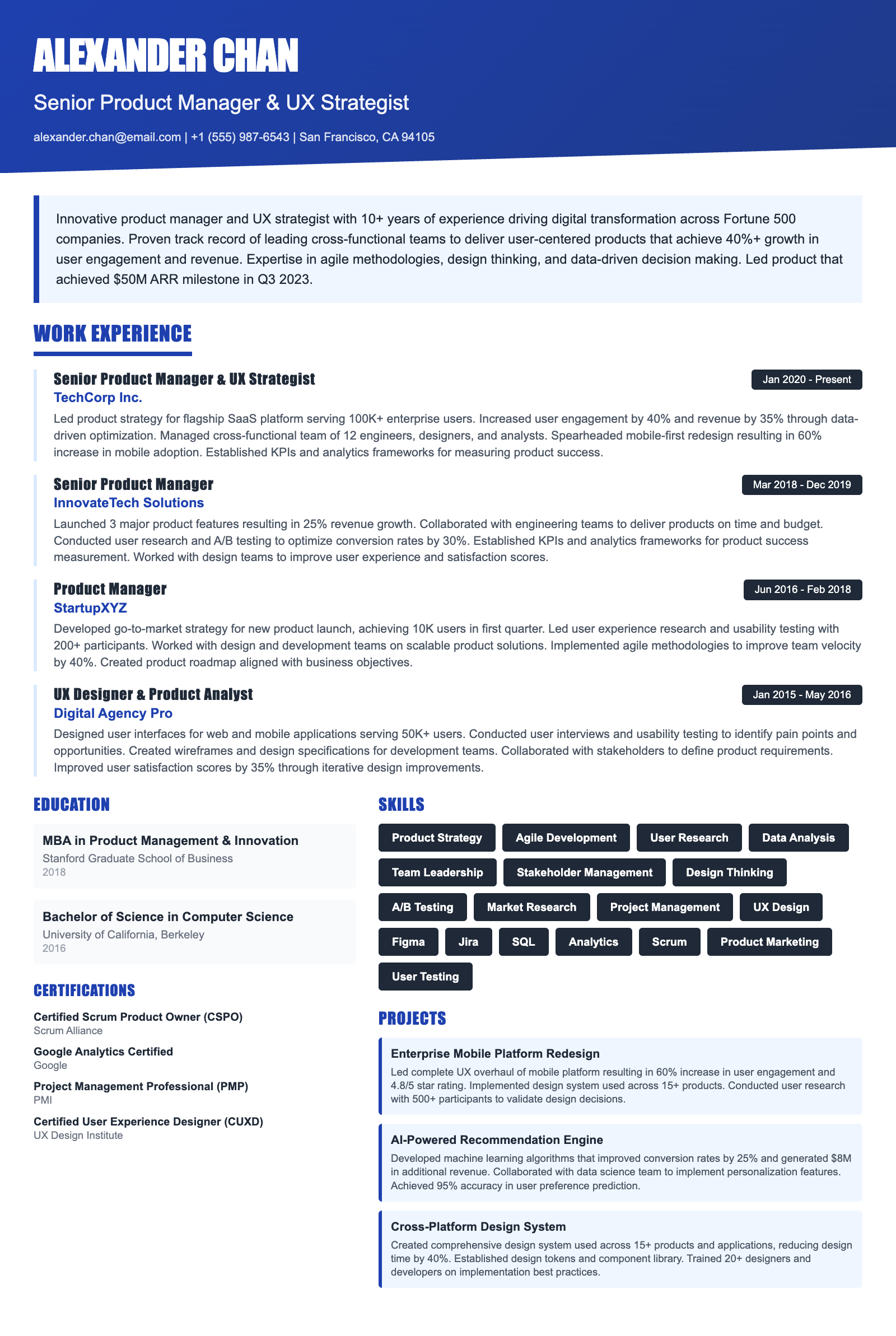
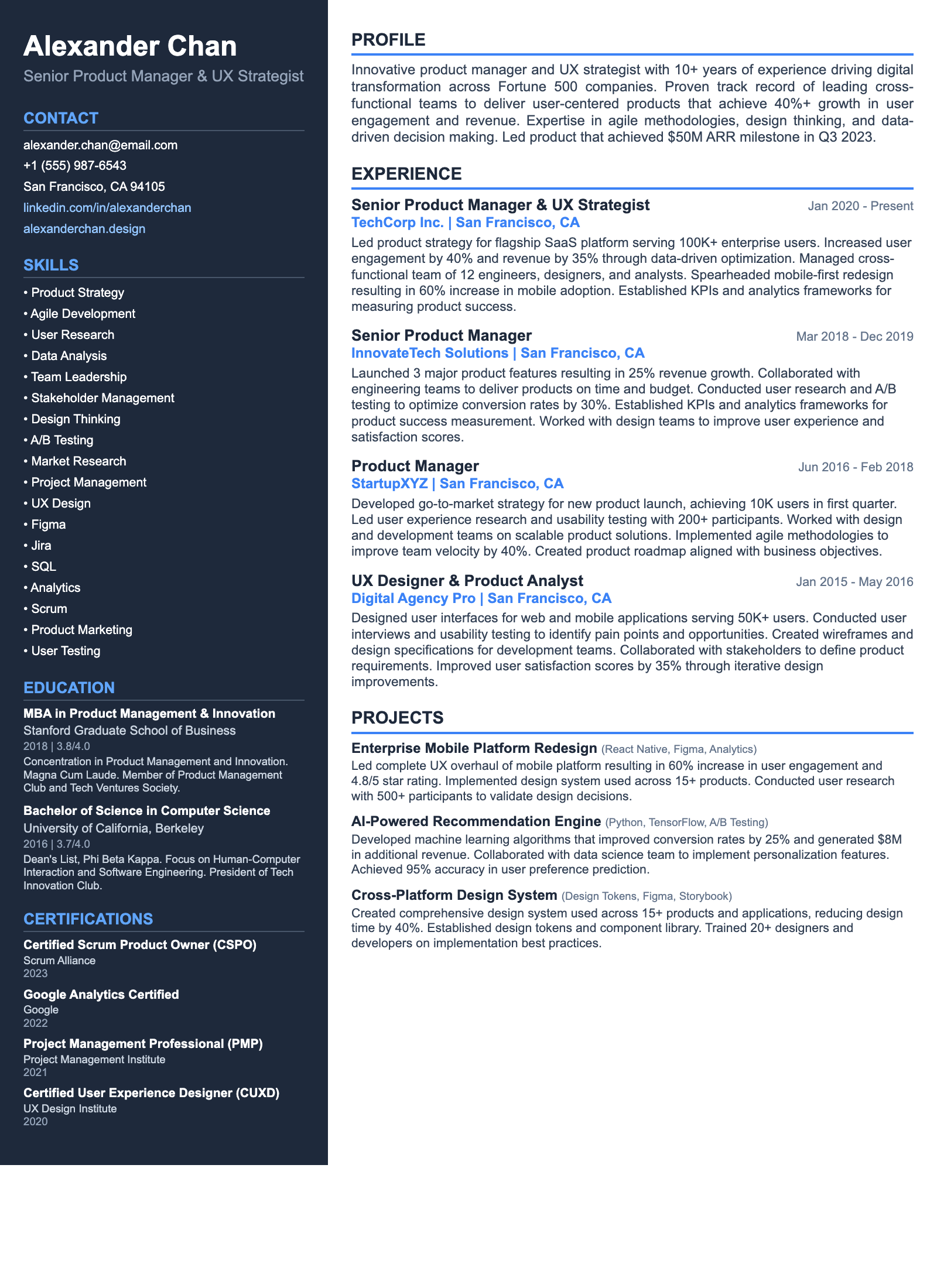
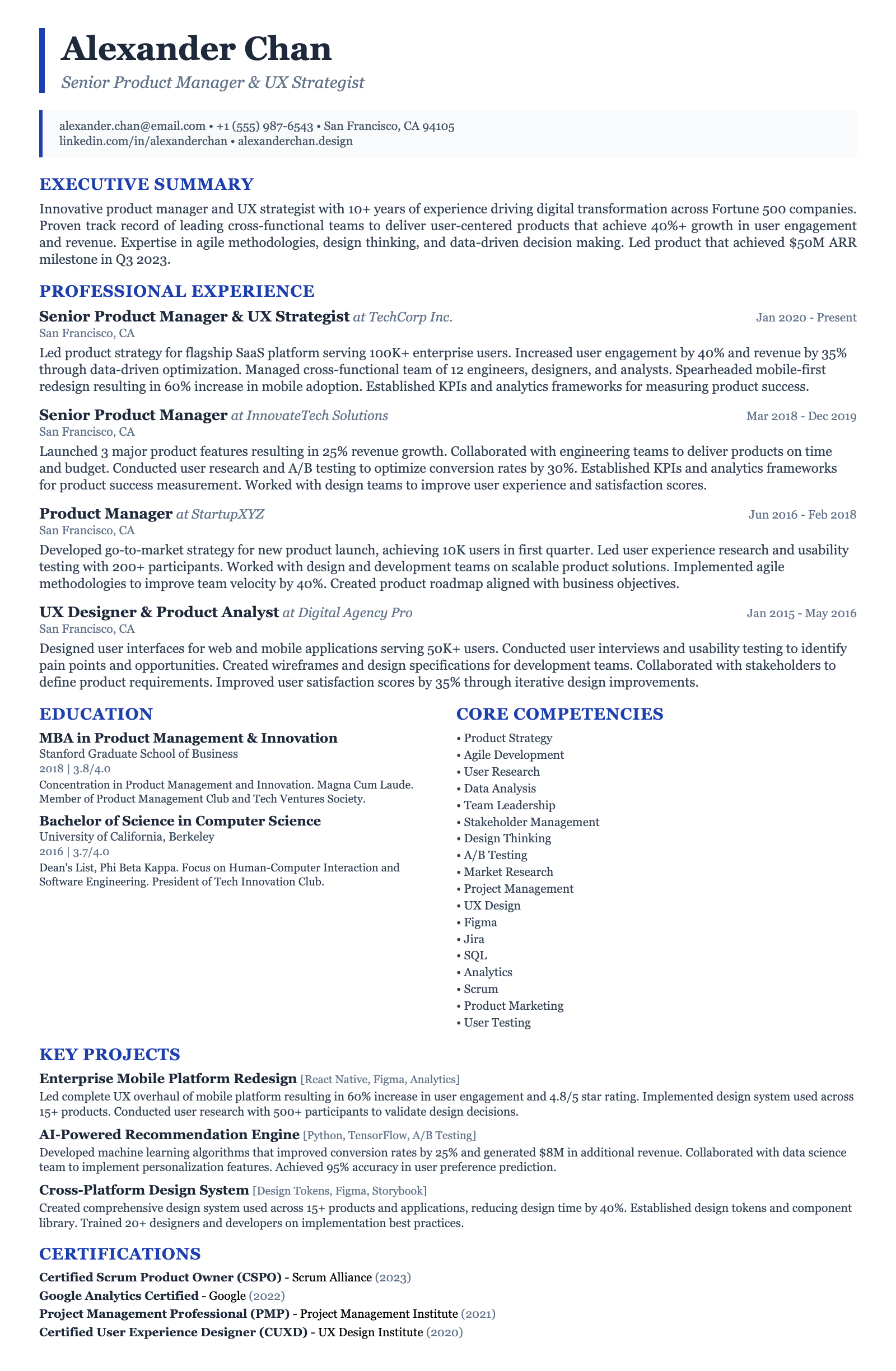
Recommended Resume Templates

ATS-friendly templates designed specifically for Senior Manufacturing Operations Manager positions in the US market.
Frequently Asked Questions

How long should my Senior Manufacturing Operations Manager resume be?

Ideally, your resume should be no more than two pages long. Focus on the most relevant and impactful experiences from the past 10-15 years. Use concise language and quantify achievements whenever possible. Highlight experiences where you've demonstrated leadership, process improvement (Six Sigma), and cost reduction using tools like ERP systems and SPC.

What are the most important skills to include on my resume?

Beyond the basics (Communication, Teamwork), emphasize skills specific to manufacturing operations. These include proficiency with industry-standard tools (SAP, Oracle ERP, MES systems), Lean Manufacturing (Six Sigma, Kaizen), Statistical Process Control (SPC), problem-solving methodologies (8D, 5 Whys), and regulatory compliance (FDA, OSHA). Also highlight leadership and project management skills.

How can I ensure my resume is ATS-friendly?

Use a clean, simple format with clear headings and bullet points. Avoid tables, images, and unusual fonts. Incorporate keywords directly from the job description. Save your resume as a PDF, but ensure the text is selectable. Focus on quantifiable results and action verbs. Reference industry-specific certifications, like Lean Six Sigma.

Are certifications important for a Senior Manufacturing Operations Manager role?

Yes, certifications can significantly enhance your resume. Lean Six Sigma Black Belt, Certified Production and Inventory Management (CPIM), and Project Management Professional (PMP) certifications demonstrate your commitment to professional development and expertise in relevant areas. Quantify how these certifications helped you improve manufacturing processes.

What are common resume mistakes to avoid?

Avoid generic descriptions of your responsibilities. Instead, focus on quantifiable achievements and specific actions you took to improve manufacturing operations. Do not neglect to mention industry-specific tools and frameworks. Don't underestimate the importance of leadership experience. Proofread carefully for typos and grammatical errors. Neglecting to tailor your resume to each specific role is also a mistake.

How do I highlight a career transition into a Senior Manufacturing Operations Manager role?

Clearly articulate your transferable skills and experiences. Highlight any relevant projects or accomplishments from your previous role that demonstrate your ability to manage operations, lead teams, and improve processes. Emphasize your understanding of manufacturing principles and your eagerness to learn industry-specific tools (SAP, MES). Obtain certifications like Lean Six Sigma to bridge any knowledge gaps. Showcase leadership skills and experience.

Ready to Build Your Senior Manufacturing Operations Manager Resume?

Use our AI-powered resume builder to create an ATS-optimized resume tailored for Senior Manufacturing Operations Manager positions in the US market.

Complete Senior Manufacturing Operations Manager Career Toolkit

Everything you need for your Senior Manufacturing Operations Manager job search — all in one platform.

Why choose ResumeGyani over Zety or Resume.io?

The only platform with AI mock interviews + resume builder + job search + career coaching — all in one.

See comparison

Last updated: March 2026 · Content reviewed by certified resume writers · Optimized for US job market