
ATS-Optimized for US Market

Senior Retail Architect Career & Resume Guide

As a Senior Retail Architect, your resume needs to showcase your ability to blend strategic vision with practical execution in the retail space. Hiring managers seek candidates who can demonstrate a deep understanding of retail operations, customer experience, and the technological infrastructure that supports them. Your resume should immediately highlight your experience in designing and implementing innovative retail solutions, focusing on projects that improved efficiency, increased sales, or enhanced customer satisfaction. Key sections include a compelling summary, a detailed work experience section quantifying your achievements (e.g., 'Reduced checkout times by 15%'), a dedicated skills section (emphasizing proficiency in tools like AutoCAD, Revit, Bluebeam Revu, and potentially scripting languages like Python or JavaScript for custom solutions), and relevant certifications (e.g., LEED AP, architectural licenses). To stand out, quantify your accomplishments using metrics and data analysis results, tailor your resume to each specific job description by incorporating keywords from the posting, and provide a portfolio link showcasing your architectural designs and project outcomes. Frame your experience with an understanding of current retail trends such as omnichannel integration, experiential retail, and sustainable design, highlighting how you’ve leveraged these trends in your past work.
Average US Salary: $80k - $130k

Expert Tip: For Senior Retail Architect positions in the US, recruiters increasingly look for technical execution and adaptability over simple job duties. This guide is tailored to highlight these specific traits to ensure your resume stands out in the competitive Senior Retail Architect sector.

What US Hiring Managers Look For in a Senior Retail Architect Resume

When reviewing Senior Retail Architect candidates, recruiters and hiring managers in the US focus on a few critical areas. Making these elements clear and easy to find on your resume will improve your chances of moving to the interview stage.

  • Relevant experience and impact in Senior Retail Architect or closely related roles.
  • Clear, measurable achievements (metrics, scope, outcomes) rather than duties.
  • Skills and keywords that match the job description and ATS requirements.
  • Professional formatting and no spelling or grammar errors.
  • Consistency between your resume, LinkedIn, and application.
  • Proficiency in key areas such as Communication, Time Management, Industry-Standard Tools.

Essential Skills for Senior Retail Architect

Include these keywords in your resume to pass ATS screening and impress recruiters.

Must-Have Skills

  • CriticalCommunication
  • HighTime Management

Technical Skills

  • HighIndustry-Standard Tools
  • MediumData Analysis

Soft Skills

  • CriticalTeamwork
  • HighAdaptability
  • CriticalLeadership

A Day in the Life

A Day in the Life of a Senior Architect

Arrive early to review metrics or sprint progress. As a Senior Architect, you lead the 9 AM stand-up, addressing blockers and setting the strategic direction for handling core responsibilities, collaborating with cross-functional teams, and driving project success within the Retail team. 10 AM-1 PM is for high-impact decisions. You're architecting solutions, reviewing critical deliverables, or negotiating priorities with Retail stakeholders. Afternoons involve mentorship and cross-org coordination. You're the go-to expert for handling core responsibilities, collaborating with cross-functional teams, and driving project success, ensuring the team's output aligns with company goals. You finish by finalizing quarterly roadmaps or reviewing next steps. At this level in Retail, your focus shifts from individual tasks to organizational impact.

Career Progression Path

Level 1

Architect I (Entry Level)

Level 2

Architect II (Junior)

Level 3

Senior Architect

Level 4

Lead Architect

Level 5

Architect Manager / Director

Interview Questions & Answers

Prepare for your Senior Retail Architect interview with these commonly asked questions.

Describe a time when you had to adapt a retail design due to unforeseen constraints (budget, space, regulatory). How did you handle it?

Medium
Situational
Sample Answer
In a recent project for a boutique clothing store, we discovered during construction that the available space was smaller than initially planned. This forced us to re-evaluate the layout and fixtures. I collaborated with the construction team and store owner to identify key areas for optimization. We redesigned the shelving to be more compact and utilized vertical space more effectively. We also streamlined the checkout area to minimize its footprint. The result was a functional and aesthetically pleasing store that met the client's needs despite the challenges. This involved using SketchUp to quickly visualize the new layout.

How do you stay up-to-date with the latest trends and technologies in retail design?

Easy
Behavioral
Sample Answer
I actively follow industry publications like Retail Design World and VMSD. I also attend relevant conferences and webinars to learn about emerging trends and technologies. I am a member of professional organizations like the Retail Design Institute (RDI) and regularly participate in their events. I also make it a point to visit new and innovative retail spaces to observe their design and customer experience strategies firsthand. I also experiment with tools such as VR walkthrough to understand the customer experience.

Tell me about a time you had to convince a client to embrace a new design concept that they were initially hesitant about.

Medium
Behavioral
Sample Answer
I once proposed an open-concept layout for a high-end jewelry store, but the client was concerned about security and potential theft. I addressed their concerns by presenting data on the effectiveness of open layouts in deterring crime and enhancing customer engagement. I also provided detailed security plans, including strategically placed cameras and enhanced staff visibility. Furthermore, I created a 3D rendering of the store to showcase the benefits of the open layout in terms of aesthetics and customer flow. Ultimately, the client was convinced and the store's sales increased by 15% after the redesign.

Describe your experience with sustainable design practices in retail architecture.

Medium
Technical
Sample Answer
I have a strong commitment to sustainable design and have incorporated green building principles into several retail projects. For example, in a recent project for a grocery store, we used recycled materials for the flooring and fixtures, installed energy-efficient lighting and HVAC systems, and incorporated natural light to reduce energy consumption. We also designed a rainwater harvesting system for irrigation. The store achieved LEED Gold certification and reduced its energy consumption by 20%. I am proficient in using LEED guidelines and tools to assess and improve the environmental performance of retail spaces.

How have you used data analytics to inform your retail design decisions?

Hard
Technical
Sample Answer
In designing a new layout for a department store, I analyzed customer traffic patterns, sales data, and dwell times in different sections of the store. This data revealed that certain areas were underutilized and that customers were struggling to find specific products. Based on these insights, I redesigned the layout to improve customer flow, increase visibility of key products, and create more engaging displays. The result was a 12% increase in sales and a significant improvement in customer satisfaction. I commonly use tools like Google Analytics and heatmaps to gather this information.

Walk me through your process of creating a retail design from initial concept to final execution, including your stakeholder management approach.

Hard
Situational
Sample Answer
My process starts with a thorough understanding of the client's brand, target audience, and business objectives. I then conduct site visits and gather data on the existing space and its surroundings. Next, I develop several design concepts, incorporating feedback from the client and other stakeholders (e.g., store managers, marketing teams). I then refine the chosen concept, creating detailed plans, specifications, and 3D renderings. Throughout the process, I maintain open communication with all stakeholders, providing regular updates and addressing any concerns. I use project management software like Asana to keep everyone informed and on track. The final stage involves overseeing the construction and installation process to ensure that the design is executed to the highest standards.

ATS Optimization Tips

Make sure your resume passes Applicant Tracking Systems used by US employers.

Incorporate industry-specific keywords, such as 'Omnichannel Retail Design,' 'Customer Journey Mapping,' 'Space Planning,' and 'Visual Merchandising,' directly from the job description.
Use a consistent and logical structure with clear section headings like 'Experience,' 'Skills,' 'Education,' and 'Projects' to facilitate parsing by ATS systems.
List technical skills as individual bullet points within the skills section, including specific software like AutoCAD, Revit, Bluebeam Revu, and SketchUp.
Quantify your achievements whenever possible, providing measurable results such as 'Reduced construction costs by 12%' or 'Increased store efficiency by 15%.'
Use a standard font like Arial or Times New Roman with a font size between 10 and 12 points to ensure readability by ATS.
Save your resume as a PDF file, as this format preserves formatting and is generally compatible with most ATS systems; using a .doc or .docx is also acceptable.
Optimize your resume for applicant tracking systems by using a simple format. Avoid using tables, images, or headers and footers, as these can confuse the ATS.
Include a skills matrix or keyword section to highlight your proficiency in key areas, such as 'Retail Space Planning,' 'Construction Documentation,' and 'Building Codes.'

Common Resume Mistakes to Avoid

Don't make these errors that get resumes rejected.

1
Failing to quantify accomplishments; without numbers, your impact is unclear to hiring managers.
2
Using generic architectural terms instead of retail-specific vocabulary; this makes your experience seem less relevant.
3
Neglecting to showcase your understanding of current retail trends, such as omnichannel integration or experiential design.
4
Not including a portfolio of your work, especially designs for retail spaces.
5
Overemphasizing design aesthetics and underemphasizing operational efficiency and customer experience.
6
Ignoring the impact of your designs on sales and revenue generation.
7
Using overly technical jargon that is not understood by non-architects on the hiring team.
8
Applying with a generic resume instead of tailoring it to each specific job description; this is a common pitfall that can be easily avoided.

Industry Outlook

The US Retail sector is experiencing steady growth. Senior Architects are particularly sought after, with the Bureau of Labor Statistics projecting average job growth through 2030. Peak hiring occurs in Q1 (January-March) and Q3 (August-September).

Top Hiring Companies

Industry LeadersRegional FirmsFast-Growing Companies

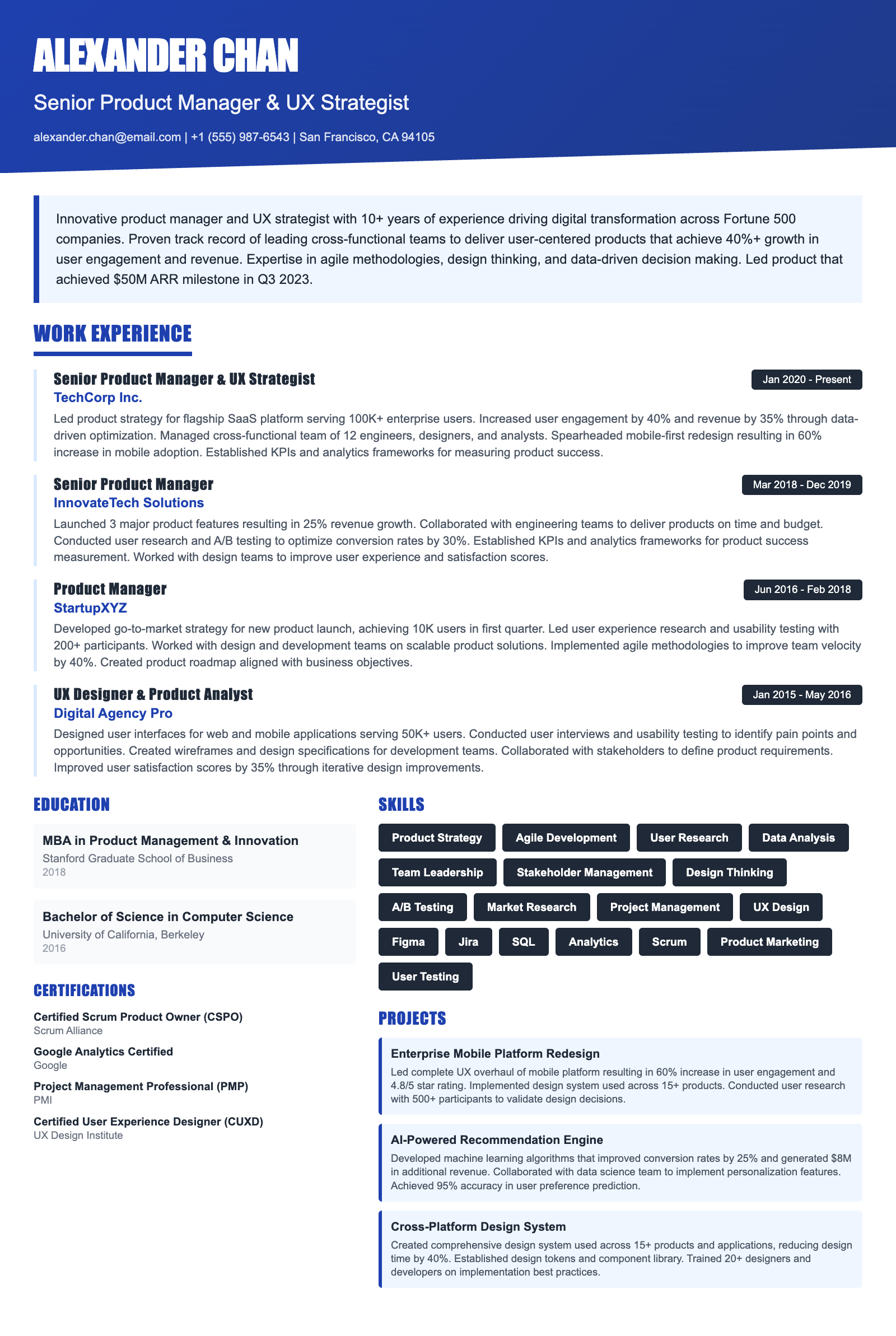
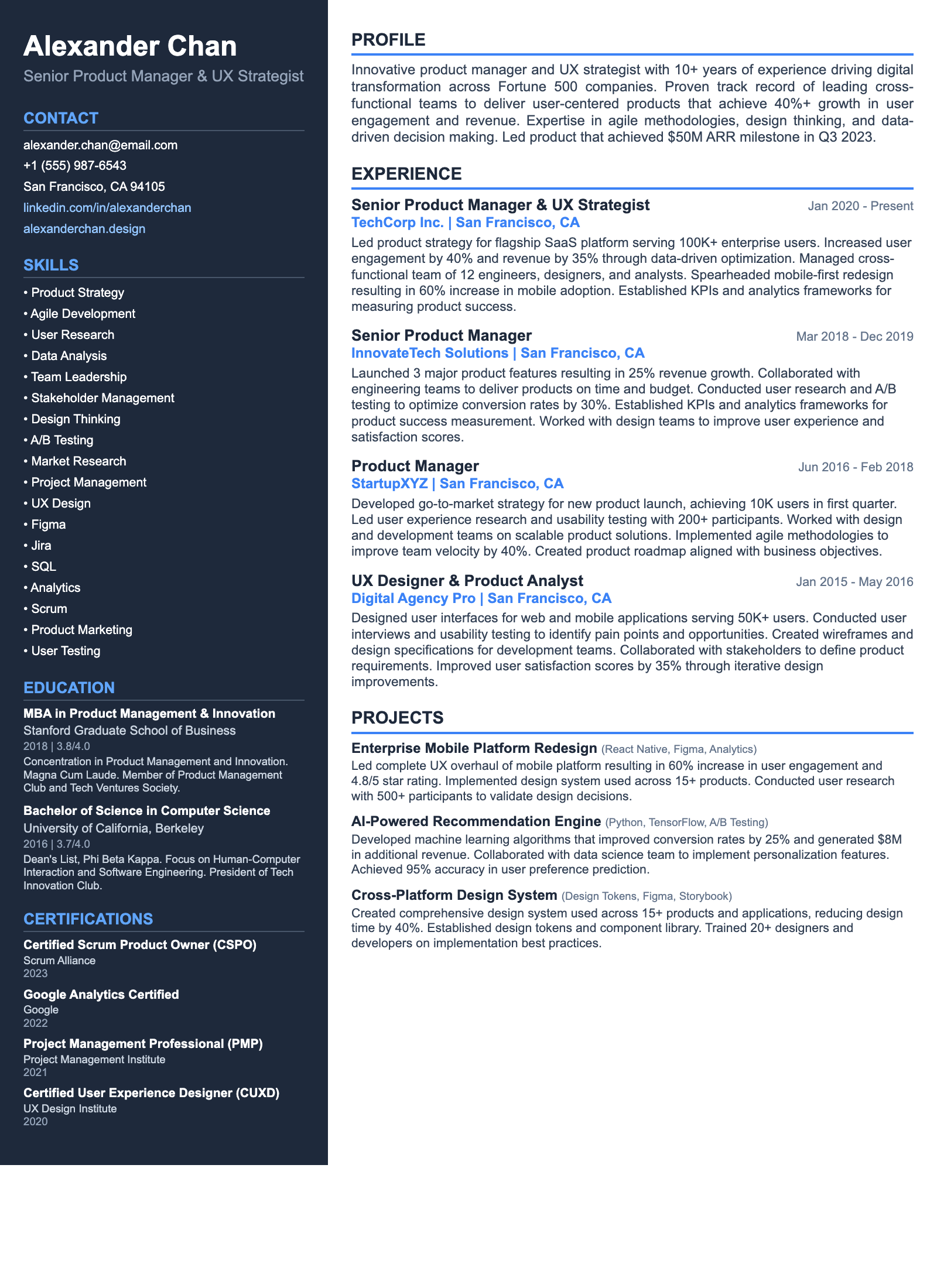
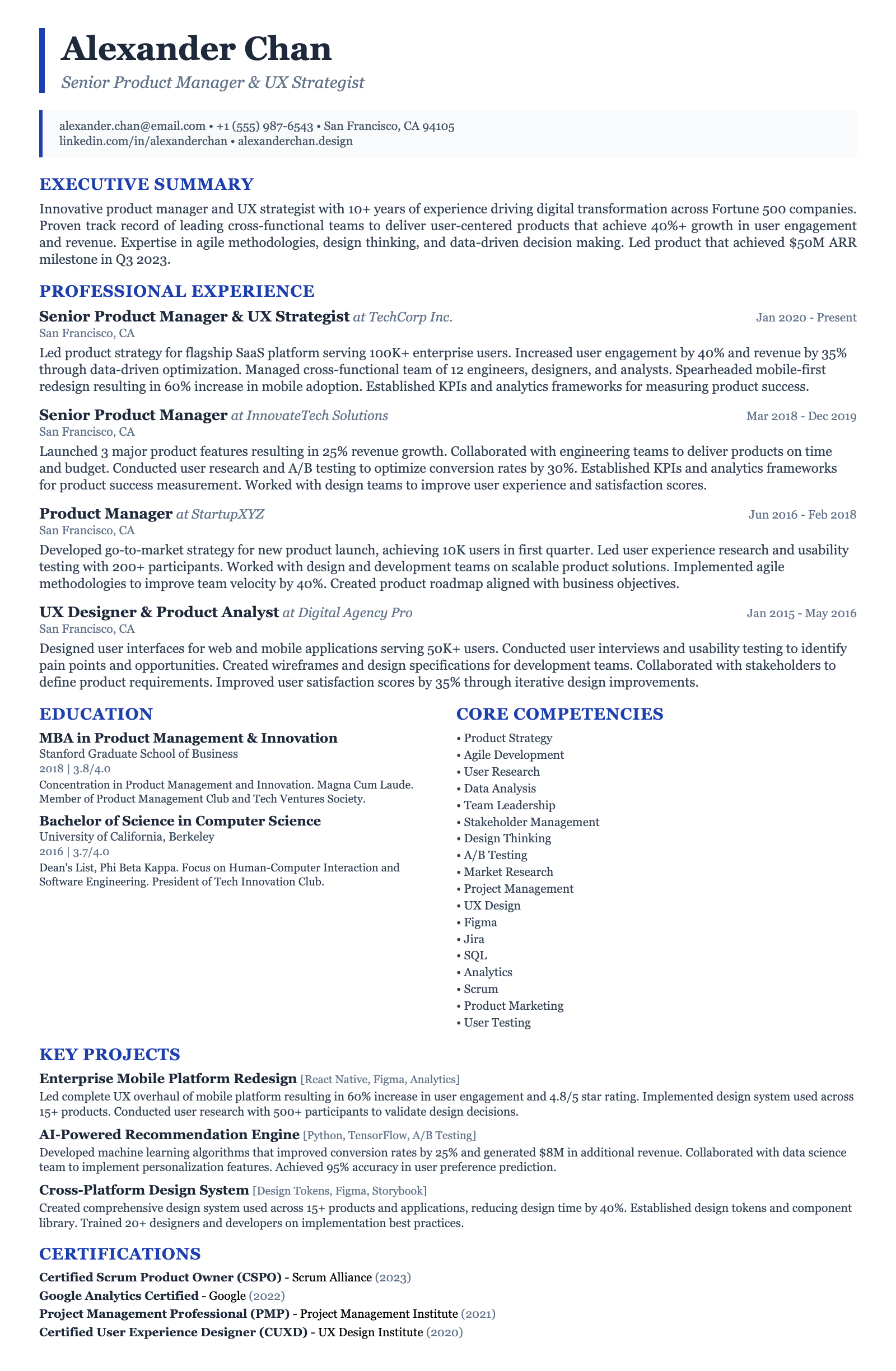
Recommended Resume Templates

ATS-friendly templates designed specifically for Senior Retail Architect positions in the US market.
Frequently Asked Questions

What is the ideal length for a Senior Retail Architect resume?

Ideally, your resume should be two pages maximum. Given the depth of experience required for a senior role, this provides enough space to detail your projects, skills, and accomplishments without overwhelming the reader. Focus on the most relevant and impactful experiences, quantifying your achievements whenever possible. Use a clear and concise writing style to keep the content digestible, and prioritize relevance over exhaustive detail. Remember, the goal is to pique the hiring manager's interest and secure an interview.

What are the key skills to highlight on a Senior Retail Architect resume?

Beyond the standard architectural skills, emphasize your knowledge of retail-specific technologies and trends. Include proficiency in industry-standard tools like AutoCAD, Revit, and Bluebeam Revu. Highlight skills in data analysis related to retail performance (e.g., using Tableau or Power BI to analyze sales data and inform design decisions). Showcase your understanding of omnichannel retail integration, customer experience design, and sustainable building practices (LEED certification is a plus). Don't forget soft skills like communication, leadership, and project management, demonstrated through specific examples.

How can I ensure my resume is ATS-friendly?

Use a simple, clean format with standard headings like 'Summary,' 'Experience,' 'Skills,' and 'Education.' Avoid tables, graphics, and unusual fonts, as these can confuse ATS systems. Incorporate keywords from the job description naturally throughout your resume, particularly in the skills and experience sections. Save your resume as a .doc or .pdf file, as these formats are generally ATS-compatible. Use clear and concise language and avoid jargon that the ATS might not recognize. Tools like Jobscan can help you optimize your resume for specific job postings.

Are certifications important for a Senior Retail Architect role, and which ones should I include?

Yes, certifications can significantly enhance your resume. Include your architectural license, LEED AP certification (demonstrating your commitment to sustainable design), and any project management certifications like PMP. Certifications related to specific retail technologies or software (e.g., Revit certifications) are also valuable. List these certifications prominently in a dedicated section or within your education section. If you lack specific certifications, consider pursuing relevant online courses or workshops to demonstrate your ongoing professional development.

What are some common mistakes to avoid on a Senior Retail Architect resume?

One common mistake is not quantifying your achievements. Instead of saying 'Improved store layout,' say 'Improved store layout, resulting in a 10% increase in sales.' Another mistake is failing to tailor your resume to the specific job description. Always customize your resume to highlight the skills and experience most relevant to the role. Avoid using generic language and clichés. Proofread carefully for typos and grammatical errors. Finally, do not omit a portfolio link showcasing your best projects.

How can I highlight a career transition on my Senior Retail Architect resume?

If transitioning from a different field or a different type of architectural role, emphasize transferable skills and experience. For example, if you have experience in project management, highlight how those skills are applicable to retail architecture. Focus on your passion for retail design and your understanding of retail trends. Consider including a brief statement in your summary explaining your career transition and highlighting your enthusiasm for the new role. Frame your past experiences in a way that demonstrates their relevance to the requirements of a Senior Retail Architect.

Ready to Build Your Senior Retail Architect Resume?

Use our AI-powered resume builder to create an ATS-optimized resume tailored for Senior Retail Architect positions in the US market.

Complete Senior Retail Architect Career Toolkit

Everything you need for your Senior Retail Architect job search — all in one platform.

Why choose ResumeGyani over Zety or Resume.io?

The only platform with AI mock interviews + resume builder + job search + career coaching — all in one.

See comparison

Last updated: March 2026 · Content reviewed by certified resume writers · Optimized for US job market

Senior Retail Architect Resume Guide (2026) | ATS-Optimized Template